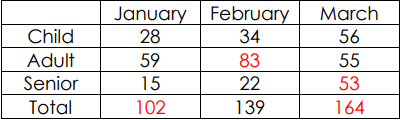
Q1: The table shows the number of people visiting an art museum over 3 months. Which month had the highest number of visitors if the total visitor in 3 months are 405?
Therefore, March had the highest number of visitors with a total of 164.
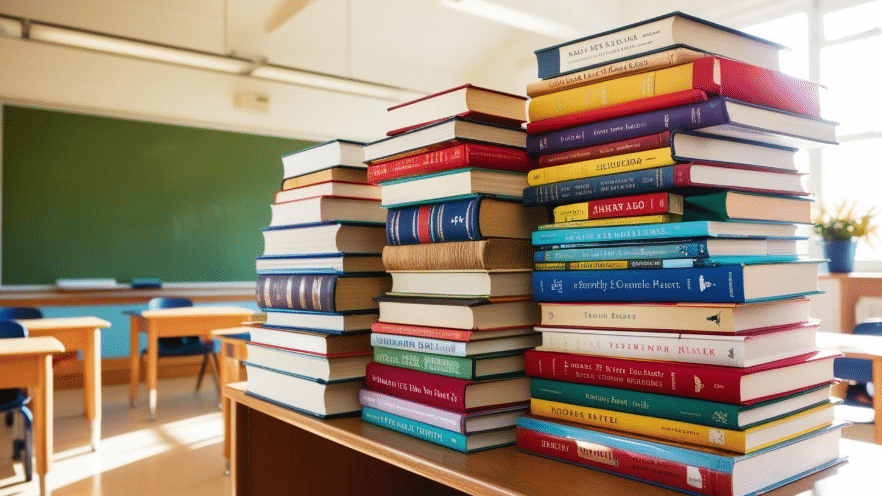
Q2: There are 167 books in one classroom and 392 books in the other. How many books are there altogether in both classrooms?
Solution:
To find the total number of books in both classrooms, you simply need to add the number of books in each classroom together:
Total number of books = Number of books in first classroom + Number of books in second classroom
Total number of books = 167 + 392
Total number of books = 559
So, there are 559 books altogether in both classrooms
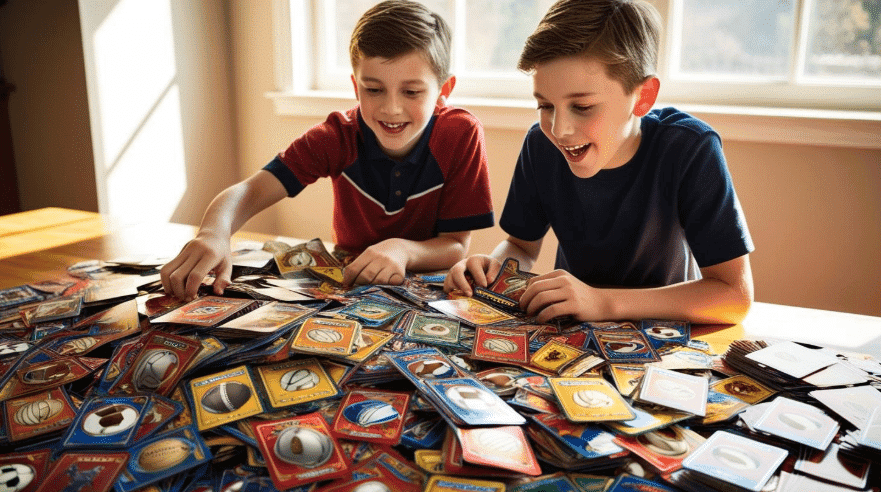
Q3: Jay has a collection of 263 football cards. His brother has 189. How many more football cards does Jay have?
Solution:
To find out how many more football cards Jay has compared to his brother, we can subtract the number of football cards his brother has from the number Jay has:
Jay's football cards - Brother's football cards = Difference
263 - 189 = 74
So, Jay has 74 more football cards than his brother.
Q4: The library is being relocated. The librarians are busy organizing the books. Three boxes filled with fiction books and two boxes filled with reference books were just delivered. If each box is filled with 120 books, how many fiction books are there?
Solution:
To find out how many fiction books there are, we first need to determine the total number of books delivered.
Three boxes filled with fiction books means there are 3 * 120 = 360 fiction books.
Two boxes filled with reference books means there are 2 * 120 = 240 reference books.
Since the question asks for the number of fiction books, the answer is 360.
Q5: There were 445 non-fiction books but 83 went missing and 45 were transferred to another library. How many non-fiction books are left?
Solution:
To find out how many non-fiction books are left after some were lost and some were transferred, we need to subtract the lost and transferred books from the initial number of non-fiction books.
Initial number of non-fiction books = 445
Lost books = 83
Transferred books = 45
Non-fiction books left = Initial number - Lost books - Transferred books
Non-fiction books left = 445 - 83 - 45
Non-fiction books left = 445 - 128
Non-fiction books left = 317
Therefore, there are 317 non-fiction books left.
Q6: There are 2,475 books in total in the library. 592 books are on loan and 137 books are missing. Out of the 592 books, 74 books are late. How many books are there in the library?
Solution:
To find the total number of books in the library, we need to subtract the number of books on loan and the number of missing books from the total number of books.
Total books in the library = Total - (Books on loan + Missing books)
= 2475 - (592 + 137)
= 2475 - 729
= 1746 books
So, there are 1746 books in the library.
Q7: It was the Crazy Sales Week at the department store. Any item that is $2,000 or more will get an instant discount of $200. People buying two pieces of clothing items gets $15 off the second item. Josh wants to buy a TV that costs $2,380 and a printer that costs $259. How much does he need to pay?
Solution:
First, let's calculate the total cost of the items before any discounts:
Cost of TV = $2,380
Cost of printer = $259
Total cost before discounts = $2,380 + $259
Total cost before discounts = $2,639
Now, let's apply the discount policy:
Since the TV costs $2,380, which is $2,000 or more, it qualifies for an instant discount of $200.
So, the new cost of the TV after the discount = $2,380 - $200 = $2,180
Since there's no discount applicable to the printer, its cost remains the same.
Now, let's calculate the final cost:
New cost of TV = $2,180
Cost of printer = $259
Total cost after discounts = $2,180 + $259
Total cost after discounts = $2,439
Therefore, Josh needs to pay $2,439 in total.
Q8: It was the Crazy Sales Week at the department store. Any item that is $2,000 or more will get an instant discount of $200. People buying two pieces of clothing items gets $15 off the second item. Sean wants to buy a laptop computer that costs $2,099, a shirt that costs $22 and a jacket that costs $136. How much does he need to pay?
Solution:
First, let's calculate the total cost of the items before any discounts:
Cost of laptop computer = $2,099
Cost of shirt = $22
Cost of jacket = $136
Total cost before discounts = $2,099 + $22 + $136
Total cost before discounts = $2,257
Now, let's apply the discounts:
Since the laptop computer costs $2,099, which is $2,000 or more, it qualifies for an instant discount of $200.
So, the new cost of the laptop computer after the discount = $2,099 - $200 = $1,899
Now, since Sean is buying two pieces of clothing items (shirt and jacket), he qualifies for the discount of $15 off the second item.
Therefore, Sean will receive a $15 discount on the jacket.
Now, let's calculate the final cost:
New cost of laptop computer = $1,899
Cost of shirt = $22
Cost of jacket after $15 discount = $136 - $15 = $121
Total cost after discounts = $1,899 + $22 + $121
Total cost after discounts = $2,042
Therefore, Sean needs to pay $2,042 in total.
Q9: On Monday, 126 laptops computer were sold. On Tuesday, 68 laptop computers were sold. On Wednesday, 283 laptop computers were sold. How many computers were sold in the three days?
Solution:
To calculate the total number of laptops sold over the three days, we'll simply add up the laptops sold on each day. On Monday: 126 laptops sold On Tuesday: 68 laptops sold On Wednesday: 283 laptops sold Total laptops sold = 126 + 68 + 283 Total laptops sold = 477 Therefore, a total of 477 laptops were sold over the three days.
Q10: Denver is musically talented, and he is earning money from his music. The latest album of a famous acoustic band sold 243 copies last week and another 482 copies this week. If there were 965 copies released, how many copies of the album remain to be sold?
Solution:
To find out how many copies of the album remain to be sold, we can subtract the total number of copies sold from the total number released.
Total copies sold = 243 (last week) + 482 (this week) = 725
Remaining copies = Total copies released - Total copies sold
Remaining copies = 965 - 725
Remaining copies = 240
Therefore, there are 240 copies of the album that remain to be sold.
FAQs on Word Problem: Addition and Subtraction - 1
1. How do I solve word problems with addition and subtraction in Class 4?
Ans. Start by reading the problem carefully, identifying what you're given and what you need to find. Underline the numbers and key words like "altogether," "left," or "more." Decide whether to add or subtract based on whether you're combining quantities or finding a difference. Then calculate and write your answer with the correct unit. Practise with visual worksheets and mind maps to strengthen this skill.
2. What's the difference between addition and subtraction word problems for CBSE Class 4 exams?
Ans. Addition word problems ask you to combine or find totals-look for words like "altogether," "total," or "in all." Subtraction word problems ask you to find what's left, remove, or compare-watch for "left," "took away," or "how many more." Understanding these signal words helps you choose the correct operation and solve accurately every time.
3. How can I tell if a word problem needs addition or subtraction when the wording is tricky?
Ans. Identify the action in the problem: if it involves combining, gaining, or putting together, use addition. If it involves removing, losing, comparing, or finding how many are left, use subtraction. Common confusion happens with comparison problems-"how many more" means subtract. Refer to flashcards listing signal words to recognise these patterns instantly during exams.
4. Why do I keep making mistakes when solving two-step word problems with addition and subtraction together?
Ans. Two-step problems require you to solve one operation first, then use that answer in the second operation. A frequent error is solving both steps simultaneously or in the wrong order. Always work step-by-step: find the first answer, then use it to solve the second part. Breaking the problem into smaller chunks prevents careless mistakes.
5. What's the best way to check my answer after solving an addition and subtraction word problem?
Ans. Reverse your operation: if you added, subtract your answer from the total to see if you get back the original number. If you subtracted, add your answer to the number you subtracted to verify it matches the original. This checking method catches calculation errors before exam submission and builds confidence in your problem-solving approach.
Previous Year Questions with Solutions, ppt, Viva Questions, Important questions, past year papers, Summary, Word Problem: Addition and Subtraction - 1, practice quizzes, Word Problem: Addition and Subtraction - 1, Extra Questions, pdf , shortcuts and tricks, study material, Objective type Questions, mock tests for examination, Free, MCQs, Sample Paper, Exam, Word Problem: Addition and Subtraction - 1, video lectures, Semester Notes;

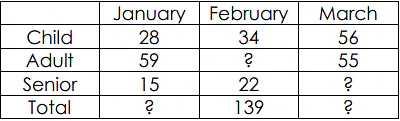 Which month had the highest number of visitors if the total visitor in 3 months are 405?