How, When and Where Class 8 Worksheet History Chapter 1
| Table of contents |

|
| Multiple Choice Questions (MCQs) |
|
| Fill in the Blanks |
|
| True/False |
|
| Match the Following |
|
| Very Short Answer Questions |
|

Multiple Choice Questions (MCQs)
Q1: Which event is associated with the year 1946 in the context of the British administration in India?
A) Establishment of the National Archives
B) The Royal Indian Navy mutiny
C) Introduction of the census
D) The first Governor-General's rule
Q2: Who published "A History of British India"?
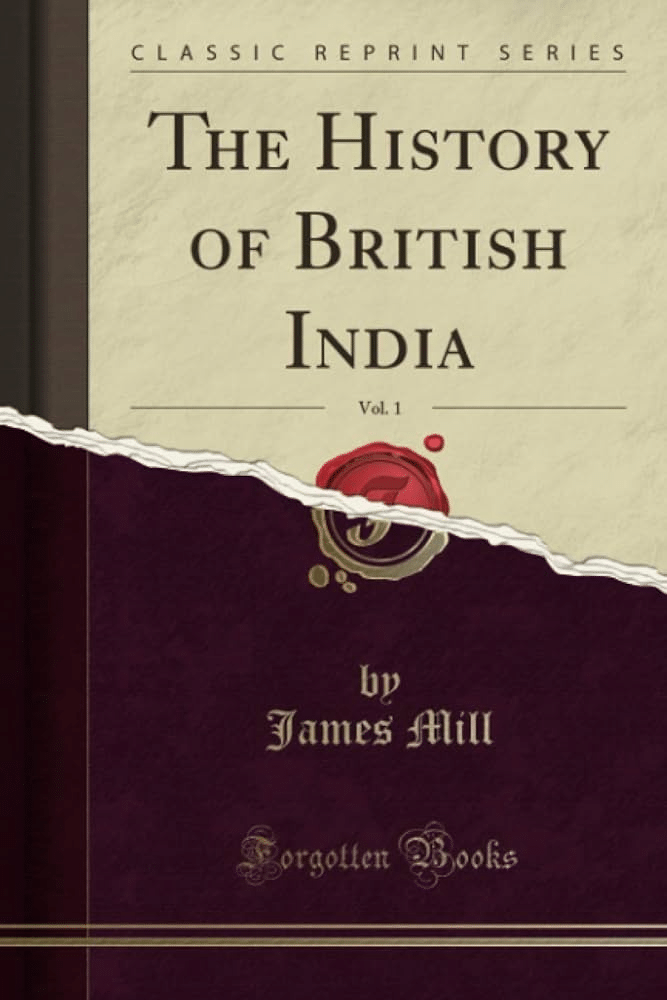
A) Warren Hastings
B) James Mill
C) Lord Mountbatten
D) Robert Clive
Q3: What was one of the significant aspects of British colonial rule?
A) Manipulating trade for their benefit.
B) Establishing control over the economy, society, and governance.
C) Exploiting resources and producing crops for export.
D) All of the above.
Q4: Why do historians question the validity of labeling historical periods solely as "Hindu" or "Muslim"?
A) Because it aligns with modern political ideologies.
B) Because such labels do not accurately reflect the complex interplay of diverse faiths and rulers' varying beliefs.
C) Because these terms were not used historically.
D) Because it simplifies history too much, making it easier for students to understand.
Fill in the Blanks
1: James Mill divided Indian history into three periods: Hindu, Muslim, and __________.
Q2: The British established __________ to preserve important records.
Q3: The __________ was a significant rebellion against British rule in 1857.
Q4: Surveys conducted by the British included __________ surveys to understand local conditions.
Q5: The term __________ is often used to describe the period of British rule in India.
True/False
Q1: Historically, history was often equated with memorizing dates related to royal coronations and battles.
Q2: James Mill's perspective on Indian history was criticized for being Western-centric and for overlooking the coexistence of diverse faiths in India.
Q3: Official records always provide a complete and unbiased view of historical events.
Q4: Colonial rule uniformly affected all classes and groups in the colonized regions.
Q5: Diaries, pilgrims' accounts, and newspapers are considered alternative historical sources that offer deeper insights into the past.
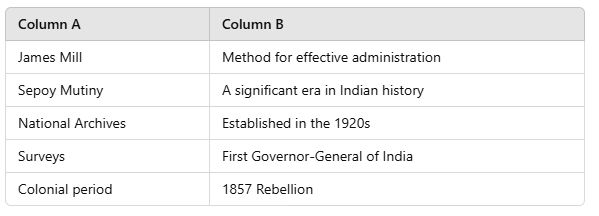
Match the Following
Very Short Answer Questions
Q1: Why do many historians refer to modern period as colonial?
Q2: When The National Archives of India came up?
Q3: Mention the events for which specific dates can be determined.
Q4: How did paintings project Governor-Generals?
Q5: What were the things that official records did not tell?
Q6: Who became the first governor general of British India?
Q7: What did James Mills think about all Asian societies?
Q8: How have historians divided Indian history?
Q9: What do you mean by the term ' colonisation'?
Q10: Who was James Mill?
Q11: Who wrote the book ‘A History of British India’?
Q12: What do you understand by history?
You can access the solutions to this worksheet here.
FAQs on How, When and Where Class 8 Worksheet History Chapter 1
| 1. What is the significance of learning about "How, When, and Where"? |  |
| 2. How can I improve my understanding of "How, When, and Where"? | |
| 3. When should I use "How, When, and Where" in my studies? | |
| 4. Where can I find more resources about this topic? | |
| 5. Why is it essential to ask these questions while studying? | |




mock tests for examination
,Sample Paper
,shortcuts and tricks
,Summary
,Important questions
,When and Where Class 8 Worksheet History Chapter 1
,video lectures
,How
,Extra Questions
,Free
,study material
,Viva Questions
,past year papers
,When and Where Class 8 Worksheet History Chapter 1
,Semester Notes
,Objective type Questions
,How
,Previous Year Questions with Solutions
,How
,Exam
,ppt
,MCQs
,practice quizzes
,When and Where Class 8 Worksheet History Chapter 1
,




Worksheet: How, When and Where Free PDF Download
Importance of Worksheet: How, When and Where
Worksheet: How, When and Where Notes
Worksheet: How, When and Where Class 8 Questions
Study Worksheet: How, When and Where on the App
|
© EduRev
|
Education Revolution
|


|




