Houses Chapter Notes | EVS for Class 2 PDF Download
| Table of contents |

|
| What is a House? |
|
| Types of Houses |
|
| Parts of a House |
|
| Different Types of Houses |
|
| Qualities of a Good House |
|

What is a House?
A house is a place where we live with our family.
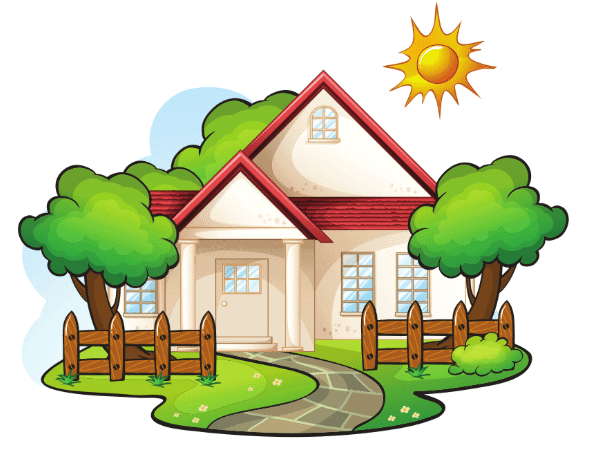 House
House
- It keeps us safe, warm, and comfortable.
- A house has rooms for sleeping, eating, and playing.
- It also has doors, windows, walls, and a roof.
- Our house protects us from rain, heat, cold, animals, and dust.
- It is our happy and safe space!
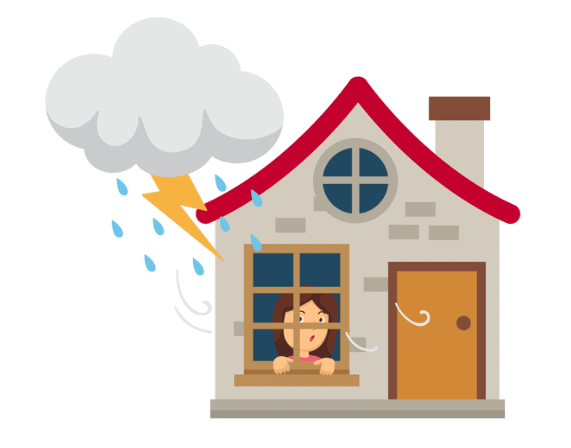 House protects us from rain
Types of Houses
Houses are of different types. Many years ago, when there were no homes, people lived in caves.
There are two types of houses:
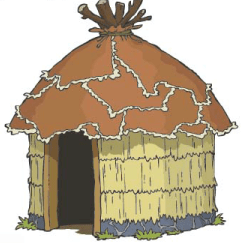
1. Kutcha houses
- They are found in some villages.
- These houses are made of straw, bamboo, mud, clay and leaves.
- These houses are not very strong.
2. Pucca houses
- They are found in cities and towns.
- These houses are made of bricks, cement, iron, steel and glass.
- They are strong.
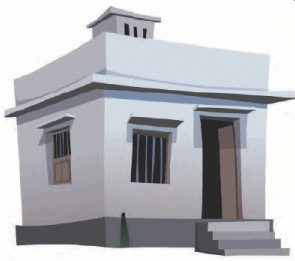 Some houses have straight roofs while some have slanting or sloping roofs. Slanting roofs do not let snow or water collect. That is why people build houses with slanting roofs in the hills.
Parts of a House
We sleep, bathe, study, eat, play and do many other activities in our houses. A house has different rooms for different activities.
1. Living Room or Drawing Room
This is the room where the family members sit together and watch television. We also receive our guests in our living room.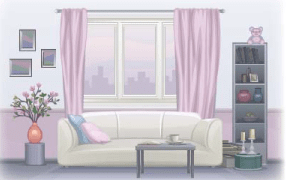
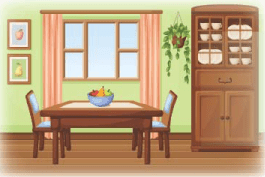
2. Dining Room
This is the room where we eat our meals.
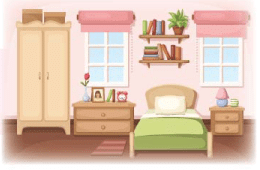
3. Bedroom
This is the room where we sleep.
4. Study Room
This is the room where we study.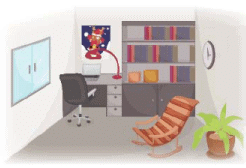
5. Kitchen
This is the room where we cook food.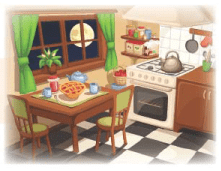
6. Bathroom
This is the room where we bathe.
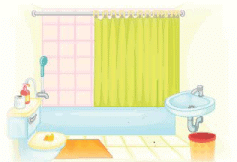
Big houses have many rooms whereas small houses have one or two rooms only.
Other things a house have:
- Windows: Every house needs windows to allow fresh air and light to come inside.
- Address: Each house has a unique name or number called an address. This address helps identify the house and includes the house number, the name of the road, the colony, and the city. People use this address to find our house.
Different Types of Houses
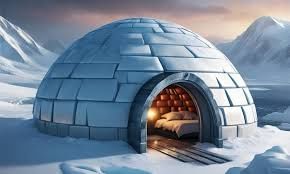
1. Igloo
- Material: Igloos are made from snow.
- Location: They are built in polar regions, where there is plenty of snow.
- Shape: Igloos have a dome-shaped design, which helps them withstand harsh weather conditions.
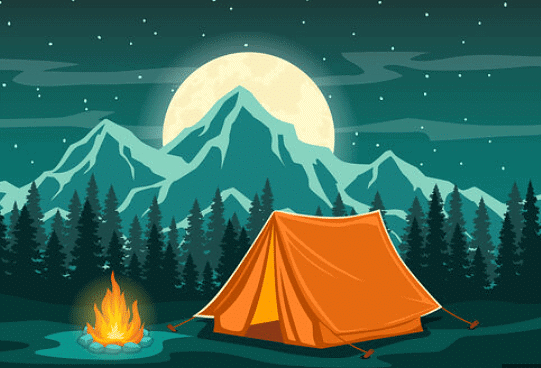
2. Tents
- Material: Tents are made from fabric.
- Location: They are mostly found in deserts, where they provide shelter from the sun and wind.
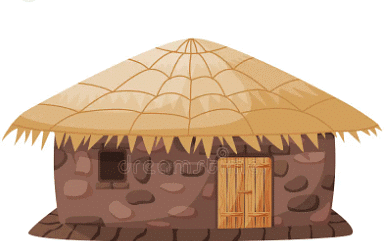
3. Mud House
- Material:Made from straws and mud
- Location: Formed mostly in villages
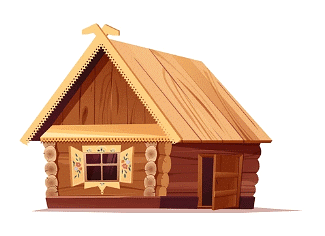
4. Huts
- Material:Formed of mud and straws
- Location: Made in villages
- Keeps temperature cool
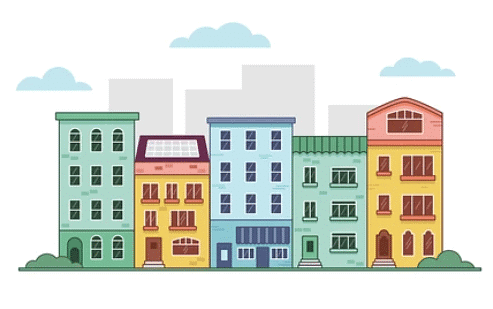
5. Apartments
- Small houses in tall buildings
- Location: Built in cities
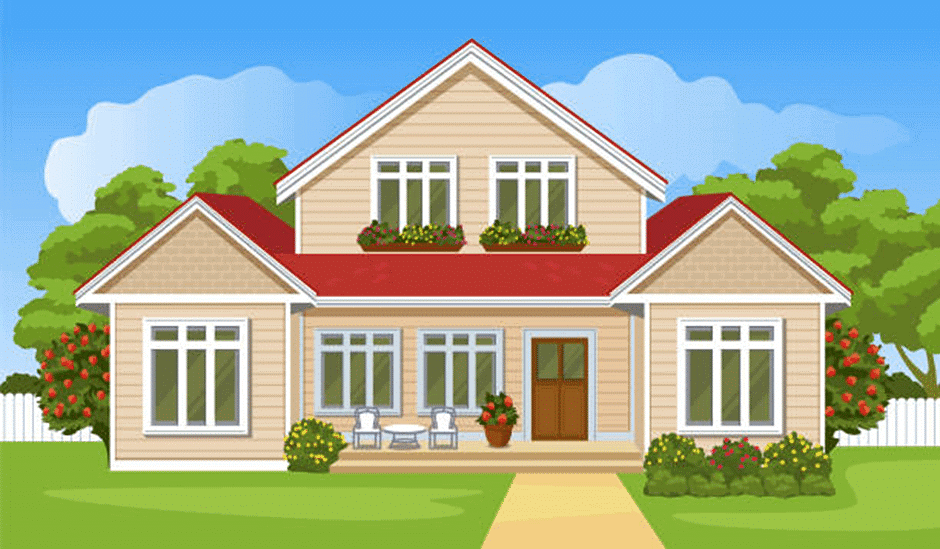
6. Bungalow
- These are big houses
- Location: Made outside cities
- Requires enough space
Qualities of a Good House
A good house is a nice place to live. It should have:
- Fresh Air – Windows let in fresh air and sunlight.
- Clean Rooms – A clean house keeps us healthy.
- Safe Doors and Walls – It should keep us safe from bad weather and animals.
- Enough Space – We need space to play, sit, and sleep comfortably.
- Everything is Working Well – Taps, doors, lights, and fans should all work properly.
|
30 videos|243 docs|48 tests
|
FAQs on Houses Chapter Notes - EVS for Class 2
| 1. What is a house? |  |
| 2. What are the different types of houses? | |
| 3. What are the main parts of a house? | |
| 4. How do houses differ based on climate? | |
| 5. Why is it important to have a good house? | |




practice quizzes
,Free
,Houses Chapter Notes | EVS for Class 2
,MCQs
,mock tests for examination
,Semester Notes
,Objective type Questions
,Exam
,Sample Paper
,Important questions
,video lectures
,study material
,shortcuts and tricks
,Extra Questions
,Summary
,Houses Chapter Notes | EVS for Class 2
,Viva Questions
,Houses Chapter Notes | EVS for Class 2
,Previous Year Questions with Solutions
,past year papers
,ppt
;




Chapter Notes: Houses Free PDF Download
Importance of Chapter Notes: Houses
Chapter Notes: Houses
Chapter Notes: Houses Class 2 Questions
Study Chapter Notes: Houses on the App
|
© EduRev
|
Education Revolution
|


|




