Freedom Class 11 Political Science
| Table of contents |

|
| Introduction |
|
| The Ideal of Freedom |
|
| What is Freedom? |
|
| Sources of Constraints |
|
| Why do we need Constraints? |
|
| Harm Principle |
|
| Negative and Positive Liberty |
|
| Conclusion |
|

Introduction
- Human history includes numerous examples of domination, enslavement, and exploitation by more powerful groups.
- However, it also showcases heroic struggles against such oppression.
- Freedom is the core of these struggles, representing the desire for individuals and communities to control their own lives and destinies.
- It involves the opportunity to express oneself freely through choices and activities.
- Both individuals and societies value their independence and seek to protect their culture and future.
The Ideal of Freedom
Before understanding the ideal of freedom, look at the following stories from around the world:
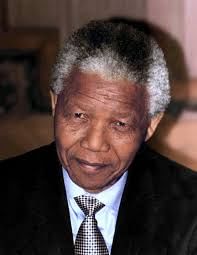
Case I: Nelson Mandela, South Africa
- Nelson Mandela's autobiography, "Long Walk to Freedom," details his personal struggle against apartheid in South Africa, highlighting the resistance against segregationist policies, the humiliations and hardships faced by black South Africans, and the constraints imposed by the apartheid regime.
- Mandela spent 27 years in jail, often in solitary confinement, giving up his youth, personal pleasures, and freedom for the ideal of removing unjust constraints and achieving freedom for all South Africans.
Case II: Aung San Suu Kyi, Myanmar
- Inspired by Gandhiji’s thoughts on non-violence, Aung San Suu Kyi remained under house arrest in Myanmar, separated from her children and unable to visit her dying husband. Her commitment to her people's freedom mirrored Mandela's dedication.
- Aung San Suu Kyi's book "Freedom from Fear" emphasizes that true freedom is freedom from fear. She believes that living a dignified human life requires overcoming fear of others' opinions, authority, community reactions, and peer ridicule.
The Ideal of Freedom
- The stories of Mandela and Aung San Suu Kyi illustrate the powerful ideal of freedom, central to national struggles in Asia and Africa against colonialism and oppression.
- These examples show that the ideal of freedom has been a driving force in the fight against injustice and for the dignity and well-being of all people.
What is Freedom?
- Freedom is defined as the absence of external constraints, allowing individuals to make independent decisions and act autonomously.
- It also involves expanding people's ability to express themselves and develop their potential, fostering creativity and capabilities.
- Both the absence of constraints and the existence of conditions for talent development are essential for a free society.
- No one can live without any constraints; hence, it is crucial to determine which social constraints are justified and acceptable.
- Discussions on freedom must examine the relationship between the individual and society to identify which features allow freedom and which do not.
- Freedom also means widening the scope for individuals, groups, communities, or nations to determine their own paths and achieve their aspirations.
- Freedom is valuable as it allows for choice-making, exercising judgement, and the full development of individual creativity, sensibilities, and capabilities.
- Determining which social constraints are necessary involves understanding the core relationship between individuals and their social groups, communities, or the state.
- It is essential to identify which features of society enable freedom and which restrict it, ensuring that necessary constraints are retained while unnecessary ones are removed.
- Freedom includes not only reducing constraints but also creating opportunities for individuals to pursue their interests in sports, science, art, music, or exploration.
- Living a dignified human life requires overcoming fear and constraints imposed by societal attitudes, authorities, and peer pressure.
- A free society is one that enables all its members to develop their potential with the minimum of social constraints, promoting collective well-being and individual growth.
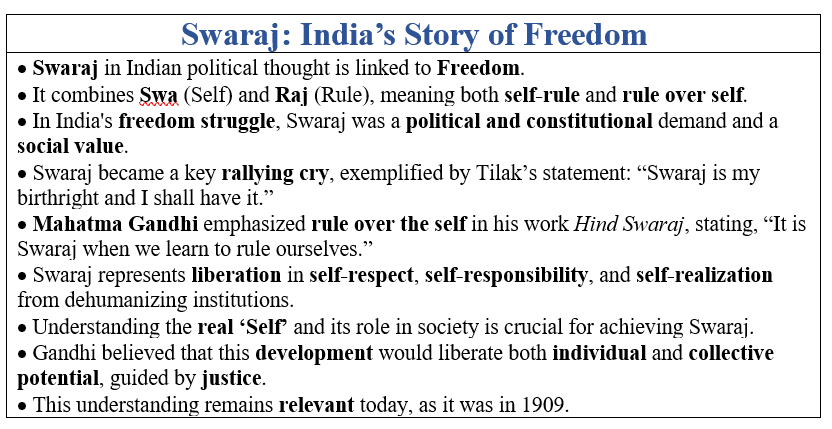 Swaraj: India's Story of Freedom
Sources of Constraints
- Restrictions on freedom may come from domination and external controls.
- Such restrictions can be imposed by force or government laws backed by force.
- Colonial rule and apartheid in South Africa exemplify these constraints.
- Democratic governments allow people to retain some control over their rulers, protecting freedom.
- Social inequality, like the caste system, and extreme economic inequality also constrain freedom.
- Subhas Chandra Bose emphasized the need to remove these constraints to achieve true freedom.
Why do we need Constraints?
- Constraints are necessary to prevent chaos in society. Without them, disagreements over ideas, opinions, and ambitions could lead to conflicts and violence.
- Differences among people in terms of ideas, ambitions, and competition for resources can lead to disagreements and conflicts. Society needs mechanisms to manage these conflicts to prevent violence and loss of life.
- Everyday conflicts over issues such as road rage, parking spaces, housing, land disputes, and film screenings highlight the need for constraints to maintain order.
- For a society to function freely with minimal constraints, individuals must respect each other's views and avoid imposing their beliefs on others.
- Even in a free society, some constraints are required to ensure respect for differences in views, opinions, and beliefs. This helps prevent conflicts and maintain social harmony.
- Legal and political restraints are essential to ensure that differences are discussed and debated civilly, without one group imposing its views on another through coercion or bullying.
- When facing bullying or harassment to conform to others' wishes, stronger legal support may be necessary to protect individual freedom.
- The critical issue is to determine which constraints on freedom are necessary and justifiable and which are not. It is important to identify the appropriate authority that can impose these constraints while allowing certain areas of life to remain free from external control.
Harm Principle
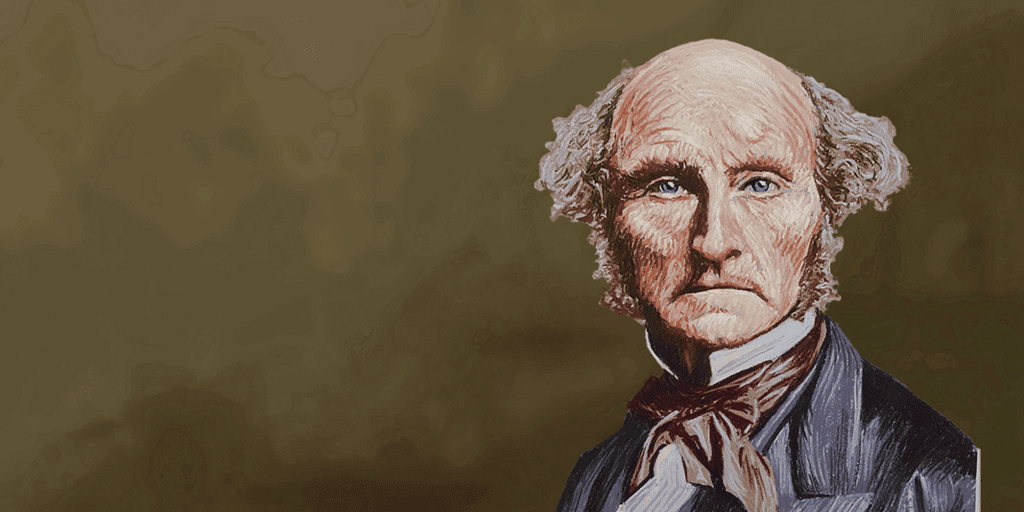
- In his essay "On Liberty," John Stuart Mill introduced the concept of the "harm principle" in political theory.
- Mill differentiated between "self-regarding" actions that affect only the individual actor and "other regarding" actions that also impact others.
- He maintained that the state or external authority should not interfere in self-regarding actions, while it may have a case for external interference in actions that may cause harm to others.
- In simpler words, the state or others shouldn't interfere in actions that only affect the person doing them. However, if those actions might harm others, then the state or others have a reason to step in.
- While freedom is crucial to human society, it should only be restricted in specific circumstances. Mill suggested that for minor harm, social disapproval should suffice rather than the force of law.
- People should tolerate different viewpoints and interests, as long as they do not harm others. However, such tolerance should not extend to views or actions that endanger people or incite hatred against them.
- In constitutional discussions in India, reasonable restrictions refer to justifiable constraints that must be capable of being defended by reason, not excessive, and proportionate to the action being restricted. Excessive restrictions could infringe on the general state of freedom in society.
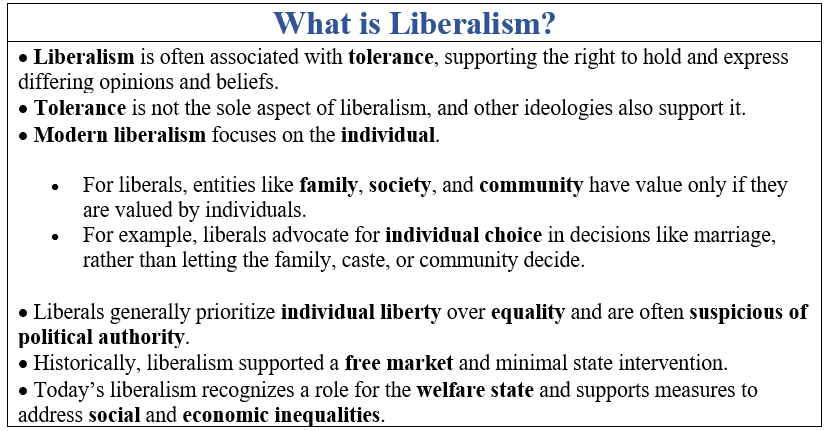 What is Liberalism?
Negative and Positive Liberty
In political theory, two types of liberty are recognized, namely negative liberty and positive liberty.
Negative Liberty:
- Negative liberty aims to define and safeguard an individual's inviolable area where they can pursue their aspirations, goals, and choices without interference from external authority.
- This area is a minimum sacred space that must be protected from any outside intervention. The negative liberty approach emphasizes an area of non-interference in which individuals can express themselves. When this area is limited, human dignity gets undermined.
- It focuses on the concept of "freedom from" interference.
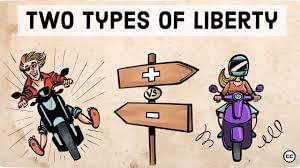
Positive Liberty:
- Positive liberty recognizes that individuals can only be free in society and aims to create a society that fosters individual development. Unlike negative liberty, it is not solely concerned with the inviolable area of non-interference but looks at the societal conditions that enable individual development.
- Positive liberty examines the nature of the relationship between the individual and society and aims to improve conditions for the development of individual personality.
- For individuals to develop their capabilities, positive conditions in the material, political, and social domains are essential.
- The idea of "freedom to" is the central argument of positive liberty.
- Generally, both negative and positive liberty complement each other, but in some cases, tyrants may use arguments of positive liberty to justify their rule.
Freedom of Expression
- Freedom of expression is considered a fundamental area of non-interference.
- J.S. Mill provided strong reasons why freedom of expression should not be restricted.
- Demands to ban books, plays, films, or academic articles have occurred at various times.
- Freedom involves making choices, distinguishing between negative and positive liberty, and justifiable constraints.
- Protecting freedom of expression may cause inconvenience but is necessary to uphold this fundamental value.
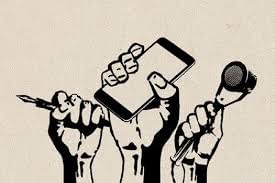
- Voltaire's statement: "I disapprove of what you say but I will defend to death your right to say it" highlights commitment to freedom of expression.
- Case of Deepa Mehta's film on widows in Varanasi faced strong protests and had to be made elsewhere.
- Banning books like Ramayana Retold by Aubrey Menon and The Satanic Verses by Salman Rushdie after protests.
- Banning films like The Last Temptation of Christ and plays like Me Nathuram Boltey due to protests.
- Banning is a short-term solution but harmful for the long-term freedom of society.
- Censorship of films is similar to banning, raising the question of when banning is justified.
- Example from England: Employees of the Royal household are constrained from writing about its inner affairs, raising questions about justifiable constraints.
- Constraints exist in different forms and situations, often backed by organized social, religious, cultural, or state authority, making them difficult to fight.
Conclusion
The stories of Nelson Mandela and Aung San Suu Kyi highlight the profound sacrifices made in the pursuit of freedom. Their narratives underscore the importance of both removing unjust constraints and creating conditions that nurture individual growth and expression. As societies evolve, it's vital to balance freedom with responsible governance, ensuring that constraints serve collective well-being while upholding fundamental human rights. Freedom remains a cornerstone in shaping equitable and just societies worldwide.
|
44 videos|387 docs|50 tests
|
FAQs on Freedom Class 11 Political Science
| 1. What is the Harm Principle in relation to the ideal of freedom? |  |
| 2. How do negative and positive liberty differ in terms of freedom? | |
| 3. Why do we need constraints on freedom according to the sources mentioned in the article? | |
| 4. What are some sources of constraints on freedom discussed in the article? | |
| 5. What is the significance of understanding the concept of freedom in the humanities and arts? | |




Freedom Class 11 Political Science
,Semester Notes
,Freedom Class 11 Political Science
,shortcuts and tricks
,practice quizzes
,Objective type Questions
,Exam
,Extra Questions
,Free
,ppt
,Previous Year Questions with Solutions
,video lectures
,Sample Paper
,mock tests for examination
,past year papers
,MCQs
,Important questions
,study material
,Summary
,Freedom Class 11 Political Science
,Viva Questions
;



Chapter Notes: Freedom Free PDF Download
Importance of Chapter Notes: Freedom
Chapter Notes: Freedom
Chapter Notes: Freedom Humanities/Arts Questions
Study Chapter Notes: Freedom on the App
|
© EduRev
|
Education Revolution
|


|




