CBSE Class 9  >  Class 9 Notes  >  Social Studies (SST)   >  Map Based Questions: Drainage

Class 9 Geography Chapter 1 Map Based Question Answers - Contemporary India - I

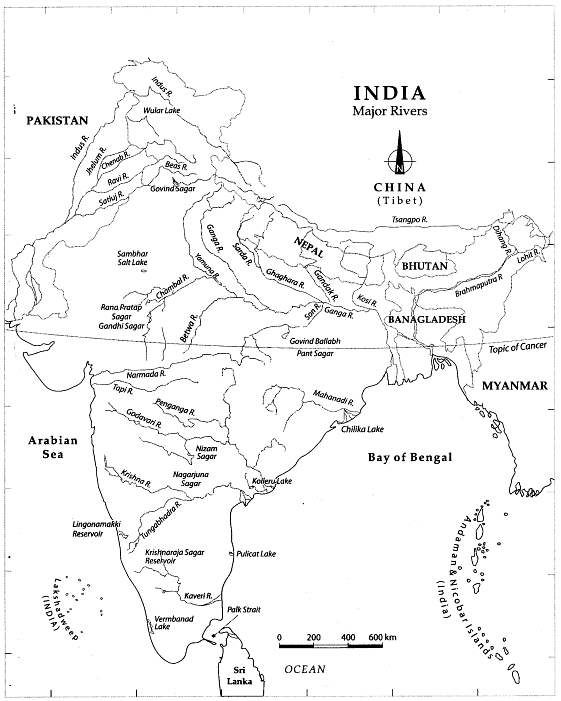
INDIA: Drainage and Lakes

This map shows various rivers that flow across the states, national capital, union territories and international boundaries. It also shows the major lakes of India.INDIA: Drainage and Lakes

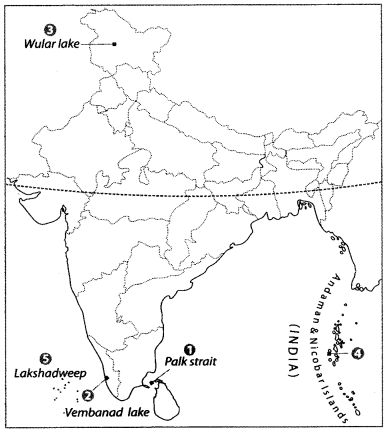
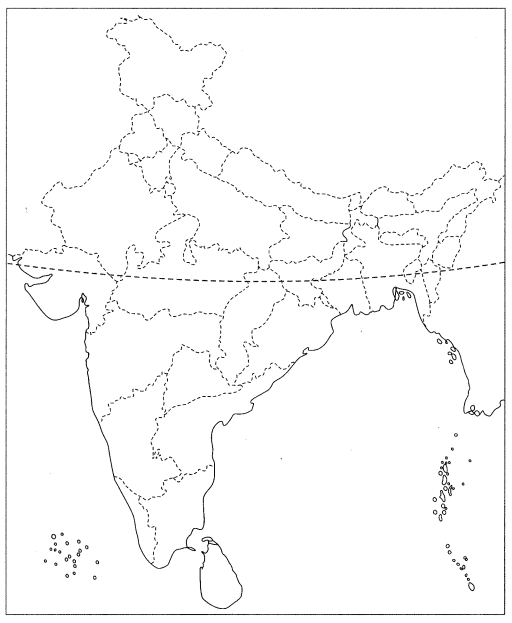
Q1: Locate and label the following items on the given map
1. The strait separating Sri Lanka and India
2. Salt water lake in Kerala
3. Largest fresh water lake in India
4. A group of islands lying East of the mainland of India
5. Islands group lying close to Malabar coast and Kerala or Islands in the South-West of the mainland of India
INDIA: Drainage and Lakes

Ans:

1. Palk Strait - The narrow strait separating south-eastern Tamil Nadu (India) and northern Sri Lanka (between Rameswaram and Jaffna).
2. Vembanad Lake - A salt-water lagoon on the Malabar coast of Kerala, the largest lake in Kerala and an important backwater system.
3. Wular Lake - The largest fresh-water lake in India, located in Jammu & Kashmir.
4. Andaman and Nicobar Islands - The group of islands lying to the east of the Indian mainland in the Bay of Bengal.
5. Lakshadweep - The group of islands off the Malabar coast in the Arabian Sea, lying to the south-west of the mainland of India.

INDIA: Drainage and Lakes

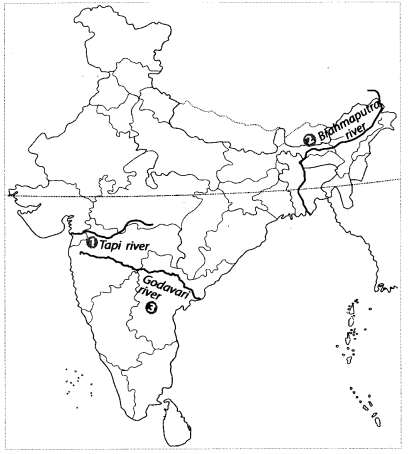
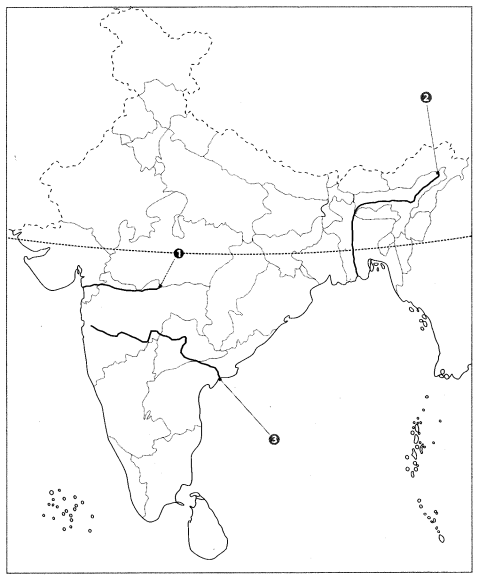
Q2: Features are marked by numbers in the given political map of India. Identify these features with the help of the following information and write their correct names on the lines marked in the map.
1. A river that rises in Betul district of Madhya Pradesh or A West flowing river.
2. The river also known as Tsangpo or The largest river of North-East India

3. The largest river of South India or A peninsular river
INDIA: Drainage and Lakes

Ans:
1. Tapi River - A west-flowing peninsular river that rises in Betul district of Madhya Pradesh and flows westwards into the Arabian Sea.
2. Brahmaputra River - Also known as Tsangpo in its upper course; it is the major river of North-East India, flowing east and then turning south and west into Bangladesh.
3. Godavari River - The largest river of peninsular (south) India, flowing eastwards across the Deccan Plateau into the Bay of Bengal.

INDIA: Drainage and Lakes


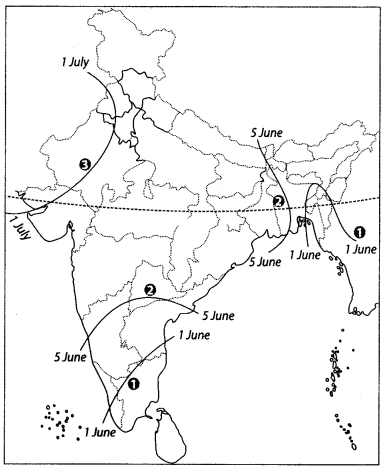
Q3: Locate and label the following items on the given map
1. A line where the time period of onset of monsoon is 1 June
2. A line where the time period of onset of monsoon is 5 June
3. A line where the time period of onset of monsoon is 1 July
INDIA: Drainage and Lakes

Ans:

INDIA: Drainage and Lakes

1. 1 June - Isochrone indicating the earliest onset along the southernmost Kerala coast.
2. 5 June - Isochrone showing the monsoon advance along parts of the west coast north of Kerala (Kerala-Karnataka/Goa region).
3. 1 July - Isochrone marking the monsoon arrival further north and east into central and northern parts of India.


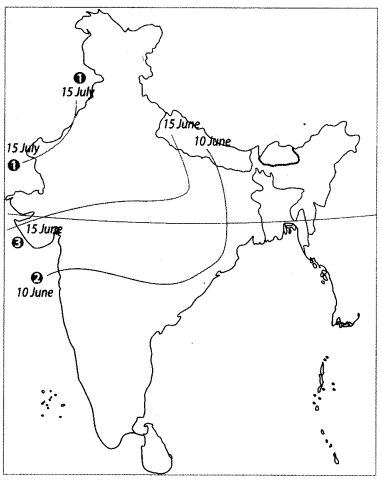
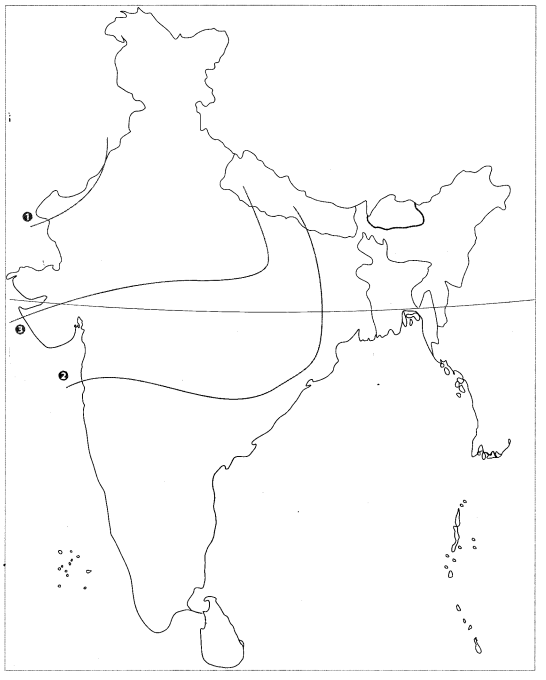
Q4: Features are marked by numbers in the given political map of India. Identify these features with the help of the following information and write their correct names on the lines marked in the map.
1. Name the date of onset of monsoon.
2. Name the date of onset of monsoon.
3. Name the date of onset of monsoon.
INDIA: Drainage and Lakes

Ans:INDIA: Drainage and Lakes

1. 15 July - Date of onset for the southernmost isochrone.
2. 10 June - Date of onset for the next isochrone to the north.
3. 15 June - Date of onset for the isochrone representing later advance into northern/central India.


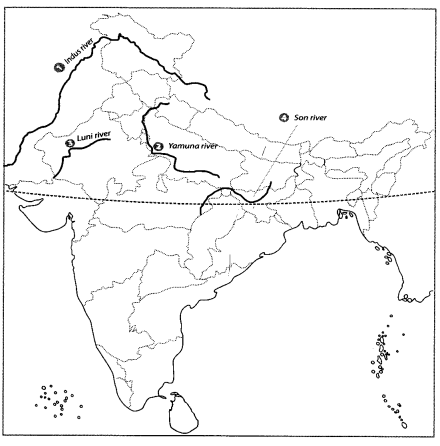
Q5: Locate and label the following items on the given map with appropriate symbols.
1. Indus river
2. Yamuna river
3. Luni river
4. Son river
INDIA: Drainage and Lakes

Ans:

INDIA: Drainage and Lakes

1. Indus River - Major river flowing from the north-west (originating near Tibet/Karakoram) and entering Pakistan; marked on the north-western part of the map.
2. Yamuna River - A major northern tributary of the Ganga, originating from the Yamunotri region and flowing south-east across Uttar Pradesh (passes close to Delhi).
3. Luni River - A west-flowing river of Rajasthan draining into the Rann of Kachchh area; marked in western India (Rajasthan region).
4. Son River - A large peninsular river rising near Amarkantak (Madhya Pradesh) and flowing eastwards to join the Ganga.

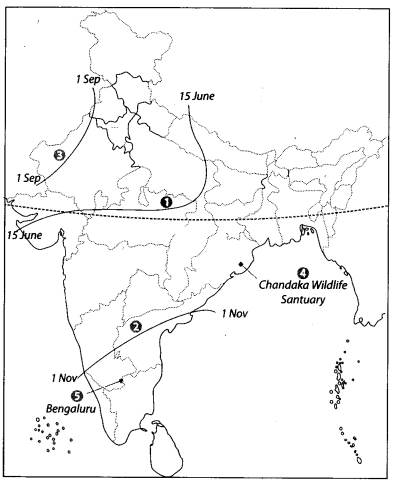
Q6: Locate and label the following items on the given map with appropriate symbols.
1. A line where the time period of onset of monsoon is 15 June.
2. A line where the time period of withdrawal of monsoon is 1 November.
3. A line where the time period of withdrawal of monsoon is 1 September.
4. Chandaka wildlife sanctuary.
5. Meteorological station Karnataka.
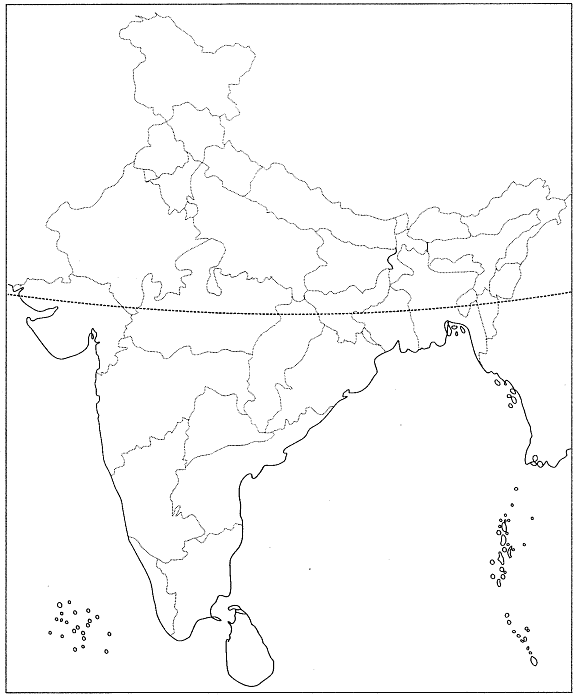
INDIA: Drainage and Lakes

Ans:

INDIA: Drainage and Lakes

1. 15 June - Isochrone showing monsoon arrival by mid-June across central India (marked on the map as the 15 June line).
2. 1 November - Line indicating the regions where monsoon withdrawal is completed by 1 November (southernmost parts).
3. 1 September - Line indicating regions where withdrawal of monsoon begins/completes by 1 September (northern/western parts).
4. Chandaka Wildlife Sanctuary - Marked near Bhubaneswar in Odisha on the map (label the sanctuary symbol at the appropriate location).
5. Meteorological Station, Karnataka - Mark the meteorological station symbol at the designated Karnataka location shown on the map.

The document Map Based Questions: Drainage is a part of the Class 9 Course Social Studies (SST) Class 9.
All you need of Class 9 at this link: Class 9
63 videos|557 docs|78 tests

FAQs on Map Based Questions: Drainage

1. What are the major river systems in India?
Ans. The major river systems in India include the Ganga, Yamuna, Brahmaputra, Indus, Godavari, Krishna, and Kaveri. Each of these rivers has significant cultural, historical, and economic importance, and they play a crucial role in the drainage system of the country.
2. How does the drainage system affect agriculture in India?
Ans. The drainage system in India significantly affects agriculture by providing essential water supply for irrigation, influencing soil fertility, and preventing waterlogging. Efficient drainage helps in maintaining the right moisture levels in the soil, which is crucial for crop yield and agricultural productivity.
3. What is the significance of lakes in India's drainage system?
Ans. Lakes in India hold ecological and hydrological significance within the drainage system. They act as natural reservoirs, help in groundwater recharge, support biodiversity, and serve as crucial sources for irrigation and drinking water. Lakes also play a role in flood control and maintaining local climate conditions.
4. What are some key features of the Ganga River system?
Ans. The Ganga River system features a vast network of tributaries, originating from the Himalayas and flowing through several states before discharging into the Bay of Bengal. It is known for its cultural and religious significance, as well as its role in agriculture and supporting millions of livelihoods along its banks.
5. What are the environmental challenges faced by India's drainage systems?
Ans. India's drainage systems face various environmental challenges, including pollution from industrial and domestic waste, encroachment on riverbanks, deforestation, and climate change impacts. These challenges threaten water quality, biodiversity, and the overall health of aquatic ecosystems, necessitating sustainable management practices.
Related Searches
Exam, Sample Paper, study material, mock tests for examination, past year papers, Important questions, Map Based Questions: Drainage, Map Based Questions: Drainage, pdf , Map Based Questions: Drainage, Extra Questions, practice quizzes, ppt, Objective type Questions, MCQs, Summary, Free, Viva Questions, video lectures, Previous Year Questions with Solutions, Semester Notes, shortcuts and tricks;