Class 9 Geography Chapter 1 Map Based Question Answers - Contemporary India - I

INDIA: Natural Vegetation
Natural vegetation in India includes Tropical Evergreen Forests, Tropical Deciduous Forests, Montane Forests, Mangrove Forests and Tropical Thorn Forests. This map shows the natural vegetation of India.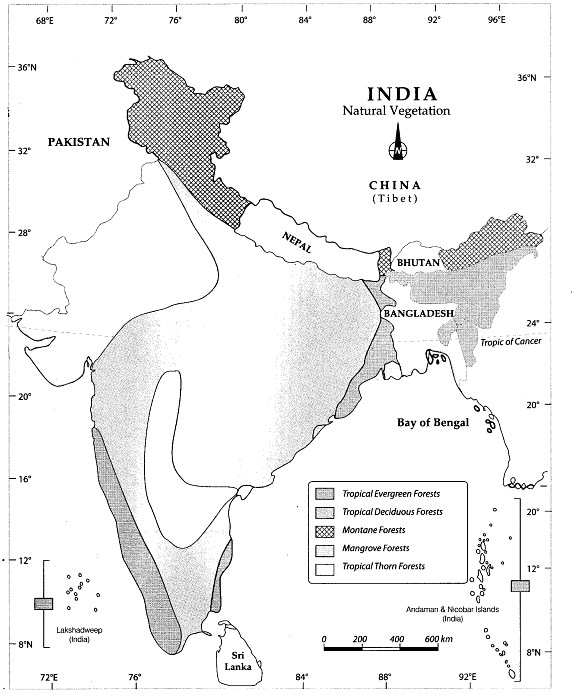
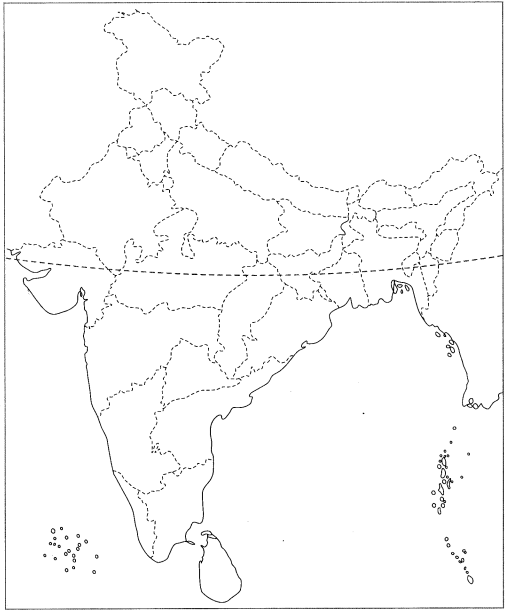
Q1: Locate and label the following items on the given map
1. Tropical Evergreen Forests
2. Montane Forests
3. Tropical Thorn Forests
Ans: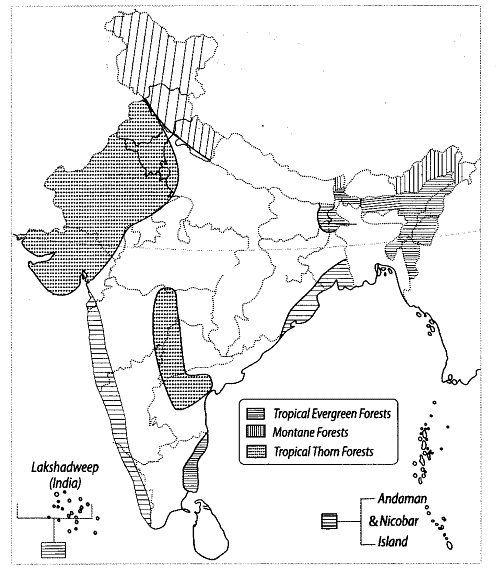
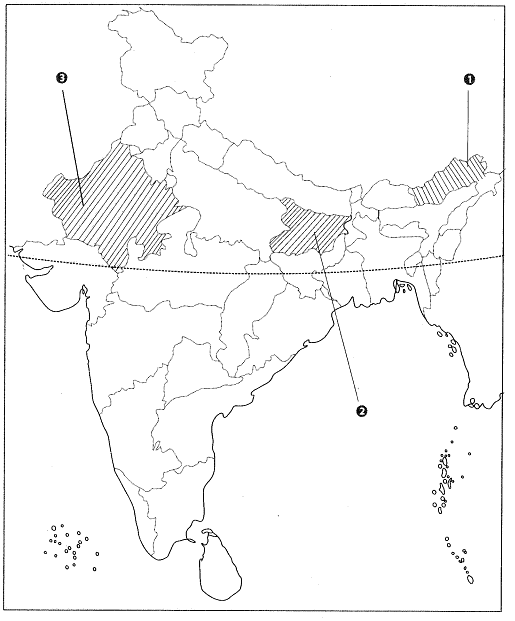
Q2: Features are marked by numbers in the given political map of India, Identify these features with the help of the following information and write their correct names on the lines marked in the map.
1. A type of vegetation
2. A type of vegetation
3. A type of vegetation
Ans: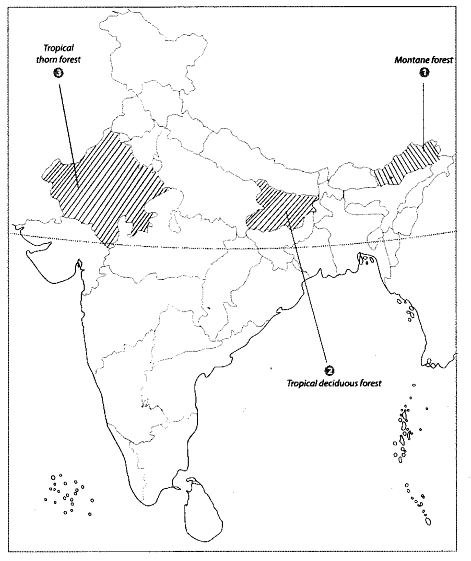
INDIA: Wildlife Sanctuaries, Bird Sanctuaries and National Parks
India is home to several fabulous wildlife sanctuaries, bird sanctuaries and national parks, which makes this country a nature lover’s paradise. The map shows the major wildlife sanctuaries, bird sanctuaries and national parks of India.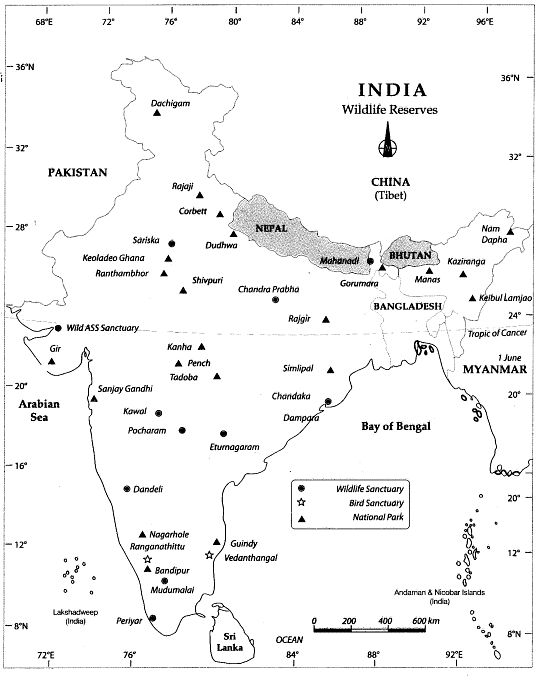
Q3: Features are marked by numbers in the given political map of India. Identify these features with the help of the following information and write their correct names on the lines marked in the map.
1. A bird sanctuary in Tamil Nadu.
2. A wildlife sanctuary in Kerala.
3. A national park in Jammu and Kashmir.
4. A wildlife sanctuary in Rajasthan.
5. A national park in Asom.
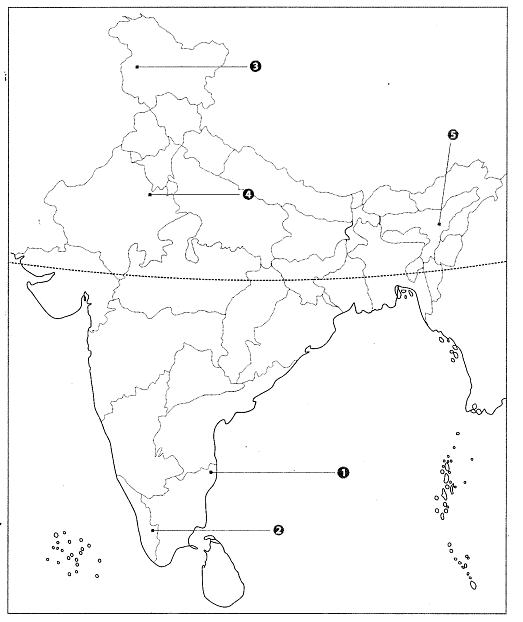
Ans:
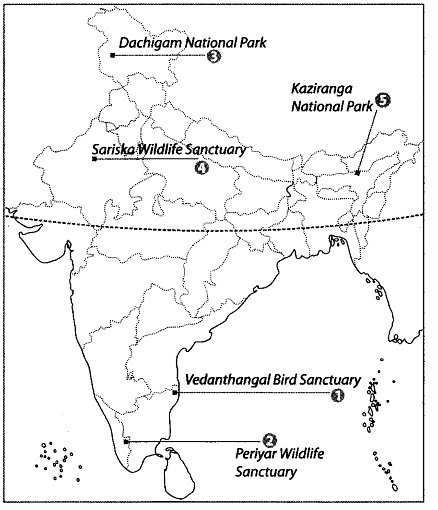
1. Vedanthangal Bird Sanctuary
2. Periyar Wildkfe Sanctuary
3. Dachigam National Park
4. Sariska Wildlife Sanctuary
5. Kaziranga National Park
Q4: Locate and label the following items on the given map
1. Ranganathittu Bird Sanctuary.
2. Mudumalai Wildlife Sanctuary.
3. Rajaji National Park
4. Bandipur National Park.
5. Sunderban National Park.
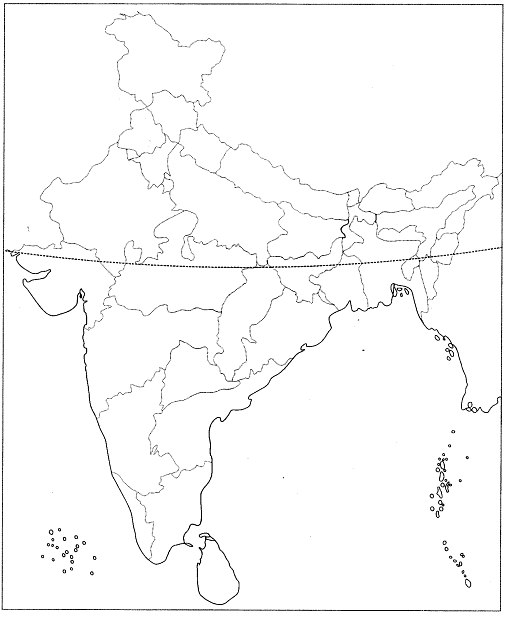
Ans: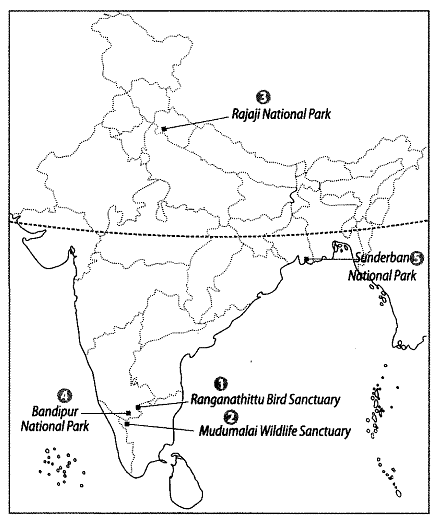
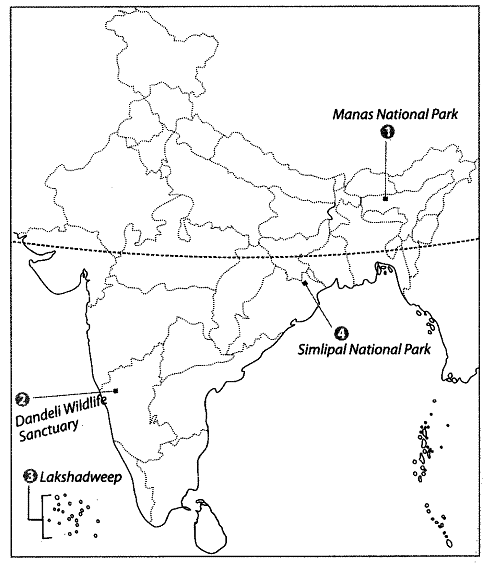
Q5: Features are Marked by numbers in the political map of India. Identify these features with the help oÍ the following information and write their correct names on the lines marked in the map.
1. A National Park.
2. A Wildlife Sanctuary.
3. The least populous Linion Territory of India.
4. National Park in Odisha.
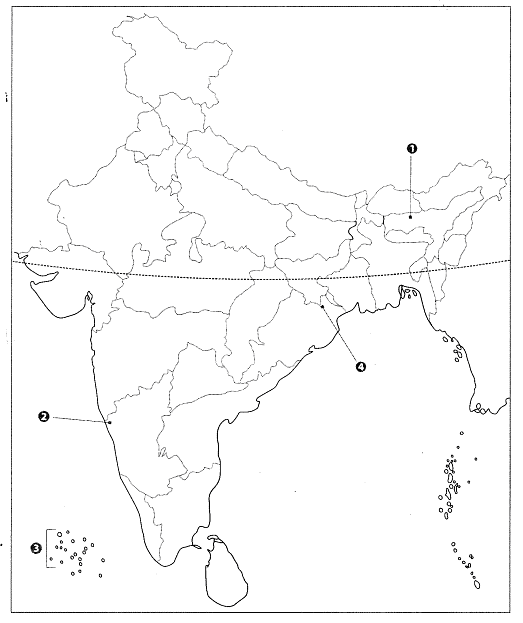
Ans:
Q6: Locate and label the following items on the given map with appropriate symbols.
1. The State having the highest literacy rate.
2. Shivpuri National Park
3. The State having the lowest literacy rate
4. Kanha National Park
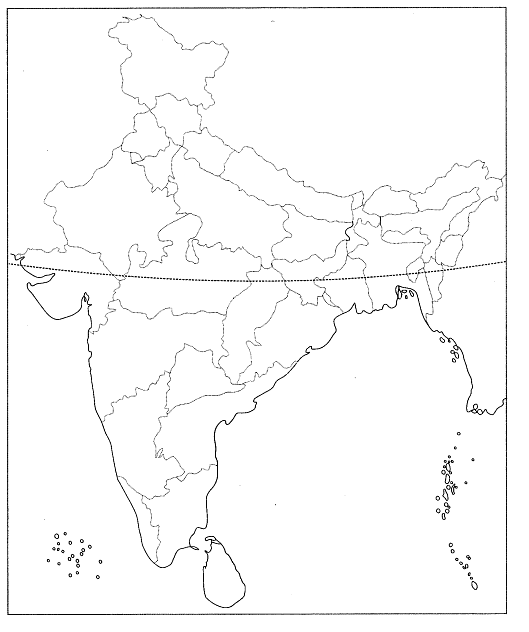
Ans: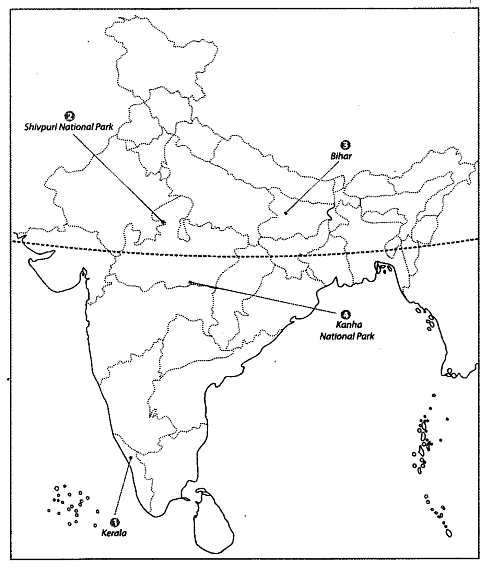
|
55 videos|637 docs|79 tests
|




video lectures
,Previous Year Questions with Solutions
,practice quizzes
,MCQs
,past year papers
,Exam
,Semester Notes
,Viva Questions
,Free
,mock tests for examination
,Class 9 Geography Chapter 1 Map Based Question Answers - Contemporary India - I
,Class 9 Geography Chapter 1 Map Based Question Answers - Contemporary India - I
,ppt
,Important questions
,Sample Paper
,shortcuts and tricks
,Class 9 Geography Chapter 1 Map Based Question Answers - Contemporary India - I
,Summary
,study material
,Extra Questions
,Objective type Questions
;



Map Based Questions: Natural Vegetation and Wildlife Free PDF Download
Importance of Map Based Questions: Natural Vegetation and Wildlife
Map Based Questions: Natural Vegetation and Wildlife Notes
Map Based Questions: Natural Vegetation and Wildlife Class 9
Study Map Based Questions: Natural Vegetation and Wildlife on the App
|
© EduRev
|
Education Revolution
|


|




