Worksheet Solutions: Rocks And Minerals - 2

Q1: Rewrite these sentences correctly.
(i) People who study rocks and minerals are called gemologist.
Ans: People who study rocks and minerals are called geologists.
(ii) Igneous rocks are formed when pressure and temperature are applied on metamorphic rocks.
Ans: Metamorphic rocks are formed when pressure and temperature are applied to igneous and sedimentary rocks.
(iii) Sedimentary rocks are formed from little pieces of igneous rocks.
Ans: Sedimentary rocks are formed from little pieces of rock that are broken down and worn away by wind and water.
(iv) All minerals are made of rocks.
Ans: Rocks are made of minerals.
Q2: Choose the odd one.
(i) Igneous, sand, sedimentary, metamorphic
Ans: Sand
(ii) Marble, basalt, obsidian, Pumice
Ans: Marble
(iii) Marble, slate, quartzite, conglomerate
Ans: Conglomerate
(iv) Conglomerate, slate, shale, limestone
Ans: Slate
(v) Gemstones, magnetite, graphite, sandstone
Ans: Sandstone
Q3: Give one word answer.
(i) Rocks are made of this
Ans: Minerals
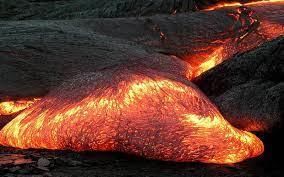
(ii) These are also called fire rocks
Ans: Igneous rocks
(iii) Talcum powder is made from this
Ans: Talc
(iv) Metals are obtained from rocks called this
Ans: Ores
Q4: Short Answer Questions.
(i) Name the three types of rocks.
Ans: The three types of rocks are:
- Igneous rock
- Sedimentary rock
- Metamorphic rock
(ii) What are minerals? Give two examples.
Ans: Minerals are naturally occurring substances found in the Earth's crust. Examples - silica and talc.
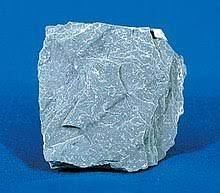
(iii) Which rock is used to make blackboards and roof tiles?
Ans: Slate rocks are used to make blackboards and roof tiles.
(iv) Give two examples of each of the following.
Ans:
- Igneous rocks - Granite, Pumice
- Metamorphic rocks - Marble, Slate
- Sedimentary rocks - Shale, Sandstone
Q5: Long Answer Questions.
(i) How are igneous rocks formed?
Ans: Igneous rocks are formed when molten rock (magma or lava) cools and becomes solid. If magma cools slowly beneath the Earth's surface, larger crystals may form; if lava cools quickly on the surface, the crystals are small or may not be visible.
(ii) Briefly describe how sedimentary rocks are formed.
Ans: Sedimentary rocks are formed by the deposition of layers of small particles such as sand, mud and clay. These particles are carried by wind, water or ice and settle in layers. Over long periods, the layers are pressed and cemented together to form solid rock.
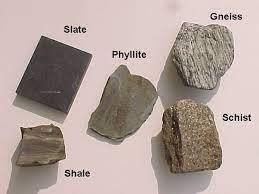
(iii) Differentiate between shale and slate.
Ans:
Shale
- Shale is a sedimentary rock made from the deposition of mud and clay.
- It is used in making tiles and bricks.
Slate
- Slate is a metamorphic rock formed from shale when heat and pressure change its structure.
- It is used to make blackboards and roof tiles.
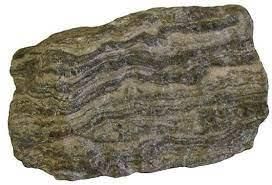
(iv) How are metamorphic rocks formed?
Ans: Metamorphic rocks are formed from igneous or sedimentary rocks when they are changed by heat and pressure inside the Earth. These conditions alter the minerals and texture of the original rock to make a new, harder rock.
(v) Write one use each of any three minerals.
Ans: The various uses of minerals are -
- Potassium and nitrate minerals - used in making fertilisers to keep soil fertile.
- Coal - used as a fuel for cooking and to generate electricity.
- Gemstones - used to make jewellery. Example - Diamond and Ruby.
FAQs on Worksheet Solutions: Rocks And Minerals - 2
| 1. What are the different types of rocks? |  |
| 2. How are rocks and minerals related? | |
| 3. What is the rock cycle? | |
| 4. How can rocks be used as natural resources? | |
| 5. How can we identify minerals and rocks? | |