IGCSE Class 10 > Class 10 Notes > Biology for GCSE/ > Coronary Heart Disease
Coronary Heart Disease

Coronary Heart Disease
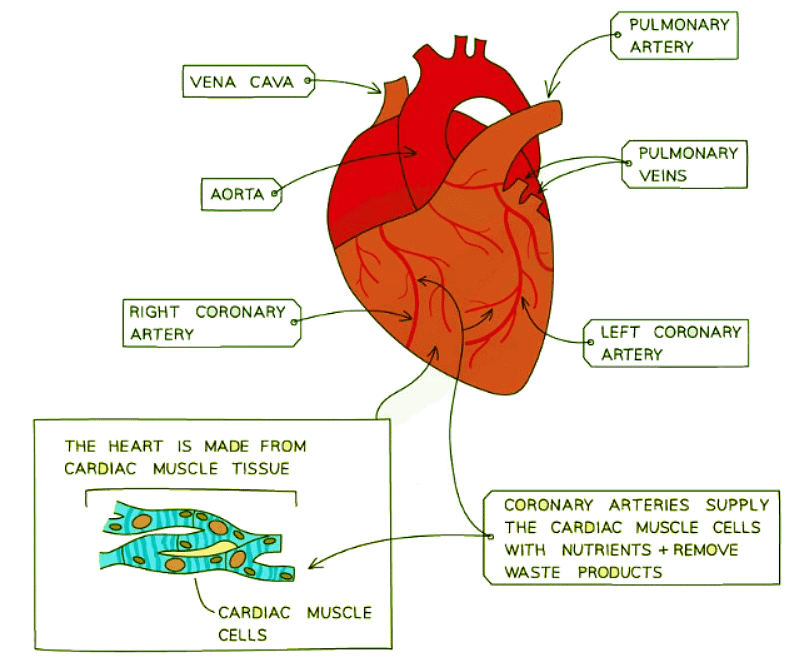 The coronary arteries
- The heart muscle, like all tissues, requires its own supply of oxygen, glucose, and nutrients, and the removal of waste products such as carbon dioxide.
- This supply is delivered by the coronary arteries, which branch off from the aorta.
- When fatty deposits, known as plaques, partially or fully obstruct these arteries, they lose their elasticity and cannot adequately accommodate blood flow, a condition known as coronary artery disease.
- Partial blockages reduce blood flow to the heart muscle cells, resulting in angina, characterized by severe chest pain.
- Complete blockages prevent oxygen from reaching the affected heart muscle cells, leading to cell death and potentially causing a heart attack.
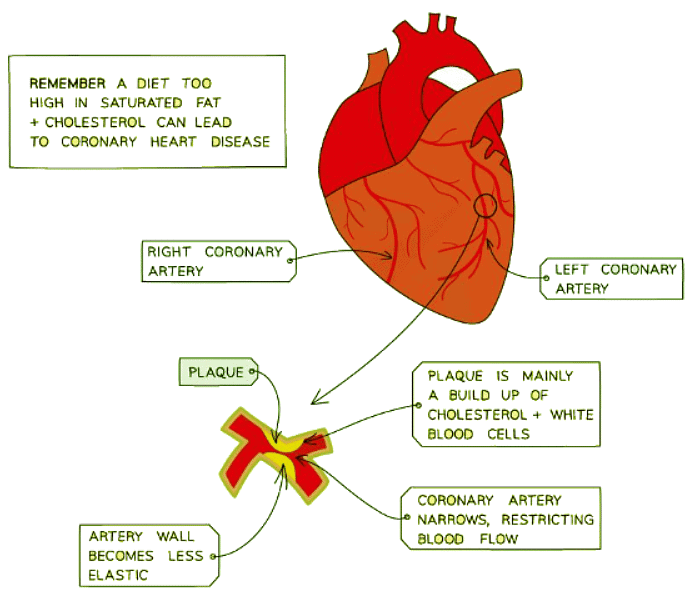 Buildup of plaque in the coronary arteries
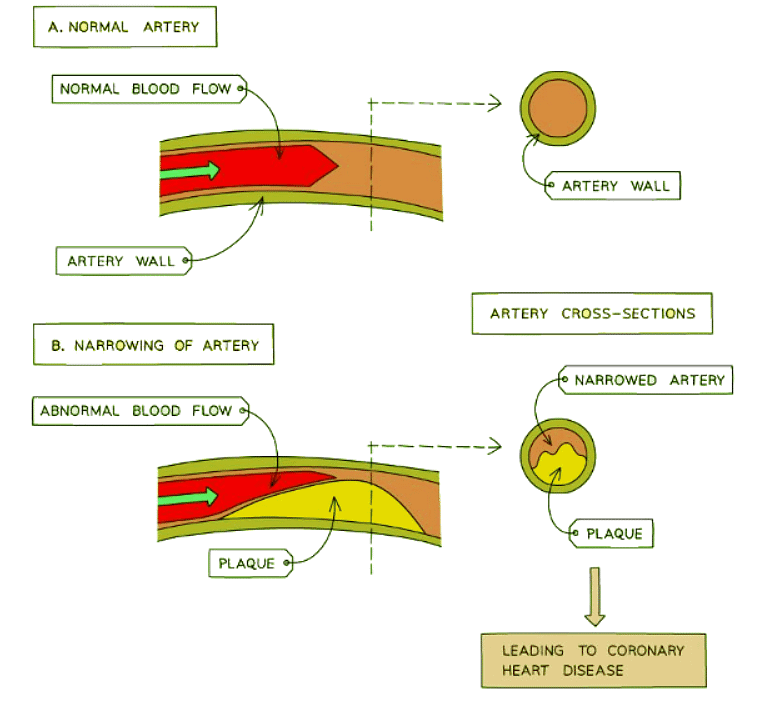 Effect of narrowing of arteries
Risk Factors for CHD Table
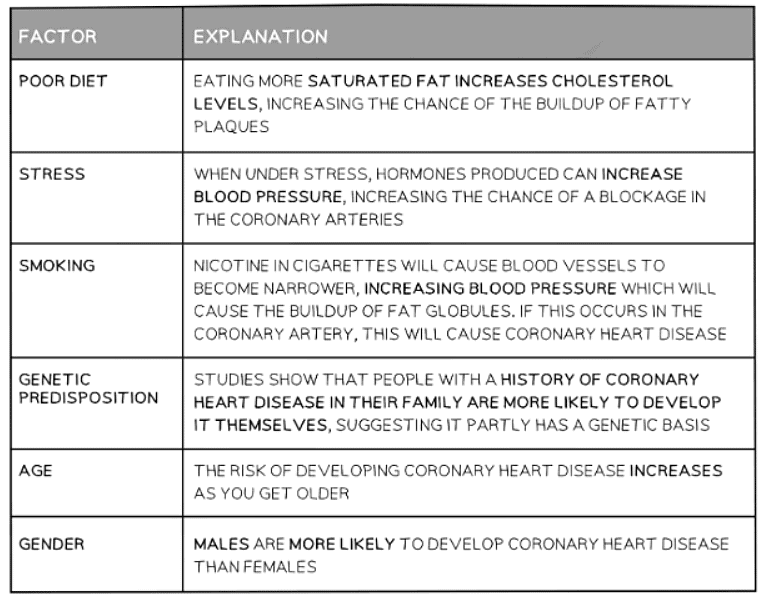
Diet, Exercise & Coronary Heart Disease
Reducing the risks of developing coronary heart disease:
- Stop smoking: This action is crucial for reducing the risk of coronary heart disease. Smoking cessation helps lower cholesterol levels, promotes weight loss, and improves overall cardiovascular health.
- Healthy diet: Opt for a diet low in animal fats and rich in fruits and vegetables. By making these dietary choices, you can effectively manage cholesterol levels, control weight, and reduce the likelihood of heart problems.
- Regular exercise: Engaging in physical activity on a consistent basis is beneficial for weight management, blood pressure regulation, cholesterol control, and stress reduction. These factors play a significant role in preventing coronary heart disease.
MULTIPLE CHOICE QUESTIONTry yourself: What is the main cause of coronary artery disease?
The document Coronary Heart Disease is a part of the Class 10 Course Biology for GCSE/IGCSE.
All you need of Class 10 at this link: Class 10
FAQs on Coronary Heart Disease
| 1. How does diet impact the risk of developing Coronary Heart Disease? |  |
Ans. Diet plays a crucial role in the development of Coronary Heart Disease. Consuming a diet high in saturated fats, trans fats, cholesterol, and sodium can increase the risk of developing the disease. On the other hand, a diet rich in fruits, vegetables, whole grains, and lean proteins can help lower the risk of Coronary Heart Disease.
| 2. What types of exercises are beneficial for preventing Coronary Heart Disease? | |
Ans. Regular physical activity is essential for preventing Coronary Heart Disease. Aerobic exercises such as walking, jogging, cycling, and swimming are particularly beneficial for improving heart health and reducing the risk of developing the disease. Strength training exercises can also help improve overall cardiovascular fitness.
| 3. How much exercise is recommended to reduce the risk of Coronary Heart Disease? | |
Ans. The American Heart Association recommends at least 150 minutes of moderate-intensity aerobic exercise or 75 minutes of vigorous-intensity aerobic exercise per week to reduce the risk of Coronary Heart Disease. This can be broken down into 30 minutes of exercise on most days of the week.
| 4. Can Coronary Heart Disease be reversed with diet and exercise alone? | |
Ans. While diet and exercise play a crucial role in preventing Coronary Heart Disease and improving heart health, the disease itself cannot be completely reversed with diet and exercise alone. However, making healthy lifestyle choices can help manage the disease, improve symptoms, and reduce the risk of complications.
| 5. How does stress management play a role in preventing Coronary Heart Disease? | |
Ans. Stress can have a significant impact on heart health and increase the risk of developing Coronary Heart Disease. Managing stress through techniques such as meditation, deep breathing exercises, yoga, and mindfulness can help reduce the risk of the disease. Prioritizing mental health and well-being is essential for overall heart health.
About this Document

4.80/5 Rating

Apr 29, 2026 Last updated
Related Exams
Document Description: Coronary Heart Disease for Class 10 2026 is part of Biology for GCSE/IGCSE preparation. The notes and questions for Coronary Heart Disease have been prepared according to the Class 10 exam syllabus. Information about Coronary Heart Disease covers topics like and Coronary Heart Disease Example, for Class 10 2026 Exam. Find important definitions, questions, notes, meanings, examples, exercises and tests below for Coronary Heart Disease.
Introduction of Coronary Heart Disease in English is available as part of our Biology for GCSE/IGCSE for Class 10 & Coronary Heart Disease in Hindi for Biology for GCSE/IGCSE course. Download more important topics related with notes, lectures and mock test series for Class 10 Exam by signing up for free. Class 10: Coronary Heart Disease
Description
Coronary Heart Disease of Biology covers all the important topics, helping you prepare for the Class 10 exam on EduRev. Start for free!
Information about Coronary Heart Disease
In this doc you can find the meaning of Coronary Heart Disease defined & explained in the simplest way possible. Besides explaining types of Coronary Heart Disease theory, EduRev gives you an ample number of questions to practice Coronary Heart Disease tests, examples and also practice Class 10 tests



Related Searches
Coronary Heart Disease, past year papers, Summary, Exam, Viva Questions, pdf , ppt, study material, Important questions, Objective type Questions, Free, Sample Paper, Semester Notes, Extra Questions, practice quizzes, mock tests for examination, MCQs, Coronary Heart Disease, shortcuts and tricks, video lectures, Previous Year Questions with Solutions, Coronary Heart Disease;