IGCSE Class 10 > Class 10 Notes > Biology for GCSE/ > Sexually Transmitted Infections
Sexually Transmitted Infections

STIs & HIV/AIDS
- Unprotected sexual intercourse can result in the transmission of pathogens through the exchange of body fluids.
- Infections that are transmitted in this manner are referred to as sexually transmitted infections (STIs).
- An illustration of an STI is HIV (Human Immunodeficiency Virus), the virus which typically leads to the progression of acquired immunodeficiency disease (AIDS).
- HIV has the potential to spread through activities such as sharing needles with an infected individual, receiving blood transfusions containing infected blood, and from a mother to her fetus through the placenta and from mother to baby through breastfeeding.
How HIV Affects the Immune System
- Immediately after contracting HIV, individuals may experience mild flu-like symptoms.
- These initial symptoms subside, and infected individuals might remain unaware of their infection for a period.
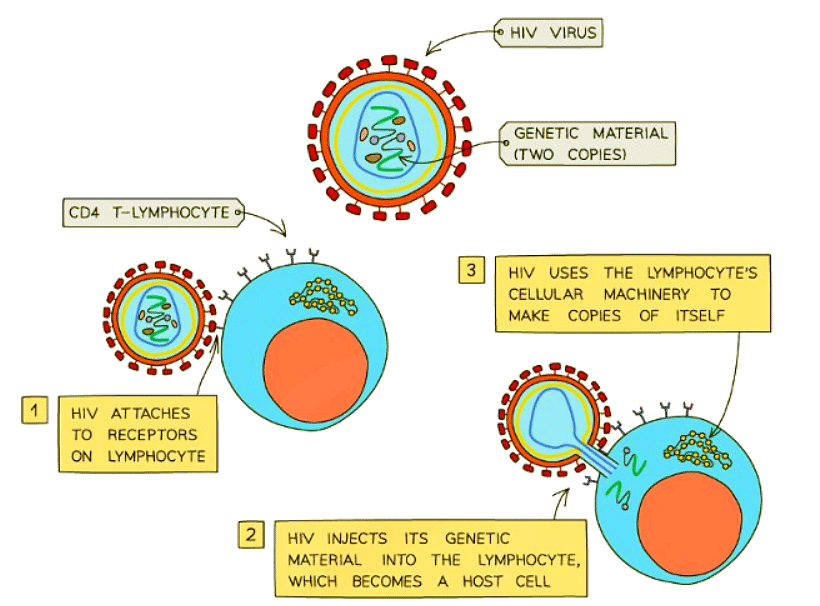
- HIV targets a specific type of white blood cell called lymphocytes, which are crucial for the immune system's functioning.
- Ordinarily, lymphocytes identify and eliminate invading pathogens, generating antibodies that aid in pathogen destruction and enhance immune response.
- HIV evades detection and destruction by lymphocytes through frequent mutations in its outer protein coat.
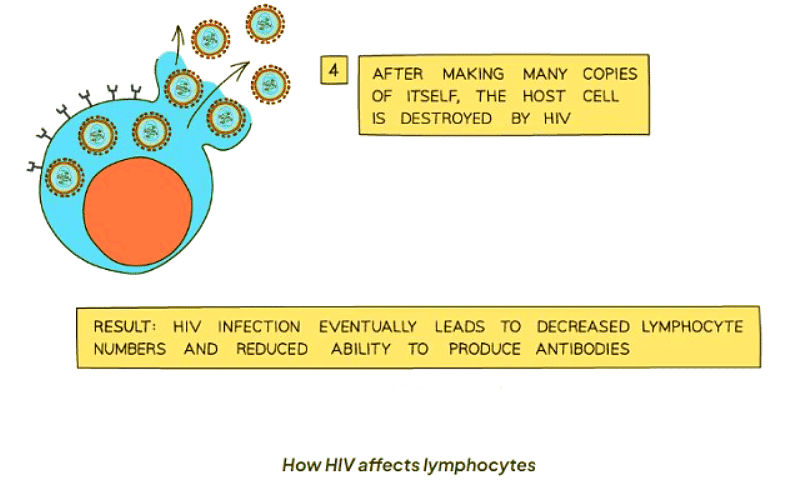
- Upon infecting lymphocytes, HIV hijacks the cells' machinery to replicate itself.
- This replication process diminishes the count of lymphocytes and reduces the production of antibodies.
- As a result, the body's capacity to combat infections diminishes over time, eventually progressing to AIDS (Acquired Immunodeficiency Syndrome).
Controlling the Spread of STIs
Sexually transmitted infections (STIs) like HIV can be managed by implementing the following strategies:
- Limiting Sexual Partners: Encouraging individuals to have a smaller number of sexual partners reduces the risk of STI transmission.
- Practicing Safe Sex: Using condoms during sexual activity helps prevent the spread of STIs, including HIV.
- Regular Testing: Individuals engaging in unprotected sex or having multiple partners should undergo regular STI testing to detect infections early.
- Educational Programs: Increasing awareness through educational initiatives helps promote safe sexual practices and STI prevention.
MULTIPLE CHOICE QUESTIONTry yourself: How does HIV affect the immune system?
The document Sexually Transmitted Infections is a part of the Class 10 Course Biology for GCSE/IGCSE.
All you need of Class 10 at this link: Class 10
FAQs on Sexually Transmitted Infections
| 1. How does HIV affect the immune system? |  |
Ans. HIV attacks the immune system by targeting CD4 cells, which are crucial for fighting off infections. As the virus replicates and destroys these cells, the immune system becomes weakened, making the body more susceptible to infections and diseases.
| 2. What are some common ways to control the spread of STIs? | |
Ans. Some common ways to control the spread of STIs include practicing safe sex by using condoms, getting tested regularly, and communicating openly with sexual partners about STI status. It is also important to avoid sharing needles and to limit the number of sexual partners.
| 3. How can individuals protect themselves from contracting STIs? | |
Ans. Individuals can protect themselves from contracting STIs by practicing safe sex, getting vaccinated for certain infections like HPV and hepatitis B, and avoiding high-risk behaviors such as unprotected intercourse and sharing needles. Regular testing and open communication with partners are also key in prevention.
| 4. What are some of the symptoms of STIs that individuals should be aware of? | |
Ans. Some common symptoms of STIs include unusual discharge, pain or burning during urination, genital sores or blisters, itching or irritation in the genital area, and flu-like symptoms such as fever and fatigue. It is important to seek medical attention if any of these symptoms occur.
| 5. How can someone living with HIV/AIDS manage their condition and maintain their health? | |
Ans. Someone living with HIV/AIDS can manage their condition by taking antiretroviral therapy (ART) as prescribed by a healthcare provider, attending regular medical check-ups, maintaining a healthy lifestyle through exercise and proper nutrition, and seeking support from healthcare professionals and support groups.
About this Document

4.85/5 Rating

Apr 29, 2026 Last updated
Related Exams
Document Description: Sexually Transmitted Infections for Class 10 2026 is part of Biology for GCSE/IGCSE preparation. The notes and questions for Sexually Transmitted Infections have been prepared according to the Class 10 exam syllabus. Information about Sexually Transmitted Infections covers topics like and Sexually Transmitted Infections Example, for Class 10 2026 Exam. Find important definitions, questions, notes, meanings, examples, exercises and tests below for Sexually Transmitted Infections.
Introduction of Sexually Transmitted Infections in English is available as part of our Biology for GCSE/IGCSE for Class 10 & Sexually Transmitted Infections in Hindi for Biology for GCSE/IGCSE course. Download more important topics related with notes, lectures and mock test series for Class 10 Exam by signing up for free. Class 10: Sexually Transmitted Infections
Description
Sexually Transmitted Infections of Biology covers all the important topics, helping you prepare for the Class 10 exam on EduRev. Start for free!
Information about Sexually Transmitted Infections
In this doc you can find the meaning of Sexually Transmitted Infections defined & explained in the simplest way possible. Besides explaining types of Sexually Transmitted Infections theory, EduRev gives you an ample number of questions to practice Sexually Transmitted Infections tests, examples and also practice Class 10 tests



Related Searches
mock tests for examination, Free, pdf , Objective type Questions, past year papers, Sexually Transmitted Infections, Previous Year Questions with Solutions, Viva Questions, Semester Notes, MCQs, study material, shortcuts and tricks, ppt, Sexually Transmitted Infections, Extra Questions, Exam, Sexually Transmitted Infections, Sample Paper, video lectures, Summary, Important questions, practice quizzes;