IGCSE Year 10 > Year 10 Notes > Chemistry for GCSE/ > Proteins
Proteins

Proteins
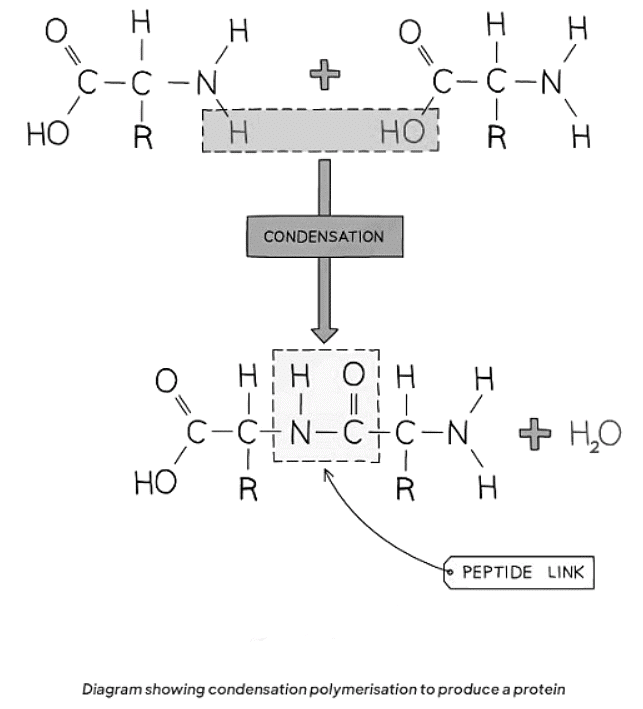
- Proteins are condensation polymers that arise from amino acid monomers linked by amide bonds, also termed peptide links in proteins, resembling the arrangement found in nylon.
- While the structure resembles nylon, the constituents in proteins vary, comprising amino acids.
- Amino acids are diminutive molecules featuring NH2 and COOH functional groups.
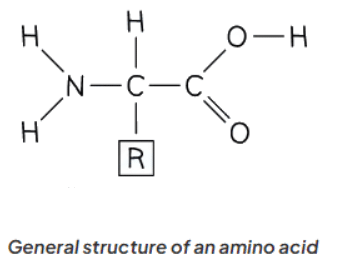
- There exist twenty prevalent amino acids, each distinguished by their side chain denoted as R.
- Proteins can encompass varying sequences of these amino acids, ranging from 60 to 600 in number.
- These amino acids serve as the monomers that undergo polymerization to construct the protein structure.
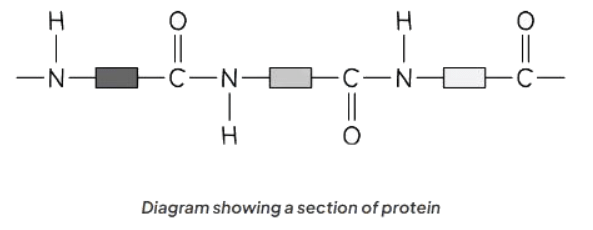
- The diagram depicts the structure of proteins, with carbon chains represented by boxes.
MULTIPLE CHOICE QUESTIONTry yourself: How are proteins formed?
The document Proteins is a part of the Year 10 Course Chemistry for GCSE/IGCSE.
All you need of Year 10 at this link: Year 10
FAQs on Proteins
| 1. What are proteins and why are they important for the body? |  |
Ans. Proteins are large molecules made up of amino acids that are essential for the growth, repair, and maintenance of tissues in the body. They play a crucial role in various bodily functions, including enzyme activity, immune response, and muscle development.
| 2. How can someone increase their protein intake in their diet? | |
Ans. One can increase their protein intake by including protein-rich foods such as lean meats, poultry, fish, eggs, dairy products, legumes, nuts, and seeds in their diet. Protein supplements such as protein powders can also be used to boost protein intake.
| 3. What happens if someone does not consume enough protein in their diet? | |
Ans. A lack of protein in the diet can lead to muscle loss, weakened immune function, slow wound healing, hair loss, and skin problems. It is important to ensure adequate protein intake to maintain overall health and well-being.
| 4. Can someone consume too much protein? | |
Ans. Consuming excessive amounts of protein can put a strain on the kidneys and lead to dehydration. It is recommended to consume protein within the recommended daily intake levels to avoid potential health risks associated with high protein intake.
| 5. Are there any plant-based sources of protein for vegetarians and vegans? | |
Ans. Yes, there are plenty of plant-based sources of protein for vegetarians and vegans, including tofu, tempeh, legumes, quinoa, nuts, seeds, and plant-based protein powders. These sources can help individuals meet their protein requirements without consuming animal products.
About this Document

4.63/5 Rating

Apr 29, 2026 Last updated
Related Exams
Document Description: Proteins for Year 10 2026 is part of Chemistry for GCSE/IGCSE preparation. The notes and questions for Proteins have been prepared according to the Year 10 exam syllabus. Information about Proteins covers topics like and Proteins Example, for Year 10 2026 Exam. Find important definitions, questions, notes, meanings, examples, exercises and tests below for Proteins.
Introduction of Proteins in English is available as part of our Chemistry for GCSE/IGCSE for Year 10 & Proteins in Hindi for Chemistry for GCSE/IGCSE course. Download more important topics related with notes, lectures and mock test series for Year 10 Exam by signing up for free. Year 10: Proteins
Description
Proteins of Chemistry covers all the important topics, helping you prepare for the Year 10 exam on EduRev. Start for free!
Information about Proteins
In this doc you can find the meaning of Proteins defined & explained in the simplest way possible. Besides explaining types of Proteins theory, EduRev gives you an ample number of questions to practice Proteins tests, examples and also practice Year 10 tests



Related Searches
Summary, shortcuts and tricks, Sample Paper, ppt, mock tests for examination, Previous Year Questions with Solutions, practice quizzes, Important questions, Proteins, past year papers, Free, Semester Notes, Proteins, MCQs, study material, pdf , Extra Questions, Objective type Questions, Proteins, video lectures, Exam, Viva Questions;