IGCSE Class 10 > Class 10 Notes > English Language for GCSE/ > Question 3 Demo Answer: Letter
Question 3 Demo Answer: Letter

Introduction
This task entails crafting a written piece in a specific format, drawing inspiration from the content of Text C. You might be prompted to write in one of six potential formats or genres:
- A letter
- A report
- A journal entry
- A speech
- An interview
- An article
The forthcoming guide will illustrate how to respond to Question 3 in the form of a letter. The task has been excerpted from a previous exam paper and comprises:
- Text C and Question 3
- Question 3 letter model answer
- Summary
Text C and Question 3
The provided example in Text C revolves around two individuals setting out on a journey across the desert.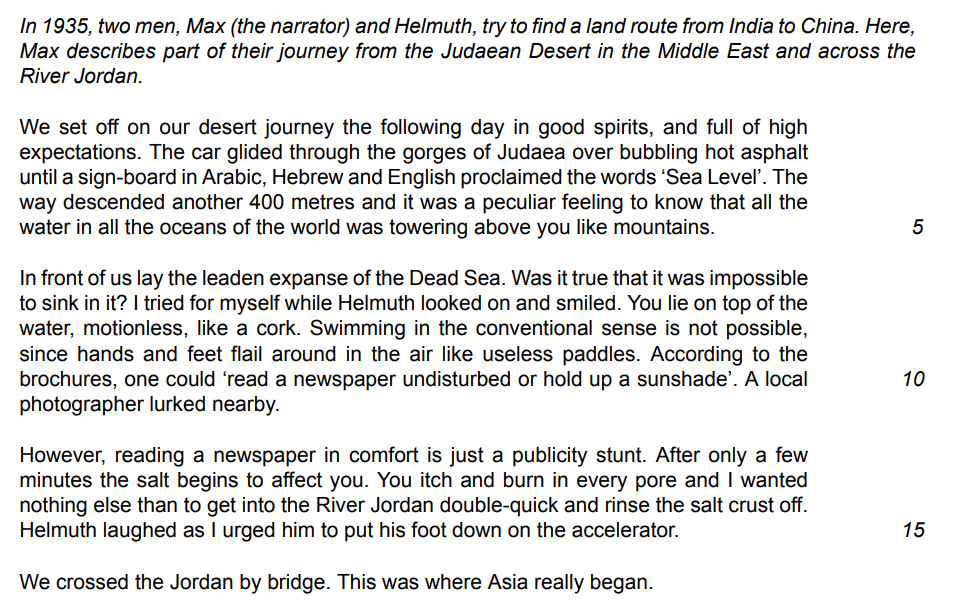
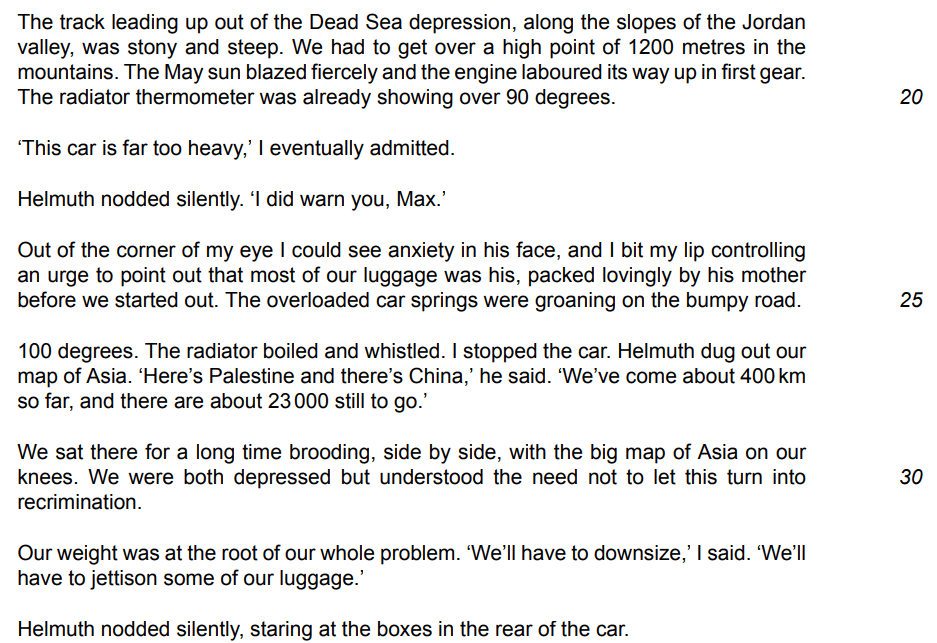
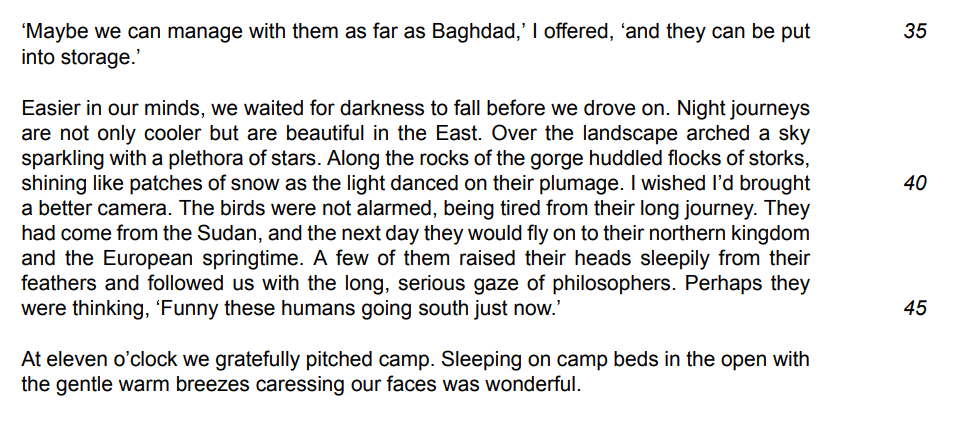
Question 3
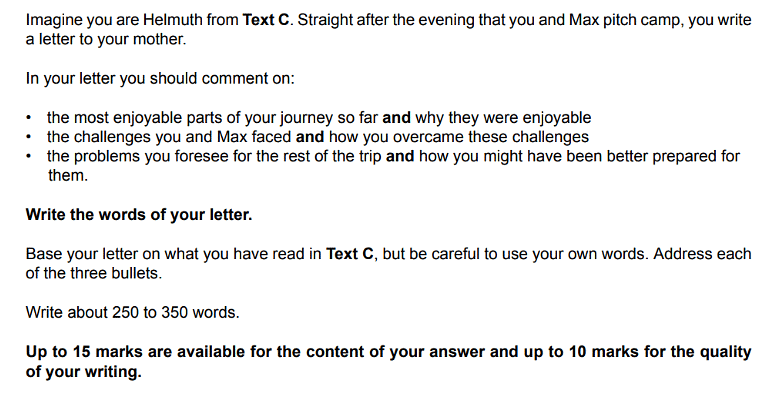
Question 3: Letter Model Answer
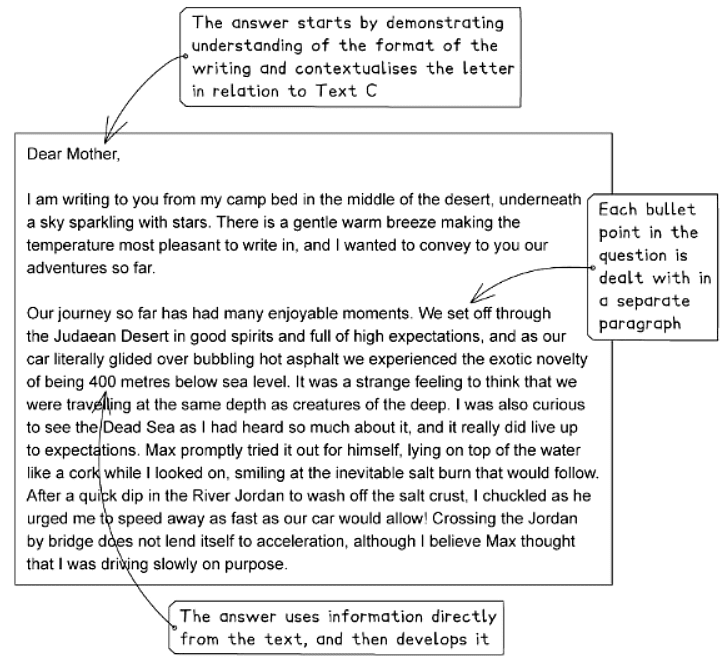
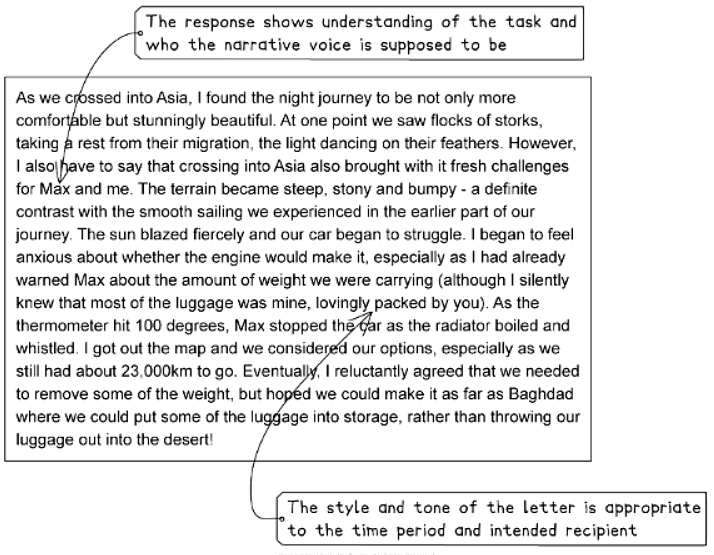
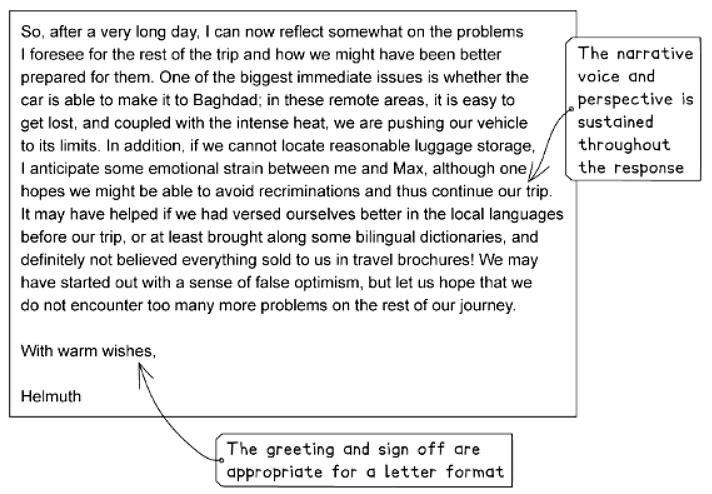
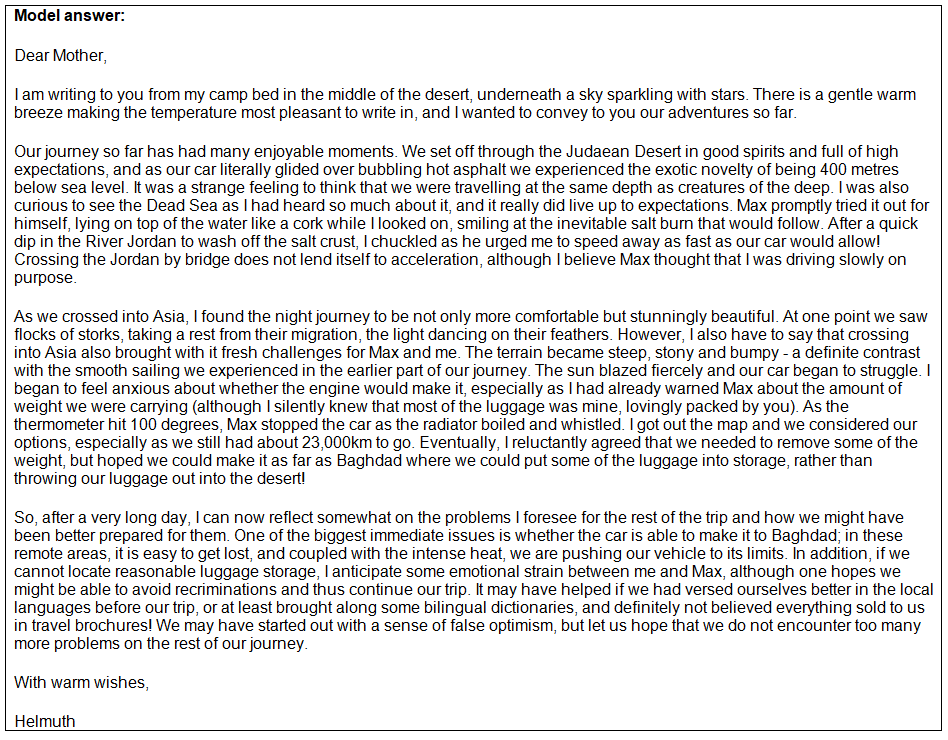
Based on the above question, the following model answer is an example of a full-mark letter response.
Unannotated model answer
Commentary:
- The response starts by showcasing an understanding of the writing format and relates the letter to Text C.
- Each point in the question is individually addressed in separate paragraphs.
- Information is extracted directly from the text and then expanded upon.
- Demonstrates comprehension of the task and the intended narrative voice.
- The style and tone of the letter align with the time period and recipient.
- Consistent narrative voice and perspective are maintained throughout the response.
- The greeting and sign-off are suitable for a letter format.
Summary
- Carefully examine the question and identify:
- The task directives outlining the required actions.
- The specific emphasis of each bullet point.
- Revisit Text C to pinpoint pertinent information applicable to your response.
- Address each bullet point methodically:
- Ensure balanced coverage of all bullet points.
- Ground your response entirely in the concepts and specifics derived from Text C.
- Establish and sustain a uniform tone and style throughout your answer.
- Refrain from simply reiterating event particulars:
- Elaborate on your insights to demonstrate a thorough understanding.
The document Question 3 Demo Answer: Letter is a part of the Class 10 Course English Language for GCSE/IGCSE.
All you need of Class 10 at this link: Class 10
FAQs on Question 3 Demo Answer: Letter
| 1. How do I structure a formal letter for GCSE English Language Question 3? |  |
Ans. A formal letter follows: sender's address, date, recipient's address, salutation (Dear Sir/Madam), body paragraphs with clear purpose, formal closing (Yours faithfully), and signature. The tone must remain professional throughout, with proper punctuation and formal vocabulary. Each paragraph should address a distinct point logically, ensuring the letter achieves its communicative purpose effectively within the word limit.
| 2. What's the difference between a formal letter and an informal letter in GCSE writing tasks? | |
Ans. Formal letters use professional vocabulary, structured paragraphs, and impersonal tone for official purposes like complaints or applications. Informal letters employ conversational language, contractions, and personal anecdotes for correspondence with friends or family. For Question 3 GCSE exams, identifying whether the task requires formal or informal register is crucial-it directly impacts vocabulary choice, sentence structure, and overall marks awarded.
| 3. How do I make my letter response engaging while meeting GCSE assessment criteria? | |
Ans. Engage readers by opening with a compelling reason for writing, using varied sentence types, and employing persuasive or emotive language where appropriate. Develop ideas fully rather than listing points superficially. Demonstrate sophisticated vocabulary and accurate spelling throughout. Use rhetorical devices subtly-rhetorical questions, parallel structures, or vivid imagery-to strengthen persuasive letters without appearing forced or overwrought.
| 4. What common mistakes do students make when answering letter-writing questions in GCSE English? | |
Ans. Students frequently ignore the stated purpose or audience, resulting in mismatched register and tone. Many fail to structure ideas logically across paragraphs, jumping between points randomly. Spelling and punctuation errors damage credibility in formal contexts. Additionally, exceeding word limits or writing too briefly loses marks for development. Consulting PPTs and mind maps on letter conventions helps students avoid these pitfalls systematically.
| 5. How should I approach planning my letter before writing for GCSE Question 3? | |
Ans. Begin by identifying the task's purpose, audience, and required register-formal or informal. Jot down three to four main points supporting your position. Decide on tone: persuasive, informative, or complaining. Draft an outline allocating paragraphs logically: introduction establishing context, body paragraphs developing arguments, conclusion reinforcing key message. This planning stage prevents rambling and ensures structured letter-writing that demonstrates clear communication skills and achieves maximum marks.
About this Document

4.78/5 Rating

Apr 29, 2026 Last updated
Related Exams
Document Description: Question 3 Demo Answer: Letter for Class 10 2026 is part of English Language for GCSE/IGCSE preparation. The notes and questions for Question 3 Demo Answer: Letter have been prepared according to the Class 10 exam syllabus. Information about Question 3 Demo Answer: Letter covers topics like and Question 3 Demo Answer: Letter Example, for Class 10 2026 Exam. Find important definitions, questions, notes, meanings, examples, exercises and tests below for Question 3 Demo Answer: Letter.
Introduction of Question 3 Demo Answer: Letter in English is available as part of our English Language for GCSE/IGCSE for Class 10 & Question 3 Demo Answer: Letter in Hindi for English Language for GCSE/IGCSE course. Download more important topics related with notes, lectures and mock test series for Class 10 Exam by signing up for free. Class 10: Question 3 Demo Answer: Letter
Description
Question 3 Demo Answer: Letter of English Language - variety of important questions with solutions, helping you prepare for exam. Download free PDF from EduRev.
Information about Question 3 Demo Answer: Letter
In this doc you can find the meaning of Question 3 Demo Answer: Letter defined & explained in the simplest way possible. Besides explaining types of Question 3 Demo Answer: Letter theory, EduRev gives you an ample number of questions to practice Question 3 Demo Answer: Letter tests, examples and also practice Class 10 tests



Related Searches
video lectures, ppt, Important questions, Question 3 Demo Answer: Letter, MCQs, study material, Semester Notes, Previous Year Questions with Solutions, practice quizzes, Free, pdf , Sample Paper, Extra Questions, Question 3 Demo Answer: Letter, past year papers, Question 3 Demo Answer: Letter, Exam, Viva Questions, shortcuts and tricks, Objective type Questions, mock tests for examination, Summary;