Question 1 Demo Answer: Speech


Introduction
For this assignment, you'll create a written piece in a specific format, drawing from the opinions, ideas, and information provided in one or two reading passages. Your writing might be in one of three potential formats or genres.
- A letter
- A speech
- An article
The following guide will demonstrate how to answer Question 1 in the format of aspeechspeech. The task itself is taken from a past exam paper. It includes:
- Addressing the reading assessment objectives
- Planning your response
- Speech model answer
- Unannotated model answer
- Summary
Addressing the Reading Assessment Objectives
This task offers up to 15 marks for your capacity to assess both the explicit and implicit ideas, opinions, and attitudes conveyed in one or two texts, and integrate them to compose a refined and elaborate response.
Let's take a look at how you do this, using the following Question 1 example: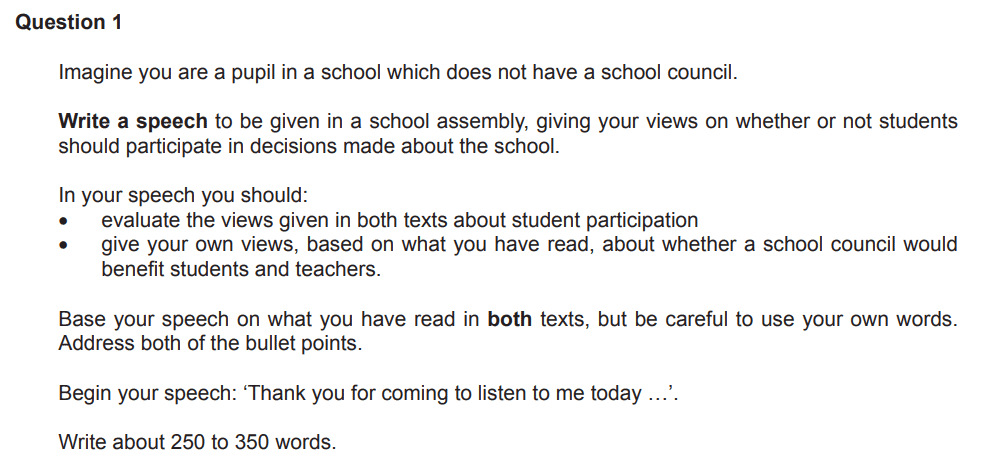
Your response here has to be based on the ideas, opinions, and attitudes contained in the following two texts:
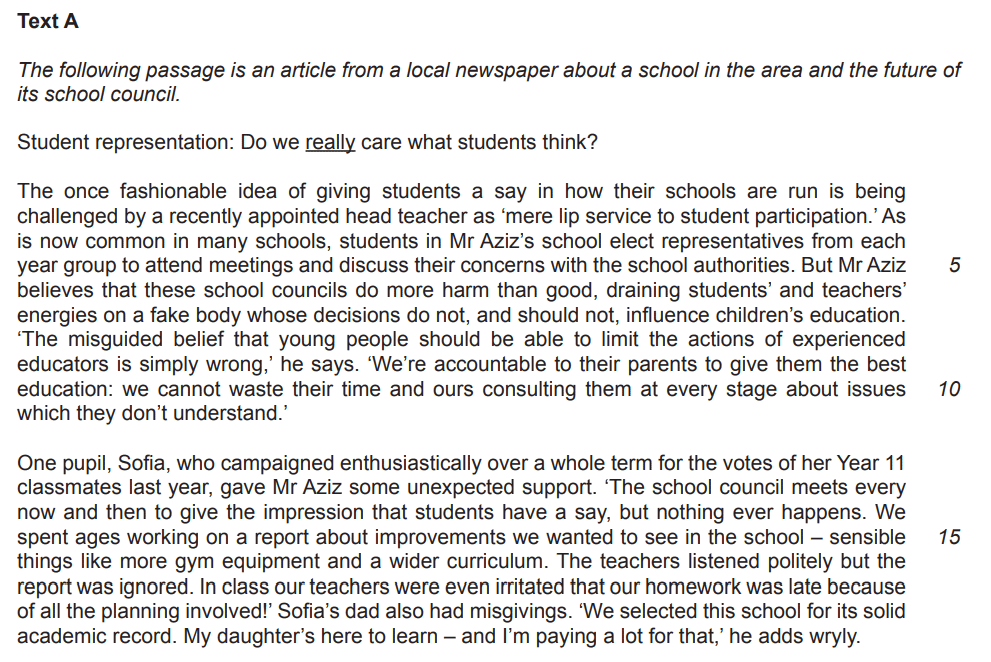
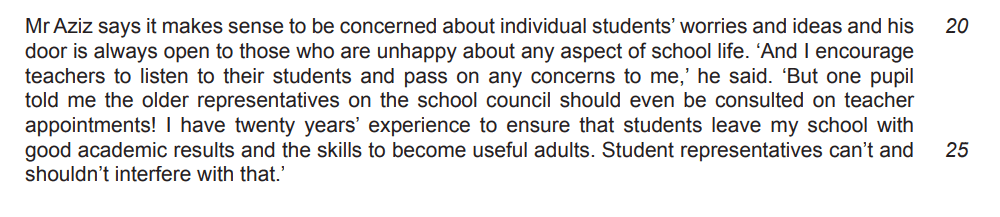
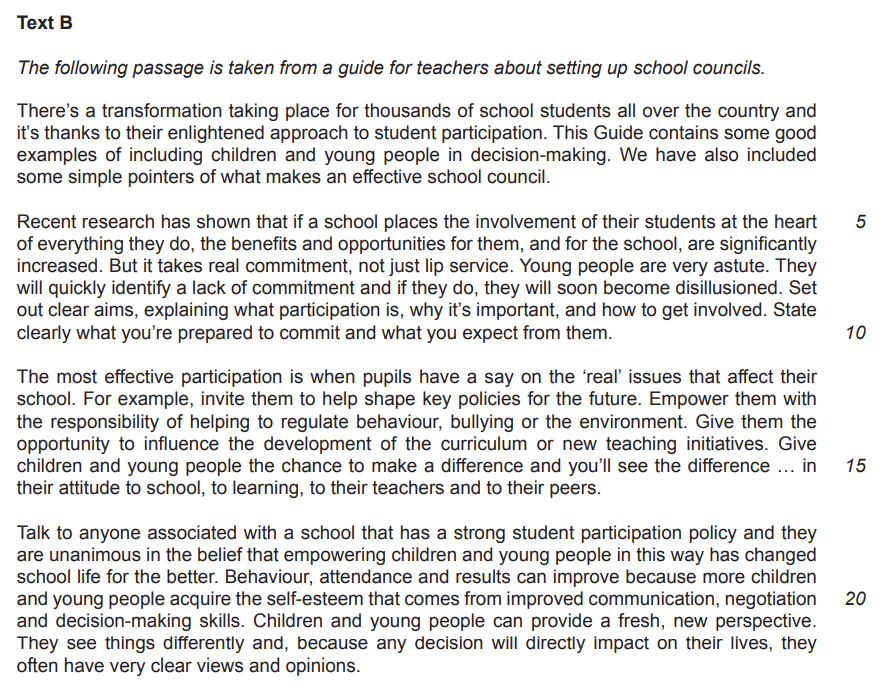
After thoroughly reviewing the task, it's essential to peruse the texts and pinpoint the ideas and opinions that could shape your writing. Your response may incorporate the following concepts extracted from these texts:
Text A
- Previously, student representation held popularity, but it may be fleeting.
- School councils demand excessive time and energy from schools and educators, diverting attention from more pressing matters.
- If student representation lacks authenticity or serves merely as a checkbox exercise, it holds little substance, particularly if ideas are disregarded.
- Teachers are answerable to parents and should prioritize education.
- Some students, too, are disenchanted with the concept of student representation, particularly when efforts yield no results.
- Seasoned educators should be responsible for decision-making, rather than children - trust should be placed in school administrators tasked with providing education.
Text B
- A progressive mindset is crucial for the efficacy of school councils, necessitating genuine dedication.
- Student involvement enjoys widespread popularity and esteem.
- Genuine student participation thrives when addressing substantive issues.
- Students can shoulder responsibility for challenging issues like behavior or bullying.
- Participation can positively influence students' attitudes toward school.
- Involvement leads to enhanced attendance and academic performance.
- Students acquire valuable skills such as negotiation, communication, and decision-making through participation.
- Students offer fresh perspectives on issues.
- Since decisions made may significantly affect them, students are incentivized to engage actively.
Planning your response
Once you have completed reading the texts and identified relevant opinions, ideas, and attitudes, and summarized them in your own words, the next step involves spending five minutes planning your written response. In your plan:
- Decide on your "voice" and point of view
- Formulate a statement summarizing your point of view, based on your interpretation
- Jot down the supporting points for your perspective to be included in the first paragraph
- Determine if you will present a counter-argument and list the supporting points for it
- Revisit your main argument, ensuring the incorporation of ideas and opinions from all relevant texts
- List the points to address the second aspect of the task
- Plan how you will initiate and conclude your response, ensuring the establishment of the appropriate style and tone
Speech model answer
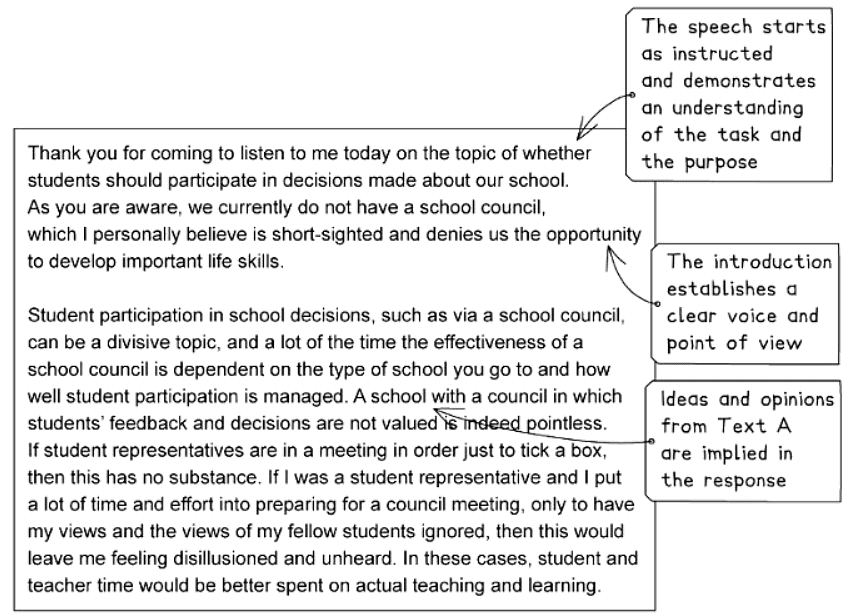
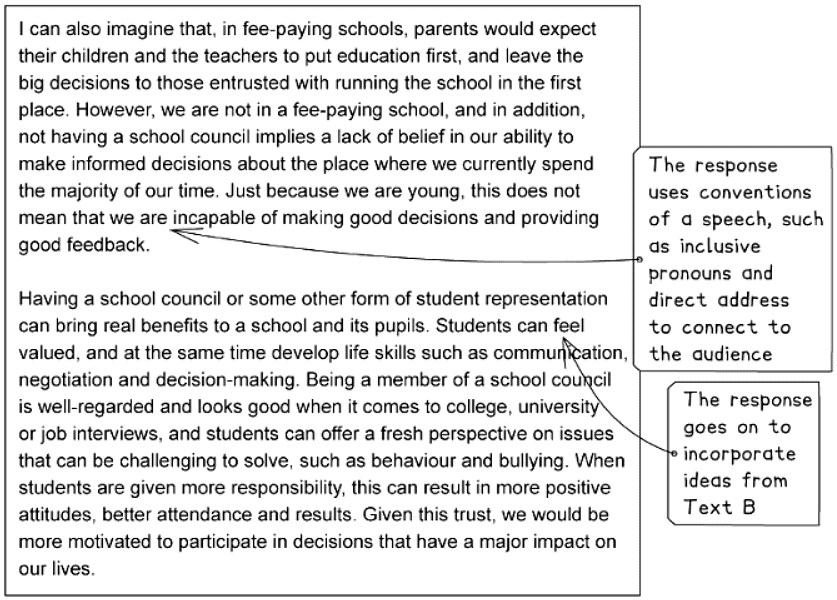
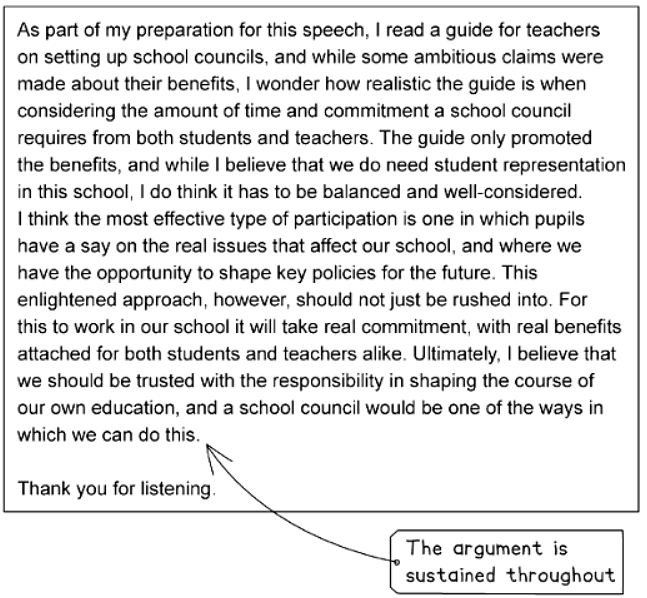
The following model answer exemplifies an exemplary response to the provided task:
Unannotated model answer
Commentary:
- The speech commences as directed, showcasing comprehension of the task, its objectives, and target audience.
- The introduction establishes a distinct voice and perspective.
- Implications of ideas and viewpoints from both texts are evident in the response.
- The response employs speech conventions like inclusive pronouns and direct address to engage the audience.
- The argument is consistently maintained throughout.
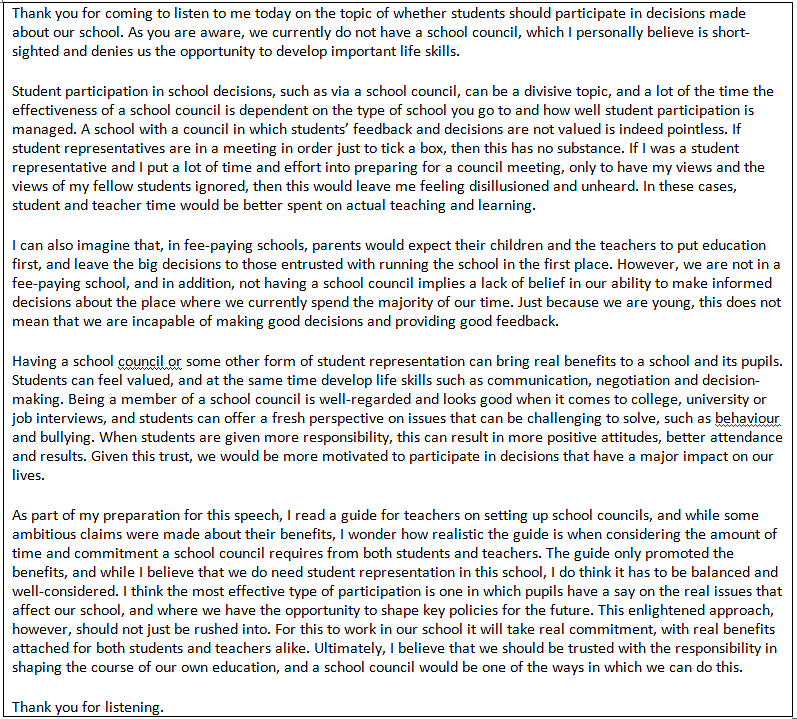
- Accurate spelling, grammar, and punctuation are demonstrated.
Summary
- Remember to carefully read the question and identify:
- What you are writing about
- Who your audience is
- Reasons for writing
- The main focus of each bullet point
- Review the text(s) and underline the important details that can be expanded upon in your response
- Present this information in bullet points using your own words
- Organize your writing, concentrating on one key idea or viewpoint per paragraph
- Address each bullet point systematically, ensuring equal coverage of all points
- Select a consistent voice and style for your response
- Avoid mere repetition of text details; instead, analyze and elaborate on the ideas, opinions, and attitudes presented in the text(s)
FAQs on Question 1 Demo Answer: Speech
| 1. What are the key elements of an "enlightened" approach required for effective school councils? |  |
| 2. How can student participation in school councils positively impact their attitudes towards school? | |
| 3. What essential skills can students develop through active participation in school councils? | |
| 4. How can decisions made within school councils affect students and motivate their active involvement? | |
| 5. How does student involvement in school councils contribute to addressing real-world issues like behavioral problems or bullying? | |




