Demo Answer: Letter

Introduction
The task requires generating a written piece following specific guidelines, shaped by the viewpoints and concepts from provided reading passages.
The ensuing guide illustrates how to undertake this task in the form of a letter. Though derived from an exam paper, it should be noted that using such material in coursework portfolios is prohibited. Nonetheless, this example serves to illustrate the skills necessary for producing high-quality work.
The guide includes:
- Addressing the reading assessment objectives
- Assignment 1 task
- Letter model answer
- Unannotated model answer
Addressing the reading assessment objectives
You can earn a maximum of 15 marks in this task by effectively analyzing both the explicit and implicit ideas, opinions, and attitudes conveyed in one or two texts, and integrating them to compose a well-developed and refined response.
Let's take a look at how you do this, using the following two texts:
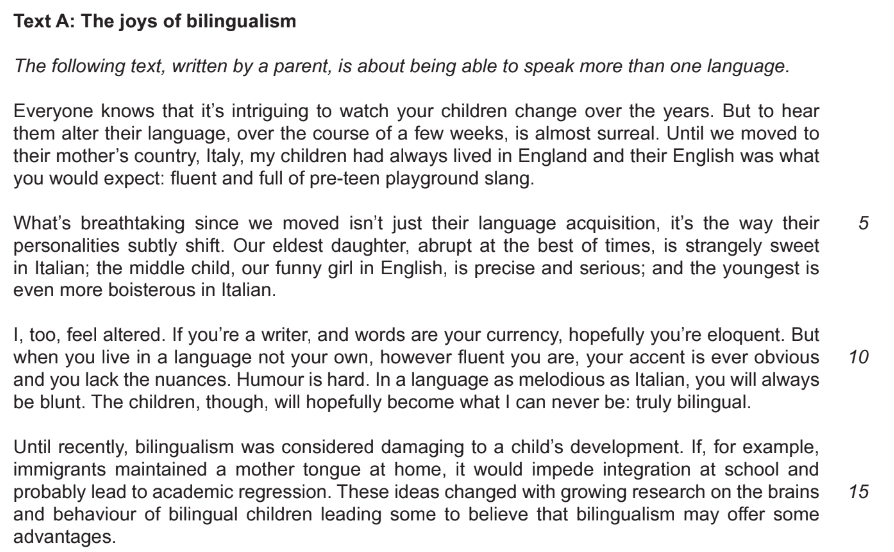
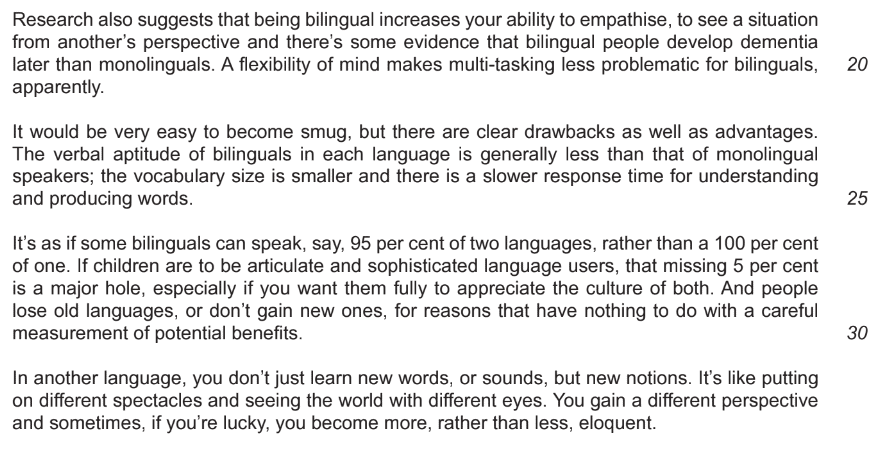
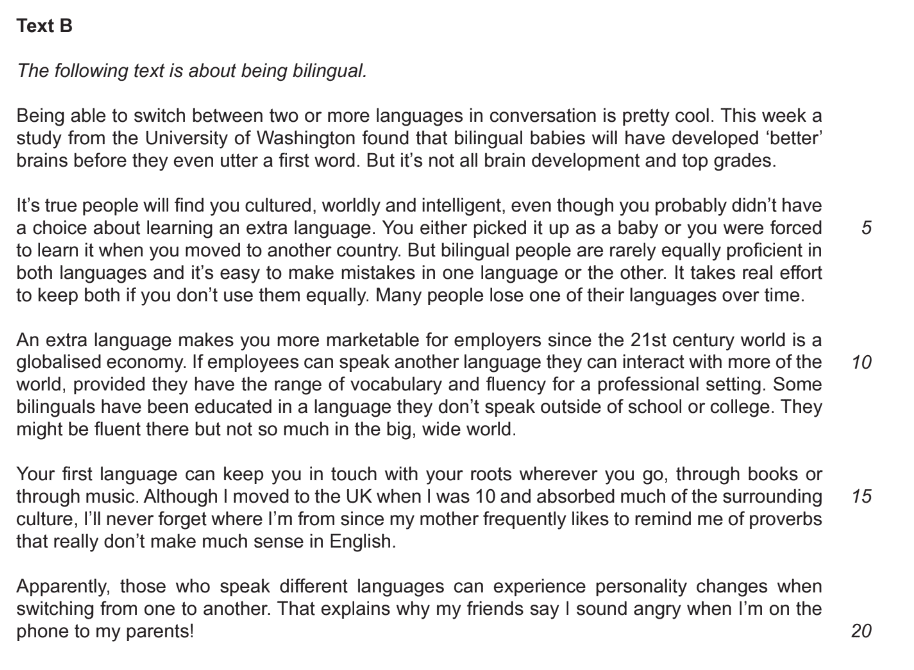
To begin with, you should read the texts and highlight the ideas and opinions that could inform your writing. Your response might use the following ideas from these texts:
Text A
- Young children, particularly pre-teens, have a remarkable ability to learn and acquire new languages rapidly.
- Exposure to and proficiency in multiple languages during childhood can influence and shape the personalities of young individuals.
- Mastering the nuances and subtleties of a new language, as well as effectively conveying humor, can pose significant challenges.
- Some argue that achieving true bilingualism, where one is equally proficient in two languages, may not be achievable.
- Accents often reveal a person's linguistic background, making bilingualism evident in their speech.
- Research indicates a shifting attitude toward bilingualism, with evolving perspectives influenced by scientific findings.
- Bilingualism is associated with enhanced empathy and a broader understanding of different viewpoints.
- There is emerging evidence suggesting that bilingualism might offer protective benefits against cognitive decline and enhance cognitive flexibility.
- However, some suggest that being bilingual may lead to a less developed command of both languages, particularly in terms of articulateness.
- Despite potential drawbacks, bilingualism is often viewed as a valuable and enriching experience, contributing to greater eloquence and cognitive abilities.
Text B
- Gaining proficiency in a second language may not always be a voluntary decision.
- Acquiring a new language can enhance your personal appeal and make you more captivating.
- Most bilingual individuals do not possess equal mastery in both languages, often leading to errors.
- Linguistic abilities can fade over time if not actively maintained.
- Having fluency in an additional language can increase your job prospects.
- Becoming truly fluent in multiple contexts is a challenging feat.
- Preserving your mother tongue fosters a deep connection to your heritage.
- Shifting between languages can potentially trigger shifts in one's persona.
Assignment 1 task
In response to the above texts, a possible Assignment 1 task wording would be:
"A relative is considering moving to another country where they and their teenage children will have to learn another language.
Write a letter to your relative giving your views about whether or not this is a good idea, based on what you have read."
Letter Model Answer
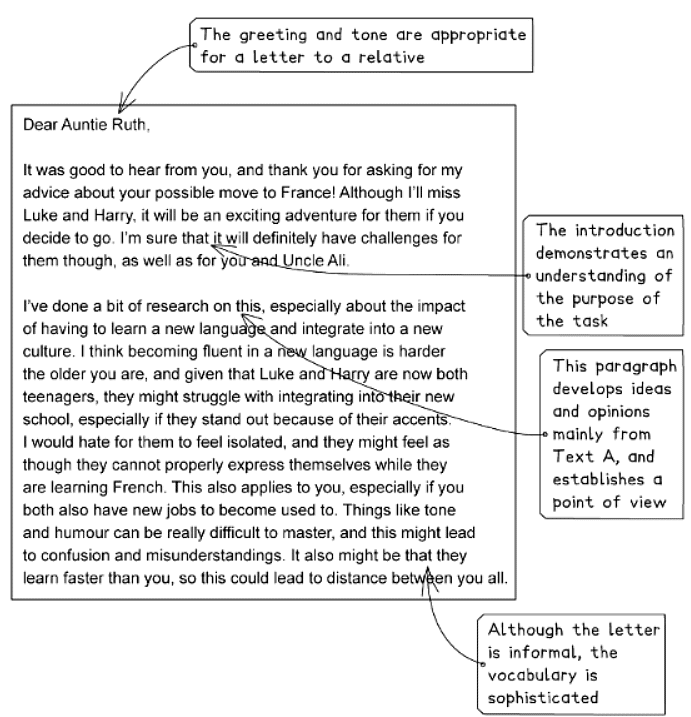
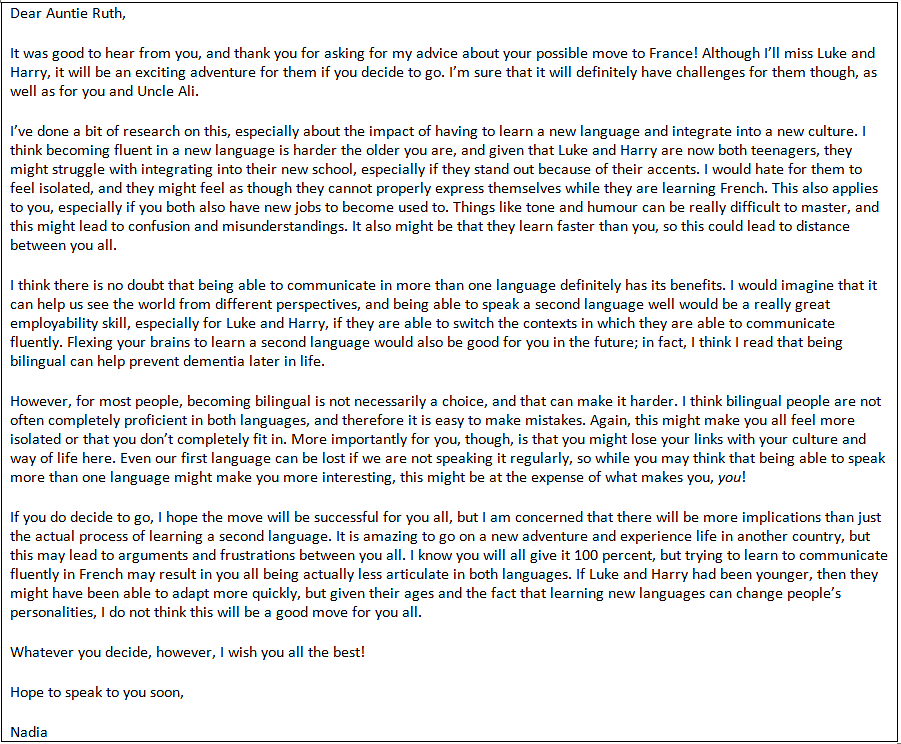
The model answer provided below exemplifies an exceptional response to the given task:
Unannotated Model Answer
Commentary:
- The greeting and tone are suitable for a letter to a family member
- The introduction shows an understanding of the task's purpose
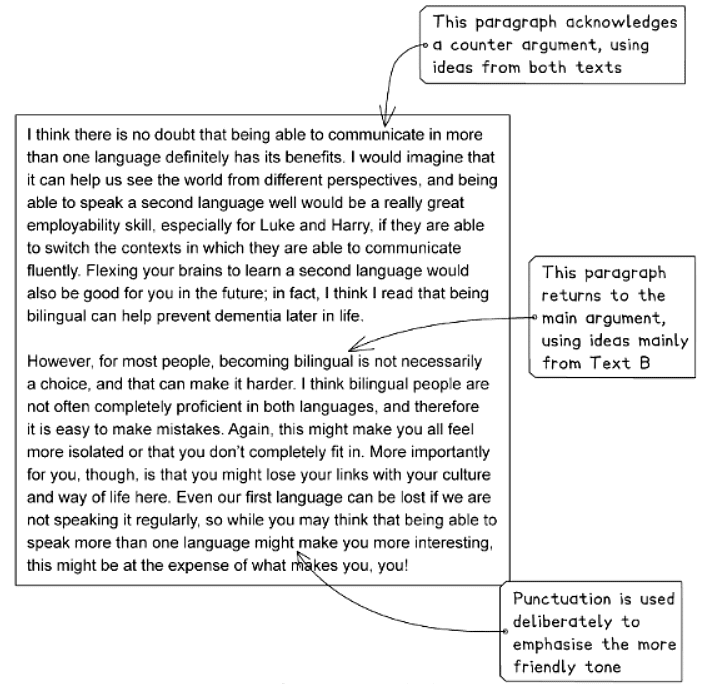
- The second paragraph elaborates on ideas primarily from Text A and establishes a perspective
- Despite the informal tone, the vocabulary used is sophisticated
- The third paragraph recognizes a counter-argument by incorporating ideas from both texts
- The fourth paragraph reiterates the main argument, drawing mainly from Text B
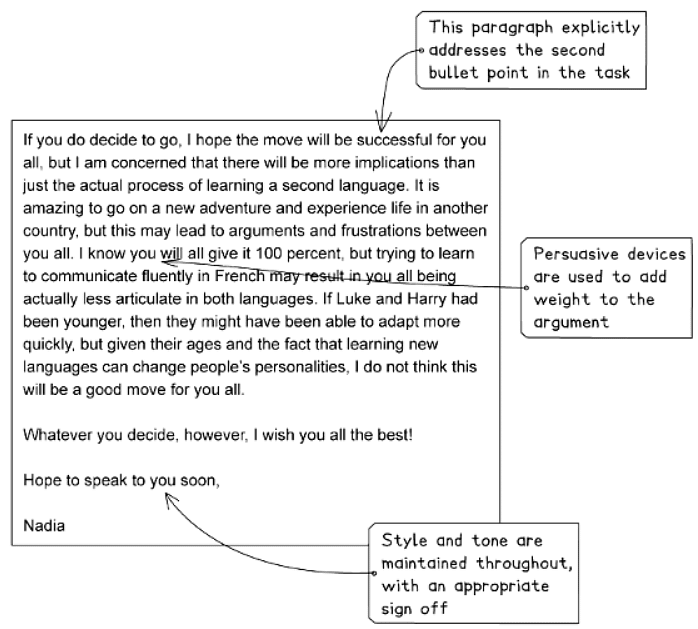
- Punctuation is strategically employed to emphasize the friendly tone
- The final paragraph explicitly addresses the second point in the task
- Persuasive techniques enhance the argument's strength
- Consistent style and tone are maintained throughout with an appropriate conclusion
- Accurate spelling, grammar, and punctuation are consistent
FAQs on Demo Answer: Letter
| 1. What are the benefits of learning a second language? |  |
| 2. Is it common for bilingual individuals to be equally proficient in both languages? | |
| 3. Can linguistic abilities fade over time if not actively maintained? | |
| 4. How can retaining your first language help keep a link to your culture? | |
| 5. Can switching between languages potentially trigger shifts in one's persona? | |




