IGCSE Year 10 > Year 10 Notes > History for GCSE/ > Opposition to Soviet Control in Hungary & Czechoslovakia
Opposition to Soviet Control in Hungary & Czechoslovakia


Nagy's Reforms in Hungary
Soviet leader: Nikita Khrushchev
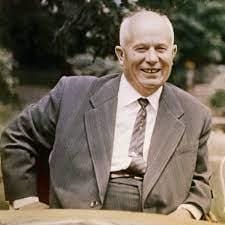
- The USSR's dictator, Joseph Stalin, died on March 5, 1953. After a three-year power struggle, Khrushchev became General Secretary of the USSR in 1956, symbolizing a shift in leadership style.
- At the 20th Party Congress in 1956, Khrushchev criticized Stalin's leadership.
- In a three-hour "Secret Speech," Khrushchev accused Stalin of abusing his power.
- Khrushchev emphasized the need for "peaceful co-existence" with the West.
- He initiated a process called "De-Stalinization."
- He released a significant number of political prisoners.
- He relaxed some censorship of information.
- He increased the availability of consumer goods in the USSR.
- Despite these changes, Khrushchev could not introduce extensive capitalism and democracy into a communist dictatorship.
Hungary's 1956 Revolution
- Background of Repressive Control:
- Hungary was under the harsh control of its communist leader, Mátyás Rákosi.
- Rákosi aimed to transform Hungary into a 'country of iron and steel,' despite the absence of iron ore.
- The nation faced challenges like fuel shortages and poor harvests.
- Protests and Suppression:
- In October 1956, Budapest witnessed violent protests led by Hungarian students demanding political and personal freedoms.
- The Hungarian authorities responded with arrests, tear gas, and even gunfire against protestors.
- The situation escalated as soldiers sided with the students, prompting the Hungarian Communist government to seek military assistance from the USSR.
- By 24th October, the Soviet Union had quelled the unrest in Budapest.
- Leadership Change and Limited Reforms:
- Soviet leader Khrushchev replaced Rákosi with Imre Nagy, hoping Nagy would address the discontent in Hungary.
- Nagy's introduction of some reforms was welcomed by the populace, pacifying the protests to some extent.
What Reforms Did Nagy Propose for Hungary?
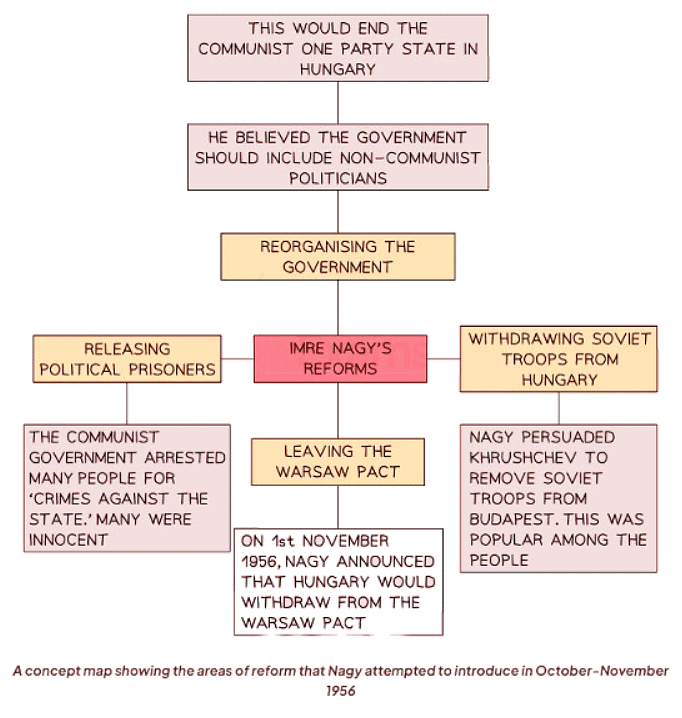
Khrushchev's Response to Hungarian Uprising
- Khrushchev granted Nagy some liberty for reforms.
- The protests in Hungary portrayed Communism negatively to the Western nations.
Reasons for Khrushchev's Stand on Hungary
- Khrushchev opposed Hungary's exit from the Warsaw Pact.
- The USSR depended on Hungary's allegiance within the Warsaw Pact.
- Khrushchev might have required Hungarian forces to quell rebellions in other satellite states.
- The withdrawal of Hungary could have incited similar actions in other satellite nations.
- The USSR counted on the united defense of pro-Communist nations.
- Khrushchev aimed to prevent the emergence of independent Communist states in Eastern Europe.
- Yugoslavia's Separation from Soviet Influence
- In 1948, Yugoslavia, led by Tito, distanced itself from Soviet dominance.
- By accepting military aid from NATO, Yugoslavia moved closer to Western powers.
- Tito experimented with diverse Communist ideologies that challenged the USSR's authority.
- Khrushchev sought to prevent other satellite states from aligning with Yugoslavia.
MULTIPLE CHOICE QUESTIONTry yourself: What was one of the main reasons for Khrushchev's opposition to Hungary's exit from the Warsaw Pact?
Khrushchev's Reaction to the Uprising
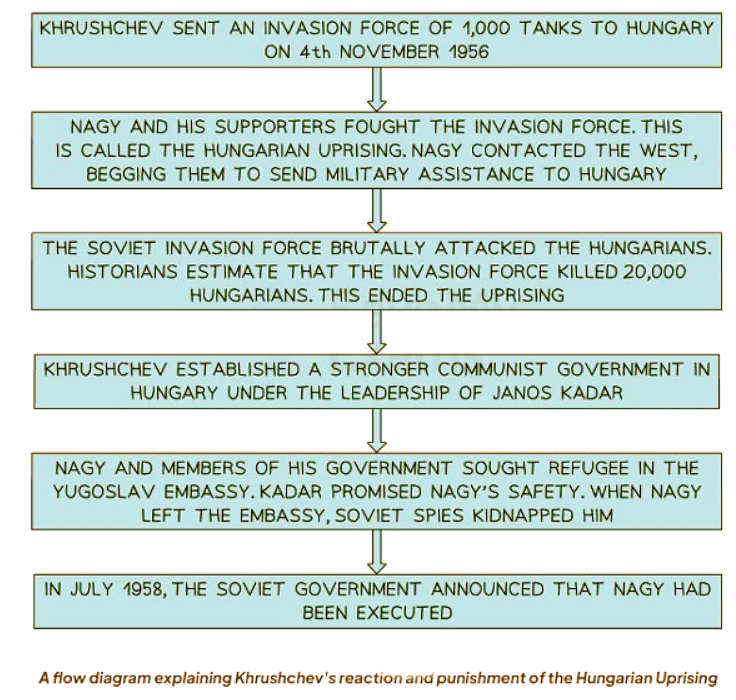
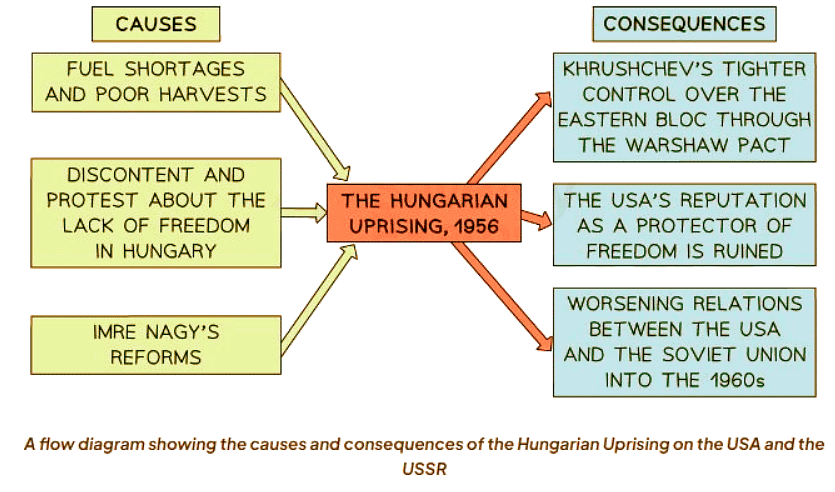
Causes and Consequences of the Hungarian Uprising
The Prague Spring Reforms
Soviet leader: Leonid Brezhnev
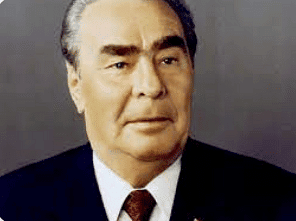
- In July 1964, Brezhnev became the Second Secretary, positioning himself as Khrushchev's successor.
- By October 1964, Brezhnev led a coalition against Khrushchev and became the First Secretary of the USSR.
- Brezhnev believed that Khrushchev had weakened the USSR.
- Unlike Khrushchev, Brezhnev consulted his colleagues on important decisions.
- Brezhnev's rule was authoritarian, similar to Stalin's style.
- Brezhnev's leadership marked a shift, signaling that the USSR would no longer permit any type of reform.
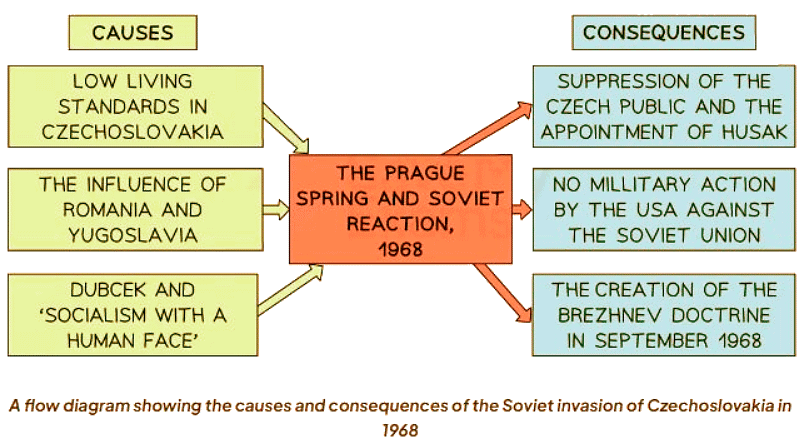
- There was a strong desire for transformation in Czechoslovakia. Life in Czechoslovakia proved challenging with its citizens facing restricted freedoms and low living standards. The government under Gottwald failed to garner popularity among the Czech public.
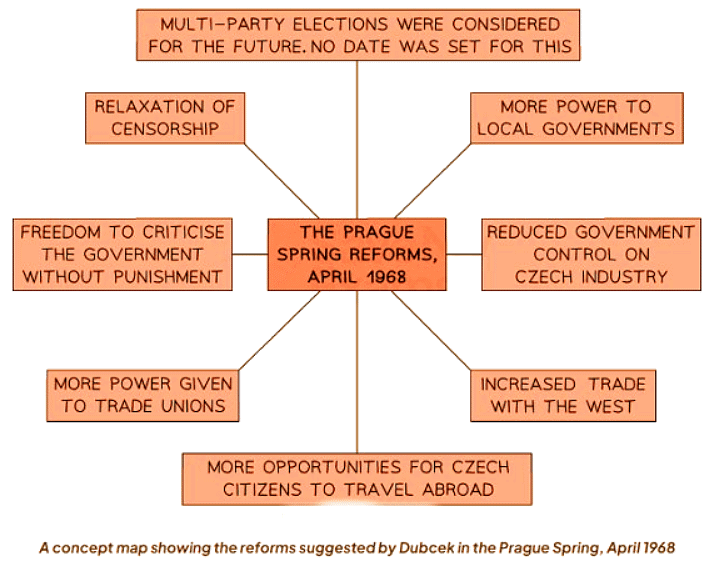
- In 1968, the Czech Communist Party elected Alexander Dubcek as the First Secretary, entrusting him with the leadership of the Czech government. Dubcek, a staunch Communist, believed in the principles of the Warsaw Pact and advocated for 'Socialism with a human face'. He emphasized the rights of individuals within a communist system, supporting their freedom to voice opinions, address government concerns without repercussions, and strive for an improved quality of life.
- The appointment of Dubcek received approval from the USSR. Under his leadership, the Czech government introduced a series of reforms in April 1968, marking the onset of the Prague Spring. This period symbolized a season of renewal and political restructuring in Czechoslovakia.
Brezhnev's Response to the Prague Spring
- Brezhnev requested Dubcek to retract the Prague Spring reforms.
- Dubcek chose to disregard Brezhnev's demand.
- Dubcek extended invitations to Ceausescu and Tito, the leaders of Romania and Yugoslavia, for discussions, perceived as a provocative move against the USSR.
- Brezhnev felt compelled to prevent Czechoslovakia from aligning with non-Soviet Communist nations.
- Brezhnev deemed it necessary to promptly counter Dubcek and the reforms associated with the Prague Spring.
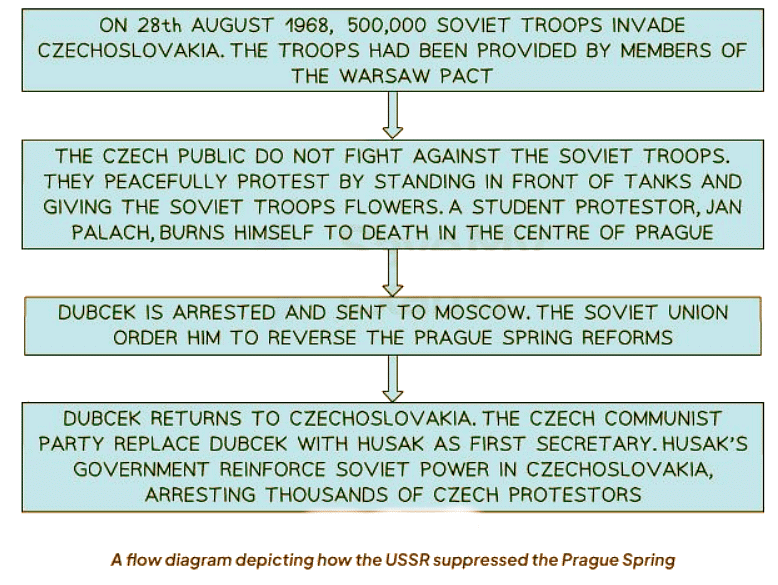
- Brezhnev ensured Czechoslovakia stayed under Soviet control for the next 20 years.
- Husak remained loyal to the USSR.
- The Czech government suppressed any signs of dissent.
Causes and Consequences of the Soviet Reaction to the Prague Spring
MULTIPLE CHOICE QUESTIONTry yourself: What was the main reason for Brezhnev's opposition to the Prague Spring reforms?
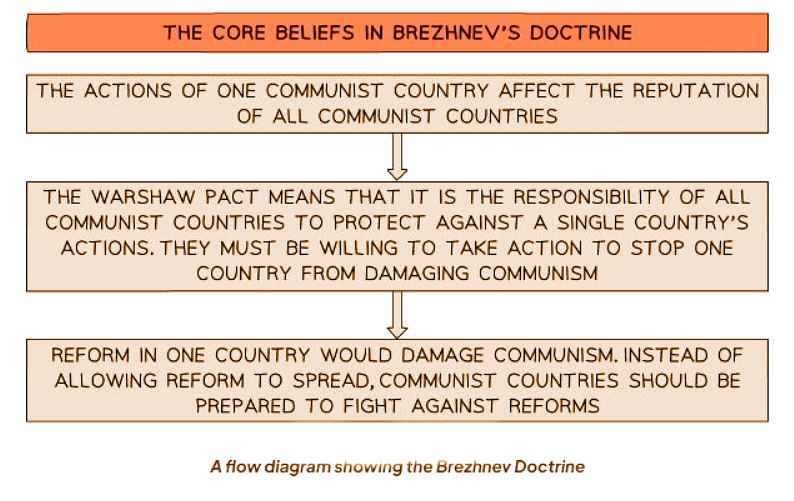
The Brezhnev Doctrine
- The Prague Spring reinforced Brezhnev's beliefs.
- Satellite states should not attempt to reform Communism.
- The Brezhnev Doctrine:
- Became public knowledge when published in the Communist newspaper, Pravda, on September 26, 1968.
- Outlined Brezhnev's expectations for the satellite states.
The document Opposition to Soviet Control in Hungary & Czechoslovakia is a part of the Year 10 Course History for GCSE/IGCSE.
All you need of Year 10 at this link: Year 10
About this Document

4.69/5 Rating

Apr 29, 2026 Last updated
Related Exams
Document Description: Opposition to Soviet Control in Hungary & Czechoslovakia for Year 10 2026 is part of History for GCSE/IGCSE preparation. The notes and questions for Opposition to Soviet Control in Hungary & Czechoslovakia have been prepared according to the Year 10 exam syllabus. Information about Opposition to Soviet Control in Hungary & Czechoslovakia covers topics like and Opposition to Soviet Control in Hungary & Czechoslovakia Example, for Year 10 2026 Exam. Find important definitions, questions, notes, meanings, examples, exercises and tests below for Opposition to Soviet Control in Hungary & Czechoslovakia.
Introduction of Opposition to Soviet Control in Hungary & Czechoslovakia in English is available as part of our History for GCSE/IGCSE for Year 10 & Opposition to Soviet Control in Hungary & Czechoslovakia in Hindi for History for GCSE/IGCSE course. Download more important topics related with notes, lectures and mock test series for Year 10 Exam by signing up for free. Year 10: Opposition to Soviet Control in Hungary & Czechoslovakia
Description
Opposition to Soviet Control in Hungary & Czechoslovakia of History covers all the important topics, helping you prepare for the Year 10 exam on EduRev. Start for free!
Information about Opposition to Soviet Control in Hungary & Czechoslovakia
In this doc you can find the meaning of Opposition to Soviet Control in Hungary & Czechoslovakia defined & explained in the simplest way possible. Besides explaining types of Opposition to Soviet Control in Hungary & Czechoslovakia theory, EduRev gives you an ample number of questions to practice Opposition to Soviet Control in Hungary & Czechoslovakia tests, examples and also practice Year 10 tests



Related Searches
pdf , Viva Questions, video lectures, Summary, Sample Paper, Important questions, ppt, Objective type Questions, Extra Questions, Previous Year Questions with Solutions, Opposition to Soviet Control in Hungary & Czechoslovakia, past year papers, Opposition to Soviet Control in Hungary & Czechoslovakia, Exam, shortcuts and tricks, practice quizzes, mock tests for examination, study material, MCQs, Semester Notes, Opposition to Soviet Control in Hungary & Czechoslovakia, Free;