Training & Development | Crash Course for UGC NET Commerce PDF Download


What is training and development in HRM?
Training and development in Human Resource Management (HRM) refer to a system of educating employees within a company. It includes various tools, instructions, and activities designed to improve employee performance. It's an opportunity for employees to increase their knowledge and upgrade their skills.
History of training and development
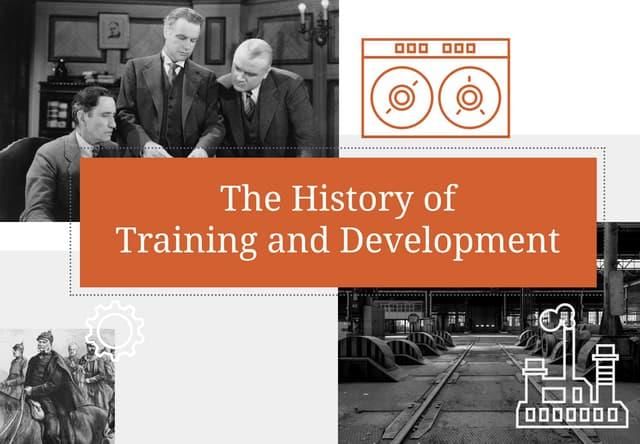 To understand training and development a bit better, let's go back in time and look at it through a historical lens. It all started during the World War II period in the United States when the need for skilled workers began to grow.
- The U.S. labor movement, established during this time, played a significant role in the rise of employee training and development.
- In the early 1900s, corporation schools were established to provide production workers with the necessary skills for their tasks. This era also marked the beginning of using personal computers for employee training.
- This computer-based training laid the groundwork for today's modern employee training systems.
Trends in training and development
After exploring its history, you might be wondering about the current state of training and development. How has it evolved over the past century? What significant changes have taken place in how training is delivered?
If these questions resonate with you, it's time to explore the latest trends in training and development. Let’s take a look at the current landscape and get a glimpse of where these programs are headed in the future.
Here are some of the emerging trends in training and development:
- Self-paced online training and development programs
- Training focused on managing virtual teams
- Personalized programs tailored to individual employee needs
- Mobile app-based training solutions
- Knowledge-sharing systems accessible to all employees
- Retraining and reskilling to stay ahead of technological advances
- Widespread access to online learning platforms
- Training programs for first-time managers and leaders
- Diversity and inclusion training
- Collecting employee data to refine and enhance training programs
- Interactive training sessions and guided walkthroughs
- Real-time feedback integrated into training
Purpose of Training and Ddevelopment in HRM
An organization that invests in its employees will likely see improved financial performance. According to research by the Association for Talent Development (ATD), companies with higher employee training expenditures reported 218% more income per employee and 24% higher profit margins.
Employee training and development in HRM serves various purposes:
Increase company productivity:
- Upskilling employees by training them to use advanced tools and technology can enhance their efficiency and confidence, leading to increased motivation and the ability to face challenges and adapt quickly.
- Promoting a culture of learning can foster better employee relationships and significantly boost overall company productivity.
Improve product or service quality:
- Training and development programs provide a platform for internal experts to share their techniques, enabling employees to learn valuable tips and best practices swiftly.
- This knowledge transfer helps employees create superior products or deliver more satisfying services, ensuring consistency and quality in their work.
Lessen Employee Turnover:
- Research indicates that investing in employee training and development positively impacts turnover rates. When employees feel valued and see opportunities for growth, they are more likely to stay with the company.
- Training programs enhance job satisfaction, foster a sense of belonging, and increase commitment among employees.
- Improved relationships with the organization resulting from training can reduce employee turnover intentions, thus boosting retention rates.
Decrease Costs and Errors:
- Highly trained employees make fewer mistakes, leading to savings in time and resources that would otherwise be spent on rectifying errors.
- Properly trained staff are adept at using resources efficiently, reducing waste, spoilage, and associated expenses.
- Training ensures employees understand how to maintain equipment, decreasing breakdowns and extending machinery lifespan.
What is the role of HR in training and development?
The role of HR in training and development is to help employees achieve their highest potential through various functions:
- Employee guidance and mentorship: HR provides guidance and mentoring to employees to support their professional growth.
- Monitoring employee performance: HR keeps track of employee performance to identify areas for improvement and development.
- Gathering feedback and interpreting data collected: HR collects feedback and interprets data to assess training needs and effectiveness.
- Providing enhancement activities and educational platforms: HR offers activities and educational resources to enhance employees' skills and knowledge.
- Supplying sufficient on-the-job training: HR ensures employees receive adequate on-the-job training to perform their roles effectively.
- Boosting employee morale and motivation: HR creates initiatives to boost morale and motivation among employees, enhancing productivity.
- Ensuring employees' overall well-being: HR promotes employee well-being by addressing their needs and concerns within the organization.
Additionally, HR is responsible for not only initiating training programs but also ensuring their adequacy and relevance. It is essential to consider employees' unique learning styles when designing training programs and activities.
What are the 5 processes in training and development?
Training and Development consists of 5 related processes. These processes do not have a distinct beginning, middle, and end. Instead, they overlap with each other to fulfill their intended purpose.
The processes are:
- Assessment of training needs and resources
- Motivation of trainers and trainees
- Design of training programs and materials
- Delivery of training
- Process and outcome evaluation
When done correctly, each process can lead to significant growth in your employees. Take note, no two employees or organizations are exactly alike.
Thus, you might want to allow some flexibility and personalization when planning the training. Also, try to consider varying backgrounds, cultures, and perspectives in implementing the processes.
Examples of training and development in HRM
So, are you prepared to establish your own training and development initiative? Hold on a moment! Before you proceed, it's crucial to select training programs that align with both your employees' needs and your company's training requirements.
It's important to note that 92% of employees have expressed that appropriate training programs significantly enhance their job engagement. Therefore, it's essential to ensure that your training and development program is a good match. Here are some examples you may want to consider:
Etsy:
Etsy takes a comprehensive approach to training and development, incorporating insights from sociology, adult learning theory, and organizational psychology, along with the company’s core values and culture. They emphasize employee feedback and even created their own feedback system, Sonar, in 2015. Like Etsy, you can blend various disciplines to create tailored programs for your organization.
Amazon:
Amazon has made a strong commitment to upskilling its employees, aiming to provide over 300,000 workers with training for future high-growth roles. Their "Upskilling 2025" initiative offers a range of programs, including:
- Machine Learning University
- Mechatronics and Robotics Apprenticeship
- Amazon Technical Apprenticeship
- User Experience Design and Research Apprenticeship
Additionally, Amazon covers full tuition for over 750,000 operations employees, demonstrating its dedication to preparing workers for the future. Amazon’s approach serves as a prime example of impactful training and development.
AT&T:
AT&T strives to foster a culture of continuous learning and skill development. Through its internal training initiative, AT&T University, the company offers mentoring, career development, personalized training, and tuition assistance. This award-winning program exemplifies how companies can prioritize employee growth through comprehensive education and training efforts.
These examples provide valuable insight into creating effective training and development programs that can enhance employee engagement and foster future success.

|
157 videos|236 docs|166 tests
|
FAQs on Training & Development - Crash Course for UGC NET Commerce
Ans. Training and development in HRM are crucial for improving employee skills, knowledge, and performance, ultimately leading to increased productivity, job satisfaction, and employee retention.
2. What are some key trends in training and development?$#
Ans. Some key trends in training and development include personalized learning experiences, microlearning, virtual reality training, and the use of data analytics to track training effectiveness.
3. Can you provide examples of companies with outstanding training and development programs?$#
Ans. Companies like Google, Amazon, Microsoft, and IBM are known for their exceptional training and development programs that focus on continuous learning, skill development, and career growth for employees.
4. How does Training & Development UGC NET help in preparing for the exam?$#
Ans. Training & Development UGC NET provides comprehensive study materials, practice tests, and expert guidance to help candidates prepare effectively for the exam and improve their chances of success.
5. How can HR professionals ensure the success of training and development programs in their organizations?$#
Ans. HR professionals can ensure the success of training and development programs by conducting needs assessments, setting clear learning objectives, monitoring progress, and seeking feedback from employees to continuously improve the training initiatives.



Previous Year Questions with Solutions
,Summary
,Objective type Questions
,Training & Development | Crash Course for UGC NET Commerce
,Viva Questions
,study material
,ppt
,Extra Questions
,Free
,Important questions
,Semester Notes
,video lectures
,past year papers
,Sample Paper
,practice quizzes
,mock tests for examination
,Exam
,MCQs
,Training & Development | Crash Course for UGC NET Commerce
,shortcuts and tricks
,Training & Development | Crash Course for UGC NET Commerce
;




Training & Development Free PDF Download
Importance of Training & Development
Training & Development Notes
Training & Development UGC NET Questions
Study Training & Development on the App
|
© EduRev
|
Education Revolution
|


|




