Detailed Summary: A Child's Thought | English Reader New Gems Class 6 PDF Download
| Table of contents |

|
| About the Poet |
|
| Key Points of the Poem |
|
| Detailed Summary |
|
| Theme/ Message |
|
| Difficult Words |
|

About the Poet
Robert Louis Stevenson was a Scottish author born on November 13, 1850, in Edinburgh, Scotland. He is best known for his adventure novels and poetry for children. Stevenson had a love for storytelling from a young age, and his imagination often led him to create magical worlds filled with interesting characters. He wrote many famous works, including "Treasure Island," "Kidnapped," and "A Child's Garden of Verses," which features the poem "A Child's Thought." This poem reflects Stevenson's deep understanding of childhood, imagination, and the contrast between dreams and reality. His writing style is often simple yet imaginative, making it accessible to children and adults alike. Stevenson had health problems throughout his life but continued to write until his death on December 3, 1894. His work remains popular today, as it captures the essence of adventure and the wonder of childhood.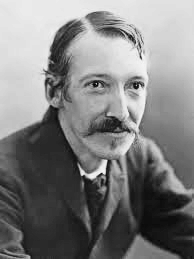
Key Points of the Poem
- The poem "A Child's Thought" consists of two stanzas.
- It explores the vivid imagination of a seven-year-old child before going to bed.
- The child dreams of a magical world filled with castles, dragons, and enchanted gardens.
- Upon waking, the child finds the real world to be dull and lacking the magic of dreams.
- The poem highlights the difference between the imaginative realm of dreams and the reality of everyday life.
Detailed Summary
Stanza 1
At seven, when I go to bed,
I find such pictures in my head:
Castles with dragons prowling round,
Gardens where magic fruits are found;
Fair ladies prisoned in a tower,
Or lost in an enchanted bower;
While gallant horsemen ride by streams
That border all this land of dreams
I find, so clearly in my head
At seven, when I go to bed.
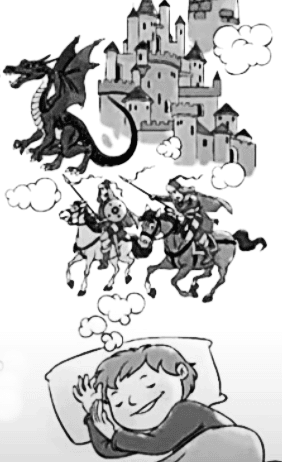
In this first stanza, the poet talks about what happens when he goes to bed at the age of seven. When he is lying down with his eyes closed, he sees wonderful pictures in his mind. It's like when you dream but you are still awake. He imagines big, tall castles where dragons are walking around. Dragons are big, scary creatures from stories. He also thinks of beautiful gardens where magical fruits grow. These fruits are not ordinary; they are special and can do amazing things. The poet also sees fair ladies who are stuck in tall towers, just like in fairy tales. Some ladies are lost in a magical place called a bower, which is like a pretty garden. He thinks about brave horsemen riding their horses along streams, which are like little rivers. All of these images fill his mind, making it a magical place full of dreams and adventures. This shows how creative and imaginative children can be when they are young and getting ready for sleep.
Stanza 2
At seven, when I wake again,
The magic land I seek in vain;
A chair stands where the castle frowned,
The carpet hides the garden ground,
No fairies trip across the floor,
Boots, and not horsemen, flank the door,
And where the blue streams rippling ran
Is now a bath and water-can;
I seek the magic land in vain
At seven, when I wake again.
In the second stanza, the poet talks about what happens when he wakes up in the morning after dreaming of all those magical things. He feels sad because the wonderful magic land he dreamed of is not there anymore. Instead of castles, he sees a chair, which is just a regular piece of furniture. The place where he imagined a garden is now just a carpet on the floor. There are no fairies dancing around in his room, just a pair of boots that are lying by the door. The beautiful blue streams he saw in his dreams have turned into an ordinary bath and a water-can. This makes the poet feel like he is looking for that magic land but cannot find it. The word "in vain" means he is trying hard but it is not working. This shows how the real world can feel boring or ordinary compared to the exciting and magical world of dreams that children have in their imagination. It reminds us that while growing up, we sometimes lose that sense of wonder and magic that we had as children when we played and dreamed.
Theme/ Message
Theme
- The Power of Imagination: The poem emphasizes how powerful and vibrant a child's imagination can be. When the child goes to bed, they create a whole world filled with magical creatures and adventures.
- The Contrast Between Dreams and Reality: The poem shows the stark difference between the dream world and real life. In dreams, the child experiences joy and excitement, while in reality, the child faces dullness and disappointment.
- Childhood Innocence: The poem captures the innocence and purity of childhood. It reminds us of a time when life was filled with wonder and possibility.
- Yearning for Magic: The child seeks the magic of their dreams in the real world, showing a deep desire for adventure and excitement that often fades with age.
Message
- Embrace Imagination: The poem encourages children and adults alike to embrace their imagination. It reminds us how important it is to dream and create stories in our minds.
- Don't Lose Your Sense of Wonder: Stevenson suggests that as we grow older, we should try not to lose our sense of wonder and excitement about the world. Even though reality can be boring, keeping a little magic in our lives is important.
- Value Childhood: The poem conveys the message to appreciate childhood and its unique perspective on life. The way children see the world is different and beautiful, filled with possibilities that adults often overlook.
- Accept Reality: While the poem celebrates imagination, it also acknowledges that we must accept reality. It teaches a balance between dreaming and facing the real world.
Difficult Words
- Prowling: Moving stealthily or sneaking around.
- Castles: Large, fortified buildings where kings and queens live.
- Enchanted: Magical or filled with magic.
- Bower: A shady or leafy shelter, often found in gardens.
- Gallant: Brave, noble, or heroic in spirit.
- Streams: Small, flowing bodies of water, like rivers.
- Seek: To look for or try to find something.
- Vain: In this context, it means to look for something that cannot be found.
- Frowned: To make a facial expression showing disapproval or sadness.
- Rippling: Moving in small waves or gentle motions, like water.
- Boots: Sturdy shoes that cover the foot and ankle.
- Garden: A piece of land where plants, flowers, and vegetables are grown.
- Fairies: Magical creatures often depicted as small and delicate.
- Magic: The use of supernatural powers to create illusions or wonders.
- Reality: The state of things as they actually exist, not as imagined.
|
69 videos|283 docs|61 tests
|
FAQs on Detailed Summary: A Child's Thought - English Reader New Gems Class 6
| 1. What is the main theme of the poem "A Child's Thought"? |  |
| 2. Who is the poet of "A Child's Thought"? | |
| 3. What are some of the key points discussed in the poem? | |
| 4. Can you explain any difficult words found in the poem? | |
| 5. How does the poem relate to the experiences of children today? | |



mock tests for examination
,Important questions
,Sample Paper
,Exam
,Summary
,Free
,Extra Questions
,practice quizzes
,Objective type Questions
,Semester Notes
,Viva Questions
,Detailed Summary: A Child's Thought | English Reader New Gems Class 6
,Detailed Summary: A Child's Thought | English Reader New Gems Class 6
,Previous Year Questions with Solutions
,ppt
,video lectures
,past year papers
,study material
,Detailed Summary: A Child's Thought | English Reader New Gems Class 6
,MCQs
,shortcuts and tricks
;




Detailed Summary: A Child's Thought Free PDF Download
Importance of Detailed Summary: A Child's Thought
Detailed Summary: A Child's Thought Notes
Detailed Summary: A Child's Thought Class 6 Questions
Study Detailed Summary: A Child's Thought on the App
|
© EduRev
|
Education Revolution
|


|




