Humanities/Arts Exam > Humanities/Arts Notes > History Class 11 > Cheat Sheet: Writing and City Life
Cheat Sheet: Writing and City Life


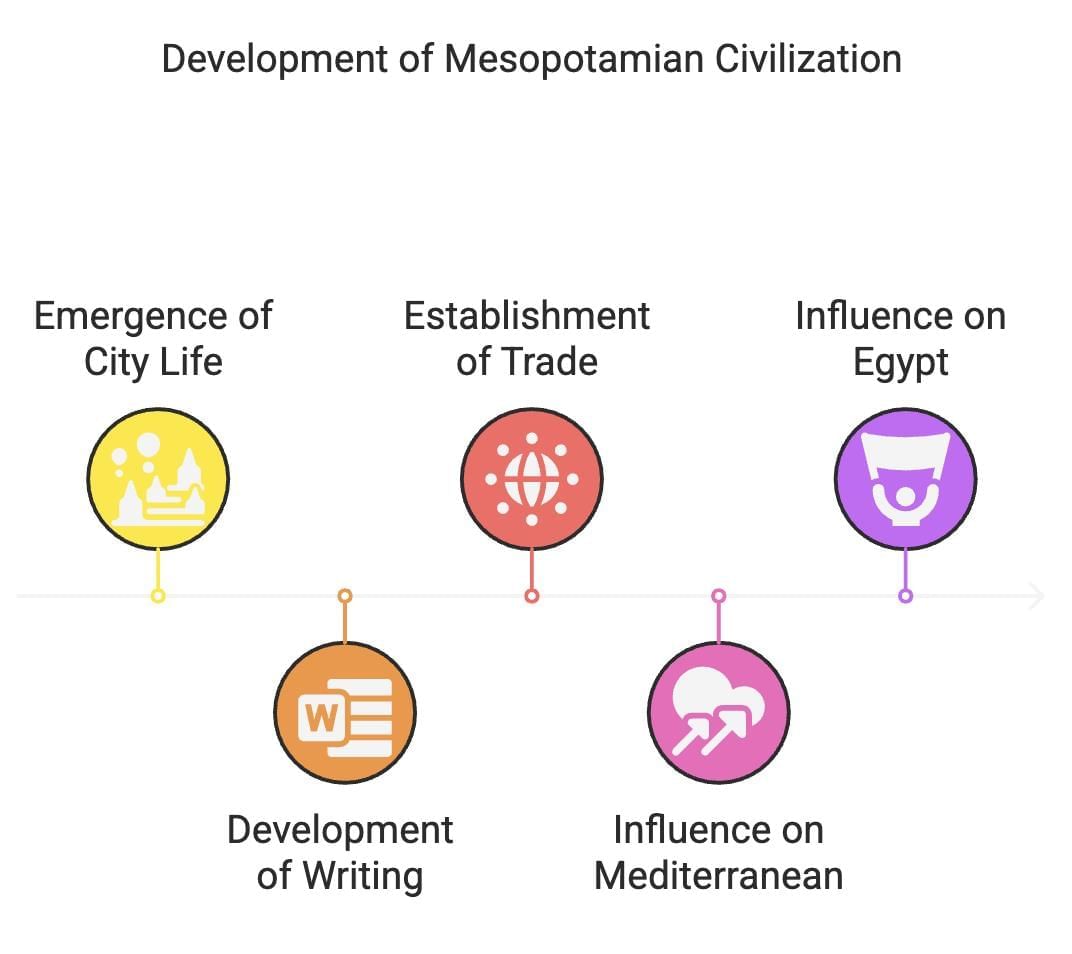
City life began in Mesopotamia, the land between the Euphrates and Tigris rivers (modern Iraq). The term "Mesopotamia" derives from Greek, meaning "middle river." This civilisation pioneered urbanism, writing, and trade, influencing regions from the Mediterranean to Egypt.
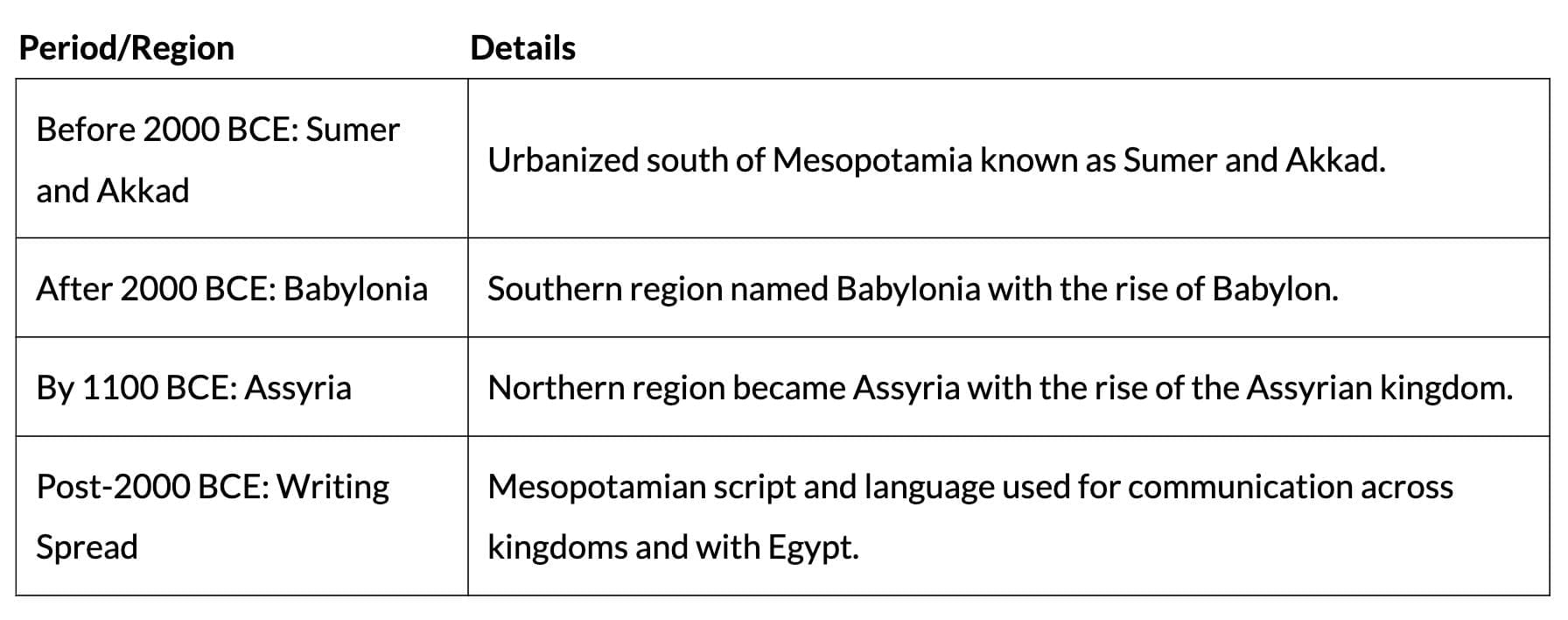
Historical Context
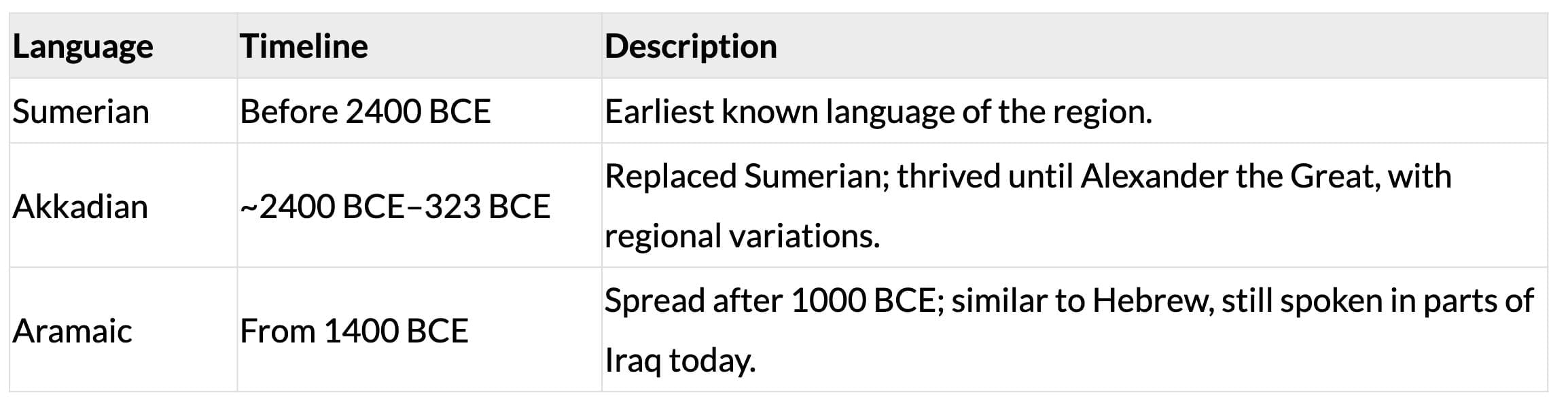
Languages
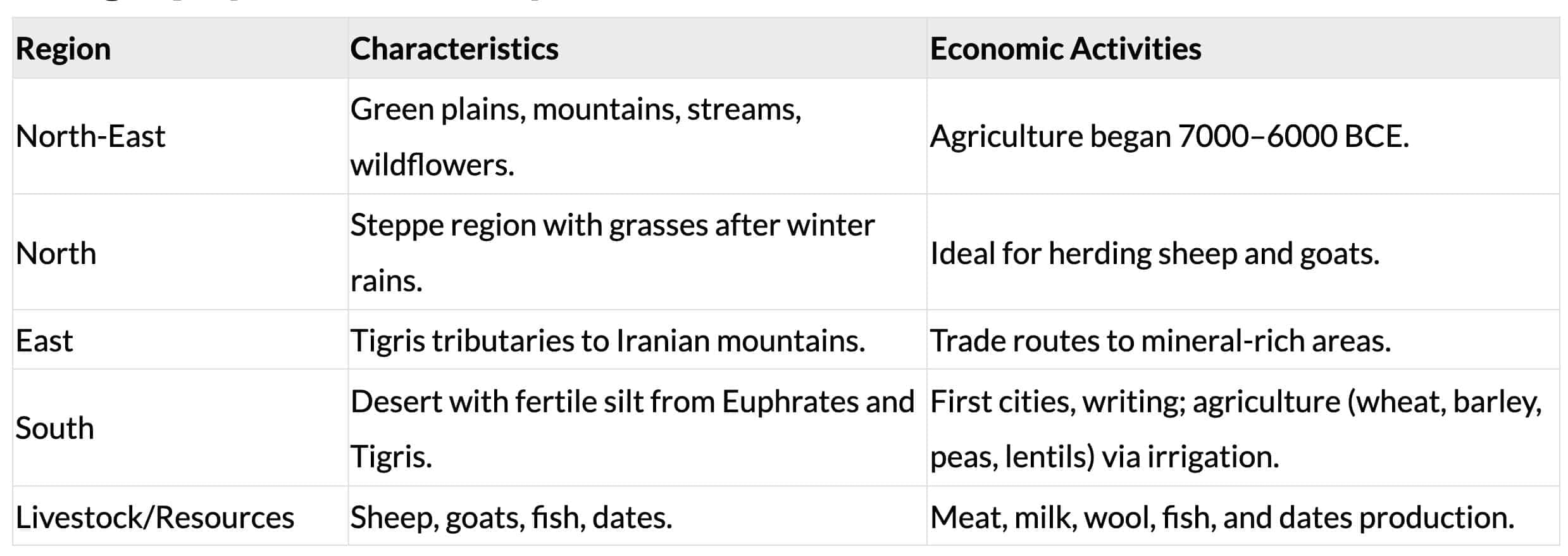
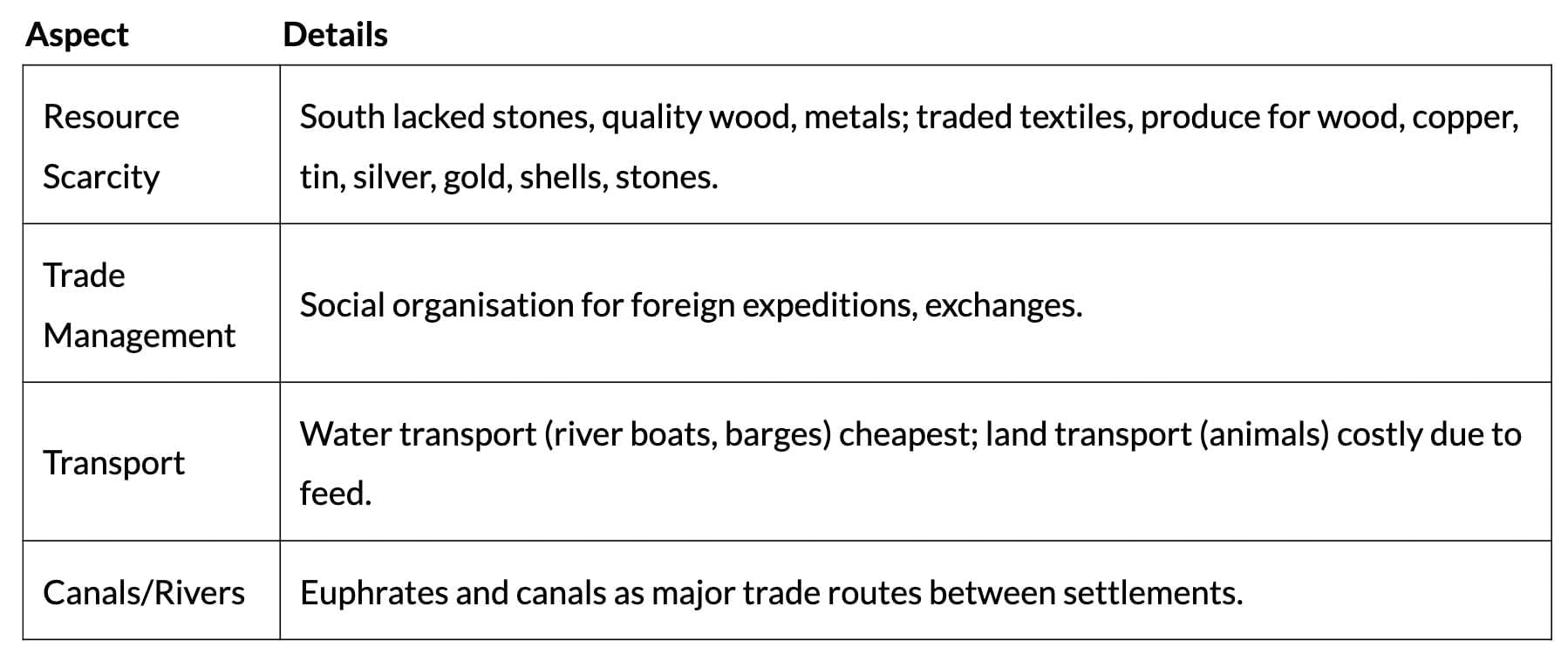
Geography and Economy
Significance of Urbanism
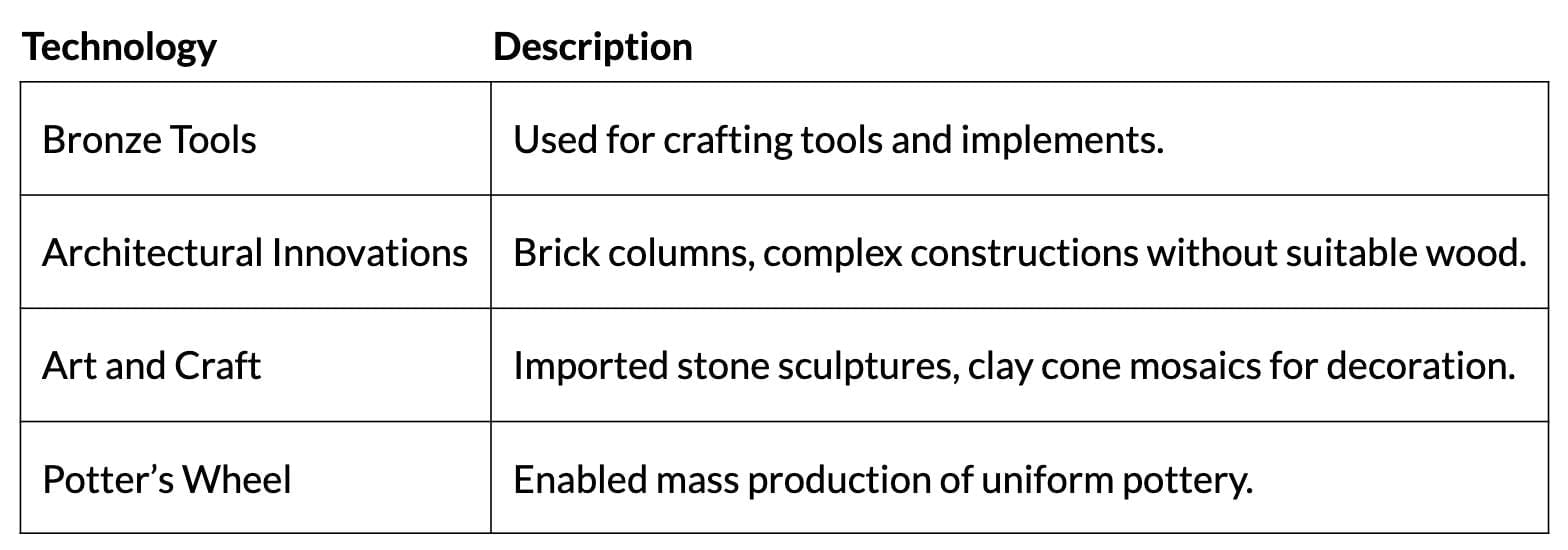
- Beyond Population: Cities thrive on diversified economies (trade, manufacturing, services).
- Interdependence: Residents rely on each other's products/services (e.g., a seal carver needs bronze tools).
- Division of Labour: Specialisation drives urban interdependence.
- Social Organisation: Requires trade/storage systems, hierarchical management, and written records.
Movement of Goods
Development of Writing
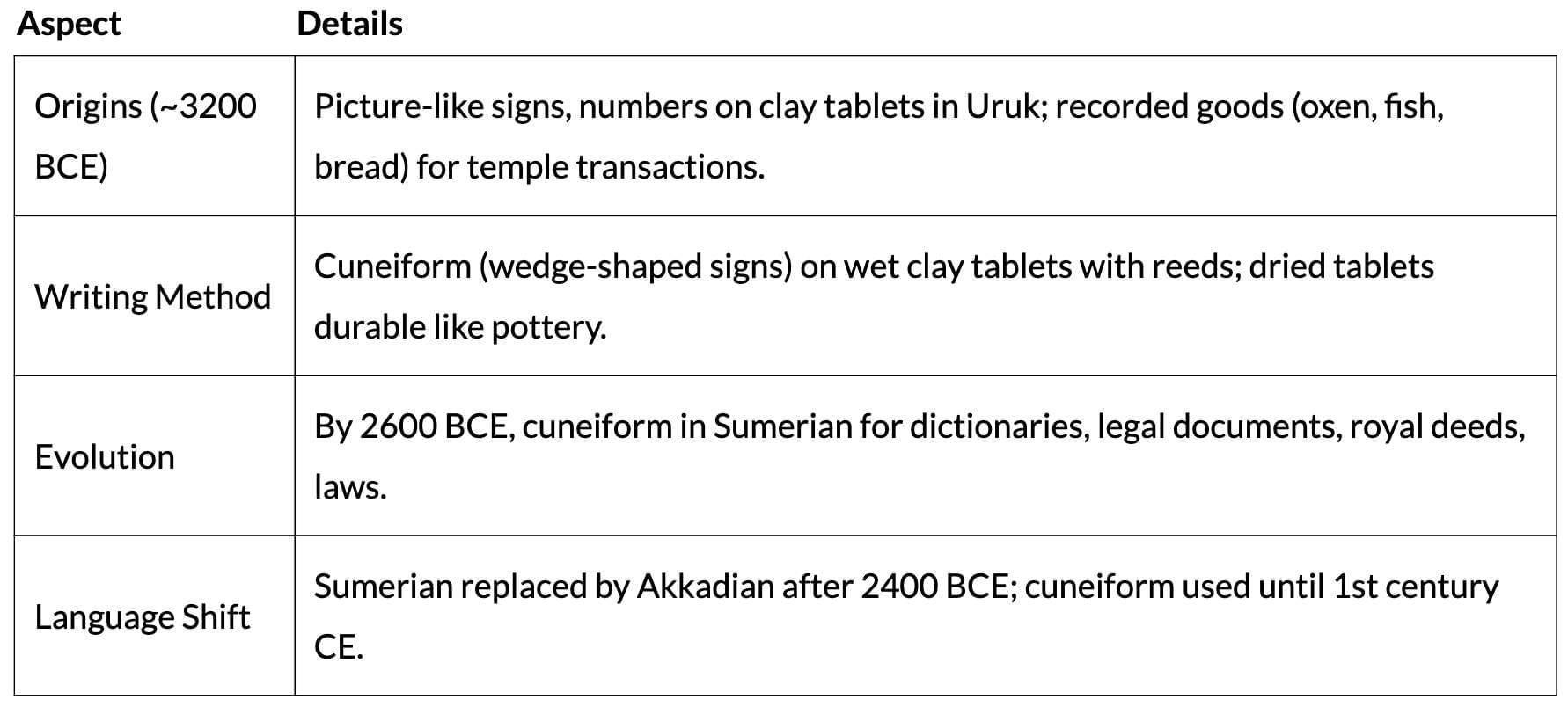
System of Writing
- Syllabic Signs: Cuneiform signs represent syllables (e.g., "say," "la"), unlike alphabetic signs.
- Complexity: Scribes learned hundreds of signs, wrote quickly on wet clay.
- Skilled Craft: Writing cuneiform was an intellectual achievement, representing language sounds.
Literacy
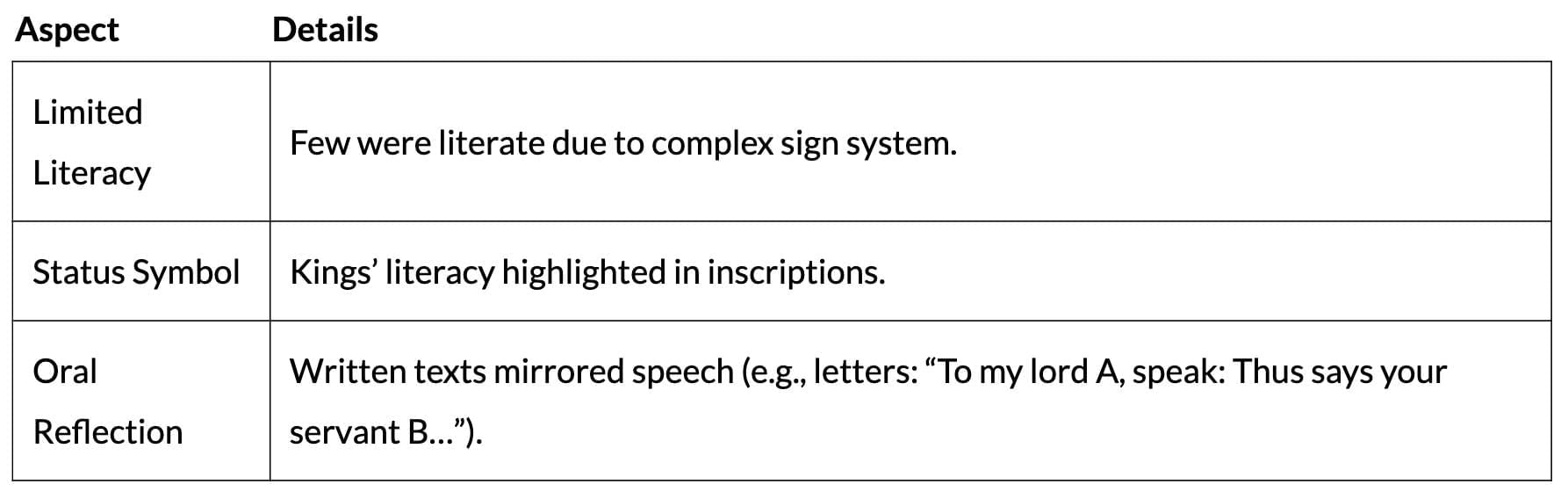
Uses of Writing
- Epic Poem (Enmerkar): Illustrates writing's role in trade, city life; Enmerkar used tablets to record messages.
- Significance: Writing symbolized urban superiority, organized trade, kingship.
Urbanisation in Southern Mesopotamia
Temples and Kings
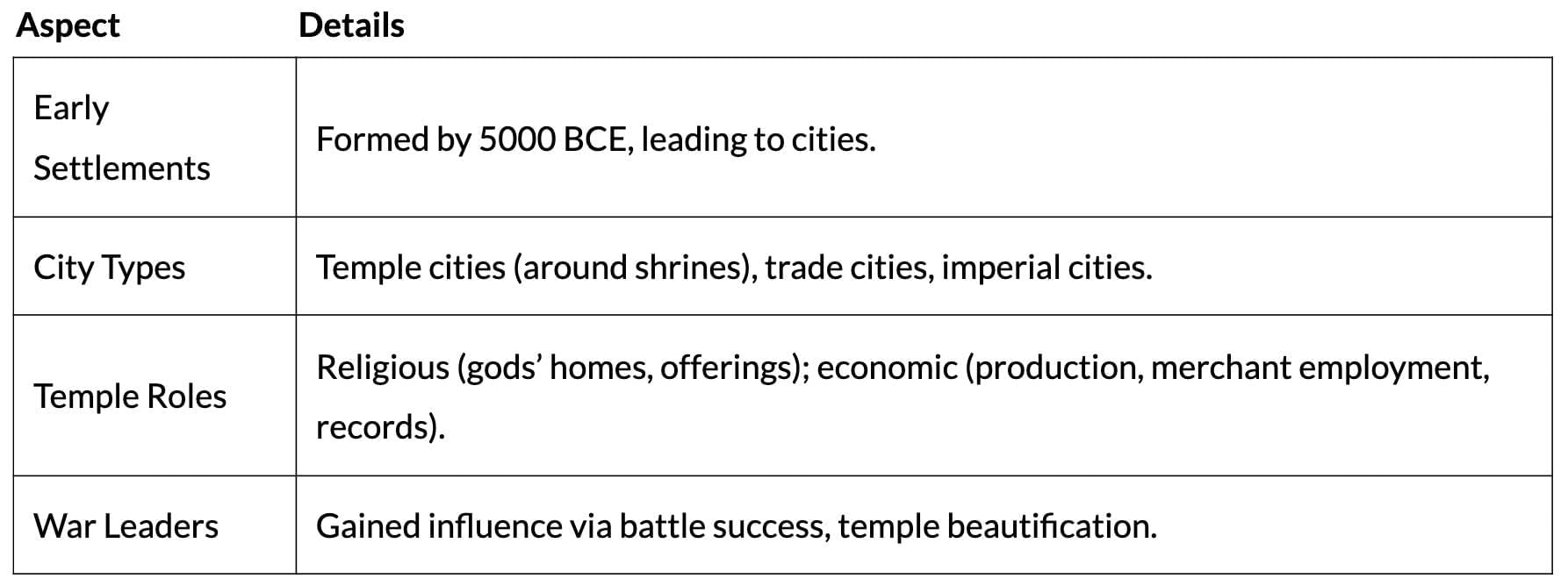
Urban Growth
- Uruk: Temple town, 250 hectares by 3000 BCE; defensive wall, population shift from villages.
- Workforce: Large projects (temples) used thousands, including war captives; workers received rations.
Technological Advances
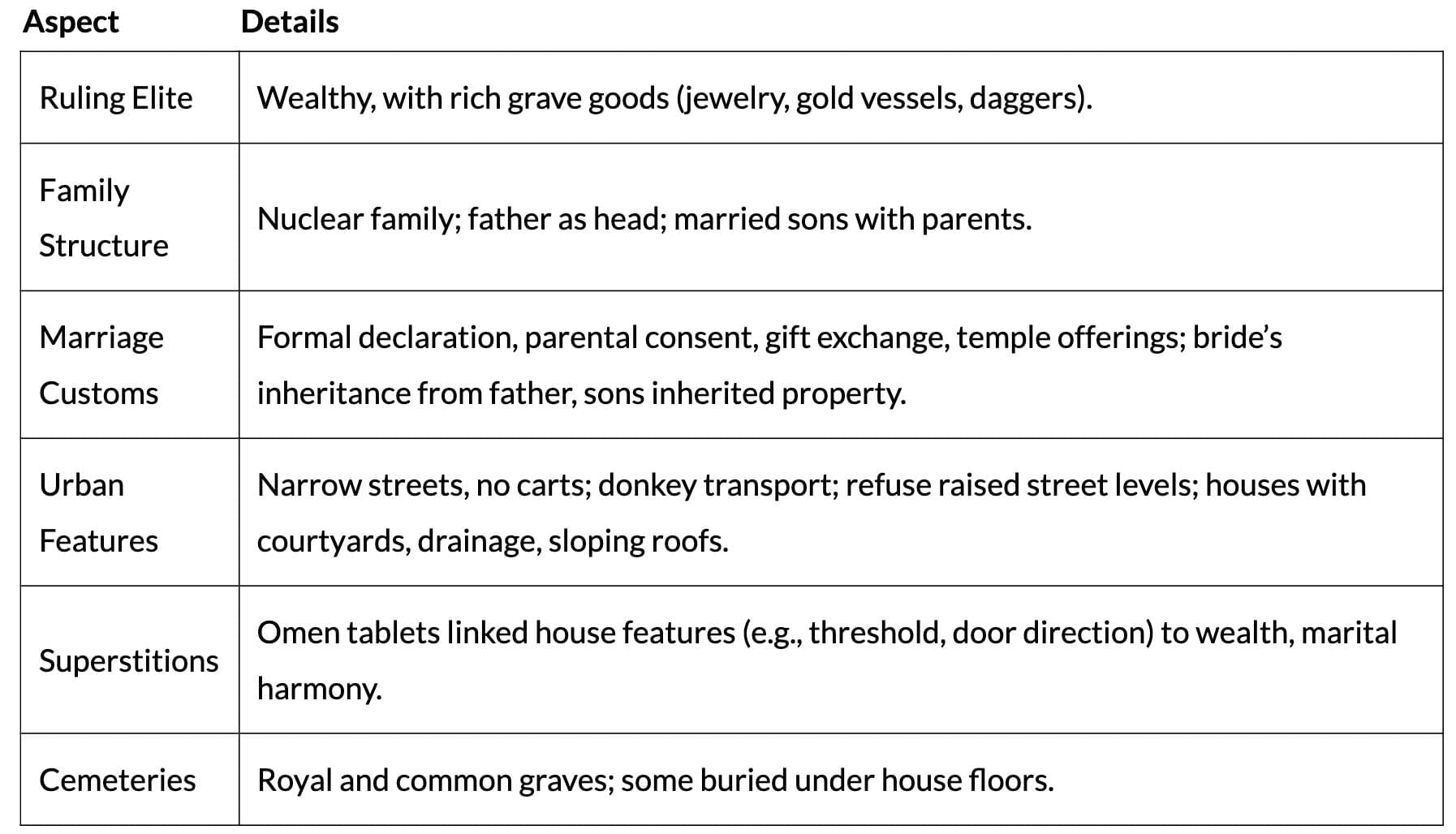
Life in the City (Ur)
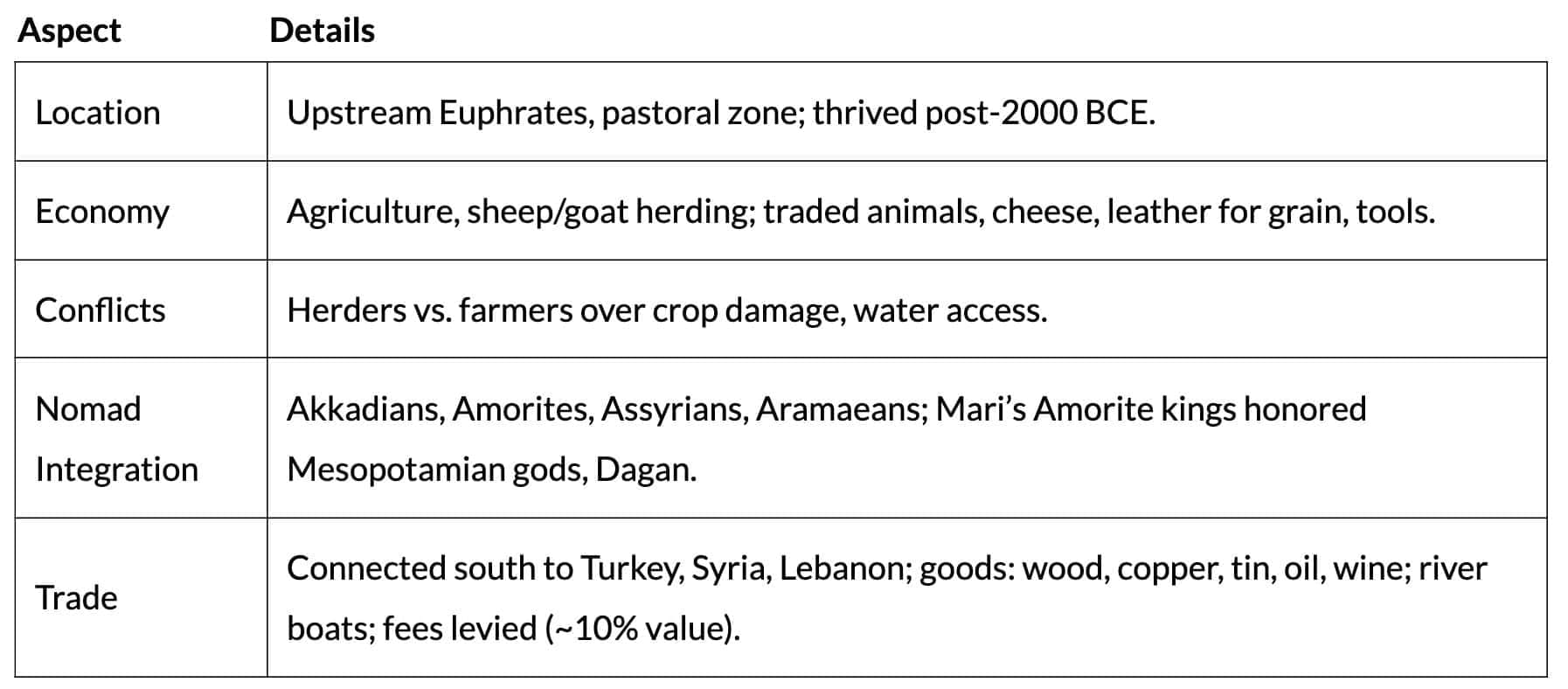
Trading Town: Mari
Cities in Mesopotamian Culture
- Pride in Cities: Celebrated in poetry, Epic of Gilgamesh; Gilgamesh found solace in Uruk's walls after failing to gain immortality.
- Cultural Diversity: Cities reflected vibrant, intermixed communities.
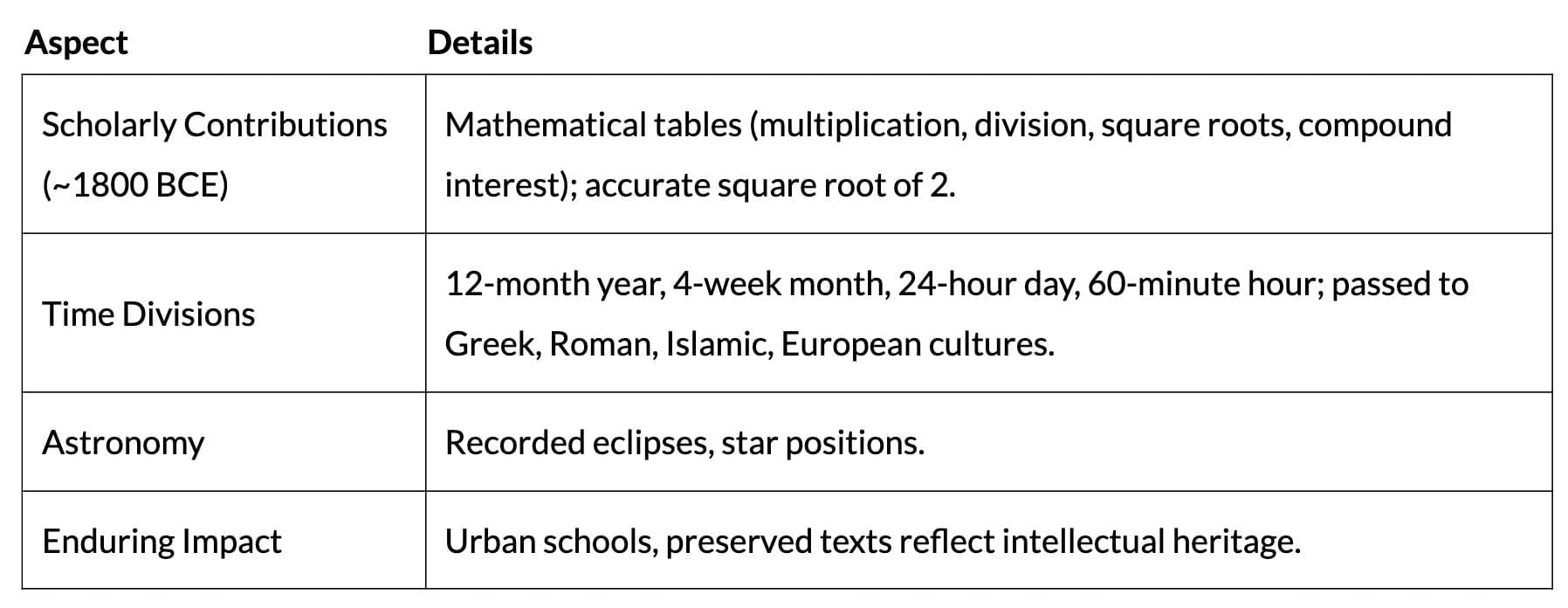
Legacy of Writing
Conclusion
Mesopotamia's vibrant city life, cultural intermixing, and innovations in governance, trade, mathematics, and timekeeping shaped urban development and scholarly traditions. Cities like Ur and Mari were centers of resilience, celebrated in epics like Gilgamesh, leaving a lasting legacy of interconnected societies.
The document Cheat Sheet: Writing and City Life is a part of the Humanities/Arts Course History Class 11.
All you need of Humanities/Arts at this link: Humanities/Arts
FAQs on Cheat Sheet: Writing and City Life
| 1. How did writing systems develop in early civilizations and why were they so important for city life? |  |
Ans. Writing systems emerged around 3200 BCE in Mesopotamia and Egypt to track trade, taxes, and administrative records in growing cities. They transformed urban societies by enabling record-keeping, legal contracts, and communication across distances-making complex city governance possible. Writing became essential for managing resources, establishing laws, and preserving knowledge in densely populated settlements.
| 2. What's the difference between pictographic and cuneiform writing, and which one came first? | |
Ans. Pictographic writing uses pictures to represent objects and ideas, while cuneiform employs wedge-shaped marks pressed into clay tablets. Pictographs developed first in early Sumerian cities around 3200 BCE, gradually evolving into cuneiform script, which was faster to write and could express complex thoughts. Cuneiform became the dominant writing system across Mesopotamia for administrative and literary purposes.
| 3. How did the invention of writing change the way cities were organized and governed? | |
Ans. Writing enabled cities to maintain detailed records of taxation, labour, and resources-critical for supporting large populations. Urban administrators used written laws and decrees to standardize governance across settlements. This documentation system allowed cities to grow beyond what oral tradition could manage, establishing bureaucracies, legal codes, and centralized authority that defined ancient urban civilization.
| 4. What role did scribes play in ancient cities, and why were they so valued in society? | |
Ans. Scribes were highly trained professionals who recorded laws, contracts, religious texts, and administrative documents in ancient cities. Their literacy made them indispensable to rulers, merchants, and temples, earning them elevated social status and wealth. Scribes essentially controlled information flow in urban societies, making them among the most powerful non-ruling figures in civilizations like Egypt and Mesopotamia.
| 5. How did writing help cities develop trade networks and economic systems? | |
Ans. Written records allowed merchants to document transactions, track debts, and establish credit systems essential for long-distance urban trade. Cities used writing to standardize weights, measures, and prices, creating predictable markets. Contract tablets and inventory lists enabled complex commercial relationships between distant cities, transforming local economies into interconnected trading networks that sustained urban growth and prosperity.
About this Document

1.5K Views

4.98/5 Rating

Apr 20, 2026 Last updated
Related Exams
Document Description: Cheat Sheet: Writing and City Life for Humanities/Arts 2026 is part of History Class 11 preparation. The notes and questions for Cheat Sheet: Writing and City Life have been prepared according to the Humanities/Arts exam syllabus. Information about Cheat Sheet: Writing and City Life covers topics like and Cheat Sheet: Writing and City Life Example, for Humanities/Arts 2026 Exam. Find important definitions, questions, notes, meanings, examples, exercises and tests below for Cheat Sheet: Writing and City Life.
Introduction of Cheat Sheet: Writing and City Life in English is available as part of our History Class 11 for Humanities/Arts & Cheat Sheet: Writing and City Life in Hindi for History Class 11 course. Download more important topics related with notes, lectures and mock test series for Humanities/Arts Exam by signing up for free. Humanities/Arts: Cheat Sheet: Writing and City Life
Description
Cheat Sheet: Writing & City Life of History Class 11 to help you remember important concepts with short tricks. Start learning for Humanities/Arts exam & improve retention with EduRev.
Information about Cheat Sheet: Writing and City Life
In this doc you can find the meaning of Cheat Sheet: Writing and City Life defined & explained in the simplest way possible. Besides explaining types of Cheat Sheet: Writing and City Life theory, EduRev gives you an ample number of questions to practice Cheat Sheet: Writing and City Life tests, examples and also practice Humanities/Arts tests



Related Searches
video lectures, Sample Paper, Important questions, Objective type Questions, Free, Cheat Sheet: Writing and City Life, MCQs, past year papers, study material, practice quizzes, ppt, Cheat Sheet: Writing and City Life, Exam, mock tests for examination, Semester Notes, Extra Questions, Previous Year Questions with Solutions, Summary, Cheat Sheet: Writing and City Life, pdf , Viva Questions, shortcuts and tricks;