Environment and Ecology (Part 1): July 2025 Current Affairs


Restoring Mangroves Can Turn the Tide on India's Coastal Security
Why in News?
Recent efforts in India to restore mangrove forests have shown promising results, highlighting their crucial role in coastal security and environmental health amidst increasing threats from urbanization and climate change.
Key Takeaways
- Mangroves are vital for enhancing climate resilience and biodiversity in coastal areas.
- Threats to mangrove ecosystems include urban expansion, aquaculture, pollution, and climate change.
- Successful restoration projects in Tamil Nadu, Gujarat, and Mumbai demonstrate the importance of community involvement and corporate partnerships.
Additional Details
- Extent of Mangroves in India: India has a total mangrove cover of 4,992 sq km, making up only 0.15% of the country's geographical area. West Bengal holds the largest concentration, particularly in the Sundarbans.
- Importance of Mangroves:
- Natural Coastal Shield: Mangroves protect coastal communities from cyclones and erosion. For example, during the 2004 tsunami, villages with mangroves in Tamil Nadu experienced less devastation.
- Climate Change Mitigation: They sequester "blue carbon," significantly contributing to carbon absorption and helping India meet its Paris Agreement commitments.
- Biodiversity Hotspots: Mangroves serve as breeding grounds for various marine species, such as those supported by the Thane Creek Flamingo Sanctuary.
- Livelihood Support: They sustain traditional livelihoods like fishing and honey gathering, crucial for communities in regions like the Sundarbans.
- Disaster Risk Reduction: They help slow floodwaters and stabilize shorelines, reducing the impact of natural disasters, as seen during Cyclone Phailin in Odisha.
- Threats to Mangroves:
- Urbanization: Mangrove areas are often cleared for housing and industrial development.
- Aquaculture: The conversion of mangrove lands for shrimp farming disrupts local ecosystems.
- Pollution: Industrial waste and plastics severely impact mangrove health.
- Climate Change: Rising sea levels and temperature fluctuations threaten mangrove regeneration.
- Resource Overexploitation: Unsustainable practices, such as excessive wood collection, contribute to degradation.
- Community Involvement in Tamil Nadu: Local communities have partnered with organizations to restore mangroves, implement hydrology restoration through tidal canal digging, and actively participate in seed collection and invasive species removal.
- Corporate Partnerships: Initiatives like Amazon's investment in mangrove restoration in Mumbai highlight the role of financial and technical support in ecological recovery.
- Gujarat's Leadership: Under the MISHTI scheme, Gujarat has made significant strides in mangrove restoration, planting 19,000 hectares of mangroves in just two years.
- Government Steps: The Indian government has launched missions to support afforestation, ecosystem restoration, and community-based conservation, recognizing mangroves as ecologically sensitive zones.
In conclusion, the restoration of mangroves is not only essential for environmental health but also plays a critical role in protecting coastal communities from disasters. Continued efforts in conservation, community involvement, and corporate partnerships are vital for the future of India's mangrove ecosystems.
Grassland Bird Census in Kaziranga
Why in News?
The Prime Minister has recently emphasized the significance of a pioneering grassland bird census conducted in Kaziranga National Park, Assam.
Key Takeaways
- This marks India's first-ever dedicated census for grassland birds.
- The initiative is led by Chiranjib Bora, a PhD scholar, with support from the INSPIRE Fellowship funded by the Department of Science & Technology.
- The census is organized by park authorities in collaboration with scientists and conservationists.
Additional Details
- Objective: The main aim is to document rare, endemic, and threatened grassland bird species, focusing on 10 priority species native to the Brahmaputra floodplains.
- Methodology Used:
- Passive Acoustic Monitoring (PAM): Recording devices are strategically placed in tall trees during the breeding season to capture sounds across 29 locations over 3 days. This method is particularly effective for detecting small, shy, and camouflaged birds that are not easily visible.
- Sound Identification Tools:
- BirdNet: A machine learning tool utilized for identifying bird calls.
- Spectrograms: A visual analysis of sound patterns. Final identifications are verified by ornithologists.
- Key Findings:
- A total of 43 grassland bird species were recorded during the census.
- Priority species identified include the Bengal Florican, Swamp Francolin, Finn's Weaver, Jerdon's Babbler, and Black-breasted Parrotbill, among others.
- A major discovery was the documentation of a breeding colony with over 85 Finn's Weaver nests, marking the first-ever observation of this nature.
In a related educational question, if you stroll through the countryside, you may encounter birds that follow cattle to catch insects disturbed by their movement through the grasses. Which of the following is/are such bird/birds?
- 1. Painted Stork
- 2. Common Myna
- 3. Black-necked Crane
Options: (a) 1 and 2 (b) 2 only* (c) 2 and 3 (d) 3 only
Barbados Threadsnake: Rediscovered Marvel
Why in News?
The Barbados threadsnake, recognized as the world's smallest known snake, has been rediscovered after being presumed extinct for several decades. This significant finding highlights the importance of conservation and the resilience of nature.
Key Takeaways
- The Barbados threadsnake belongs to the family Leptotyphlopidae.
- It is a blind, burrowing snake that primarily feeds on termites and ants.
- The species is critically endangered, facing threats primarily from habitat loss.
Additional Details
- Physical Characteristics: The Barbados threadsnake reaches a maximum length of only 10.4 cm (4.1 inches) and weighs approximately 0.6 g (0.02 ounces), making it the smallest known snake in existence.
- Behavior: These snakes are solitary and nocturnal, typically hiding under rocks during the day. They are adapted for a fossorial lifestyle, meaning they live primarily underground.
- Habitat: The natural habitat of the Barbados threadsnake is restricted to the eastern forests of Barbados, particularly tropical dry forests.
- Diet: As carnivores, their diet consists mainly of termite and ant larvae, and they often reside near nests of these insects.
- Reproduction: The species is oviparous, laying one slender egg as part of its reproductive process.
- Conservation Status: The Barbados threadsnake is classified as critically endangered by the IUCN Red List, primarily due to habitat loss.
The rediscovery of the Barbados threadsnake emphasizes the importance of conservation efforts and provides hope for the survival of this unique species.
Debrigarh Wildlife Sanctuary: Introduction of Tigers
Why in News?
The Odisha government has announced plans to introduce tigers to the renowned Debrigarh Wildlife Sanctuary located in the Bargarh district. This initiative has garnered attention from wildlife enthusiasts and conservationists alike.
Key Takeaways
- Debrigarh Wildlife Sanctuary is situated near Hirakud Dam, the longest dam in India.
- The sanctuary spans an area of approximately 347 sq.km and was established in 1985.
- It is historically significant due to its association with freedom fighter Veer Surendra Sai.
Additional Details
- Location: The sanctuary is located near the Mahanadi River, close to Hirakud Dam, which is recognized as the longest earthen dam globally.
- Vegetation: The area predominantly features mixed and dry deciduous forests, which support diverse wildlife.
- Flora: Notable tree species include Sal, Asana, Bija, Aanla, and Dhaura.
- Fauna: The sanctuary is home to various animals such as Indian leopards, sloth bears, chousingha (four-horned antelope), sambar deer, gaurs (Indian bison), wild boars, and Indian wild dogs (dholes).
- In addition, it serves as a vital wintering ground for migratory birds including the crested serpent eagle, flower peckers, red-vented bulbul, tree pie, drongo, and white-eyed oriental.
This planned introduction of tigers is expected to enhance the ecological balance of the sanctuary and attract more visitors, thereby promoting conservation efforts in the region.
New Guidelines for Management of Contaminated Sites
Why in News?
The Union Environment Ministry has announced the Environment Protection (Management of Contaminated Sites) Rules, 2025, as part of the Environment (Protection) Act, 1986. This initiative aims to establish a structured framework for addressing contaminated sites in India.
Key Takeaways
- Establishment of a dedicated legal framework for identifying and remediating contaminated sites.
- Emphasis on preventing environmental degradation and ensuring accountability of polluters.
- Funding patterns vary for different regions, with specific support for Himalayan and Northeast states.
Additional Details
- Nodal Agency: The Ministry of Environment, Forest and Climate Change (MoEFCC) is designated as the nodal agency for this initiative.
- Site Classification: Sites will be categorized as suspected, potentially contaminated, or confirmed based on scientific evidence.
- Exclusions: The framework excludes sites involving radioactive waste, mining, marine oil spills, and municipal solid waste, which are regulated separately.
- Transparency & Tracking: A real-time online portal managed by the Central Pollution Control Board (CPCB) will provide public access to site data.
- Public Participation: There will be a 60-day window for stakeholder feedback after sites are listed, and final site lists will be published in regional newspapers.
- Polluter Pays Principle: Identified polluters are responsible for the full cost of remediation and must repay within three months. Land use changes and ownership transfers will be restricted during and after clean-up.
- Orphan Sites: Clean-up of sites with no known polluter will be funded through the Environment Relief Fund, penalties from environmental violations, and government budgetary support.
- Voluntary Remediation: Private entities with the necessary technical capacity may undertake remediation with the consent of landowners.
- Monitoring Committees: State and Central-level committees will oversee the implementation and provide annual compliance reports.
These guidelines represent a significant advancement in India's efforts to manage contaminated sites effectively while promoting environmental protection and accountability.
International Tiger Day, 2025
Why in News?
On July 29, 2025, India joined 12 other nations in celebrating International Tiger Day, a significant global event aimed at raising awareness about the importance of tiger conservation.
Key Takeaways
- International Tiger Day promotes global efforts to protect tigers and their habitats.
- The theme for 2025 emphasizes the role of Indigenous Peoples and Local Communities in tiger conservation.
- India holds the largest population of wild tigers in the world.
Additional Details
- About International Tiger Day: This day is observed annually to foster a collaborative approach toward safeguarding tigers and ensuring they coexist peacefully with humans.
- History: International Tiger Day, also known as Global Tiger Day, was established during the Saint Petersburg Tiger Summit in 2010, where 13 tiger-range countries convened to address the alarming decline in tiger populations.
- Tiger Population in India: As of now, India is home to 75% of the world's wild tigers, with over 3,600 tigers inhabiting approximately 138,200 square kilometers of forested area.
- The increase in the tiger population is attributed to extensive conservation initiatives, particularly the national program known as Project Tiger.
This day serves as a crucial reminder of the ongoing efforts required to ensure the survival of tigers, highlighting the need for sustained conservation strategies and community involvement.
Sundarbans Set to Become India's Second-Largest Tiger Reserve
 Why in News?
The proposal to expand the Sundarbans Tiger Reserve by 1,100 sq km has received clearance from the National Tiger Conservation Authority (NTCA) and is now awaiting approval from the National Board for Wildlife (NBWL).
Key Takeaways
- The Sundarbans Tiger Reserve (STR) is located in West Bengal, at the southern tip of the Gangetic Delta.
- The current area of STR is 2,585.89 sq km, which would expand to 3,629.57 sq km if the proposal is approved.
- It is recognized as a Tiger Reserve, National Park, and Biosphere Reserve, and is part of a UNESCO World Heritage Site.
- The STR is the only mangrove forest in the world that supports a viable tiger population.
- There are over 100 tigers in the reserve, with 80 in the core area and 21 in adjacent forests.
Additional Details
- Location: The reserve is situated in the South and North 24-Parganas districts of West Bengal.
- Landscape: It features interconnected estuaries, tidal creeks, and 105 mangrove-covered islands.
- Flora: The predominant mangrove species include Avicennia, Rhizophora, and Heritiera.
- Fauna: The reserve is home to various species such as Royal Bengal Tigers, Fishing Cats, Estuarine Crocodiles, Irrawaddy Dolphins, King Cobras, and numerous endangered reptiles and birds.
- Boundaries:
- East: Bangladesh border (Raimangal, Harinbhanga rivers)
- South: Bay of Bengal
- North/West: Matla, Bidya, Gomdi Rivers
This expansion is significant as it will enhance conservation efforts and help maintain the biodiversity of this unique ecosystem.
India Notifies Environment Protection Rules to Address Chemically Contaminated Sites
Why in News?
The Ministry of Environment, Forest and Climate Change has officially announced the Environment Protection (Management of Contaminated Sites) Rules, 2025, marking a significant advancement in India's approach to managing sites contaminated by hazardous chemicals.
Key Takeaways
- Introduction of a legally binding framework to identify, assess, and remediate contaminated sites.
- Codification of procedures for addressing historically polluted areas, enhancing public health and ecosystem safety.
- Initial identification of 103 contaminated sites, with remediation efforts only underway at seven.
Additional Details
- Contaminated Sites:These are locations where hazardous and other wastes have been dumped historically, often before appropriate regulatory measures were established. Common examples include:
- Defunct industrial landfills
- Waste storage and chemical spill sites
- Abandoned chemical handling facilities
- Key Features of the Environment Protection Rules:
- The rules provide a structured, time-bound process for remediation.
- Steps include identification, preliminary assessment, detailed site surveys, remediation planning, and cost recovery.
- Scope and Exemptions: The rules do not apply to radioactive waste, mining-related contamination, marine oil pollution, or municipal solid waste dump sites to avoid regulatory overlap.
- Significance: This new legal framework represents a shift from fragmented enforcement to a more systematic approach to environmental remediation, defining responsibilities and timelines for action.
- Challenges in Implementation:Successful execution depends on:
- Scientific capacity for hazardous chemical assessment
- Institutional coordination among various agencies
- Funding support for remediation efforts
- Public awareness and community participation
In conclusion, the introduction of these rules is a pivotal step for India in tackling the serious issue of contaminated sites, aiming to protect public health and the environment through structured and legally enforced actions.
Marbled Cat: A Rare Discovery in Northeast India
Why in News?
In a significant development for wildlife research in Northeast India, camera traps have successfully captured the first-ever images of the elusive Marbled Cat in the Kakoi Reserve Forest, Assam.
Key Takeaways
- The Marbled Cat is a small wild cat found in South and Southeast Asia.
- Its scientific name is Pardofelis marmorata.
- It has a distribution range from the Eastern Himalayas to the Indochinese region.
- The IUCN Red List classifies it as Near Threatened.
Additional Details
- Habitat: Marbled Cats inhabit various environments, including mixed deciduous-evergreen forests, secondary forests, and rocky scrub, ranging from sea level to altitudes of 3,000 meters.
- Physical Characteristics: They are about the size of a domestic cat, measuring approximately 45-60 cm (18-24 inches) long, with tails of equal length. Their fur is soft, brownish-yellow with large, pale blotches outlined in black.
- Behavior: These cats are solitary and nocturnal, known for being excellent climbers. They primarily feed on small animals and birds.
- Distribution: In India, they are mainly found in the forests of the Northeastern states, including regions like Assam.
This groundbreaking observation highlights the importance of conservation efforts for the Marbled Cat and underscores the rich biodiversity present in India's northeastern forests.
Golden Jackal
 Why in News?
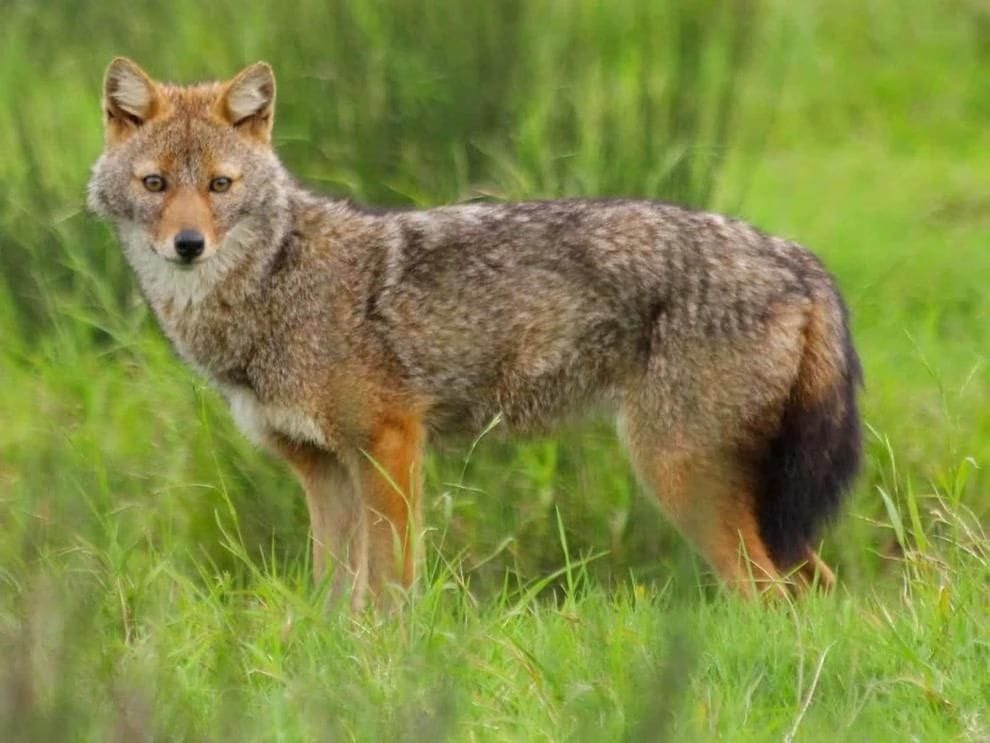
Recent citizen science studies have highlighted that the state of Kerala is home to an estimated population of between 20,000 and 30,000 Golden Jackals, showcasing their adaptability in human-dominated landscapes.
Key Takeaways
- The Golden Jackal, also known as the common jackal, is a medium-sized canid.
- They are primarily nocturnal in human-inhabited areas but may exhibit diurnal behavior in other regions.
- Golden Jackals live in mated pairs and are strictly monogamous.
- They have a diverse diet, being omnivorous.
Additional Details
- Habitat: Golden Jackals are abundant in valleys, along rivers, canals, lakes, and seashores, but are rare in foothills and low mountains.
- Distribution: They are found across North and East Africa, Southeastern Europe, and South Asia, extending to Burma. In India, their range extends from the Himalayan foothills to the Western Ghats.
- Conservation Status: According to the IUCN, Golden Jackals are classified as "Least Concern." They are listed under CITES Appendix III and protected by the Wildlife Protection Act of 1972 in Schedule I.
This information underscores the resilience of the Golden Jackal in adapting to various environments, particularly in areas dominated by human activity, rather than traditional forest habitats.
New Wasp Species Discovered in West Bengal
Why in News?
Recently, scientists from the Zoological Survey of India (ZSI) have reported the discovery of four new species of spider-egg parasitic wasps in West Bengal, highlighting the biodiversity of the region and the ecological roles these wasps play.
Key Takeaways
- Four new species of parasitoid wasps have been identified: Idris bianor, Idris furvus, Idris hyllus, and Idris longiscapus.
- The wasps are primarily found in agroecosystems and semi-natural habitats across West Bengal.
Additional Details
- Genus Idris: These wasps belong to the genus Idris (Hymenoptera: Scelionidae) and are known for their unique reproductive behavior.
- The wasps lay their eggs inside spider egg sacs, particularly targeting jumping spiders (Salticidae).
- Notably, the phenomenon of gregarious parasitism occurs, where multiple wasps develop within a single egg sac.
- Ecological Significance: Parasitoid wasps like Idris are crucial in controlling spider populations and maintaining the balance within arthropod communities.
This discovery emphasizes the importance of parasitoids in ecosystems and contributes to our understanding of biodiversity in India.
Discovery of New Bush Frogs in Meghalaya
 Why in News?
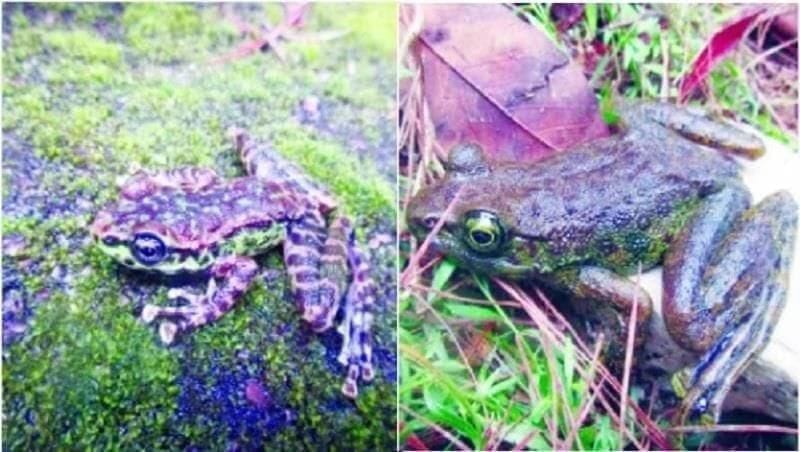
Recently, two new species of bush frogs, named Raorchestesjadoh and Raorchestesjakoid, were discovered in Meghalaya, India. This discovery adds to the biodiversity of the region and highlights the importance of conservation efforts.
Key Takeaways
- Raorchestesjadoh was found in Langtor, Eastern West Khasi Hills at 1,655 meters above sea level.
- Raorchestesjakoid was discovered in Lawbah, East Khasi Hills at an elevation of 815 meters.
- Both species are part of the Raorchestes genus, which includes a total of 80 recognized species.
- These frogs are unique for their direct development, bypassing the tadpole stage.
Additional Details
- Habitat: Both species inhabit bushes and trees near human settlements, indicating their adaptability to altered environments.
- Evolutionary Significance: Their distinct calls, morphological features, and DNA sequences place them within the Raorchestesparvulus species complex, emphasizing their unique evolutionary paths.
- Geographical Range: The Raorchestes genus has a wide distribution, extending from southern and northeastern India to regions in Nepal, Myanmar, Thailand, Laos, and southern China, reaching as far as Vietnam, Cambodia, and western Malaysia.
This discovery underscores the rich biodiversity of Meghalaya and the need for continued research and conservation efforts in the region.
Horsehair Worms: Recent Discoveries
Why in News?
Officials from the Forest Department have recently discovered Horsehair worms, scientifically known as Nematomorpha, in the Motidol beat area of the Mohandra region, part of the Southern Forest Division within the Panna Tiger Reserve.
Key Takeaways
- Horsehair worms, also referred to as Gordian worms, belong to the phylum Nematomorpha.
- They can grow to lengths ranging from several inches to over 14 inches.
- These worms are quite thin, measuring between 1/25 inch to 1/16 inch in width (1 mm to 1.5 mm), and maintain a uniform diameter.
- Color variations include whitish, yellow/tan, brown, and black.
- They are typically found in water sources like ponds, rain puddles, swimming pools, and even domestic water supplies.
Additional Details
- Life Cycle: Adult Horsehair worms are free-living and non-parasitic, while their immature stages are internal parasites that affect insects such as grasshoppers, crickets, and cockroaches.
- These worms are not parasites of humans, livestock, or pets and pose no threat to public health.
- They are considered beneficial as they help control populations of certain insects.
In summary, the presence of Horsehair worms in the Panna Tiger Reserve highlights the biodiversity of the region and their ecological role as natural pest controllers.
Ramsar COP15 Opens in Zimbabwe
 Why in News?
Delegates from 172 countries gathered in Victoria Falls, Zimbabwe, for the 15th Meeting of the Conference of the Contracting Parties (COP15) to the Ramsar Convention on Wetlands. This event highlights global efforts to address wetland conservation.
Key Takeaways
- Theme: Protecting Wetlands for Our Common Future
- Host Nation: Zimbabwe, which holds the presidency of the Ramsar Convention for three years
- Expected Outcome: Adoption of the Victoria Falls Declaration, a global framework aimed at protecting wetlands
Additional Details
- About the Ramsar Convention: Adopted on 2 February 1971 in Ramsar, Iran, the convention's objective is to conserve and ensure the wise use of wetlands worldwide.
- Key Functions:
- Identify wetlands of international importance
- Promote sustainable management practices
- Foster international cooperation in wetland conservation
- Governing Body: The Conference of the Contracting Parties (COP) meets every few years to review implementation, adopt site designations, budgets, and policy actions. It includes member and non-member states, as well as IGOs and NGOs as observers.
- Criteria for Ramsar Site Designation:A wetland must meet at least one of the following nine criteria:
- Unique or rare wetland type
- Habitat for endangered, vulnerable, or endemic species
- Crucial for migratory waterbirds
- High ecological, hydrological, or biodiversity value
- Supports ecosystem services (e.g., flood control, water purification)
- Provides cultural or spiritual value
- Serves sustainable community livelihoods
- Holds scientific or educational importance
- Requires global cooperation due to threats
India has been a part of the Ramsar Convention since 1 February 1982, with its first Ramsar site being Chilika Lake in Odisha, designated in 1981. As of July 2025, India has a total of 91 Ramsar sites, covering approximately 13.58 lakh hectares, which constitutes about 10% of India's wetland area. The top states with Ramsar sites include Tamil Nadu with 20 sites and Uttar Pradesh with 10 sites. Notably, India has never chaired a Ramsar COP session.
Global Snapshot and Other Facts
- Total Members: 171 countries
- Leading Countries:
- United Kingdom: 175 sites (most)
- Mexico: 142 sites
- Bolivia: Largest area (~1.48 lakh sq. km under protection)
- World Wetlands Day: Celebrated annually on 2 February
- Montreux Record: A register for Ramsar sites under serious threat requiring urgent conservation
Piratula acuminata: A New Spider Discovery in the Sundarbans
Why in News?
Researchers from the Zoological Survey of India (ZSI) have recently identified a new species of spider named Piratula acuminata on Sagar Island, located in the Sundarbans region. This discovery adds to the biodiversity knowledge of the area and highlights the unique species found within this ecological hotspot.
Key Takeaways
- Piratula acuminata is a newly discovered species of spider.
- It belongs to the family Lycosidae, commonly known as wolf spiders.
- This is the first recorded instance of the genus Piratula in India.
- The spider is characterized by its medium size, measuring approximately 8-10 millimeters in length.
Additional Details
- Habitat: This spider species was discovered specifically on Sagar Island in the Sundarbans, a region known for its rich biodiversity.
- Physical Description:Piratula acuminata features a pale creamy-white body adorned with brown and chalk-white spots on its abdomen, along with a pair of light brown stripes towards the rear.
- Behavior: Unlike web-building spiders, wolf spiders like Piratula acuminata are ground-dwelling predators that utilize ambush tactics to capture their prey.
- Geographical Significance: The genus Piratula is primarily found across Asia, with few occurrences in Europe and North America, making this discovery significant for Indian arachnology.
The identification of Piratula acuminata not only enriches the understanding of local biodiversity but also emphasizes the need for continued research and conservation efforts in the Sundarbans region.
Environmental Flow of the Ganga River
Why in News?
Recently, a significant meeting chaired by the Union Minister of Jal Shakti focused on the environmental flow (e-flow) of the Ganga River and its tributaries, highlighting the urgency of addressing water management issues in India.
Key Takeaways
- Environmental flow (e-flow) is essential for sustaining freshwater ecosystems and supporting livelihoods dependent on these water resources.
- Indian rivers face severe ecological challenges due to dam constructions, pollution, and encroachments.
- The concept of e-flow emphasizes the necessity of maintaining a minimum flow of water to protect river health.
Additional Details
- Environmental Flow: Refers to the quantity, timing, and quality of water flow required to sustain freshwater ecosystems and the communities that rely on them.
- Challenges: Recent decades have seen extensive alterations in river flows due to activities like dam building and pollution, which disrupt the ecological balance.
- Significance: Maintaining e-flow is crucial for ecological integrity and offers substantial benefits to human welfare, particularly in regions where water use is heavily contested.
- E-flow studies focus on the habitat and flow needs of vital fish species to ensure the survival of aquatic life and maintain a balanced river system.
- Ensuring e-flow contributes to long-term ecological and economic advantages for society.
The meeting's discussions underscore the importance of implementing effective strategies to protect the Ganga River's environmental flow, thus ensuring the sustainability of its ecosystems and the communities that depend on them.
The Scientist Who Made 'Mangroves' a Buzzword
Why in News?
Mangroves, once valued primarily by local communities for their resources, have gained global recognition for their crucial environmental roles. Their importance now encompasses disaster risk reduction, climate adaptation, carbon sequestration, and the protection of diverse shoreline habitats. This shift is largely credited to scientific research, policy changes, and the advocacy of figures like M.S. Swaminathan.
Key Takeaways
- Mangroves are recognized for their role in climate change mitigation and disaster resilience.
- The advocacy and research of M.S. Swaminathan have been pivotal in reshaping perceptions of mangroves.
- India has made significant strides in mangrove restoration and management since the late 20th century.
Additional Details
- M.S. Swaminathan: A prominent advocate for mangrove conservation, Swaminathan highlighted the ecological, economic, and social importance of mangroves, particularly in the face of climate change.
- International Society for Mangrove Ecosystems (ISME): Founded by Swaminathan, ISME has been instrumental in promoting global mangrove conservation efforts.
- Joint Mangrove Management Programme: This initiative emerged from participatory research, emphasizing community involvement in mangrove restoration.
- India's mangrove cover is currently 4,991.68 km², reflecting a positive trend due to science-based policies and collaborative efforts.
World Mangrove Day (July 26) serves as a reminder of the progress made in mangrove conservation and the ongoing need for collaborative efforts to ensure their protection as vital resources for environmental security and climate resilience.
Macquarie Island Earthquake
Why in News?
A recent earthquake measuring 6.0 on the Richter Scale struck the western region of Macquarie Island, drawing attention to this unique geological site.
Key Takeaways
- Macquarie Island is located approximately 1,500 km southeast of Tasmania, Australia, in the Pacific Ocean.
- The island serves as an important geological site where the Indo-Australian tectonic plate meets the Pacific plate.
Additional Details
- Geographical Location: Macquarie Island is situated about halfway between Australia and Antarctica, measuring about 34 kilometers (21 miles) in length and 5 kilometers (3 miles) in width.
- Significance: It is the only place on Earth where rocks from the mantle, located 6 km below the ocean floor, are exposed above sea level. This exposure contributes to its status as a UNESCO World Heritage Site since 1997.
- Flora and Fauna: Although there are no permanent residents, the island hosts various native vegetation types, including grasses and mosses, as well as a diverse range of wildlife, such as 4 species of penguins and 4 species of albatross, along with 57 recorded seabird species.
- Conservation Status: Politically part of Tasmania, Australia, Macquarie Island became a Tasmanian State Reserve in 1978, highlighting its significant ecological and conservation value.
This earthquake not only raises concerns over geological activity but also emphasizes the ecological importance of Macquarie Island as a critical site for biodiversity and geoconservation.
Significance of ICJ Ruling on Climate Change
 Why in News?
The International Court of Justice (ICJ) has issued a groundbreaking advisory opinion affirming that nations possess a legal obligation under international law to mitigate greenhouse gas emissions. Although the ruling is not legally enforceable, it has the potential to enhance climate litigation on a global scale and hold countries accountable for their inaction, including the possibility of compensation claims.
Key Takeaways
- The ICJ ruling emphasizes climate action as a binding duty under international law.
- The opinion was influenced by a UN General Assembly resolution and supports demands from developing nations for stronger commitments from industrialized countries.
- Failure to comply with climate obligations may result in liability for compensation related to climate-related damages.
Additional Details
- Case Background: Initiated by Vanuatu, a campaign for an ICJ advisory opinion on climate change began in September 2021, highlighting the urgent need for legal action for small island nations endangered by rising sea levels.
- UN General Assembly Resolution: In March 2023, the UN General Assembly adopted a resolution, urging the ICJ to clarify the obligations of states under international law concerning environmental protection.
- Legal Framework: The ICJ's advisory opinions, although not binding, carry significant legal and moral authority, guiding the evolution of international law regarding climate obligations.
- The court's opinion states that all countries are legally obligated to reduce greenhouse gas emissions, with industrialized nations required to lead these efforts and assist developing nations.
- Failure to meet these obligations is classified as an "internationally wrongful act," which could lead to accountability for affected states and individuals.
- The ruling also acknowledges the right of "injured states" to seek reparations for climate impacts, which may open avenues for legal action against wealthier nations and corporate polluters.
In conclusion, while the ICJ's advisory opinion does not impose immediate penalties, it establishes a vital precedent that emphasizes the legal and moral responsibilities of nations in combating climate change. The true effect of this ruling will unfold as national courts reference it in future climate-related cases and as governments respond to their duties under international law.
Coral Loss in Lakshadweep
Why in News?
A recent study spanning 24 years by the Nature Conservation Foundation highlights a significant decline in coral cover in Lakshadweep, revealing a reduction of 50% since 1998.
Key Takeaways
- Study Duration: 24-year study (1998-2022)
- Findings: 50% decline in live coral cover-from 37.2% to 19.6%
- Main Cause: Repeated marine heatwaves linked to climate change
- Study Locations: Agatti, Kadmat, and Kavaratti atolls monitored
- Response Clusters: Six coral groups identified based on depth, wave exposure, heat resistance, and recovery patterns
- Recovery Timeline: Requires at least 6 years without bleaching for healthy regeneration
Additional Details
- Coral and Coral Bleaching: Corals are colonies of tiny animals called polyps that build calcium carbonate skeletons. They host zooxanthellae, microscopic algae that provide nutrients via photosynthesis.
- Coral Types:
- Hard Corals: Form reef structures (e.g., brain coral, staghorn coral)
- Soft Corals: Flexible, grow on reef surfaces but do not build reefs
- Habitat Requirements:
- Water Quality: Must be clean and low in sediment
- Temperature Range: Prefer 20-21°C; typically found in waters less than 90 metres deep
- Salinity: Optimal range is 27-30 parts per thousand (ppt)
- Ocean Currents: Nutrient-rich water flow is essential
- Coral Bleaching: Triggered by heat stress, pollution, or acidification, leading to the loss of algae. If stress persists, corals turn white due to loss of algae, which is their main food source, and can die if stress continues for prolonged periods.
In conclusion, the ongoing coral decline in Lakshadweep is a significant environmental concern, emphasizing the need for immediate action to combat climate change and protect marine biodiversity.
Lantana camara: An Invasive Threat to Biodiversity
Why in News?
The invasive species Lantana camara, initially introduced as an ornamental plant, now infests approximately 325,282 hectares of forests in Himachal Pradesh, threatening the state's native biodiversity.
Key Takeaways
- Lantana camara is an invasive alien species native to Central and South America.
- This pantropical weed aggressively proliferates, forming dense thickets.
- It was first introduced to India in the early 18th century and has since spread throughout tropical regions of the country.
- Its spread is moving from lower elevations to higher altitudes.
Additional Details
- Ecological Impact:Lantana camara produces allelochemicals that inhibit the growth of other plant species beneath its canopy, leading to a decline in biodiversity by replacing native flora.
- Management strategies include utilizing its biomass for socioeconomic benefits, such as making furniture and fuelwood.
- Its biomass can also be transformed into organic compost and vermicompost, providing an alternative to chemical fertilizers in organic farming.
In conclusion, the invasion of Lantana camara poses significant ecological challenges, but with effective management and utilization strategies, its impact can be mitigated while also benefiting local economies.
Karenia mikimotoi: Toxic Algae Outbreak in South Australia
Why in News?
A significant outbreak of toxic algae, specifically due to Karenia mikimotoi, has occurred off the coast of South Australia. This phenomenon has led to devastating effects on numerous marine species and has disrupted local tourism and fishing industries.
Key Takeaways
- Karenia mikimotoi is a prevalent red-tide dinoflagellate found mainly in the eastern North Atlantic and around Japan.
- This organism releases harmful hemolytic and ichthyotoxins, adversely affecting fisheries and marine ecosystems.
- No confirmed reports suggest direct impacts on human health from K. mikimotoi, though it causes significant marine fauna mortality.
- Large die-offs of K. mikimotoi can lead to anoxic conditions, depleting oxygen levels in surrounding waters.
- This species is less toxic overall but has been reported in many regions worldwide, including Ireland, Norway, India, Japan, Korea, Australia, South Africa, Alaska, Texas, and the east coast of the U.S.
Additional Details
- Characteristics:Karenia mikimotoi is a photosynthetic organism featuring oval to round yellow-brown chloroplasts, each containing a pyrenoid. It possesses a large ellipsoidal nucleus situated in the left hypothecal lobe.
- This algae can adapt to a range of environmental conditions, including variations in light, temperature, salinity, and nutrient levels.
This outbreak highlights the ecological challenges posed by Karenia mikimotoi and underlines the importance of monitoring and managing harmful algal blooms to protect marine environments and local economies.
Empowering Urban India for Climate Resilience
 Why in News?
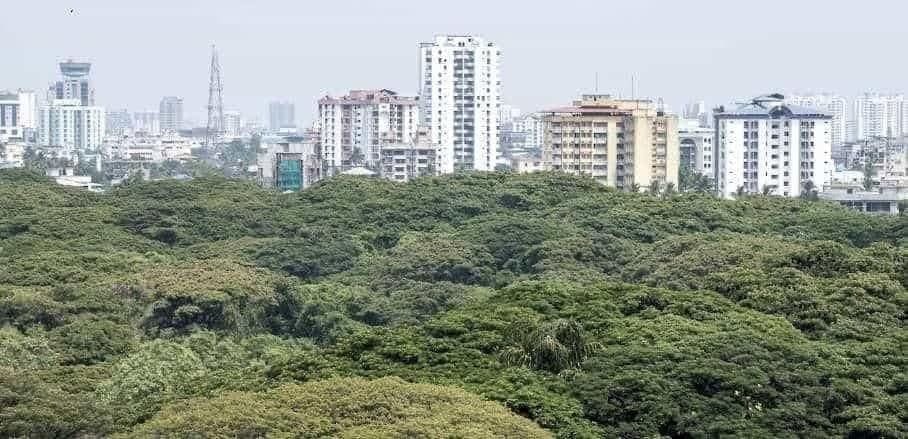
India's urban areas are experiencing rapid growth, which presents significant challenges in adapting to the impacts of climate change. A recent report by the World Bank, titled "Towards Resilient and Prosperous Cities in India," in collaboration with the Union Ministry of Housing and Urban Affairs (MoHUA), underscores the urgent need for improved urban climate resilience. The report advocates for greater autonomy for Urban Local Bodies (ULBs) and highlights the necessity of an estimated $2.4 trillion investment by 2050 to address these challenges.
Key Takeaways
- The necessity for urban autonomy in climate governance is emphasized, with evidence indicating that cities with decision-making power have better climate resilience.
- The report highlights the financial and population projections essential for urban climate adaptation.
- Best practices in Indian cities are cited as models for resilience against climate change.
- Conclusive recommendations for national and local governments aim to improve urban climate readiness.
Additional Details
- Urban Autonomy: The World Bank stresses the importance of implementing the 74th Constitutional Amendment Act of 1992 to enhance local governance structures, enabling better resource mobilization, accountability, and revenue generation.
- Climate Risks:Urban India faces two primary risks:
- Pluvial flooding due to inadequate drainage systems and excessive concretization.
- Extreme heat stress exacerbated by the urban heat island effect.
- The report estimates that annual flood-related losses could reach $5 billion by 2030 and $30 billion by 2070, while heat-related fatalities may double to over 300,000 annually by 2050.
Financial and Population Projections
- It is projected that $2.4 trillion will be necessary by 2050 to build resilient urban infrastructure and services.
- An investment of at least $150 billion is required over the next 15 years to enhance flood resilience in 60% of high-risk cities.
- India's urban population is expected to nearly double to 951 million by 2050, with cities generating 70% of new employment by 2030.
Best Practices Cited in India
- Ahmedabad: Developed a Heat Action Plan model to strengthen early warning systems, enhance healthcare readiness, increase green cover, and adjust work schedules for outdoor laborers.
- Kolkata: Implemented a city-level flood forecasting and warning system.
- Indore: Invested in a modern solid waste management system, improving cleanliness and generating green jobs.
- Chennai: Adopted a climate action plan focused on risk assessment and promoting both adaptation and low-carbon growth.
Recommendations of the Report
- For National and State Governments: Develop a financing roadmap and establish standards to boost municipal capacity while involving the private sector in climate-resilient infrastructure development.
- For Cities and ULBs: Assess climate risks locally and mobilize capital for adaptation and mitigation through methods like cool roofs, early warning systems, urban greening, and adjusted working hours to reduce heat stress.
- Implement urban planning strategies that minimize impervious surfaces and enhance stormwater management.
The World Bank-MoHUA report emphasizes the critical need to empower cities through enhanced autonomy, targeted investments, and necessary institutional reforms. These steps are essential for ensuring that India's urban future is not only climate-resilient but also economically vibrant and socially inclusive.
IUCN World Conservation Congress 2025
Why in News?
The International Union for Conservation of Nature (IUCN) World Conservation Congress 2025 is set to take place in Abu Dhabi, focusing on the utilization of genetic tools in conservation efforts.
Key Takeaways
- The IUCN World Conservation Congress is the largest global assembly of nature conservation experts, leaders, and decision-makers.
- This event occurs every four years and will shape the future priorities for nature conservation and climate change.
Additional Details
- Components of the Congress:The Congress consists of three major components:
- Forum: A vast knowledge marketplace for conservation and sustainable development science, practices, and innovations.
- Exhibition: A space where IUCN members, businesses, and academia can host pavilions, booths, and events.
- Member's Assembly: The highest decision-making body of IUCN, where members vote on critical conservation and sustainable development issues.
- Theme of 2025 Congress: The theme, "Powering transformative conservation," will address five essential themes aimed at driving significant changes for a sustainable future for nature and humanity.
- Overview of IUCN: Founded in 1948, the IUCN (International Union for Conservation of Nature) is the largest and most diverse environmental network, comprised of government and civil society organizations. It leverages knowledge and resources for conservation.
- Governance Structure:
- The IUCN Council is the primary governing body between Congress sessions, overseen by the IUCN President.
- The Members' Assembly, as IUCN's highest governing body, discusses strategic topics, adopts motions, approves programs, and elects the IUCN Council.
The IUCN World Conservation Congress serves as a critical platform for addressing pressing environmental issues, enhancing collaboration, and guiding global conservation efforts.
Threat of Ambrosia Beetle to Rubber Plantations in Kerala
Why in News?
Rubber plantations in Kerala are facing a significant challenge due to the attack of ambrosia beetles, which form a detrimental alliance with fungi, leading to severe leaf fall and rapid drying of trees.
Key Takeaways
- Ambrosia beetles are primarily associated with ambrosia fungi.
- These beetles are native to Central and South America and were first reported in India in 2012.
- The beetles attack stressed, dead, or infected trees, leading to economic losses in rubber production.
Additional Details
- Ambrosia Beetle: This beetle gets its name from the fungi it cultivates. It has a mutualistic relationship with two fungal species: Fusarium ambrosia and Fusarium solani.
- Effects on Rubber Trees: The ambrosia beetles bore tunnels, known as galleries, in the bark of trees, where they introduce fungi. The fungi weaken the wood, enabling deeper penetration. This relationship can lead to severe structural damage, leaf fall, trunk drying, and even tree death, significantly affecting latex production.
- Prevention Techniques: To mitigate the impact of this beetle-fungus duo, experts recommend using antifungal agents, removing infected tree parts, and employing traps designed for ambrosia beetles.
Continued monitoring and preventive actions are essential to safeguard rubber plantations from this invasive threat.
Guryul Ravine Fossil Site
 Why in News?
The Geological Survey of India (GSI) has issued a serious warning to the Jammu and Kashmir administration regarding the Guryul Ravine fossil site in Khonmoh, near Srinagar. This site is facing significant threats due to human activities, which jeopardize its unique scientific value.
Key Takeaways
- The Guryul Ravine fossil site is located in the Vihi district of Kashmir.
- It contains fossils dating back 260 million years, providing evidence of the Permian-Triassic extinction event.
- The site is near Dachigam National Park and is part of the Khonmoh Conservation Reserve.
- Human activities such as quarrying and construction are damaging the site.
Additional Details
- Permian-Triassic Extinction Event: This event, also known as the End-Permian Extinction or the 'Great Dying', occurred approximately 251.9 million years ago and marks a major boundary between the Permian and Triassic geological periods. It is characterized by a significant loss of biodiversity across vast regions.
- The Guryul Ravine site is believed to preserve evidence of the world's first recorded tsunami event, with its imprint still visible in the exposed rock layers.
The Guryul Ravine fossil site is of immense scientific importance, and its preservation is crucial for understanding Earth's geological history. Immediate action is necessary to mitigate the threats posed by ongoing human interventions.
Discovery of Lyriothemis abrahami
 Why in News?
A new species of dragonfly, Lyriothemis abrahami, has recently been officially documented in Kerala, previously misidentified as Lyriothemis flava due to their superficial similarities.
Key Takeaways
- Location: Discovered in Kerala, India.
- Habitat: Breeds in small water pools found in tree holes.
- Distinct Features: Strong sexual dimorphism with uniquely shaped hamules in males and jet black bodies with yellow triangular spots in females.
- Distribution: Found in lowland rainforests to mid-elevation evergreen and deciduous forests, at elevations between 50 m and 1,100 m above sea level.
- Odonate Species Count: This discovery increases Kerala's odonate species count to 191, including 78 endemic species.
Additional Details
- Ecological Significance:Lyriothemis abrahami serves as an indicator of forest health, highlighting the importance of habitat conservation for broader ecological benefits.
- Dragonflies, including this species, are apex predators in the insect world, playing a crucial role in regulating populations of many other insects, such as mosquitoes and other pests in urban areas.
The documentation of Lyriothemis abrahami underscores the rich biodiversity of Kerala and the importance of ongoing research in understanding and conserving these vital ecosystems.
India's Soil Crisis and the Imperative for Nutritional Agriculture
 Why in News?
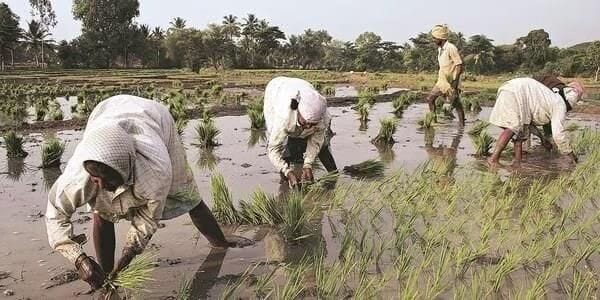
India has undergone a significant transformation from relying on food aid in the 1960s to becoming a leading exporter of rice and the operator of one of the largest food distribution programs globally (PMGKY). Despite this advancement in food security, a critical underlying issue related to soil health poses a serious threat to nutritional outcomes and long-term agricultural sustainability.
Key Takeaways
- India's transition from food deficit to surplus is marked by major milestones in agricultural productivity.
- Malnutrition remains a pressing issue, highlighting the inadequacies in nutritional security despite caloric sufficiency.
- Poor soil health contributes significantly to micronutrient deficiencies in crops.
- There is an urgent need for a paradigm shift towards nutritional agriculture focused on soil health.
Additional Details
- Transformation from Deficit to Surplus: In the 1960s, India was dependent on food aid, while by 2024-25, it exported 20.2 million tonnes of rice, displaying a remarkable turnaround.
- Food Security Initiatives: Programs like PM-Garib Kalyan Yojana (PMGKY) are in place to provide essential food grains to over 800 million people.
- Malnutrition Statistics: The National Family Health Survey (NFHS 5) indicates that 35.5% of children under five are stunted, and 32.1% are underweight, despite overall food sufficiency.
- Soil Health Crisis: According to the Soil Health Card scheme, less than 5% of soil samples are adequate in nitrogen, with only 20% being sufficient in organic carbon, leading to nutrient-deficient crops.
- Fertilizer Imbalance: In states like Punjab and Telangana, excessive nitrogen use is coupled with deficiencies in potassium, resulting in poor soil health and agricultural productivity.
- Environmental Impact: Inefficient fertilizer use leads to significant losses, with only 35-40% of nitrogen being absorbed, contributing to greenhouse gas emissions and groundwater contamination.
- Call for Change: There is a pressing need for customized nutrient planning based on soil health, rather than blanket fertilizer application.
To secure India's food and nutritional future, addressing the soil nutrient crisis is imperative. Sustainable agricultural practices must focus on both the quantity and quality of food, emphasizing the rejuvenation of soil as the foundation of human health and national prosperity.
India Achieves Clean Energy Target Ahead of Schedule
Why in News?
India has successfully reached a significant milestone by achieving 50% of its installed electricity capacity from non-fossil fuel sources, surpassing its Paris Agreement target by five years. This accomplishment underscores India's firm dedication to climate action and sustainable development.
Key Takeaways
- As of June 30, 2025, non-fossil fuel sources account for 50.1% of India's installed electricity capacity.
- India's total installed power capacity stands at 485 gigawatts (GW), with substantial contributions from renewable sources.
- Thermal power, primarily from coal and gas, has decreased significantly in contribution, dropping from 70% in 2015 to 49.9%.
Additional Details
- Renewable Energy Growth: The growth in renewable energy, especially solar and wind, has played a crucial role in this achievement. India has become the fourth-largest country in renewable installed capacity by 2024, following China, the US, and Brazil.
- Challenges in Energy Storage: Despite the increase in renewable energy, India faces grid stability issues due to inadequate energy storage systems. As of 2024, India had less than 5 GW of storage capacity, which is insufficient for managing peak demands and surplus generation.
- Government Initiatives: To enhance energy storage capabilities, the Central Electricity Authority has recommended co-locating storage systems with new solar projects. Additional funding has also been allocated to support battery storage development.
- Barriers to Progress: Major constraints include high upfront costs, import duties, strict domestic content rules, and delays in project approvals, which hinder the commissioning of battery storage projects.
In conclusion, while India has made remarkable progress toward its clean energy goals ahead of schedule, significant challenges remain in stabilizing and strengthening its electricity grid. Addressing these challenges, particularly in storage and transmission infrastructure, will be vital for sustaining the momentum of renewable energy growth and achieving future targets.
FAQs on Environment and Ecology (Part 1): July 2025 Current Affairs
| 1. What is the significance of restoring mangroves for India’s coastal security? |  |
| 2. How does the grassland bird census in Kaziranga contribute to biodiversity conservation? | |
| 3. What are the key features of the newly introduced guidelines for managing contaminated sites in India? | |
| 4. Why is the introduction of tigers in Debrigarh Wildlife Sanctuary significant for wildlife conservation? | |
| 5. What role does the Sundarbans play in India's tiger conservation efforts? | |