Primary 6 Exam > Primary 6 Notes > Physcial & Health Education > Chapter Notes: Local and Tradition Games
Chapter Notes: Local and Tradition Games


Introduction
Traditional games are special because they are passed down from one generation to another. Kids in different parts of our country enjoy them with lots of laughter and joy. These games make you stronger, improve your balance, and help you learn the importance of friendship and working together. They also remind us of our culture and values in a playful way.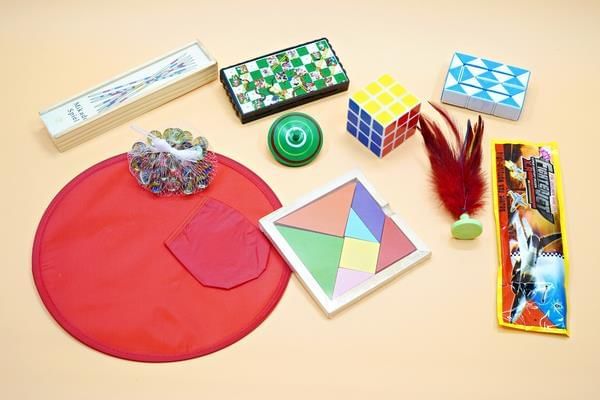 Local and traditional games
Nadan Panthu Kali
- This game involves two teams throwing and kicking a ball across a field divided by a center line.
- Teams use different throwing methods like tossing and hitting with the same hand, opposite hand, or hand behind back.
- Points are scored by catching the ball or kicking it beyond the opponent's finish line.
- The first team to reach ten points wins.
MULTIPLE CHOICE QUESTIONTry yourself: How can teams score points in Nadan Panthu Kali?
Attakalam
- Two teams play in a circle where one team inside resists being pushed out by the outside team.
- Points are scored by pushing opponents out within 30 seconds or if the pusher fails.
- The team with maximum points or students remaining wins.
Jodi Baki
- Students run around a circle while a leader announces a number, and they form groups of that number.
- Extra students are out, and the game continues until few remain.
- The last students who form groups win.
Nakal Kho
- In a circle, defenders run while an attacker imitates their actions to tag them.
- Defenders say "Kho" to switch, and tagged become attackers.
- Game continues until all get turns.
MULTIPLE CHOICE QUESTIONTry yourself: What does 'Nakal Kho' refer to?
Mai Bhi Maindhak
- An attacker in frog position tags defenders with leg swings.
- Tagged become attackers until one defender remains as winner.
Damru Relay
- Teams run in lines, completing circles before returning.
- Last student finishing first wins for the team.
Aahwan Kabaddi
- Attackers clap defenders' palms while chanting and run back.
- Points for safe return or tagging the attacker.
- Team with most points wins.
MULTIPLE CHOICE QUESTIONTry yourself: What sport is mentioned in the text?
Bhukha Sher
- Students in circles as safe zones, denner as lion roars and calls animals.
- Students chase and tap lion, but run back on "Bhakshanam".
- Caught becomes denner.
Ghar Pehchano
- Student with soil in hand, eyes covered, walks and drops soil.
- Then finds the drop spot within time or does sit-ups.
- Others hide the soil.
Daicholu
- Chaser crawls in circle to touch students with foot.
- Touched is out or disqualified if foot out of perimeter.
- First touched becomes chaser.
MULTIPLE CHOICE QUESTIONTry yourself: What is Daicholu?
Chikka-Chikka
- Teams in houses, change houses avoiding outside students.
- Touched while running is out.
Gocho Paari
- Students in outer circle stop ball from entering inner circle with one leg.
- If ball enters, thrower enters, last attempter becomes thrower.
- Rotation for all.
Fact Corner
Traditional games provide holistic development and connect to heritage. Leg strength equals arm strength for pushing. Agility is covering distance in directions timely. Core muscles (29 in abdominal, back, hips, pelvis) help stand, balance, twist, bend, move, protect spine. Eating lentils and pulses strengthens health.
MULTIPLE CHOICE QUESTIONTry yourself: What is the focus of the text?
Conclusion
Local and traditional games are fun and help you grow strong, work as a team, and learn about your culture. They improve your moves, thinking, and kindness. Practice safely and play with friends to become better and happier!The document Chapter Notes: Local and Tradition Games is a part of the Primary 6 Course Physcial & Health Education for Primary 6.
All you need of Primary 6 at this link: Primary 6
FAQs on Chapter Notes: Local and Tradition Games
| 1. Nadan Panthu Kali क्या है और इसे कैसे खेलते हैं? |  |
Ans. Nadan Panthu Kali एक लोकप्रिय लोक खेल है जो मुख्य रूप से भारत के कुछ हिस्सों में खेला जाता है। यह खेल दो टीमों के बीच होता है, जहां एक टीम 'नादान' होती है और दूसरी टीम 'पंथु' होती है। खेल का उद्देश्य नादान टीम द्वारा पंथु टीम के खिलाड़ियों को छूना होता है, जबकि पंथु टीम अपने खिलाड़ियों की रक्षा करती है। इसे खेलने के लिए एक खुले मैदान की आवश्यकता होती है।
| 2. Attakalam खेल का महत्व क्या है? | |
Ans. Attakalam एक पारंपरिक खेल है जो सामूहिक भागीदारी को बढ़ावा देता है। यह खेल बच्चों और वयस्कों के बीच सामंजस्य और सहयोग की भावना को बढ़ाता है। इसमें कौशल, रणनीति और टीम वर्क की आवश्यकता होती है, जो सामाजिक और शारीरिक विकास के लिए लाभकारी है।
| 3. Jodi Baki खेल को कैसे खेला जाता है? | |
Ans. Jodi Baki एक मजेदार खेल है जिसमें खिलाड़ी एक निश्चित क्षेत्र में एक-दूसरे के खिलाफ खेलते हैं। खेल का मुख्य उद्देश्य एक गेंद को दूसरे टीम के खिलाड़ियों से बचाते हुए अपने क्षेत्र में रखना होता है। इसमें गति और संतुलन की आवश्यकता होती है, और यह खेल बच्चों के लिए बहुत मनोरंजक होता है।
| 4. Nakal Kho के नियम क्या हैं? | |
Ans. Nakal Kho एक खेल है जिसमें एक टीम 'खो' होती है और दूसरी टीम 'नकल' होती है। खो टीम को नकल टीम के खिलाड़ियों को पकड़ने का प्रयास करना होता है। नियमों के अनुसार, नकल टीम को अपनी सीमाओं के भीतर रहना होता है और खो टीम को खिलाड़ियों को छूने के लिए रणनीति बनानी होती है। यह खेल तेज़ी और तर्कशीलता को बढ़ावा देता है।
| 5. Bhukha Sher खेल में बच्चों को क्या सिखाया जाता है? | |
Ans. Bhukha Sher खेल बच्चों को टीम वर्क और सामूहिकता का महत्व सिखाने के लिए डिज़ाइन किया गया है। इस खेल में, बच्चे एक शेर बनते हैं और अन्य बच्चों को अपने से बचने का प्रयास करना होता है। यह खेल बच्चों में प्रतिस्पर्धा की भावना के साथ-साथ खेल भावना और मित्रता को भी बढ़ाता है।
About this Document

4.64/5 Rating

Apr 19, 2026 Last updated
Document Description: Chapter Notes: Local and Tradition Games for Primary 6 2026 is part of Physcial & Health Education for Primary 6 preparation. The notes and questions for Chapter Notes: Local and Tradition Games have been prepared according to the Primary 6 exam syllabus. Information about Chapter Notes: Local and Tradition Games covers topics like and Chapter Notes: Local and Tradition Games Example, for Primary 6 2026 Exam. Find important definitions, questions, notes, meanings, examples, exercises and tests below for Chapter Notes: Local and Tradition Games.
Introduction of Chapter Notes: Local and Tradition Games in English is available as part of our Physcial & Health Education for Primary 6 for Primary 6 & Chapter Notes: Local and Tradition Games in Hindi for Physcial & Health Education for Primary 6 course. Download more important topics related with notes, lectures and mock test series for Primary 6 Exam by signing up for free. Primary 6: Chapter Notes: Local and Tradition Games
Description
Chapter Notes: Local & Tradition Games of Physcial & Health Education with clear explanations of key concepts & important topics of the chapter, to help you underst& lessons better & revise quickly, & crack the Primary 6 exam.
Information about Chapter Notes: Local and Tradition Games
In this doc you can find the meaning of Chapter Notes: Local and Tradition Games defined & explained in the simplest way possible. Besides explaining types of Chapter Notes: Local and Tradition Games theory, EduRev gives you an ample number of questions to practice Chapter Notes: Local and Tradition Games tests, examples and also practice Primary 6 tests



Related Searches
Chapter Notes: Local and Tradition Games, mock tests for examination, Sample Paper, pdf , Exam, Free, Summary, past year papers, video lectures, Semester Notes, Chapter Notes: Local and Tradition Games, MCQs, Important questions, practice quizzes, Chapter Notes: Local and Tradition Games, Previous Year Questions with Solutions, Viva Questions, shortcuts and tricks, ppt, study material, Extra Questions, Objective type Questions;