Important Formulas: Far and Near


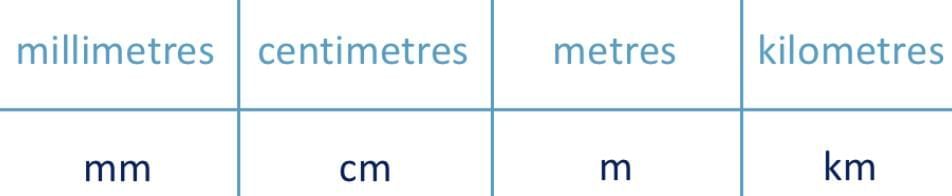
Basic Units of Length
Millimetre (mm): Used for very small things (screws, sprouts, nails).
Centimetre (cm): Used for small objects (mobile phone, handkerchief).
Metre (m): Used for medium to large objects (door height, elephant's trunk, depth of well).
Kilometre (km): Used for very large distances (roads, races, distance between cities).
Feet (ft) and Inches (in): Common in daily life, especially for measuring height.
Conversion Rules
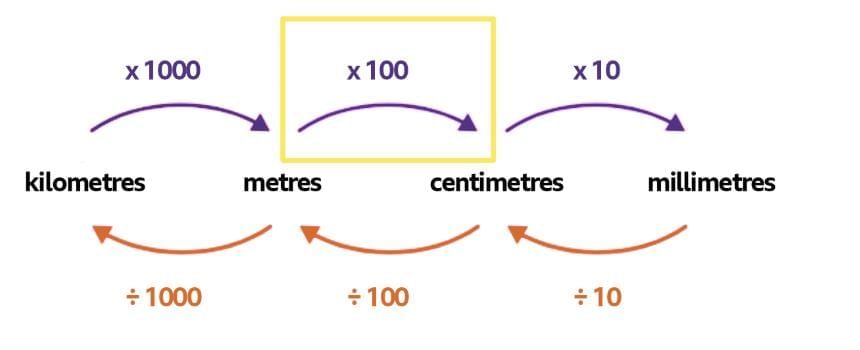
10 mm = 1 cm
100 cm = 1 m
1000 m = 1 km
1 inch = approximately 2.5 cm
1 foot = 12 inches ≈ 30 cm
Comparing Lengths
Always convert to the same unit before comparing.
Example:
5 m = 500 cm
So, 456 cm < 500 cm
Rule:
Use < (less than), > (greater than), = (equal to)
Addition & Subtraction of Lengths
Method 1: Add or subtract metres and centimetres separately (borrow if needed).
Method 2: Convert everything into a single unit (cm or m), then add or subtract.
Example 1: A rope is 2 m 45 cm long. Another piece of rope is 1 m 60 cm long. What is the total length of the two ropes?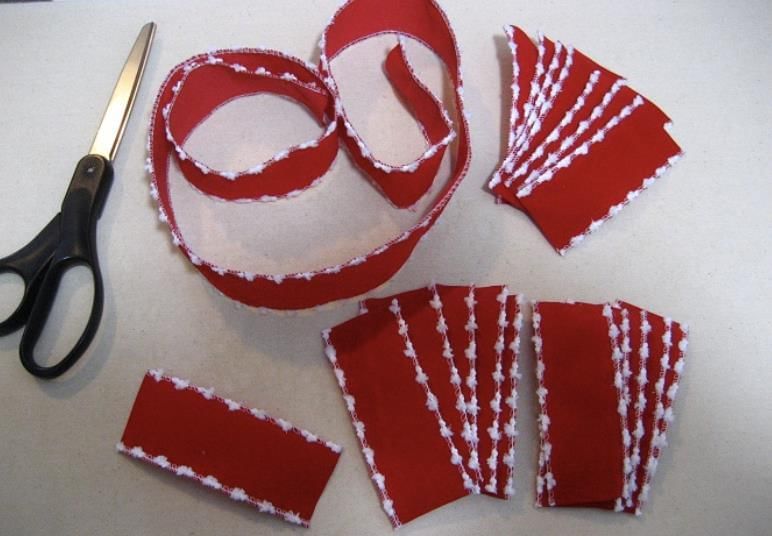
Solution:
Length of first rope = 2 m 45 cm = (2 × 100 + 45) cm = 245 cm
Length of second rope = 1 m 60 cm = (1 × 100 + 60) cm = 160 cm
Total length = 245 + 160 = 405 cm
Convert back to metres: 405 cm = 4 m 5 cm
Total length = 4 m 5 cm
Example 2: A ribbon is 3 m 25 cm long. A piece of 1 m 78 cm is cut from it. How much ribbon is left?
Solution:
Method 1: (convert to cm)
Length of ribbon = 3 m 25 cm = (3 × 100 + 25) cm = 325 cm
Length cut = 1 m 78 cm = (1 × 100 + 78) cm = 178 cmRemaining length = 325 - 178 = 147 cm
Convert back to metres: 147 cm = 1 m 47 cm
Ans:. m 47 cm
Method 2: Quick regrouping method (optional):
3 m 25 cm - 1 m 78 cm
→ Borrow 1 m: (2 m 125 cm) - (1 m 78 cm)
Centimetres: 125 - 78 = 47 cm
Metres: 2 - 1 = 1 m
→ 1 m 47 cm
Multiplication of Lengths
Method 1: Multiply metres and centimetres separately, then convert.
Method 2: Convert to cm first, multiply, then convert back.
Example 3: A rope is 2 m 15 cm long. If 3 such ropes are joined together, what is the total length?
Solution (convert to cm):
Length of one rope = 2 m 15 cm = (2 × 100 + 15) cm = 215 cm
Total length = 215 × 3 = 645 cmConvert back to metres: 645 cm = 6 m 45 cm
Ans:. m 45 cm
Division of Lengths
Convert everything into a single unit (usually centimetres), then divide.
Example 4: A rope is 5 m 20 cm long. It is cut into 4 equal pieces. What is the length of each piece?
Solution (convert to cm):
Total length of rope = 5 m 20 cm = (5 × 100 + 20) cm = 520 cm
Length of one piece = 520 ÷ 4 = 130 cmConvert back to metres: 130 cm = 1 m 30 cm
Ans:. m 30 cm
Estimation in Measurement
Use known references to make good estimates:
House height ≈ 3-4 m
Electric pole ≈ 8-10 m
2-storey house ≈ 6 m → can be used to estimate taller buildings
Measurement Tools for Long Distances
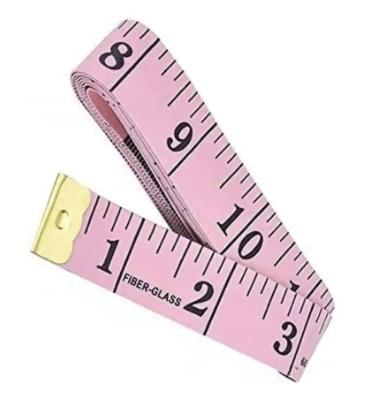
Long Tape: large measuring tape.
Range finder: measures distance to a target.

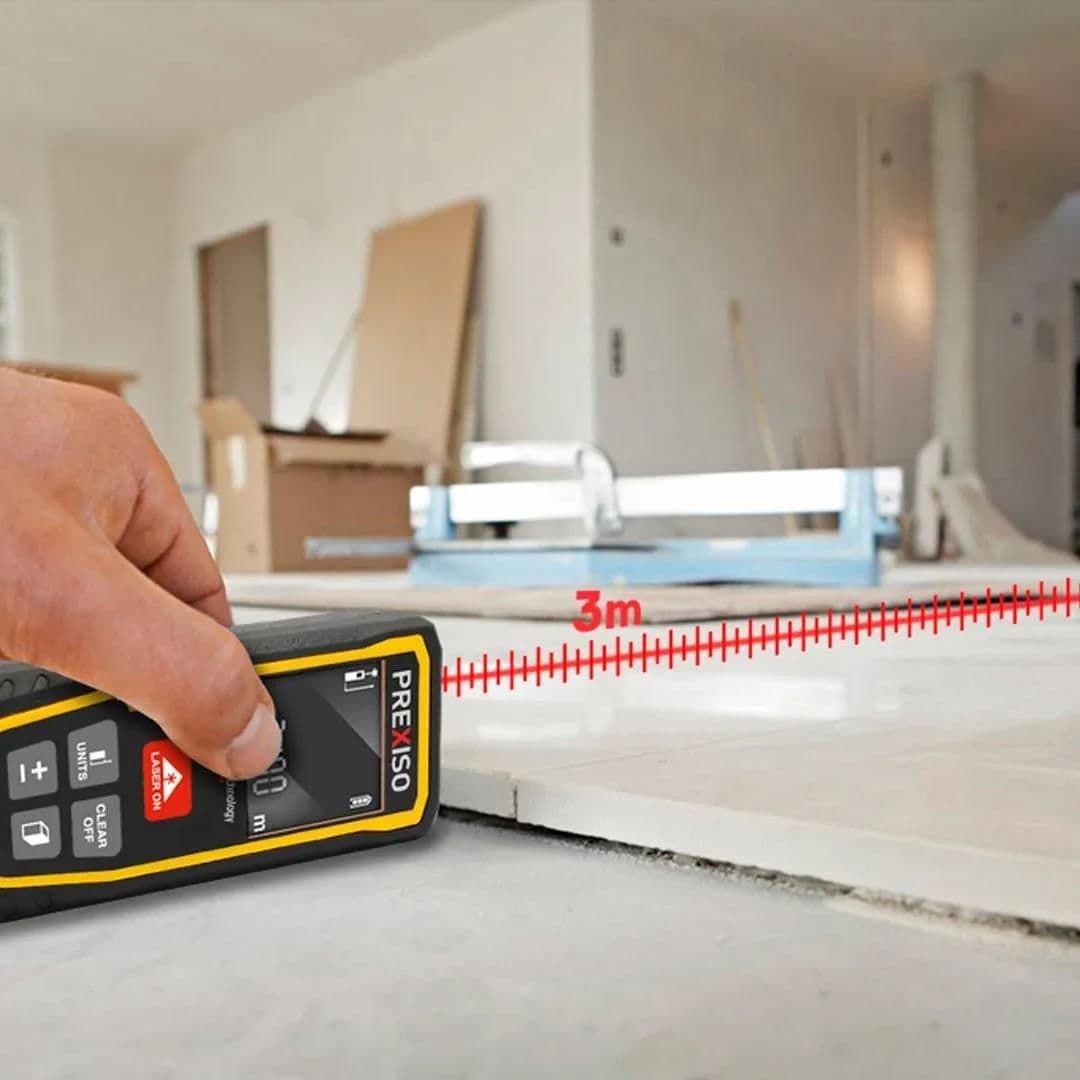
Laser Distance Meter: measures distance using light beams.
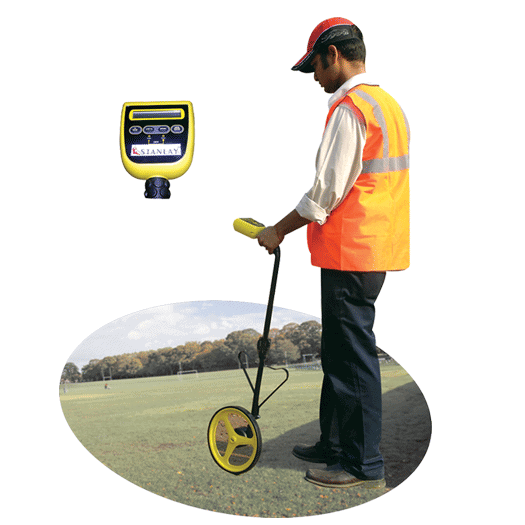
Rodo-meter (Measuring Wheel): distance measured as wheel rolls.
FAQs on Important Formulas: Far and Near
| 1. What are the basic units of length in the metric system? |  |
| 2. How do you convert between different units of length? | |
| 3. How do you compare lengths using these units? | |
| 4. What are the steps for adding and subtracting lengths? | |
| 5. What tools are commonly used for measuring long distances? | |