History, Art & Culture: October 2025 Current Affairs


GS1/History & Culture
UNESCO's Virtual Museum: Reclaiming the World's Lost Heritage
 Why in News?
UNESCO has recently launched the Virtual Museum of Stolen Cultural Objects, a digital platform introduced at the MONDIACULT conference. This initiative aims to reconnect communities with cultural treasures that have been lost due to theft and colonialism. Each stolen artifact symbolizes a loss of identity, and the project seeks to raise awareness and support recovery efforts against the illicit trade of cultural heritage items.
Key Takeaways
- The Virtual Museum currently features nearly 240 missing artifacts from 46 countries.
- It is designed to "gradually empty itself" as items are recovered and returned.
- The platform includes AI-generated 3D reconstructions of lost objects for better exploration.
Additional Details
- MONDIACULT: The acronym stands for the UNESCO World Conference on Cultural Policies and Sustainable Development, the largest ministerial forum on cultural policy, gathering UNESCO's 194 Member States.
- Historical Context: The first MONDIACULT conference in Mexico City in 1982 expanded the definition of culture and established it as essential for development. The 2022 revival emphasized culture as a global public good and human right.
- Future Conferences: MONDIACULT is mandated to occur every four years, with the next scheduled for 2025 in Barcelona, focusing on themes such as cultural rights and digital technologies in the culture sector.
- Architectural Design: The museum's design, conceived by Francis Kéré, resembles a baobab tree-a symbol of endurance and wisdom in Africa, with clickable branches leading to various sections.
The Virtual Museum serves as both a symbolic and functional space, hosting exhibitions that highlight successful restitutions and the human costs of cultural loss. It aims to enhance collaboration among governments, museums, and civil society in addressing the challenges of cultural preservation and restitution.
GS1/History & Culture
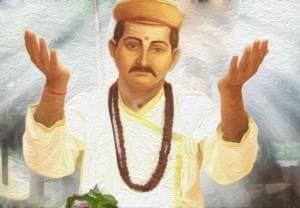
Who was Vidyapati Thakur (1352-1448)?
 Why in News?
This newscard is an excerpt from the original article published in Down To Earth.
Key Takeaways
- Vidyapati Thakur was a celebrated Maithili poet, philosopher, and scholar from Mithila, Bihar.
- He played a crucial role in the Bhakti movement, blending classical and vernacular languages.
- Known as the "Father of Maithili Literature," he elevated a regional language to literary prominence.
Additional Details
- Identity and Origin: Vidyapati was active under the Oiniwar dynasty during the 14th-15th centuries, contributing to both philosophical discourse and poetry.
- Languages Used: He composed works in Maithili, Sanskrit, and Avahatta, showcasing a unique blend of literary styles.
- Cultural Role: By promoting Maithili as a medium for devotion and philosophy, he broke the monopoly of Sanskrit in literature.
- Major Contributions:
- Bhakti Poetry (Padavali): Authored lyrical songs centered on Radha-Krishna love, empowering women through emotive verse.
- Linguistic Innovation: Claimed the "sweetness of native speech," advocating for vernacular expression.
- Ethical and Philosophical Thought: In his work Purusha-Pariksha, he emphasized knowledge and humility as true markers of nobility.
- Ecological Vision: His work Bhu-Parikramanam depicted natural elements as moral entities, anticipating modern environmental ethics.
- Devotional Hymns: Wrote Ganga Stuti, portraying the river as a divine mother and moral guide.
- Administrative Scholarship: His manual, Likhanavali, demonstrated his expertise in governance and record-keeping.
- Regional Influence: His literary idiom inspired poets in Bengal, Odisha, and Assam, contributing to the Brajabuli tradition.
- Culture-Nature Synthesis: Viewed land as sacred and trees as temples, merging ecological themes with spirituality.
- Enduring Legacy: Vidyapati's ideals of love, humility, and environmental stewardship continue to shape Mithila's cultural identity.
Vidyapati Thakur remains a pivotal figure in Indian literary history, bridging traditional Sanskrit literature with regional modernity and establishing a profound influence on subsequent generations of poets and thinkers.
Consider the following statements:
- Saint Nimbarka was a contemporary of Akbar.
- Saint Kabir was greatly influenced by Shaikh Ahmad Sirhindi.
Which of the statements given above is/are correct?
- Options: (a) 1 only (b) 2 only (c) Both 1 and 2 (d) Neither 1 nor 2
GS1/History & Culture
Mera Hou Chongba Festival
 Why in News?
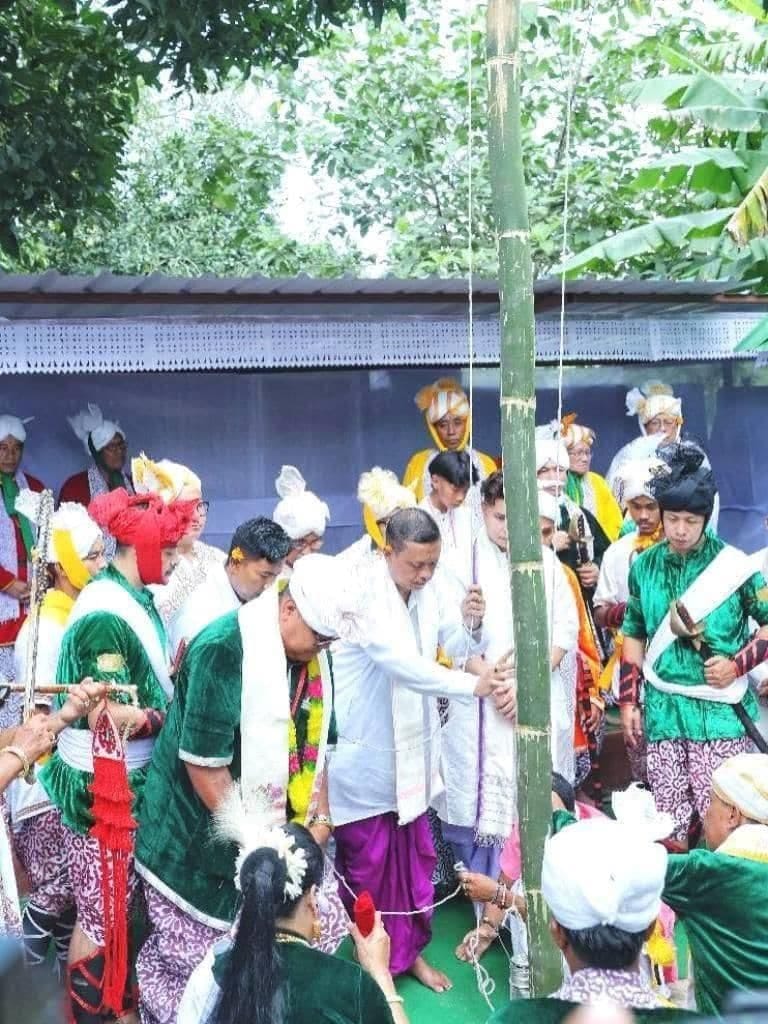
The Mera Hou Chongba festival, which symbolizes unity between the hills and the valleys, was recently celebrated in Manipur, highlighting its cultural significance and communal harmony.
Key Takeaways
- The festival occurs on the 15th lunar day of the Mera month in the Meitei calendar each year.
- It has historical roots linked to Nongda Lairen Pakhangba, a legendary ruler of Manipur.
- The festival features a ritual march led by the titular King of Manipur with tribal village chiefs.
- Traditional rituals during the festival include Mera Thaomei Thanba (lighting of the ceremonial fire) and Mera Yenkhong Tamba (exchange of gifts).
- Cultural dances and a grand feast are part of the celebrations, emphasizing brotherhood among various tribes.
- It is the only festival in Manipur where all indigenous communities participate, reinforcing its importance for unity and harmony.
Additional Details
- Historical Significance: The festival's origins are believed to trace back to the era of Nongda Lairen Pakhangba, reflecting the deep-rooted traditions of the Manipuri people.
- The rituals not only celebrate cultural heritage but also foster a sense of community and belonging among diverse tribal groups.
The Mera Hou Chongba festival stands as a testament to the rich cultural tapestry of Manipur, promoting unity and celebrating the harmonious coexistence of its various communities.
GS1/History & Culture
Gyan Bharatam Mission - India's Push to Preserve Heritage
Why in News?
The Gyan Bharatam Mission, initiated by the Ministry of Culture, is poised to establish Memorandums of Understanding (MoUs) with approximately 50 institutions across India. This initiative aims to conserve, digitize, and promote the nation's extensive collection of ancient manuscripts.
Key Takeaways
- The mission addresses the urgent need for preserving India's rich manuscript heritage.
- It aims to create a National Digital Repository (NDR) for greater access to these manuscripts.
- Collaboration with various institutions will enhance the reach and efficacy of conservation efforts.
Additional Details
- Background: India boasts one of the world's most extensive manuscript traditions, containing millions of ancient texts in diverse languages including Sanskrit, Pali, and Persian. These documents are vital to India's civilizational heritage, covering fields like literature, philosophy, and science.
- Institutional Collaboration: The mission will sign agreements with 20 institutes initially, followed by 30 more, facilitating a nationwide effort in manuscript conservation and digitization.
- Framework: Institutions will be categorized into Cluster Centres, which will manage activities collaboratively, and Independent Centres, which will focus solely on their collections.
- Funding: The financial structure involves phased funding, with the first installment of 70% provided after budget approval and the remainder contingent on progress reports and third-party verification.
- Focus Areas: The mission identifies six thematic verticals, including Survey and Cataloguing, Conservation, Technology and Digitisation, Linguistics, Research, and Outreach.
The Gyan Bharatam Mission not only aims to preserve ancient manuscripts but also seeks to connect these historical texts with contemporary academic research, thus enriching both scholarly pursuits and public knowledge. By aligning with global initiatives such as UNESCO's Memory of the World Programme, the mission demonstrates India's commitment to safeguarding its cultural heritage while promoting international academic collaboration.
GS1/History & Culture
Pandit Chhannulal Mishra, Thumri Maestro, Passes Away
 Why in News?
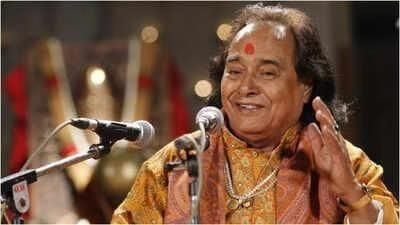
Pandit Chhannulal Mishra, a celebrated maestro of Hindustani classical music and recipient of the Padma Vibhushan, has sadly passed away at the age of 89.
Key Takeaways
- Pandit Chhannulal Mishra was a prominent figure in Hindustani classical music, especially known for his expertise in Thumri.
- He represented the Banaras Gharana and was noted for blending various musical traditions.
Additional Details
- Background: Born in 1936 in Varanasi, he rose from humble beginnings to become one of India's greatest Hindustani classical vocalists.
- Musical Lineage: He was a foremost exponent of the Purab Ang Thumri and the Banaras Gharana, skillfully combining the melodic precision of the Kirana tradition with the emotive depth characteristic of Banaras.
- Artistic Range: Mastered various forms including Thumri, Dadra, Kajri, and Chaiti, which showcased both folk vitality and classical discipline.
- Voice & Expression: His gravelly, resonant voice conveyed deep emotions, often invoking themes related to Lord Shiva and the Ganga.
- Cultural Symbol: Along with Ustad Bismillah Khan, he epitomized the Ganga-Jamuni tehzeeb, symbolizing the harmony between Hindu and Muslim artistic traditions.
Pandit Chhannulal Mishra's legacy is a unique blend of classical rigor, folk heart, and spiritual emotion, enriching India's cultural tapestry.
About Thumri Music
- Nature: A semi-classical vocal genre from North India, Thumri emphasizes emotion (bhava) over strict raga structures.
- Origin: Developed in the 19th century under Nawab Wajid Ali Shah of Lucknow, later absorbing devotional and folk influences.
- Etymology: The term 'Thumri' is derived from thumakna ("to walk gracefully"), reflecting its fluid and expressive nature closely associated with Kathak dance.
- Themes: Focuses on Sringara rasa-love, separation, and devotion-often narrated through Radha-Krishna stories, typically from a female perspective.
- Language: Primarily sung in Braj Bhasha, Awadhi, and Hindi, with influences from Urdu and Sanskrit.
- Musical Features: Utilizes popular ragas such as Bhairavi, Khamaj, and Kafi; allows for improvisation and vocal ornamentation (murki, meend, gamak).
Forms of Thumri
- Bandish-ki-Thumri: A structured composition with defined rhythms.
- Bol-Banao Thumri: A lyrical and emotive style that permits deeper expression.
Major Gharanas
- Lucknow Gharana: Known for courtly refinement and dance association (e.g., Begum Akhtar).
- Banaras Gharana: Emphasizes devotional singing (notable artists include Girija Devi, Rasoolan Bai, Siddheshwari Devi, and Chhannulal Mishra).
- Patiala Gharana: Fast-paced, rhythm-oriented style influenced by tappa (e.g., Bade Ghulam Ali Khan).
Thumri and Indian Classical Tradition
- Position in Hindustani System: Serves as a bridge between pure classical forms (like Khayal and Dhrupad) and folk/dance traditions, prioritizing emotional storytelling over technical display, thus making classical music more accessible.
- Connection with Kathak: Complements Kathak dance, enhancing abhinaya (expressive gestures) through musical narration.
- Hindustani vs Carnatic Contrast: While Hindustani music focuses on raga improvisation, Carnatic music is more composition-centric with structured kritis and defined tala frameworks.
- Cultural Role: Thumri reflects the fusion of classical, folk, and devotional idioms, symbolizing India's cultural inclusivity.
Thumri thrives on the interplay of bhava (emotion), raga (melody), and laya (rhythm)-a trinity central to Indian aesthetics.
GS1/History & Culture
150 Years of 'Vande Mataram'
Why in News?
Prime Minister Narendra Modi, during his Mann Ki Baat broadcast, urged citizens to celebrate the 150th anniversary of our national song, "Vande Mataram."
Key Takeaways
- "Vande Mataram" was written by Bankim Chandra Chattopadhyay in 1875.
- It was originally composed in Sanskrit (Bengali script) and featured in the novel Anandamath (1882).
- The song represents devotion to the motherland and the spirit of sacrifice.
- Rabindranath Tagore first publicly performed it in 1896, marking its significance as a nationalist anthem.
- In 1937, the first two stanzas were adopted as the National Song of India.
Additional Details
- Meaning: The phrase "Vande Mataram" translates to "I bow to thee, Mother," symbolizing love for the motherland, unity, and sacrifice.
- Role in Freedom Struggle: The song became a rallying cry during the Swadeshi Movement, frequently sung at protests and meetings, embodying the spirit of resistance.
- Official Status: It was granted equal status with "Jana Gana Mana" by Dr. Rajendra Prasad on January 24, 1950.
- Structure & Style: The song consists of six stanzas that blend precise Sanskrit with Bengali rhythm, celebrating the beauty and divinity of India.
- Translations & Music: Sri Aurobindo provided an English translation in 1909, while musical renditions by V.D. Paluskar and Ravi Shankar popularized it further.
- Cultural Symbolism: "Vande Mataram" personifies India as the Divine Mother, transcending all religious and regional divides, and is often played instrumentally at the conclusion of Parliamentary sessions.
The adoption of terms like 'Swadeshi' and 'Boycott' marked a significant shift in the methods of struggle during India's freedom movement, particularly in the context of the agitation against the Partition of Bengal.
GS1/History & Culture
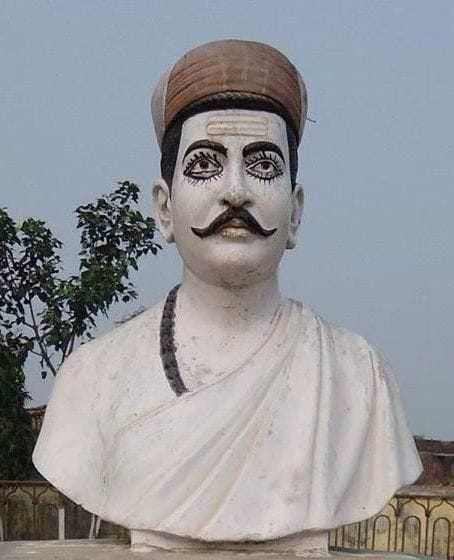
Who was Vidyapati Thakur (1352-1448)?
 Why in News?
This newscard is an excerpt from the original article published in Down To Earth, highlighting the significance of Vidyapati Thakur in the context of art and culture.
Key Takeaways
- Vidyapati was a celebrated Maithili poet, philosopher, and scholar from Mithila in northern Bihar.
- He played a crucial role in the Bhakti movement, merging classical and vernacular literary traditions.
Additional Details
- Identity and Origin: Vidyapati Thakur, active during the 14th to 15th centuries, is revered as the "Father of Maithili Literature." He elevated the Maithili language, making it a medium for devotion and philosophy, thus breaking the monopoly of Sanskrit.
- Languages Used: He composed works in Maithili, Sanskrit, and Avahatta, effectively blending classical and vernacular idioms.
- Major Contributions:
- Bhakti Poetry (Padavali): Authored lyrical songs centered on the love of Radha-Krishna, which empowered women through emotive Maithili verse.
- Linguistic Innovation: Asserted the sweetness of native speech, thereby legitimizing vernacular expression against the elitism of Sanskrit.
- Ethical and Philosophical Thought: In his work "Purusha-Pariksha," he emphasized knowledge and humility as the true marks of nobility, challenging existing caste and wealth hierarchies.
- Ecological Vision: In "Bhu-Parikramanam," he portrayed nature-rivers, groves, and winds-as moral presences, anticipating modern environmental ethics.
- Devotional Hymns: His "Ganga Stuti" personified the river as a divine mother and moral teacher, merging spirituality with ecological reverence.
- Administrative Scholarship: "Likhanavali" served as a manual of governance, demonstrating his mastery beyond poetry.
- Regional Influence: His literary idiom influenced regions like Bengal, Odisha, and Assam, inspiring the Brajabuli tradition among Chaitanya-era Vaishnava poets.
- Culture-Nature Synthesis: He viewed the land as sacred, trees as temples, and rivers as teachers, merging ecology with devotion and ethics.
- Enduring Legacy: Vidyapati Thakur is considered a bridge between Sanskrit classics and regional modernity. His ideals of love, humility, and environmental ethics continue to shape Mithila's cultural identity.
Vidyapati Thakur's profound impact on literature and culture remains significant, as evidenced by his contributions to the Bhakti movement and the elevation of regional languages.
FAQs on History, Art & Culture: October 2025 Current Affairs
| 1. Who was Vidyapati Thakur and what contributions did he make to literature and culture? |  |
| 2. What is the significance of the Mera Hou Chongba Festival? | |
| 3. How does the Gyan Bharatam Mission aim to preserve India's heritage? | |
| 4. What impact did Pandit Chhannulal Mishra have on Indian classical music? | |
| 5. What is the historical importance of the song 'Vande Mataram'? | |