Indian Polity and Governance: November 2025 Current Affairs


GS2/Polity
Presidential Reference on Governors & State Bills (2025)
 Why in News?
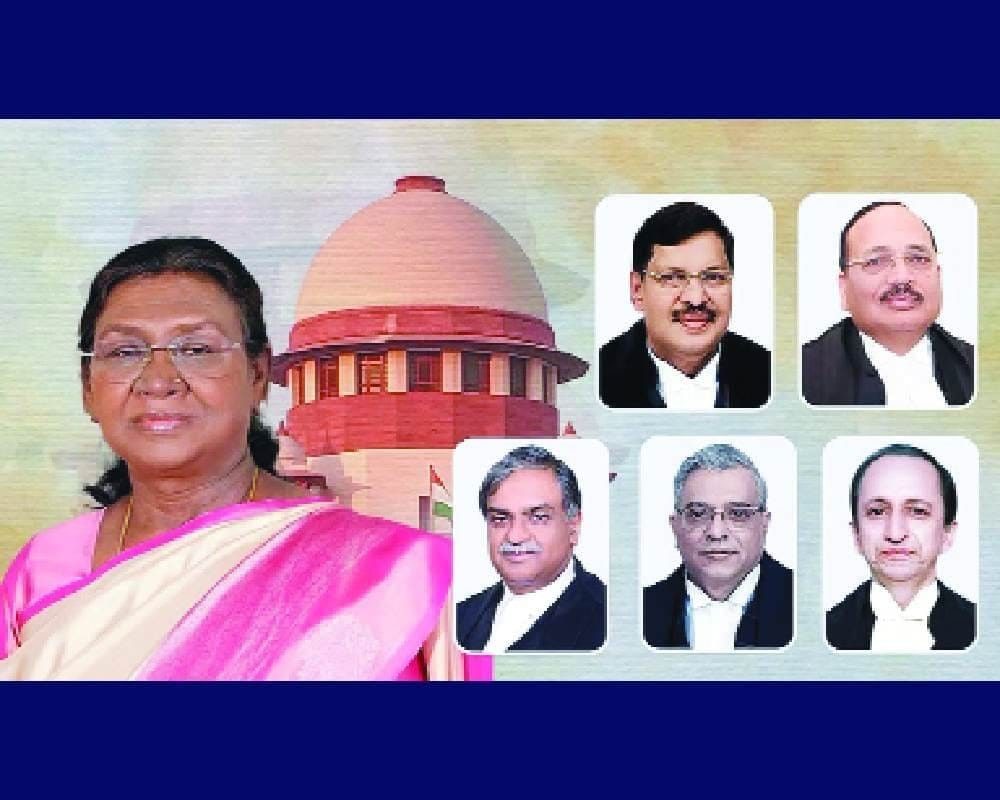
On November 23, 2025, Chief Justice of India B.R. Gavai clarified the Supreme Court's advisory opinion regarding the timelines for Governors and the President in granting assent to State Bills, following the 2025 Presidential Reference.
Key Takeaways
- The Supreme Court's advisory opinion is not a judicial review judgment.
- Governors and the President must act on pending Bills within a "reasonable period".
- The April 8, 2025 Supreme Court judgment introduced a timeline for action on Bills, which was not explicitly stated in the Constitution.
- The concept of a "reasonable period" remains undefined, leading to ongoing legal interpretations.
Additional Details
- Presidential Reference: Made under Article 143 of the Constitution, allowing the President to seek the Supreme Court's opinion on legal questions of public importance. While the opinion is not binding, it holds significant persuasive value.
- Key Constitutional Provisions Involved:
- Article 200: Outlines the Governor's options on State Bills, including the authority to give or withhold assent, return non-Money Bills, or reserve Bills for the President's consideration.
- Article 201: Details the President's powers regarding reserved Bills, with no fixed timelines for action.
- Article 143: Governs Presidential References to the Supreme Court.
- Judicial Clarifications: CJI Gavai emphasized that the Constitution does not mandate specific timelines, and the judiciary cannot impose such timelines. However, it acknowledged that excessive delays in processing Bills may be subject to judicial review.
This advisory opinion is crucial for understanding the separation of powers, federalism, and the role of constitutional authorities. It is particularly relevant for the Prelims, as questions may pertain to the powers of the Governor, assent procedures for Bills, and the nature of advisory jurisdiction.
Additional notable statements from CJI Gavai include the distinction between advisory opinions and judgments, affirming that advisory opinions cannot overturn judgments, and emphasizing the importance of judicial independence without necessitating conflict with the government.
Question for Consideration:
Which of the following are the discretionary powers given to the Governor of a State? (PYQ 2014)
- 1. Sending a report to the President of India for imposing the President's rule
- 2. Appointing the Ministers
- 3. Reserving certain bills passed by the State Legislature for consideration of the President of India
- 4. Making the rules to conduct the business of the State Government
Select the correct answer using the code given below:
- (a) 1 and 2 only
- (b) 1 and 3 only
- (c) 2, 3 and 4 only
- (d) 1, 2, 3 and 4
GS2/Polity
The Constitution (131st Amendment) Bill 2025 - Chandigarh Under Article 240
 Why in News?
The Union Home Ministry has clarified that the Central Government has no plans to introduce the Constitution (131st Amendment) Bill 2025 in the upcoming Winter Session of Parliament. This proposal aimed to bring Chandigarh under Article 240, which sparked significant political backlash in Punjab, reviving longstanding tensions regarding the status of Chandigarh that originated from the Punjab Reorganisation Act of 1966.
Key Takeaways
- The Constitution (131st Amendment) Bill 2025 was listed for introduction in the Lok Sabha.
- The Bill aimed to place Chandigarh under Article 240, allowing presidential regulations for the Union Territory.
- Punjab has historically viewed Chandigarh as its rightful capital, leading to political opposition against the Bill.
Additional Details
- Proposed Change: The objective of the Bill was to include Chandigarh under Article 240, which would allow the President to issue regulations for the UT, thereby enabling the appointment of an independent Administrator/Lieutenant Governor.
- Article 240: This provision empowers the President to frame regulations for certain Union Territories, such as Andaman & Nicobar Islands and Puducherry, which can override existing Acts of Parliament for those UTs.
- If applied to Chandigarh, it would mean direct administrative control by the Centre, removing the Punjab Governor's role as Administrator.
- Centre's Clarification: The government stated that the proposal was intended to streamline law-making for Chandigarh but emphasized that no decision had been finalized and no Bill would be presented in the 2025 Winter Session.
- Political Opposition: Punjab views Chandigarh as its capital, with current Chief Minister Bhagwant Mann and other opposition parties criticizing the Bill as a move to undermine Punjab's claims.
The ongoing debate over the status of Chandigarh illustrates the complex historical, political, and constitutional sensitivities surrounding the city. It underscores the necessity for careful federal negotiations and a balanced approach that respects the commitments made to both Punjab and Haryana while ensuring effective governance.
GS2/Polity
Reforming State PSCs - Addressing Structural Gaps
Why in News?
The 2025 National Conference of State Public Service Commissions (PSCs), hosted by the Telangana State PSC, has brought renewed focus on the longstanding challenges affecting State PSCs.
Key Takeaways
- The evolution of Public Service Commissions (PSCs) in India highlights historical demands for merit-based civil service entry.
- State PSCs face significant structural and procedural challenges.
- Proposed reforms aim to enhance the efficiency and credibility of State PSCs.
Additional Details
- Evolution of Public Service Commissions:The origins of PSCs in India can be traced back to the struggle for self-governance. Key milestones include:
- The Montagu-Chelmsford Reforms, which proposed an independent office for service regulation.
- The establishment of the first Public Service Commission in 1926.
- Provisions in the Government of India Act, 1935, mandating PSCs for each province, now retained in the Constitution.
- Procedural Challenges:
- Irregular updates to syllabi and heavy reliance on limited academic resources.
- Complex reservation calculations leading to legal disputes, particularly in states like Telangana and Andhra Pradesh.
- Recurring controversies such as paper leaks and judicial interventions, contributing to a loss of faith in State PSCs.
- Reform Measures:
- Institutional reforms to provide a five-year roadmap for vacancies and ensure predictable exam cycles.
- Proposed constitutional amendments to raise the age limit for PSC members and establish minimum qualifications.
- Improvements in examination processes for fairness, including regular syllabus updates and objective-type testing.
GS2/Polity
SC Advisory on Presidential Reference on Governors' Timelines
 Why in News?
The Supreme Court is preparing to issue an advisory opinion regarding a Presidential Reference that challenges its authority to set timelines and establish procedures for Governors and the President in relation to State Bills submitted for assent or consideration.
Key Takeaways
- The Supreme Court will provide an advisory opinion on whether it can impose timelines for Governors and the President regarding State Bills.
- A five-judge Bench, led by CJI B.R. Gavai, stated that the Court must act if a constitutional authority neglects its responsibilities.
- This issue arises amidst tensions between Opposition-ruled States and Governors over delays in key State legislation.
- The reference follows the Supreme Court's decision on April 8, which set a three-month deadline for action on Bills.
- The Court emphasized that Governors should not hinder governance by delaying action on important welfare legislation.
Additional Details
- Presidential Reference Under Article 143: This provision allows the President to seek the Supreme Court's advisory opinion on significant legal or factual questions. Notably, Article 143(1) offers an optional opinion, while Article 143(2) mandates the Court to provide an opinion on disputes concerning pre-Constitution treaties or agreements.
- The advisory opinion, while influential, is not binding on the President.
- Presidential References must be heard by a minimum five-judge Bench as per Article 145(3).
- The historical background of this power stems from the Government of India Act, 1935. In comparison, Canada allows advisory opinions, whereas the U.S. does not.
- Past references include significant cases like the Delhi Laws Act (1951) and the Keshav Singh Case (1965).
- The current reference questions whether the Court can impose timelines on Governors and the President that are not explicitly stated in Articles 200 and 201.
- Judicial Timelines and Reviewability: The Supreme Court has established definitive timelines for Governors' actions under Article 200, stating that inaction can be subjected to judicial review.
The outcome of this advisory opinion may clarify the constitutional roles of the President and Governors, reinforce the federal structure, and eliminate procedural uncertainties. However, the advisory process itself faces challenges such as potential politicization and the undefined nature of "public importance," along with the absence of a timeline for the Court's response.
Question:
Which of the following are the discretionary powers given to the Governor of a State?
1. Sending a report to the President of India for imposing the President's rule
2. Appointing the Ministers
3. Reserving certain bills passed by the State Legislature for consideration of the President of India
4. Making the rules to conduct the business of the State Government
Select the correct answer using the code given below: Options: (a) 1 and 2 only (b) 1 and 3 only* (c) 2, 3 and 4 only (d) 1, 2, 3 and 4
GS2/Polity
Regulating User-Generated Content (UGC) - SC Pushes for Robust Framework to Balance Free Speech and Protection
Why in News?
The Supreme Court of India has raised significant concerns about the rapid dissemination of harmful content on social media platforms. This includes content that is obscene, defamatory, and potentially "anti-national." The Court emphasized the necessity for autonomous regulation, age-verification mechanisms, and preventive measures, alongside potential amendments to the IT Rules 2021, all while ensuring compliance with Article 19(1)(a) and Article 19(2) of the Indian Constitution.
Key Takeaways
- The Supreme Court highlighted the virality of harmful UGC before any takedown actions can be implemented.
- Existing warnings regarding adult content were deemed insufficient by the Court.
- The need for an impartial and autonomous regulatory authority was strongly emphasized.
- The Court aims to protect individuals from harm without infringing on free speech rights.
Additional Details
- Proposed Regulatory Measures:The Court suggested several measures, including:
- Age Verification: Use of Aadhaar or PAN for age verification before accessing sensitive content.
- Stricter Oversight: Establishment of an autonomous body to regulate UGC, rejecting ineffective self-styled bodies.
- AI-Enabled Moderation: Platforms are encouraged to use AI for content moderation and early detection of harmful materials.
- Expanded IT Rules, 2021:Proposed amendments include:
- Defining "obscene content" by its potential to deprave or corrupt audiences.
- Prohibitions on content that offends decency, promotes violence, or derogates vulnerable groups.
- Implementation of a content rating framework to guide access based on age appropriateness.
- Key Concerns Raised:
- Risk of pre-censorship due to vague definitions of terms like "anti-national."
- Need for public consultations to gather stakeholder feedback, as mandated by prior Supreme Court directions.
- Challenges posed by the rapid virality of content and its implications for victim protection.
The intervention of the Supreme Court represents a pivotal moment in India's approach to digital governance. While it upholds freedom of speech under Article 19(1)(a), the Court underscores the urgent need for effective, accountable, and technology-driven measures to protect citizens from harmful user-generated content. The proposed amendments to the IT Rules 2021 and the establishment of an independent regulatory body aim to balance digital rights with safety, fostering a responsible online environment.
GS2/Polity
Presidential Opinion Versus the Federal Structure
Why in News?
The recent Supreme Court opinion regarding the 16th Presidential reference has raised significant concerns about the powers of Governors and the President in India, potentially undermining the federal structure intended by the Constitution. This development poses risks to the autonomy of States and the very fabric of democratic governance.
Key Takeaways
- Federalism is a crucial aspect of India's constitutional framework, designed to ensure a balance of power between the Union and the States.
- The recent judicial opinion may lead to increased centralization of power, threatening state autonomy and democratic principles.
- Governors' unchecked powers to withhold assent to bills can distort democratic processes and create a crisis in governance.
Additional Details
- Federalism: Federalism is foundational to India's governance, where power is distributed between the Union and State governments. States have autonomy in areas such as law and order, which is essential for maintaining democratic equality.
- Crisis of Gubernatorial Power: The controversy revolves around the undefined powers of Governors, who can indefinitely withhold assent to State legislation, effectively acting as an unelected veto-holder.
- The trend of centralization has been exacerbated by actions such as the refusal to compensate States for GST losses and the imposition of financial pressures through centrally sponsored schemes.
- These actions collectively threaten the federal balance, positioning States as subordinate entities rather than equal partners in governance.
If the erosion of federalism continues, it could lead to a significant imbalance of power favoring the Union government, thereby jeopardizing the democratic fabric of the nation. It's imperative for constitutional bodies to reassert the principles that uphold India's unity and diversity.
GS2/Governance
75th Anniversary of National Sample Survey (NSS)
 Why in News?
The Ministry of Statistics and Programme Implementation (MoSPI) is commemorating the 75th anniversary of the National Sample Survey (NSS) alongside World Statistics Day on November 18, 2025. This event marks a significant milestone in the history of India's socio-economic data collection.
Key Takeaways
- The NSS began in 1950 to address gaps in national income data and has evolved into India's most extensive multi-topic socio-economic survey system.
- Conducted by the National Statistical Office (NSO), it plays a vital role in policy formulation and evaluation across various sectors.
Additional Details
- Origins: The NSS was initiated in 1950 to fill essential data gaps and has since become the largest socio-economic survey in India.
- Institutional Home: Originally conducted by the NSSO (established in 1970), the NSSO has now merged into the NSO.
- Organisational Structure:The NSO operates through four key divisions:
- SDRD (Kolkata): Responsible for survey design.
- FOD (Delhi/Faridabad): Handles fieldwork.
- DPD (Kolkata): Manages data processing.
- SCD (New Delhi): Coordinates overall operations.
- Survey Design and Coverage: NSS conducts large "thick rounds" every five years (approximately 1.2 lakh households) and "thin rounds" focusing on specialized themes.
- Geographic Coverage: The survey has expanded from 1,833 villages in 1950-51 to over 14,000 rural villages and urban blocks in recent years.
- Scope: It collects national and state-level estimates on various socio-economic themes including consumption, employment, health, education, and agriculture.
- Major Surveys Under NSS/NSO:Key surveys include:
- Periodic Labour Force Survey (PLFS): Launched in 2017, this survey provides essential data on employment and unemployment.
- Annual Survey of Industries (ASI): Tracks organized manufacturing, including output and employment statistics.
- Price Surveys: Generate Consumer Price Index (CPI) data and contribute to Wholesale Price Index (WPI) calculations.
- Urban Frame Survey (2022-27): Aims to update the sampling frame for urban socio-economic surveys.
- Agriculture and Crop Surveys: Estimate crop yields and support state agricultural statistics.
The NSS is crucial for policy-making as it underpins the design and evaluation of various government programs such as MGNREGA, PDS reforms, and Ayushman Bharat. Its data supports macroeconomic assessments, including GDP estimation and poverty analysis, and offers invaluable household-level datasets for longitudinal studies.
Question: As per the NSSO 70th Round "Situation Assessment Survey of Agriculture Households", consider the following statements:
- 1. Rajasthan has the highest percentage share of agriculture households among its rural households.
- 2. A little over 60 percent of total households in the country belong to OBCs.
- 3. In Kerala, over 60 percent of agriculture households reported their maximum income from sources other than agriculture activities.
Which of the statements given above is/are correct? Options: (a) 2 and 3 only (b) 2 only (c) 1 and 3 only* (d) 1, 2 and 3
GS2/Polity
SC Orders Relocation of Stray Dogs from Public Premises
 Why in News?
The Supreme Court has mandated the removal of stray dogs from public areas such as schools, hospitals, railway stations, and bus stands, directing that they be relocated to shelters after undergoing sterilization. This decision follows a recent incident involving a foreign national in Bengaluru, highlighting the threats posed by stray dogs to public safety, tourism, and India's global reputation.
Key Takeaways
- The Supreme Court's directive emphasizes public safety and the humane treatment of stray dogs.
- Municipal bodies are responsible for implementing the Animal Birth Control (ABC) programme.
- Stray dogs must not be returned to their original locations after relocation.
Additional Details
- Animal Birth Control (ABC) Rules, 2023: These rules replace the 2001 regulations and prohibit the relocation of stray dogs, ensuring they are sterilized and vaccinated before being sheltered.
- Role of Local Bodies: Municipal bodies must ensure humane treatment of stray dogs and effectively implement sterilization and immunization to control the stray population.
- Joint Implementation with Anti-Rabies Programme: Local authorities are required to conduct both ABC and Anti-Rabies programmes together, providing guidelines for managing conflicts without relocating dogs.
- Role of Recognised Organisations: Only organizations recognized by the Animal Welfare Board of India (AWBI) can carry out the ABC programme, ensuring compliance and proper management.
- Central and State Coordination: The Central Government has directed state officials to ensure uniform implementation of the ABC rules across all states and Union Territories.
- Mandatory Anti-Rabies Measures: All hospitals must maintain sufficient stocks of anti-rabies vaccines for immediate treatment of bite victims.
- Awareness in Educational Institutions: Schools and colleges are to conduct sessions on safe behavior around animals and first-aid procedures for bites.
- Appointment of Nodal Officers: Institutions must appoint nodal officers to oversee cleanliness and hygiene in relation to stray animals.
- Removal of Cattle from Highways: Authorities are instructed to clear stray animals from highways and relocate them to shelters.
- Dedicated Highway Patrol and Helplines: Governments must establish patrol teams to monitor highways for stray animals and provide helplines for reporting incidents.
This Supreme Court order represents a significant shift in managing stray animals, prioritizing public safety while also ensuring humane treatment for the animals involved. The measures outlined aim to create a safer environment for citizens while addressing the welfare of stray dogs.
GS2/Polity
Mayor in India
Why in News?
Zohran Mamdani, of Indian origin, has been elected as the Mayor of New York City, highlighting the significance of mayoral roles globally, including in India.
Key Takeaways
- The Mayor is the head of a Municipal Corporation, overseeing urban governance and local service delivery.
- Established under the 74th Constitutional Amendment Act, 1992, which provided constitutional status to Urban Local Bodies (ULBs).
Additional Details
- Administrative Framework: Municipal corporations operate under state municipal laws and are supervised by state urban development departments.
- Historical Context: The first municipal corporation was established in Madras in 1688, followed by Bombay and Calcutta in 1762 during British rule.
- Evolution of the Office: The idea of an elected municipal President was introduced through Lord Mayo's Resolution in 1870, and further shaped by Lord Ripon's Resolution in 1882, earning the latter the title "Father of Local Self-Government in India."
- Election and Tenure:
- Direct Election: In cities like Bhopal, Indore, and Jaipur, citizens directly elect the Mayor.
- Indirect Election: In cities like Mumbai, Delhi, and Bengaluru, elected councillors choose the Mayor.
- Tenure varies from 1 to 5 years, depending on state-specific legislation.
- Powers and Functions:
- Ceremonial Role: Acts as the first citizen of the city and represents it at official and public events.
- Presiding Officer: Chairs meetings and ensures smooth deliberations.
- Limited Executive Power: The Municipal Commissioner, an IAS officer appointed by the state government, holds the administrative authority.
- Policy and Representation: Acts as a political leader and civic advocate, addressing urban development issues.
- Comparison with Mayors in the U.S.:
- System Type: India follows a parliamentary model under state supervision, while the U.S. operates on an executive or presidential city model.
- Election Method: Mayors in India are usually indirectly elected by councillors, whereas U.S. Mayors are directly elected by citizens.
- Tenure: In India, terms vary between 1 to 5 years, while U.S. Mayors typically serve a fixed 4-year term, renewable once.
- Administrative Power: Indian Mayors have limited executive power, while U.S. Mayors have full executive control over departments and budgets.
- Financial Authority: Indian Mayors rely on state approval for budgets, whereas U.S. Mayors have autonomous budgetary powers.
- Legislative Role: Indian Mayors chair council meetings, while U.S. Mayors can veto bills and issue executive orders.
- Autonomy: Indian Mayors are subordinate to state authority, while U.S. Mayors are semi-autonomous within city jurisdiction.
- Nature of Office: The role is largely symbolic and representational in India, whereas it is a powerful executive position in the U.S.
In summary, the role of a Mayor in India is pivotal in urban governance and local service delivery, shaped by historical resolutions and constitutional provisions, while differing significantly from the executive functions of a Mayor in the U.S.
Consider the following statements:
- Powers of the Municipalities are given in Part IX A of the Constitution.
- Emergency provisions are given in Part XVIII of the Constitution.
- Provisions related to the amendment of the Constitution are given in Part XX of the Constitution.
Select the answer using the code given below:
- (a) 1 and 2 only
- (b) 2 and 3 only
- (c) 1 and 3 only
- (d) 1, 2 and 3*
GS2/Governance
SEBI Panel Proposes Major Overhaul of Conflict-of-Interest Norms
 Why in News?
The SEBI High-Level Committee has proposed significant reforms aimed at enhancing the conflict-of-interest and disclosure framework within the Securities and Exchange Board of India (SEBI). This initiative is particularly relevant following allegations of conflict of interest against former SEBI chief Madhabi Puri Buch, which prompted a thorough review of existing regulations.
Key Takeaways
- Introduction of a multi-tier disclosure system for SEBI's senior officials.
- Implementation of investment restrictions and structured recusal norms.
- Establishment of a stronger whistleblower mechanism to protect investors.
Additional Details
- Background: The High-Level Committee (HLC) was established in March in response to allegations regarding undisclosed stakes in offshore funds linked to the Adani Group, which were denied by both Buch and the Adani Group.
- Mandatory Public Disclosure: It is recommended that SEBI's chairman, whole-time members, and chief general managers publicly disclose their assets and liabilities due to their significant decision-making authority.
- Uniform Investment and Trading Restrictions: The proposed restrictions apply to senior officials, limiting their investments to professionally managed pooled schemes and including them under insider trading regulations.
- Expanded Definition of "Family": The committee suggests a broader definition to include anyone related by blood or marriage who is financially dependent, enhancing conflict-of-interest checks.
- Whistleblower Mechanism: A robust system is proposed to ensure anonymity and protection for those reporting conflicts of interest, aiming to uphold institutional integrity.
- Post-Retirement Restrictions: A two-year ban is suggested for former SEBI members from engaging in matters concerning SEBI, strengthening ethical governance.
- New Ethics and Compliance Framework: The creation of an Office of Ethics and Compliance and an Oversight Committee to monitor adherence to the conflict-of-interest framework is recommended.
- Technology-Driven Monitoring: The proposal includes a modern system leveraging AI and data analytics to proactively identify and manage conflict-of-interest risks.
These proposed reforms reflect SEBI's commitment to enhance transparency, accountability, and ethical standards, ensuring a fair market environment for all stakeholders.
GS2/Governance
Exploited Workers: A Labour Policy's Empty Promises
 Why in News?
An investigation into the seafood industry along India's east coast has uncovered severe exploitation of women workers. These workers endure unsafe conditions and receive minimal wages, having been reclassified as "daily wagers" to strip them of essential benefits like Employees' State Insurance (ESI) and Provident Fund (PF). Despite the alarming reality of approximately 11 million people living in modern slavery in India, the government's new draft policy, Shram Shakti Niti 2025, claims to be "future-ready" and in line with ancient Indian values. Critics, however, argue that it fails to address the systemic exploitation of workers and does not strengthen labour protections amidst the current harsh employment landscape.
Key Takeaways
- The majority of India's workforce (90%) is informally employed, lacking legal rights and fair wages.
- The draft policy emphasizes "employer ease" over the protection of workers' rights.
Additional Details
- Informal Employment: Millions work without written contracts or benefits, violating constitutional rights.
- Universal Social Security: The policy proposes merging existing schemes to provide comprehensive benefits but lacks clarity on funding and risks tokenism.
- The digital-only access model may exclude vulnerable groups, breaching principles of equality.
- Union Protections: The absence of union support undermines collective bargaining and workers' rights.
- Occupational Safety and Health: While the policy aims for safer working conditions, it lacks enforcement mechanisms and accountability measures.
The Shram Shakti Niti 2025 presents itself as a progressive framework for a developed India. However, its numerous gaps, such as weak oversight, digital exclusion, and lack of penalties, threaten to exacerbate inequalities in the gig economy. For the policy to be effective, it must incorporate robust funding, institutional safeguards, and accessible grievance systems, ensuring it serves as a genuine tool for labour justice rather than mere rhetoric.
GS2/Polity
Burden of Proof: On Electoral Integrity
Why in News?
The recent op-ed in The Hindu highlights the growing concerns regarding the integrity of India's electoral process, particularly in light of allegations made by political leaders about the presence of fake voters on electoral rolls. This issue is crucial for maintaining public trust in the democratic process and the Election Commission of India (ECI).
Key Takeaways
- Allegations of over 25 lakh fake voters in Haryana's electoral rolls have raised serious questions about electoral integrity.
- The ECI's response to these allegations has been criticized for lacking transparency, which further erodes public trust.
- Ensuring transparency and accountability is essential for restoring faith in the electoral process.
Additional Details
- Electoral Credibility: The credibility of elections is vital for democracy, and allegations of fake voters highlight systemic issues within the ECI that need urgent attention.
- Institutional Accountability: The ECI must address concerns regarding electoral rolls and ensure that allegations of manipulation are thoroughly investigated to maintain public confidence.
- Public Trust: Transparency in the electoral process is crucial; the ECI's reluctance to release detailed electoral data has fueled public suspicion of electoral manipulation.
- Global Significance: As the world's largest democracy, India's electoral integrity is significant on a global scale, affecting perceptions of democratic legitimacy worldwide.
In conclusion, the op-ed emphasizes that for democracy to thrive, it is not only essential to conduct free and fair elections but also to ensure that the processes involved are transparent and verifiable. The ECI must work towards rebuilding trust by implementing measures for greater transparency and independent verification of electoral processes.
GS2/Polity
SC Clarifies Governor's Powers
Why in News?
The Supreme Court has ruled that Governors are not permitted to indefinitely withhold assent to state legislature Bills, emphasizing that cooperative federalism entails constructive engagement with elected governments rather than obstruction. However, the Court also stated that it cannot impose fixed deadlines on Governors or the President regarding the granting of assent, nor can it establish a doctrine of "deemed assent" or compel the President to seek judicial advice on pending Bills.
Key Takeaways
- The Supreme Court addressed a presidential reference regarding the powers of Governors and the President related to state Bills.
- Judicial review is limited; while courts can direct action, they cannot enforce timelines on constitutional authorities.
- Article 361 provides immunity to Governors but does not justify indefinite delays in decision-making.
Additional Details
- Presidential Reference: President Droupadi Murmu invoked Article 143(1) due to controversies over delays by Governors and the President in acting on state Bills. This was prompted by a judgment in a Tamil Nadu case, which imposed strict timelines for action on Bills.
- Governor's Options under Article 200: The Court clarified that Governors have three options: grant assent, reserve the Bill for the President, or return the Bill for reconsideration. Indefinite withholding of assent is not permitted.
- Article 200 Discretion: The Governor is not bound by the Cabinet's advice when deciding on Bills, exercising independent constitutional discretion.
- Justiciability: While courts cannot review the merits of a Governor's decision, they can address prolonged inaction.
- Article 201 Presidential Powers: The President's decisions on Bills are also not subject to judicial review, and no timelines can be imposed on the President for granting assent.
- Judicial Review Limitations: Courts can only review laws, not Bills, and Article 142 cannot be used to create "deemed assent" or replace constitutional roles.
This ruling underscores the necessity for clarity in the relationship between the legislative and executive branches in India, ensuring that constitutional powers are respected and exercised without undue delay.
GS2/Governance
High Pendency and Staffing Gaps in Juvenile Justice Boards
Why in News?
A groundbreaking study by the India Justice Report (IJR) has uncovered that over 55% of cases before India's Juvenile Justice Boards (JJBs) were pending as of October 31, 2023. This highlights significant systemic deficiencies in staffing, data management, and infrastructure.
Key Takeaways
- JJBs have disposed of less than half of the 100,904 cases filed with them.
- High pendency rates vary by state, with Odisha at 83% and Karnataka at 35%.
- 24% of JJBs are not fully constituted, and 30% lack legal services clinics.
Additional Details
- Status of JJBs: According to the IJR study, 92% of India's 765 districts have established JJBs, yet the pendency rate is alarmingly high.
- High Pendency and Workload: Each JJB manages an average of 154 pending cases annually, indicating a severe mismatch between caseload and available resources.
- Staffing and Infrastructure Shortfalls: There are major vacancies in key positions, particularly for social workers and support staff, leading to inadequate training and child-friendly facilities.
- Poor Data Systems: Unlike courts, JJBs lack a centralized data repository. Only 36% of RTI queries received comprehensive responses.
- Juvenile Apprehension Trends: Approximately 40,036 juveniles were apprehended in 31,365 cases, with over 75% being aged 16-18 years.
- Inter-Agency Coordination Deficit: Various agencies involved in juvenile justice often work in isolation, resulting in ineffective coordination.
- Legal Support Gaps: With 30% of JJBs lacking legal aid clinics, many juveniles do not receive adequate defense representation.
To address these challenges, experts recommend establishing a National Juvenile Justice Data Grid, filling vacancies in JJBs and child care institutions, ensuring legal aid services are available in all districts, enhancing inter-agency data sharing, and increasing budget allocations for child protection services. Such reforms are crucial for protecting children in conflict with the law and ensuring a fair and timely justice process.
GS2/Polity
Is Federalism in Retreat Under Single Party Hegemony?
Why in News?
The introduction of the Goods and Services Tax (GST) marked a significant shift in India's indirect taxation landscape, yet it has raised alarms among various States about diminishing revenue autonomy. The ongoing litigation concerning compensation, centrally-sponsored schemes, disaster relief funding, and Finance Commission recommendations has reached the Supreme Court, prompting a critical inquiry: Is Indian federalism being structurally reshaped under a single-party political hegemony? This discussion highlights how the dynamics of fiscal and political federalism have evolved from cooperative frameworks in the 1990s to more competitive and centralized structures following 2014.
Key Takeaways
- Unprecedented Stress on Fiscal Federalism: The GST has placed significant pressure on fiscal federalism.
- Decline of Traditional Accommodation Politics: There is a growing disconnect between wealthier southern States and the Union's redistributive policies.
- Challenge of Vertical Imbalance: States across the political spectrum are increasingly voicing concerns about taxation and grants.
Additional Details
- Shifts in Federalism:
- Federal Coalition Politics: In the 1990s, regional parties had a significant role in influencing national policy, fostering an environment of increased Centre-State interaction.
- Decline of Accommodation: The dominance of a single party has reduced negotiations, leaving regional identities less represented.
- BJP's Unitary Political Vision: This vision prioritizes uniformity, diminishing incentives for coalition-driven negotiations.
- Impact of GST on Fiscal Architecture:
- Loss of Tax Autonomy: States have relinquished their power to independently tax, relying on shared revenues and compensation from the Centre.
- Compensation Tensions: Ongoing delays in compensation have bred distrust, exacerbated by structural issues related to Finance Commission recommendations.
- Redistributive Principle: Southern States argue that the system of redistributive transfers is rigid and does not accurately reflect their economic contributions.
- Drivers of Regional Inequality and Fiscal Stress:
- Unequal Growth Patterns: While southern States exhibit high economic growth, they struggle with employment outcomes, leading to persistent inequality.
- Structural Vertical Imbalance: The Centre maintains crucial taxation powers, while States face significant expenditure responsibilities, resulting in fiscal dissatisfaction.
- Urbanization and Labour Migration: Remittances from poorer northern States bolster southern economies, creating interdependence that also fosters friction.
- Reshaping of Political Federalism:
- Reduced Federal Bargains: Weaker regional representation at the Centre has diminished cooperative dynamics.
- Rise of Central Schemes: States now perceive a trend towards centralization in scheme design and funding.
- Executive Federalism: Increased meetings and vertical control mechanisms are replacing traditional political negotiations.
- Concerns Surrounding Delimitation and Census:
- Southern States' Anxiety: Fears of losing political representation due to slower population growth compared to northern States.
- Economic Contribution vs Representation: High-growth States feel that their efficient governance is not adequately reflected in political representation.
- One Nation, One Election Debate: This is viewed as another move towards centralization, further weakening federal political competition.
The article concludes that the challenges facing Indian federalism are not isolated incidents but are deeply rooted in structural issues stemming from the post-GST fiscal arrangement, the decline of accommodation politics, regional disparities, and the emergence of a dominant national party. The imperative moving forward is to redesign mechanisms that foster trust, negotiation, and fiscal equilibrium to ensure that India's federal framework remains robust against political upheavals and promotes cooperative problem-solving.
PYQ Relevance
In the question regarding recent changes in Centre-State relations and suggestions for rebuilding trust between the Centre and States directly ties to the themes discussed in this article. Issues of centralization, GST-induced fiscal pressures, and the erosion of accommodation politics are central to understanding these dynamics, particularly in relation to fiscal imbalance, GST Council deliberations, and the influence of single-party dominance on federal negotiations.
GS2/Polity
Constitutional Legacy of the Basic Structure Doctrine and the Call for Indianising Jurisprudence
 Why in News?
The Chief Justice of India (CJI) Surya Kant, during the inauguration of the International Mooting Academy at O.P. Jindal University, reflected on the constitutional legacy, emphasizing the significance of the 1973 Kesavananda Bharati judgment and the evolving concept of 'Indianisation' in the legal system.
Key Takeaways
- Significance of the Kesavananda Bharati Judgment
- Judicial Perspectives on Basic Structure
- Kesavananda as a Moral Milestone (CJI)
- Indianisation of the Legal System
- Technological Modernisation of Justice System
- Key Challenges
- Way Forward
Additional Details
- Significance of Kesavananda Bharati Judgment:
The Basic Structure doctrine, established by the Supreme Court in the landmark case of Kesavananda Bharati v. State of Kerala, asserts that the fundamental features of the Constitution cannot be amended by Parliament.
- Basic Structure as Constitutional Conscience:
The CJI described it as the conscience of democracy, preventing it from drifting into absolutism. This doctrine represents a foundational affirmation of constitutionalism and the rule of law.
- An Act of Constitutional Archaeology:
The doctrine is seen as uncovering the principles embedded within the Constitution, highlighting inherent moral values such as liberty, equality, and human dignity.
- The Living Constitution:
The Constitution's strength lies in its adaptability without losing its moral compass, requiring each generation to interpret it as a 'living charge.'
- Judicial Perspectives on Basic Structure:
- Judicial Independence and Rule of Law: The doctrine stems from judicial independence, safeguarding core constitutional features.
- Constitutional Supremacy: It affirms constitutional supremacy rather than judicial supremacy.
- Natural Rights Foundation: Basic Structure is grounded in natural rights linked to justice, liberty, and equality.
- Kesavananda as a Moral Milestone (CJI):
- Resilience of Indian Democracy: The judgment displayed India's moral conscience comparable to older democracies.
- Symbolism - The Constitutional Khaat: The constitution is likened to a khaat, representing balance and moral discipline.
- Indianisation of the Legal System:
- Swadeshi Jurisprudence: The Supreme Court emphasized the development of a distinct 'swadeshi' interpretation of Indian law.
- Previous Calls for Indianisation: Notable jurists have advocated for a legal framework rooted in Indian thought.
- Decolonising Indian Legal Thought: Criticism of colonial jurisprudence and a call for recognition of ancient Indian legal thinkers.
- Technological Modernisation of Justice System:
- Ease of Justice: The Prime Minister advocated for virtual hearings and translated judgments to enhance accessibility.
- Judicial Competence: The Union Law Minister emphasized the need for e-courts and AI-enabled systems.
- Key Challenges:
- Balancing amendability with constitutional stability.
- Avoiding judicial overreach while ensuring constitutional supremacy.
- Integrating indigenous traditions with modern democratic principles.
- Bridging the accessibility gap in technology-driven reforms.
- Way Forward:
- Strengthening constitutional culture through education.
- Continued modernization with e-courts and digital tools.
- Encouraging engagement with Indian legal principles while upholding universal ethics.
- Preserving judicial independence from political interference.
- Harmonizing tradition with modernity without compromising democratic rights.
The enduring significance of the Basic Structure Doctrine is not just as a judicial creation but as the moral foundation of Indian democracy. The Kesavananda Bharati judgment serves as a guiding force as India navigates modernization and institutional reforms while striving for a justice system that is technologically advanced, socially accessible, constitutionally grounded, and culturally relevant.
GS2/Governance
Modernising India's Labour Regulation - Significance of the New Labour Codes
Why in News?
India has made a significant reform in its labour laws by consolidating 29 fragmented regulations into four comprehensive Labour Codes: wages, social security, industrial relations, and occupational safety & health. This transformation aims to reduce regulatory complexity, encourage formalisation, and improve the ease of doing business, all contributing to the vision of a Viksit Bharat by 2047.
Key Takeaways
- Introduction of uniform definitions and clearer regulations across states.
- Mandatory written appointment letters for employees.
- Timely wage payment rules enhanced for better compliance.
- Recognition of gig and platform workers with updated health and safety standards.
- National-level compliance architecture simplifies administrative processes.
Additional Details
- Fragmented Regulatory Landscape: Previous labour laws were inconsistent and evolved without coordination, leading to confusion and compliance burdens.
- Tax on Scale: Ambiguity in compliance previously discouraged firms from expanding, contributing to the "missing middle" phenomenon.
- Enhancing Ease of Doing Business: The new Codes provide predictability, reducing the risk of non-compliance and boosting investor confidence.
- Strengthening Formal Employment: The requirement for appointment letters and clear wage definitions aims to discourage informal work arrangements.
- Inclusion of gig and platform workers opens pathways to social protection, aligning India's labour market with global standards.
- Women's Labour-Force Participation: Relaxation of night work restrictions enhances economic opportunities for women, promoting inclusive growth.
In conclusion, India's new Labour Codes represent a pivotal shift towards a coherent and modern labour framework. They aim to promote formal employment, reduce compliance uncertainty, and support the inclusion of diverse worker categories like women and gig workers. Successful implementation of these Codes will be crucial in building a competitive and resilient labour market that benefits both workers and businesses, thereby laying a strong foundation for a Viksit Bharat by 2047.
GS2/Polity
Supreme Court's Advisory Opinion on Governor's Powers
Why in News?
The Supreme Court has recently provided a critical advisory opinion under Article 143 of the Constitution. This opinion responds to a Presidential reference connected to a two-judge Bench's ruling from April 2025, which addressed delays in assent to State Bills.
Key Takeaways
- The Supreme Court clarified the powers and discretion of Governors regarding assent to State Bills.
- The Court determined that judicial timelines cannot be imposed on the Governor or the President for acting on Bills.
- The concept of "deemed assent" was rejected, reaffirming that assent-related decisions are the prerogative of the Governor or President.
Additional Details
- Background to the Presidential Reference: This reference was initiated in response to the Supreme Court's April 2025 judgment in the case of State of Tamil Nadu vs. Governor of Tamil Nadu. The court had mandated a three-month timeline for the Governor and President to act on Bills, declared such decisions to be subject to judicial review, and exercised Article 142 powers to grant "deemed assent" to pending Tamil Nadu Bills.
- Scope of Questions: The advisory opinion addressed 14 constitutional questions concerning the interpretation of Articles 200 and 201 regarding the assent to State Bills, the intervention of courts before a Bill becomes law, and the justiciability of delays.
- Governor's Options: The Court confirmed that Governors have three options when presented with a Bill: to assent, to reserve the Bill for Presidential consideration, or to withhold assent and return the Bill with observations.
- Discretion of the Governor: The Governor is not bound to act on the advice of the Council of Ministers regarding assent, a shift from previous judicial interpretations.
- Limited Justiciability: Although generally non-justiciable, in cases of "glaring prolonged and unexplained inaction," courts may direct the Governor to act; however, they cannot review decisions before a Bill becomes law.
- No Judicial Timelines: The Court ruled that it cannot impose timelines for action on Bills in the absence of constitutional mandates.
- Concerns Raised: Critics express that the opinion may undermine legislative intent and lead to potential delays in governance, risking the agenda of elected State governments.
In conclusion, the Supreme Court's advisory opinion significantly reshapes the understanding of the powers of Governors in India, emphasizing their discretion while also posing challenges to the legislative process. Moving forward, it is crucial for Governors to exercise their powers with responsible urgency and for the Central government to support the autonomy of State governments.
GS2/Governance
The Amplitude of Gubernatorial Discretion
Why in News?
This discussion revolves around the role of the Indian Governor, particularly in light of Article 200 of the Constitution, which has created ambiguity regarding gubernatorial discretion and its impact on Centre-State relations.
Key Takeaways
- Walter Bagehot's principle about the British monarch's lack of independent political will is applicable to the Indian Governor's role.
- The Supreme Court's recent opinion has implications for the extent of gubernatorial discretion and its alignment with constitutional design.
- Historical context reveals a shift from significant discretionary powers under the Government of India Act, 1935, to a more parliamentary role for the Governor in the Indian Constitution.
- Judicial interpretation has expanded the discretion of Governors, raising concerns about the potential for gubernatorial governance.
Additional Details
- Historical Foundations: The Government of India Act, 1935, granted Governors substantial powers, but the framers of the Constitution intended to limit this through a parliamentary system.
- Judicial Interpretation: The Supreme Court affirmed that Governors have implied discretion under Article 200, leading to potential conflicts with the framers' intent.
- Political Realities: The perception of Governors as extensions of the Union executive complicates their role, especially in politically charged environments.
- Risks of Over-Broad Discretion: Expanding gubernatorial discretion could undermine the legislative process and democratic accountability.
- Proposed Solutions: Introducing constitutional timelines for gubernatorial assent and revisiting appointment processes could enhance clarity and reduce partisanship.
In conclusion, the relationship between the legislature and the Governor is pivotal in ensuring democratic accountability. Addressing the ambiguities surrounding gubernatorial powers is essential for maintaining a balanced federal structure in India.
FAQs on Indian Polity and Governance: November 2025 Current Affairs
| 1. What is the significance of the Constitution (131st Amendment) Bill in relation to Article 240? |  |
| 2. How does the Supreme Court's advisory on presidential references regarding governors influence state governance? | |
| 3. What are the structural gaps in State Public Service Commissions (PSCs) that the recent reforms aim to address? | |
| 4. Why is regulating user-generated content (UGC) important, and what balance is sought between free speech and protection? | |
| 5. What are the implications of the SEBI panel's proposals for conflict-of-interest norms? | |