NCERT Solutions: Air Around us

Q1. What is the composition of air?
Ans: Air is a mixture of gases. It mainly contains nitrogen and oxygen, which together make up about 99% of air. The remaining 1% consists of carbon dioxide, water vapour and a few other gases. Air may also contain dust and smoke particles.
Q2. Which gas in the atmosphere is essential for respiration?
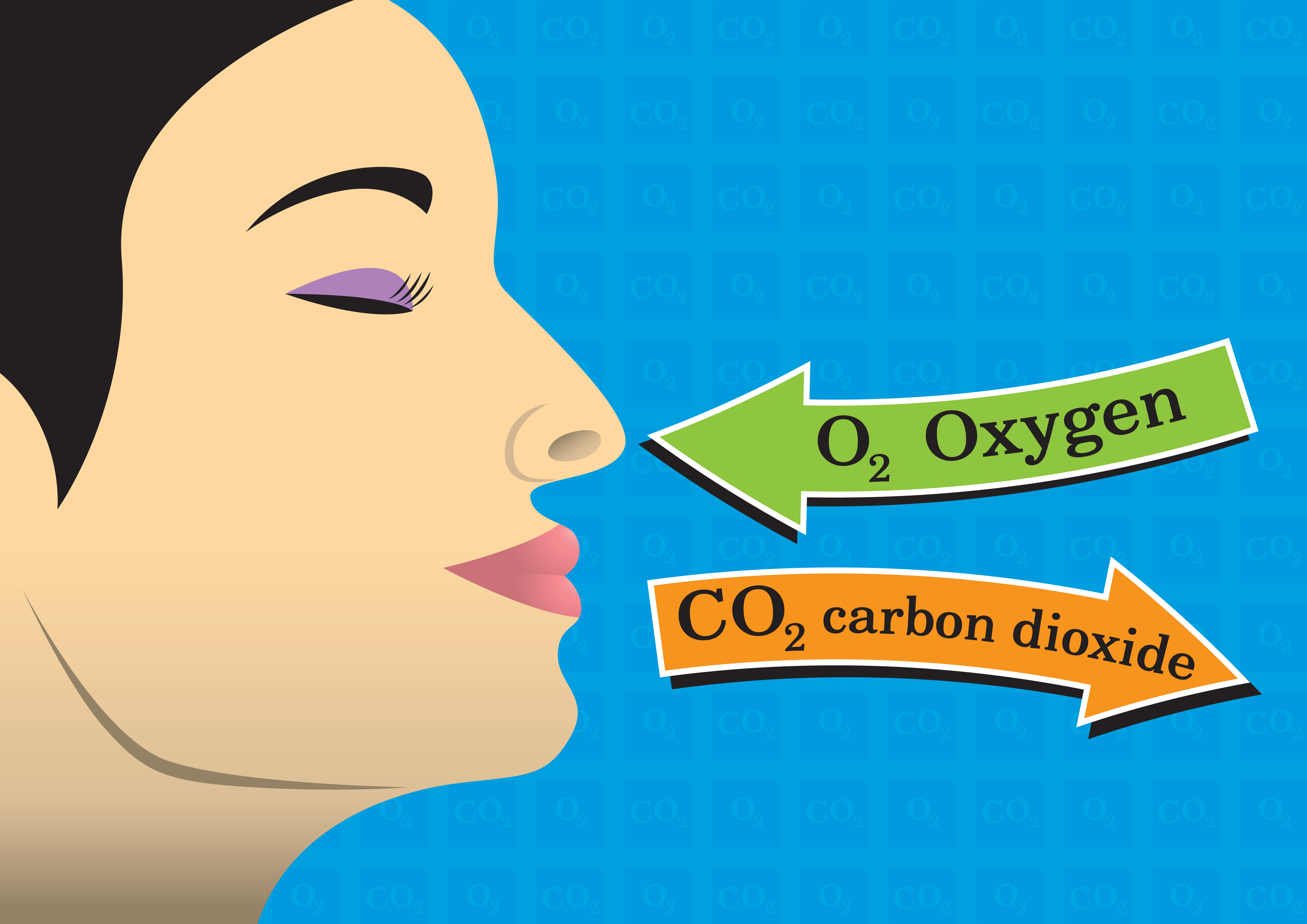
Ans: Oxygen in the atmosphere is essential for respiration.
Oxygen is used by most living organisms to break down food and release energy. Without oxygen, animals and many microorganisms cannot carry out normal respiration.
Q3. How will you prove that air supports burning?
Ans:
Step 1: Take two candles of the same length and fix them on a table.
Step 2: Light both the candles.
Step 3: Cover one of the burning candles with an inverted glass tumbler. Leave the other candle uncovered.
Step 4: Observe both candles.
Observation: The candle covered with the glass tumbler gets extinguished after some time, while the uncovered candle continues to burn.
Conclusion: The candle goes out because the air (oxygen) inside the glass tumbler gets used up and no fresh air is available. This proves that air supports burning.
Q4. How will you show that air is dissolved in water?
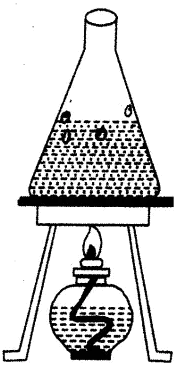
Ans: Take some water in a glass vessel or beaker and heat it slowly on a tripod stand. Before the water reaches its boiling point, small bubbles start rising from the bottom to the surface. These bubbles are air coming out of the water. They show that air was dissolved in the water. When water is warmed, the dissolved air escapes as bubbles.
Q5. Why does a lump of cotton wool shrink in water?
Ans: A lump of cotton wool has many tiny spaces between its fibres that are filled with air. When the cotton is immersed in water, the water replaces the air in those spaces. Because water takes up the spaces previously filled by air, the cotton fibres come closer together and the lump appears to shrink. The cotton also becomes heavier and less fluffy.
Q6. The layer of air around the earth is known as _______.
Ans: The layer of air around the earth is known as the atmosphere. Atmosphere consists of various gases such as nitrogen and oxygen, together with small amounts of other gases, water vapour and suspended particles.
Q7. The component of air used by green plants to make their food, is _______.
Ans: The component of air used by green plants to make their food, is carbon dioxide.
Green plants use carbon dioxide, water and sunlight to make food by the process of photosynthesis and they release oxygen as a by-product. Animals and other organisms use oxygen for respiration and release carbon dioxide. This exchange keeps a balance of these gases in the atmosphere.
- Natural sources of carbon dioxide include animals, which exhale carbon dioxide during breathing.
- Human activities that increase carbon dioxide in air include burning coal, oil and natural gas for energy and transport.
Q8. List five activities that are possible due to the presence of air.
Ans: The five activities that are possible due to air are as follows:
- Photosynthesis - Plants use carbon dioxide from air and sunlight to make food.
- Cloud formation - Air carries water vapour, which condenses to form clouds.
- Respiration - Animals and many organisms use oxygen from air to obtain energy from food.
- Transpiration - Plants release water vapour from their leaves into the air.
- Winnowing - Farmers use the movement of air (wind) to separate grain from chaff.
Q9. How do plants and animals help each other in the exchange of gases in the atmosphere?
Ans: Plants take in carbon dioxide from the air for photosynthesis and give out oxygen. Animals take in oxygen for respiration and give out carbon dioxide. In this way, plants and animals help each other by exchanging gases: plants supply oxygen needed by animals, and animals supply carbon dioxide needed by plants.
FAQs on NCERT Solutions: Air Around us
| 1. What are the different gases present in air and what percentage does each one make up? |  |
| 2. How does air pressure work and why do we feel heavier at sea level than on mountains? | |
| 3. Why is oxygen important for living things and what happens if we don't have enough oxygen? | |
| 4. What causes wind and how is it related to air movement around us? | |
| 5. How does air pollution happen and what are the main sources of pollutants in the air we breathe? | |