Class 7 Civics Chapter 6 Notes - Understanding Media
| Table of contents |

|
| Understanding Media |
|
| Media and Technology |
|
| Media and Money |
|
| Media and Democracy |
|
| Setting Agendas |
|

Understanding Media
Media refers to various forms of communication, including radio, TV, newspapers, and the Internet. It includes diverse channels like TV news broadcasts. Mass media, such as TV, radio, and newspapers, reach millions around the world, influencing everyday life.
- Media is the plural of 'medium' and includes different ways society communicates.
- Mass Media: Comprises TV, radio, and newspapers that reach vast audiences globally, affecting daily life.
 Different forms of media
Media and Technology
Media and technology have become an integral part of our daily lives, significantly shaping the way we perceive and interact with the world. Although it might be hard to imagine life without them, modern media forms like cable TV and the internet are relatively new, having been around for less than twenty years.
Let's take a closer look at how media and technology have evolved and their impact on our lives.
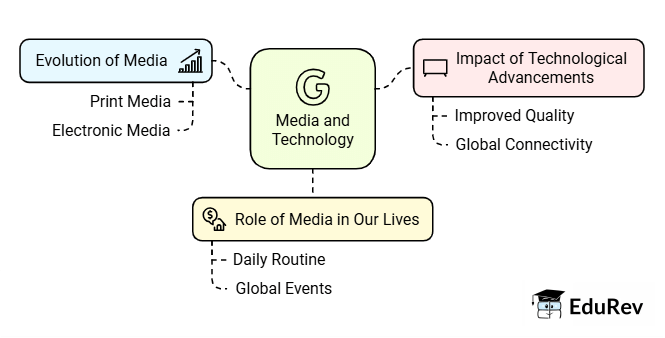
- Evolution of Media and Technology: Newspapers, commonly known as print media, are made using printing technology. We often include newspapers and magazines under print media, while TV and radio fall under electronic media. This traditional media has been a key source of information for many years. Television and radio, as forms of electronic media, use technology to broadcast to millions of people, transforming how information is shared.
- Impact of Technological Advancements: Advances in technology have allowed media to reach a wider audience with better quality. For example, technology has helped media connect with more people globally. Television, in particular, has been vital in linking individuals worldwide. With satellites and cables, TV images can travel far, giving viewers access to news and programmes from various locations.
- The Role of Media in Our Lives: As technology progresses, our perspectives on life also change. Television enables us to witness events from around the world, making it feel smaller and more connected. It allows us to experience global happenings in real time, promoting a sense of togetherness among people. Everything from a phone call to the evening news on TV can be considered media.
Media and Money
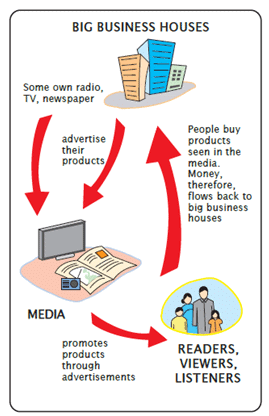
Consider the TV studio where the newsreader works; it contains lights, cameras, sound equipment, and transmission satellites, all of which are very expensive. Additionally, as mentioned earlier, the technology used by mass media is constantly evolving, requiring significant investment to stay updated. Because of these expenses, mass media organisations need substantial funds to operate. Consequently, many television channels and newspapers are owned by large business corporations.
 Media and Money
- Professionals Behind the Scenes: Beyond the newsreader, numerous other professionals are involved in the production of a broadcast. These include Camera Technicians who are responsible for capturing the visuals & Lighting Technicians who Ensure proper lighting for clear and high-quality images. All these professionals need to be compensated for their work, contributing to the overall cost of producing media content.
- Ownership of Media Outlets: Due to the high costs involved in producing and maintaining mass media, most media outlets are owned by large corporations. These corporations have the financial capacity to invest in the necessary technology and personnel.
- Revenue Generation Through Advertising: Mass media constantly seeks ways to generate revenue, with advertising being one of the primary methods. Advertisers promote various products such as cars, chocolates, clothes, and phones during television broadcasts.
TV Shows: Ads often appear during breaks in your favorite TV shows.
Sports Events: For example, during a cricket match, the same ads are played repeatedly between overs. The repetition of ads is a strategy used by advertisers to persuade viewers to purchase the products they are promoting.
Media and Democracy
In a democracy, the media plays a crucial role in keeping citizens informed about national and global events. It helps people understand the workings of the government and provides the necessary information to participate in civic activities, such as:
- Writing to officials
- Organizing or participating in protests
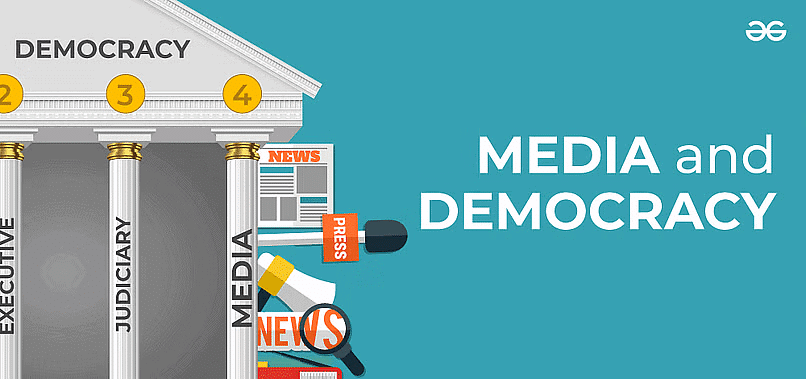
- The Need for Balanced Reporting: For a democracy to function effectively, the media must provide a fair and balanced portrayal of events. For instance, consider a protest against pollution from factories: One newspaper might portray the protesters as troublemakers & another might depict them as defenders of their jobs. A balanced report would present all sides of the story, allowing readers to form their own opinions.
- Challenges to Media Independence: To produce balanced reporting, media must operate independently; however, this independence is often compromised by government censorship, as seen during the Emergency period in India (1975-1977), and the influence of big business, where media outlets' reliance on advertising revenue can lead to biased reporting by large corporations aiming to avoid displeasing advertisers.
- Media Bias and Focus: Even in the absence of direct censorship, media coverage can still be skewed due to factors such as ownership influence and selective reporting. Ownership influence occurs when media companies, particularly those owned by large corporations, prioritize stories that align with their own interests. Selective reporting happens when media outlets emphasize specific aspects of a story to attract attention or promote a particular viewpoint.
Setting Agendas
The media is essential in deciding which stories are seen as important or "newsworthy." By choosing what to highlight and share, the media shapes how people view various issues and prioritises certain matters over others. In a democracy, the media plays a vital role in our lives, as it is the primary way we learn about government-related issues.
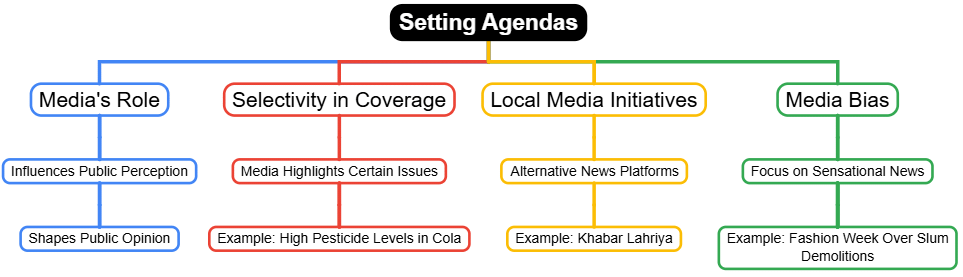
- Selectivity in Coverage: A school's annual function might receive little attention unless a notable figure, such as a famous actor, is involved. This phenomenon is known as the media 'setting the agenda,' where the media's selectivity shapes which events gain prominence. One recent example is Media coverage of high pesticide levels in cola drinks, despite governmental resistance, underscored the need for strict monitoring according to international standards.
- Local Media Initiatives: Local groups have established their own media platforms to address concerns like crop prices, farmer advice, and local challenges, given the mainstream media's limited focus on these issues. A notable example is Khabar Lahriya, a fortnightly newspaper run by eight Dalit women in Uttar Pradesh. It focuses on Dalit issues, violence against women, and political corruption in the Bundeli language, reaching a diverse audience including farmers, shopkeepers, and newly literate women.
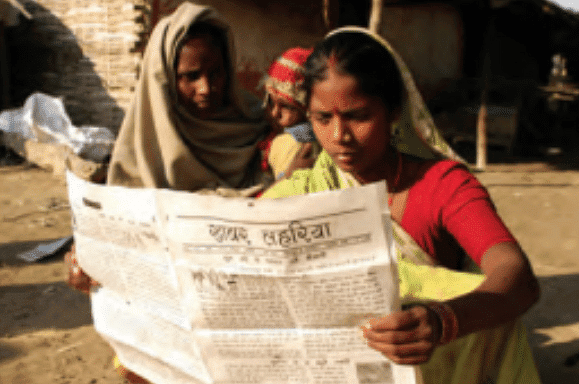 Khabar leheriya
 - Impact of Media Bias on Public Perception: Local media initiatives aim to address overlooked issues such as crop prices and local challenges. However, media bias can lead to a focus on glamorous events, like Fashion Week, at the expense of critical issues, such as slum demolitions. This bias can overshadow significant but less sensational topics, as seen in the inadequate coverage of the drinking water crisis, which affects thousands annually due to unsafe water.
Some Important Keys
- Media: The term ‘media’ refers to various forms of communication, including everything from phone calls to television news.
- Public protest:. public protest occurs when many people gather to express their disagreement with advertisements.
- Balanced report:. balanced report presents multiple viewpoints on a story, allowing readers to form their own opinions, assuming the media is independent.
- Censorship: The government has the authority to prevent media from publishing or showing certain stories. In India's history, the media faced significant censorship during the Emergency from 1975 to 1977.
- Broadcast:. broadcast is a TV or radio programme that is transmitted widely.
- Setting Agenda: One key role of the media is to decide which stories are highlighted, determining what is considered newsworthy. This is often referred to as setting the agenda.
- Local Media: Local media focuses on smaller issues that affect everyday people. Recognising that mainstream media often overlooks these matters, many local groups have initiated their own media outlets.
In a democracy, the media plays a crucial role in delivering news and discussing events occurring both nationally and globally.
|
63 videos|371 docs|46 tests
|
FAQs on Class 7 Civics Chapter 6 Notes - Understanding Media
| 1. What is the relationship between media and technology in today's society? |  |
| 2. How does media influence democracy? | |
| 3. What impact does money have on media practices? | |
| 4. How do media set agendas in society? | |
| 5. What are some examples of media technologies that have emerged in recent years? | |




Semester Notes
,video lectures
,ppt
,mock tests for examination
,shortcuts and tricks
,study material
,Class 7 Civics Chapter 6 Notes - Understanding Media
,Important questions
,Summary
,Free
,Class 7 Civics Chapter 6 Notes - Understanding Media
,Previous Year Questions with Solutions
,Viva Questions
,Objective type Questions
,practice quizzes
,Exam
,Sample Paper
,past year papers
,Class 7 Civics Chapter 6 Notes - Understanding Media
,MCQs
,Extra Questions
;



Chapter Notes - Understanding Media Free PDF Download
Importance of Chapter Notes - Understanding Media
Chapter Notes - Understanding Media
Chapter Notes - Understanding Media Class 7 Questions
Study Chapter Notes - Understanding Media on the App
|
© EduRev
|
Education Revolution
|


|




