Class 7 Geography Chapter 7 Notes - Life in the Deserts
| Table of contents |

|
| What is Desert? |
|
| The Hot Desert - Sahara |
|
| The Cold-Desert-Ladakh |
|
| Tourism in Ladakh |
|

What is Desert?
Desert is an arid region characterized by extremely high or low temperatures and has scarce vegetation. They are vast, arid regions characterized by a scarcity of precipitation, resulting in dry and often hard to survive landscapes. These areas typically receive minimal rainfall, making it challenging for vegetation to thrive. Deserts cover approximately one-third of the Earth's land surface and are found on every continent.
Depending on the temperature, There are two types of deserts
1. The Hot Sahara Desert
2. The Cold Desert Ladakh
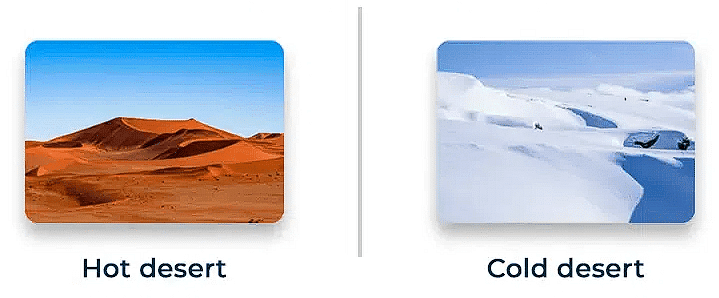 Types of Deserts
The Hot Desert - Sahara
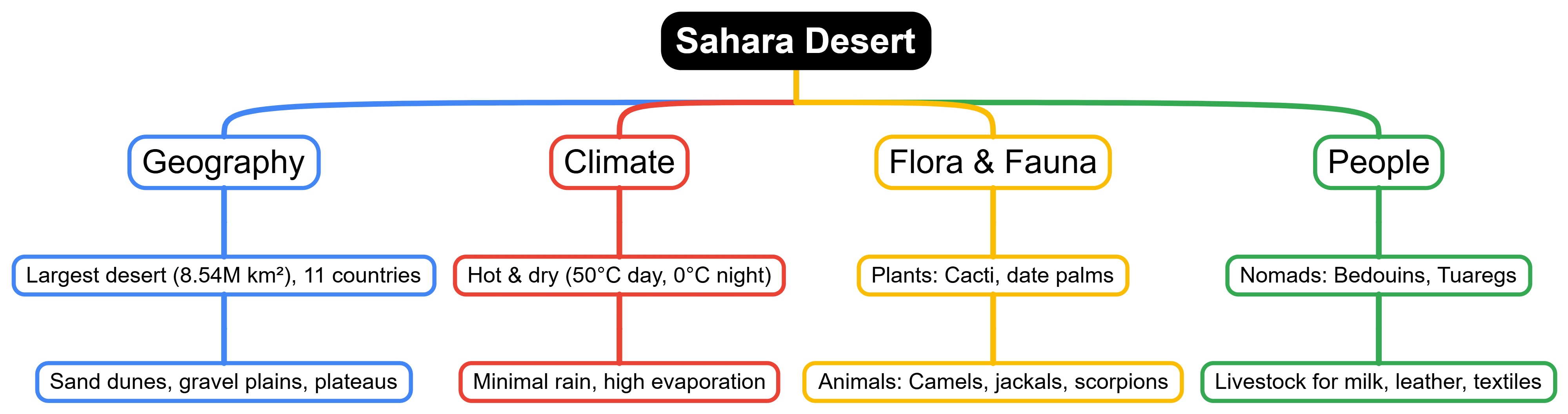
- The Sahara Desert spans a significant portion of Africa.
- It is the largest desert in the world.
- The Sahara covers an area of approximately 8.54 million square kilometers. In comparison, India has an area of 3.28 million square kilometers.
- The Sahara Desert extends across eleven countries which are: Algeria, Chad, Egypt, Libya, Mali, Mauritania, Morocco, Niger, Sudan, Tunisia, and Western Sahara.
- Beyond vast stretches of sand, the Sahara has gravel plains and elevated plateaus with bare rocky surfaces, some over 2500m high.
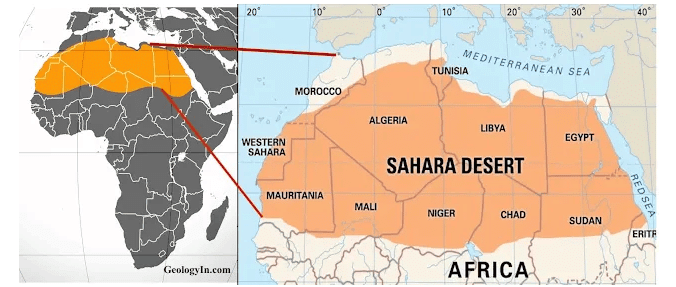 Sahara Desert
(a) Climate
The Sahara Desert is a super hot and dry place where it rarely rains.
- The intense heat in the Sahara Desert contributes to the rapid evaporation of water sources. This phenomenon occurs due to the elevated temperatures, causing water to transform into vapor swiftly. The scarce rainfall, coupled with the quick evaporation, accentuates the arid nature of the environment.
- Daytime temperatures in the Sahara Desert can reach remarkable highs, soaring up to 50°C(122°F). This extreme heat is comparable to standing close to a high-temperature heat source.
- Conversely, during the night, the desert experiences a significant drop in temperature, with readings nearing zero degrees Celsius. The vast difference between scorching daytime conditions and chilly nights is a distinctive feature of the Sahara's climate.
(b) Flora and Fauna
- The vegetation in the Sahara Desert includes plants like cacti, date palms, and acacias.
- Some areas feature oasis, which are green spots with date palms encircling them.
- The desert is home to various animal species, including camels, hyenas, jackals, foxes, scorpions, and many types of snakes and lizards.
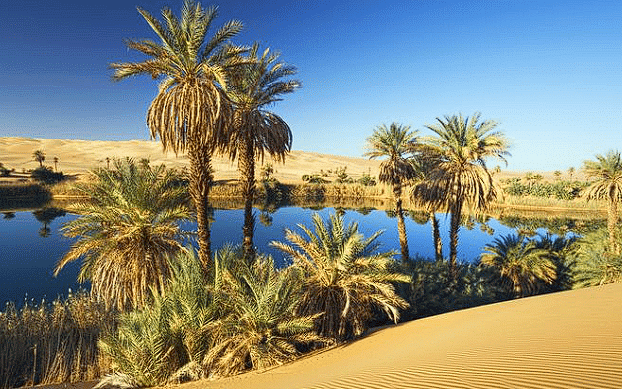 Oasis
Oasis
(c) People
- Despite its harsh climate, the Sahara Desert has been home to various groups.
- The Bedouins and Tuaregs are among these groups, and they are nomadic tribes.
- They raise livestock including goats, sheep, camels, and horses.
- These animals provide them with milk, skin for making leather items (such as belts, slippers, and water bottles), and hair for creating mats, carpets, clothes, and blankets.
- To protect themselves from dust storms and hot winds, they wear heavy robes.
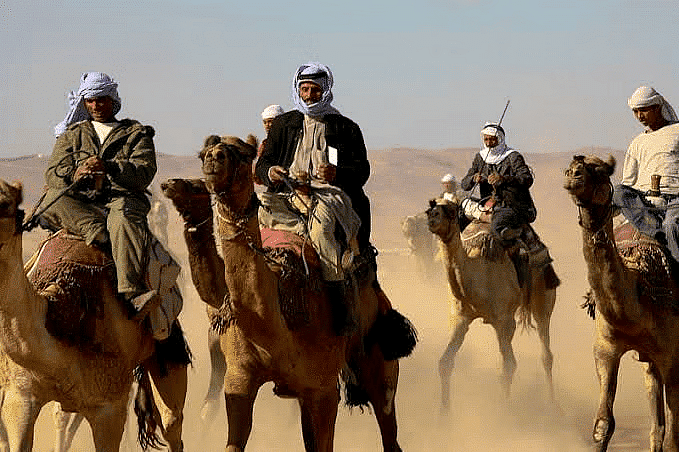 Nomads
- Oasis Settlements and Agriculture: The oasis in the Sahara and the Nile Valley in Egypt sustain settled communities because of the presence of water. This allows inhabitants to grow date palms and various crops like rice, wheat, barley, and beans. Egypt is also widely recognized for its cotton production.
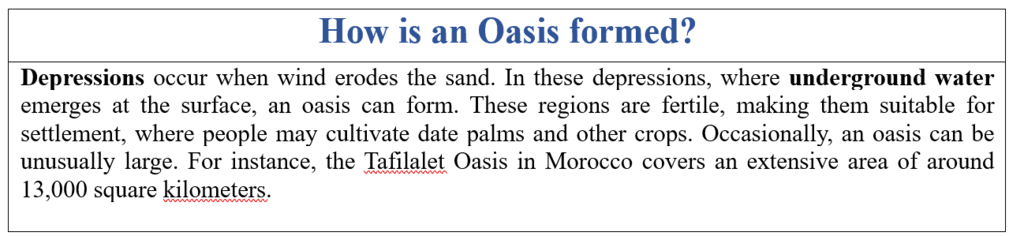 Formation of an Oasis
 - Discovery of Oil: The discovery of oil, a product with high demand, in Algeria, Libya, and Egypt is steadily changing the Sahara Desert. The region is also rich in other important minerals such as iron, phosphorus, manganese, and uranium.
- The Cultural Landscape: The cultural landscape of the Sahara is evolving. Modern glass office buildings now overshadow traditional mosques, and superhighways cross ancient camel paths. Trucks are increasingly taking over the role of camels in the salt trade. The Tuaregs are frequently seen guiding foreign tourists, and more nomadic herdsmen are transitioning to city life, finding jobs in the oil and gas industries.
The Cold-Desert-Ladakh
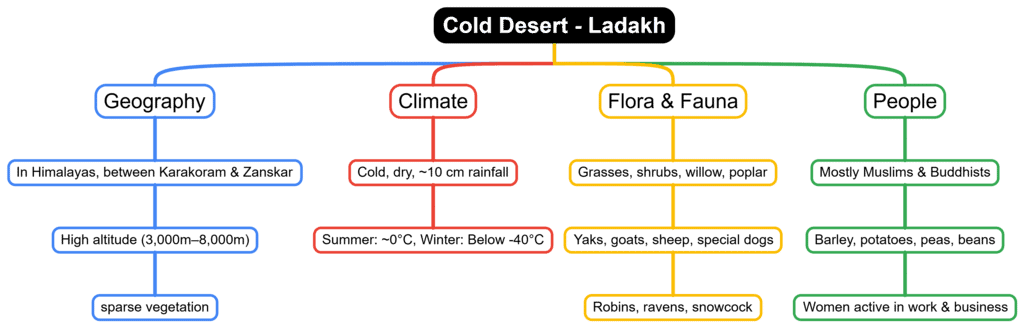
- Ladakh is situated in the Great Himalayas, enclosed by the Karakoram Range to the north and the Zanskar mountains to the south.
- The region is characterized by sparse vegetation due to its frigid desert climate.
- Altitudes range from 3000m in Kargil to over 8000m in the Karakoram.
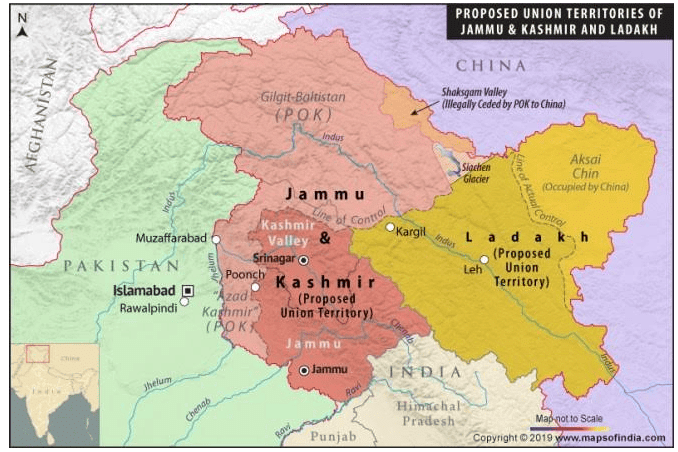 Ladakh
(a) Climate
The climate is extremely cold and dry, with minimal rainfall (about 10 cm annually) and intense sunlight.- Daytime temperatures in summer are just above freezing, while night temperatures can drop below -30°C. Winters see temperatures below -40°C for extended periods.
- Ladakh experiences freezing winds and is in the rain shadow of the Himalayas, meaning that it experiences very little rainfall.
(b) Flora and Fauna
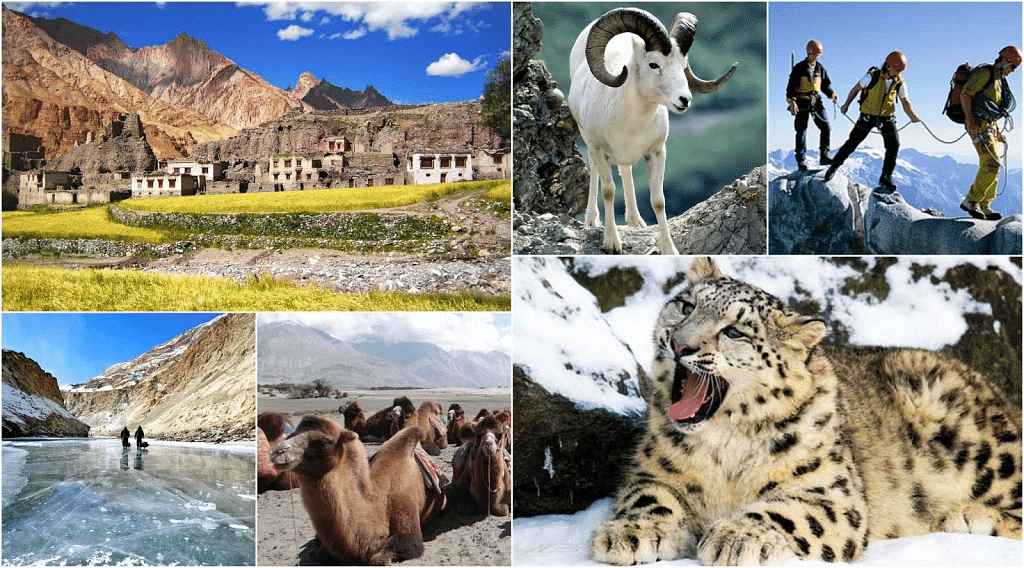 Flora and Fauna
- Vegetation is limited to patches of grasses, shrubs, willow, and poplar groves. Fruit trees like apples, apricots, and walnuts bloom in summer.
- Bird species such as robins, redstarts, Tibetan snowcock, ravens, and hoopoes inhabit the region, with some being migratory.
- Wildlife includes wild goats, sheep, yaks, and special dog breeds, raised for various purposes including milk, meat, and wool.
(c) People
 People in Ladakh
- The population comprises mainly Muslims and Buddhists, with cultural ties to Tibet and Central Asia.
- Buddhist monasteries, including Hemis, Thiksey, Shey, and Lamayuru, are prominent features of the landscape.
- Summers are dedicated to agriculture, with crops like barley, potatoes, peas, beans, and turnips cultivated.
- Women play significant roles in household chores, agriculture, and small businesses.
- Leh, the capital of Ladakh, is well connected to Kashmir Valley by road via National Highway 1, which passes through the Zoji La Pass.
- Tourism is a major industry, attracting visitors for activities like monastery visits, trekking, and witnessing local ceremonies.
Tourism in Ladakh
Major Attraction: Ladakh sees tourists from India and abroad.Activities: Visiting gompas (monasteries), Trekking through meadows and glaciers, Witnessing ceremonies and festivals.
Sustainable Living: Resources like water and fuel are used carefully. Minimal waste and high resource reverence. Long-standing harmony with nature.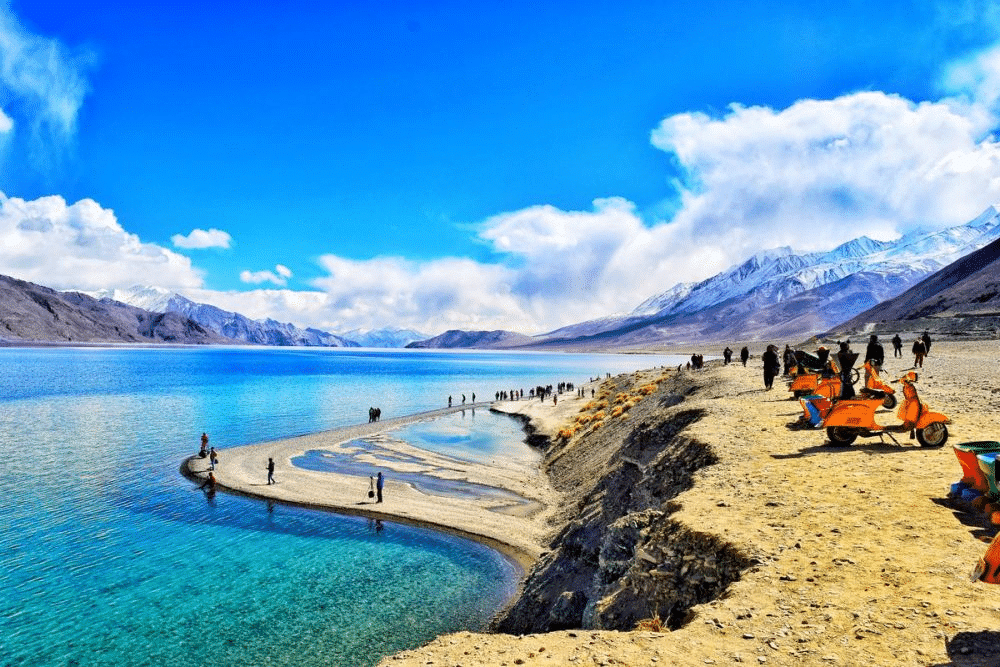
Tourism in Ladakh
(d) Sustainability and Resource Management
- Despite modernization, the people of Ladakh maintain a deep connection with nature.
- Resources such as water and fuel are utilized with reverence and care due to their scarcity.
- Minimal waste is generated, and nothing is discarded unnecessarily.
Differences Between the Two Types of Deserts 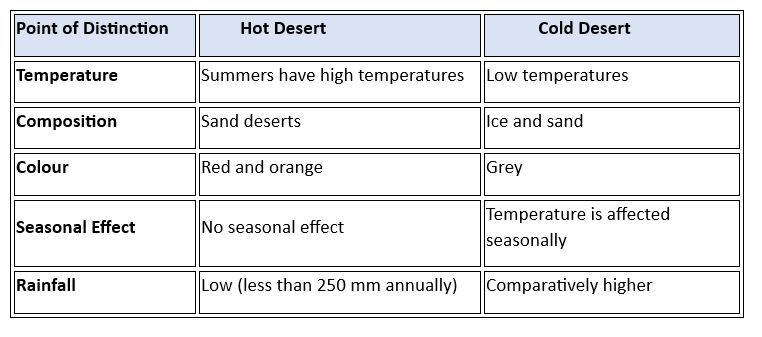 Difference between Hot desert and Cold Desert
The Sahara's vastness and diverse geographical features contrast sharply with the cold, mountainous terrain of Ladakh, highlighting the rich diversity of desert environments around the world.
|
63 videos|371 docs|46 tests
|
FAQs on Class 7 Geography Chapter 7 Notes - Life in the Deserts
| 1. What are the main characteristics of hot deserts like the Sahara? |  |
| 2. How do cold deserts like Ladakh differ from hot deserts? | |
| 3. What types of plants and animals are found in deserts? | |
| 4. How do people adapt to living in desert regions? | |
| 5. What are some challenges faced by communities living in deserts? | |




MCQs
,Viva Questions
,shortcuts and tricks
,Objective type Questions
,video lectures
,Sample Paper
,Extra Questions
,study material
,Free
,practice quizzes
,ppt
,past year papers
,Previous Year Questions with Solutions
,Class 7 Geography Chapter 7 Notes - Life in the Deserts
,Summary
,Semester Notes
,Exam
,mock tests for examination
,Important questions
,Class 7 Geography Chapter 7 Notes - Life in the Deserts
,Class 7 Geography Chapter 7 Notes - Life in the Deserts
;



Chapter Notes - Life in the Deserts Free PDF Download
Importance of Chapter Notes - Life in the Deserts
Chapter Notes - Life in the Deserts
Chapter Notes - Life in the Deserts Class 7 Questions
Study Chapter Notes - Life in the Deserts on the App
|
© EduRev
|
Education Revolution
|


|




within 7 days!