Population Interactions | Biology Class 12 - NEET PDF Download
| Table of contents |

|
| Population Interactions |
|
| Types of Interactions among Organisms |
|
| 1. Predation |
|
| 2. Competition |
|
| 3. Parasitism |
|
| 4. Commensalism |
|
| 5. Mutualism |
|

Population Interactions
In nature, no habitat is home to just a single species. Every species relies on others in some way. For instance, even a plant that makes its own food needs soil microbes to break down organic matter and provide essential nutrients. Additionally, plants require animal agents for pollination. This shows that animals, plants, and microbes are interconnected and cannot live in isolation.
Interspecific interactions occur between populations of different species and can be beneficial, harmful, or neutral to one or both species. These interactions are fundamental to the existence of biological communities, even in their simplest forms.
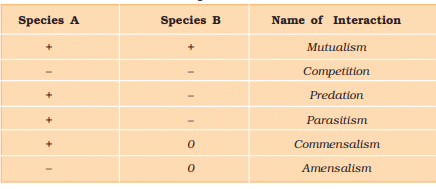
Interspecific interactions are classified into different types based on their impact on the species involved. The possible outcomes of these interactions are illustrated in the table below:
Types of Interactions among Organisms
Organisms interact with one another in various ways, which can be classified into different types of interactions based on the benefits or harms involved.
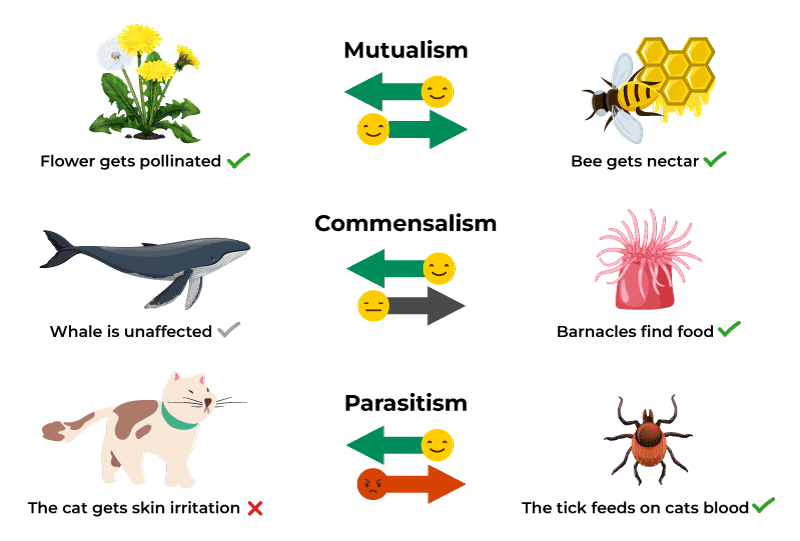
1. Mutualism: In this type of interaction, both species benefit from each other. It's a win-win situation for both parties involved.
2. Competition: Here, both species lose in their interaction with each other. They compete for resources, and neither gains an advantage.
3. Parasitism: In parasitism, only one species benefits while the other is harmed. The parasite benefits at the expense of the host.
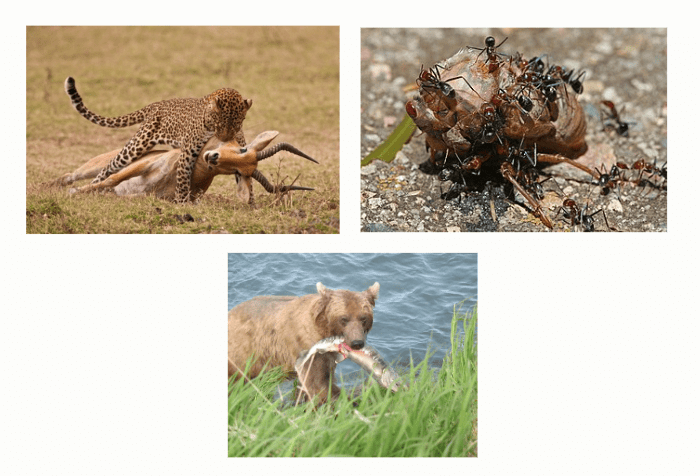
4. Predation: Similar to parasitism, in predation, one species benefits (the predator) while the other (the prey) is harmed. The predator feeds on the prey.
5. Commensalism: In commensalism, one species benefits while the other is neither benefited nor harmed. The interaction is neutral for one party.
6. Amensalism: In amensalism, one species is harmed while the other is unaffected. The interaction is detrimental to one party without impacting the other.
7. Close Living: Predation, parasitism, and commensalism share a common characteristic of close living. In these interactions, the involved species live in close proximity to each other.
1. Predation
 Predation
- Predation is how nature transfers the energy that plants capture to higher levels in the food chain.
- Animals that eat plants, called herbivores, are similar to predators because they help move energy up the food chain.
- Predators also play important roles by keeping prey populations in check. Without predators, prey species could multiply too much and upset the balance of the ecosystem.
- For example, when non-native species are introduced to a new area, they can become invasive because there are no natural predators to control them.
- Predators help maintain the balance of species in a community by reducing competition among prey species. In the rocky intertidal areas of the American Pacific Coast, the starfish Pisaster is a key predator.
- When all the starfish were removed from a certain area, more than 10 species of invertebrates became extinct within a year due to competition for resources.
- If a predator is too good at catching its prey and overexploits it, the prey might become extinct, leading to the predator's extinction as well due to lack of food. This is why predators in nature are careful and not overly aggressive.
- Prey species have developed various defenses to protect themselves from being eaten. Some insects and frogs are camouflaged to avoid detection by predators. Others, like the Monarch butterfly, are poisonous and taste bad to predators.
- The Monarch butterfly gets its distasteful chemical from the poisonous weeds it eats as a caterpillar. Plants, on the other hand, are prey for herbivores and have evolved different defenses since they cannot move away.
- Common defenses include thorns, like those found on acacia trees and cacti. Many plants also produce chemicals that make herbivores sick, disrupt their reproduction, or kill them.
- For instance, the weed Calotropis produces toxic cardiac glycosides, which is why animals like cattle and goats avoid eating it. Many commercial plant products, such as nicotine, caffeine, and quinine, are actually produced by plants as defenses against grazers and browsers.
2. Competition
 Competition
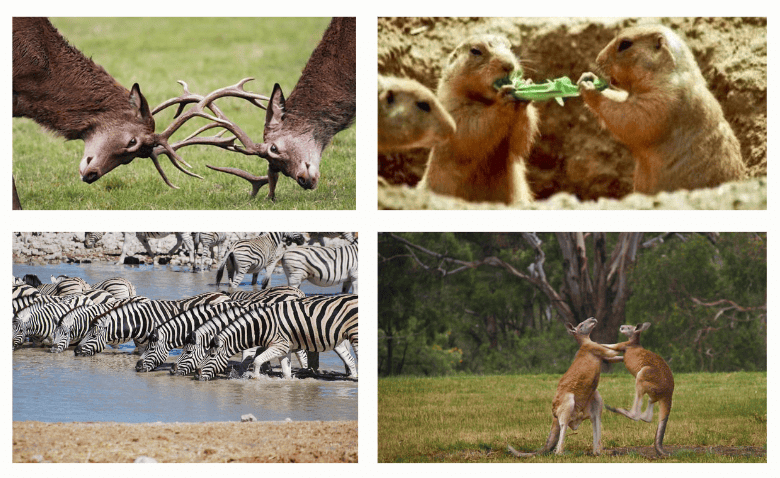
- Interspecific competition is a powerful force in organic evolution. It occurs when different species compete for the same resources, which can be limiting or not.
- Competition is not limited to closely related species; unrelated species can also compete for the same resource. For example, in some South American lakes, flamingoes and fish compete for zooplankton.
- Resources do not have to be limiting for competition to occur. In interference competition, one species can reduce the feeding efficiency of another species, even when resources are abundant.
- Competition is best defined as a process where the fitness of one species is significantly lower in the presence of another species. This can be measured by the intrinsic rate of increase, or 'r'.
- Laboratory experiments have shown that when resources are limited, the competitively superior species will eventually eliminate the other species. However, evidence for competitive exclusion occurring in nature is not always conclusive.
- Strong circumstantial evidence for competition in nature includes the extinction of the Abingdon tortoise in the Galapagos Islands after the introduction of goats, and the phenomenon of 'competitive release', where a species expands its distribution range when a competing species is removed.
- Recent studies suggest that species facing competition may evolve mechanisms for coexistence, such as resource partitioning, rather than exclusion. For example, different species of warblers can coexist on the same tree by having different foraging patterns.
Gause’s ‘Competitive Exclusion Principle’
- Two closely related species competing for the same resources cannot coexist indefinitely, and the competitively inferior one will be eliminated eventually.
- This principle holds true when resources are limiting, but not under all circumstances.
3. Parasitism
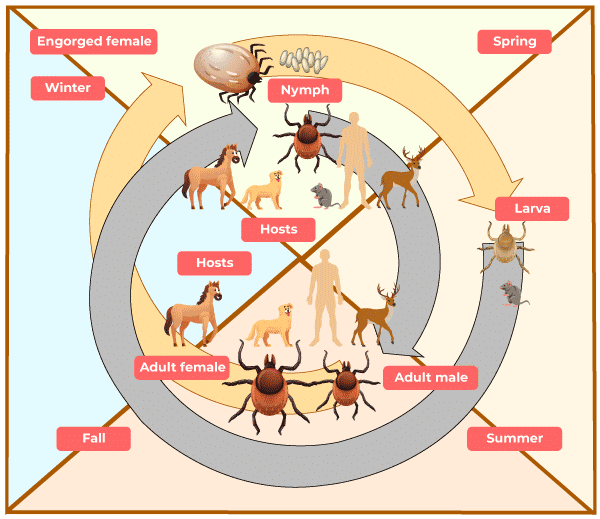 Parasitism
Parasitism has evolved in numerous taxonomic groups, ranging from plants to higher vertebrates, because it offers free lodging and meals. Many parasites have become host-specific, meaning they can only parasitize a single species of host. This leads to a co-evolutionary relationship where both the host and the parasite adapt to each other.
Parasites have developed special adaptations such as the loss of unnecessary sense organs, the presence of adhesive organs or suckers to cling onto the host, the loss of digestive systems, and a high reproductive capacity.
The life cycles of parasites are often complex, involving one or two intermediate hosts or vectors to facilitate parasitism of their primary host. For example, the human liver fluke depends on a snail and a fish to complete its life cycle, while the malarial parasite relies on mosquitoes as vectors to spread to other hosts.
- Majority of the parasites harm the host; they may reduce the survival, growth and reproduction of the host and reduce its population density.
- They might render the host more vulnerable to predation by making it physically weak.
- Parasites that feed on the external surface of the host organism are called ectoparasites.
- Examples include lice on humans, ticks on dogs, and ectoparasitic copepods infesting marine fish.
- Endoparasites, on the other hand, live inside the host body at various sites such as the liver, kidney, lungs, or red blood cells.
- Their life cycles are more complex due to their extreme specialization, and their morphological and anatomical features are often simplified, with a focus on their reproductive potential.
- Brood parasitism in birds is an intriguing form of parasitism where a parasitic bird lays its eggs in the nest of a host bird, allowing the host to incubate them.
- Over time, the eggs of parasitic birds have evolved to resemble the size and color of the host's eggs to avoid detection and rejection by the host.
- The female mosquito, despite needing human blood for reproduction, is not considered a parasite.
4. Commensalism
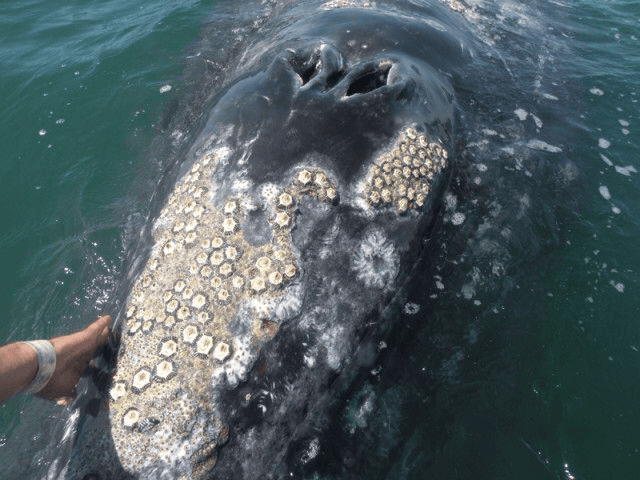 Commensalism: Barnacles and Whale
- In commensalism, one species benefits while the other is neither harmed nor benefited.
- Examples include:
- Epiphytic Orchids: Orchids growing on mango trees benefit without harming the tree.
- Barnacles and Whales: Barnacles on whales gain without affecting the whale.
- Cattle Egrets and Grazing Cattle: Egrets follow cattle to catch insects stirred up by their movement.
- Clown Fish and Sea Anemones: Clown fish get protection from predators by living among the stinging tentacles of sea anemones, which do not seem to benefit from the arrangement.
5. Mutualism
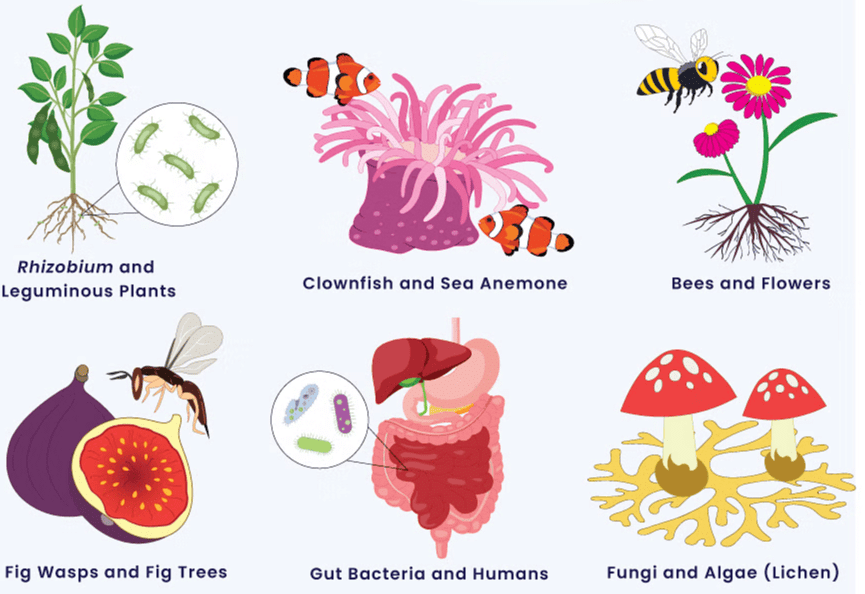 Mutualism
Mutualism is a type of interaction where both species involved benefit from the relationship.
- Lichens are a close mutualistic relationship between a fungus and photosynthesizing algae or cyanobacteria.
- Mycorrhizae are associations between fungi and the roots of higher plants, where fungi help plants absorb essential nutrients, and plants provide fungi with energy-yielding carbohydrates.
Plant-Animal Mutualism
- Plants rely on animals for pollinating flowers and dispersing seeds.
- Animals are compensated with rewards such as pollen, nectar, and nutritious fruits.
- To prevent cheating, plants and animals have co-evolved, ensuring their interactions are mutually beneficial.
Examples of Plant-Animal Mutualism
- Fig Trees and Wasps: Certain fig species can only be pollinated by specific wasp species.The female wasp uses the fig fruit as an egg-laying site and feeds its larvae with developing seeds. In return, the wasp pollinates the fig while searching for egg-laying sites.
- Orchids and Bees: Many orchids have evolved unique floral patterns to attract specific pollinator insects, ensuring guaranteed pollination.
- Mediterranean Orchid Ophrys. This orchid attracts a species of bee by mimicking the appearance of a female bee. The male bee attempts to mate with the flower, transferring pollen in the process.
|
78 videos|279 docs|174 tests
|
FAQs on Population Interactions - Biology Class 12 - NEET
| 1. What is predation and how does it affect population dynamics? |  |
| 2. How does competition occur between organisms and what are its types? | |
| 3. What is parasitism and how does it impact host organisms? | |
| 4. Can you explain commensalism and provide an example? | |
| 5. What is mutualism and why is it important in ecosystems? | |




Sample Paper
,Population Interactions | Biology Class 12 - NEET
,Exam
,Free
,ppt
,Semester Notes
,Objective type Questions
,past year papers
,shortcuts and tricks
,Viva Questions
,practice quizzes
,Important questions
,MCQs
,video lectures
,mock tests for examination
,Population Interactions | Biology Class 12 - NEET
,Population Interactions | Biology Class 12 - NEET
,Previous Year Questions with Solutions
,Summary
,Extra Questions
,study material
,



Population Interactions Free PDF Download
Importance of Population Interactions
Population Interactions Notes
Population Interactions NEET Questions
Study Population Interactions on the App
|
© EduRev
|
Education Revolution
|


|




within 7 days!