Class 9 Civics Chapter 4 Notes - Working of Institutions

The Judiciary and Its Structure
The judiciary is an institution responsible for delivering justice and resolving legal disputes. In India, the judiciary consists of various courts at different levels, collectively known as the judiciary.
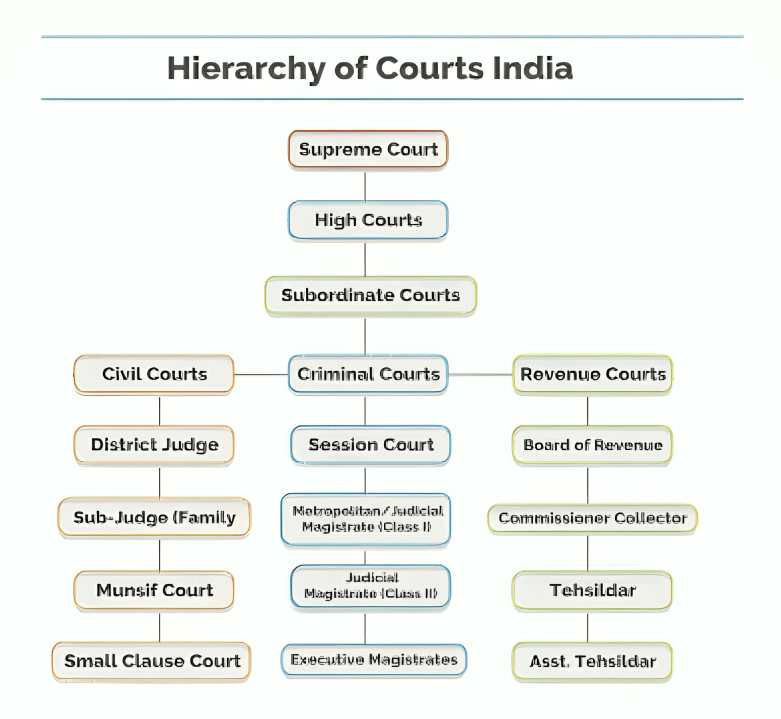
The structure of the Indian judiciary includes:
- Supreme Court: The highest court in the country.
- High Courts and Subordinate Courts: Functioning at the state level.
- District Courts and Local Courts: Operating at the district and local levels.
- Lok Adalats: Special courts for quicker and informal dispute resolutions.
India's judiciary is unified, meaning the Supreme Court supervises judicial administration across the nation. Its decisions must be followed by all other courts.
The judiciary has the power of judicial review, allowing the Supreme Court and High Courts to check if any law or executive action is constitutional when challenged. This ensures that laws align with the Constitution.
Judges of the Supreme Court and High Courts are appointed by the President, based on the Prime Minister's advice and after consulting the Chief Justice of the Supreme Court. Once appointed, judges retain a high level of independence, with minimal interference from the political executive. The most senior judge is usually appointed as the Chief Justice.
Removing judges is a serious matter; a judge can only be removed through an impeachment motion that must be passed by two-thirds of both Houses of Parliament. This process highlights the independence of the judiciary.
Additionally, the judiciary plays an important role in protecting citizens' rights through public interest litigation. This process allows anyone to approach the courts if government actions harm public interest.
Independence of the Judiciary
Judicial independence is essential for a fair justice system. It guarantees that the judiciary operates without influence from the legislature or executive branches. Judges make decisions based on the law, not on government or political party instructions. This separation is vital in modern democracies like India, where courts function independently from other government branches.
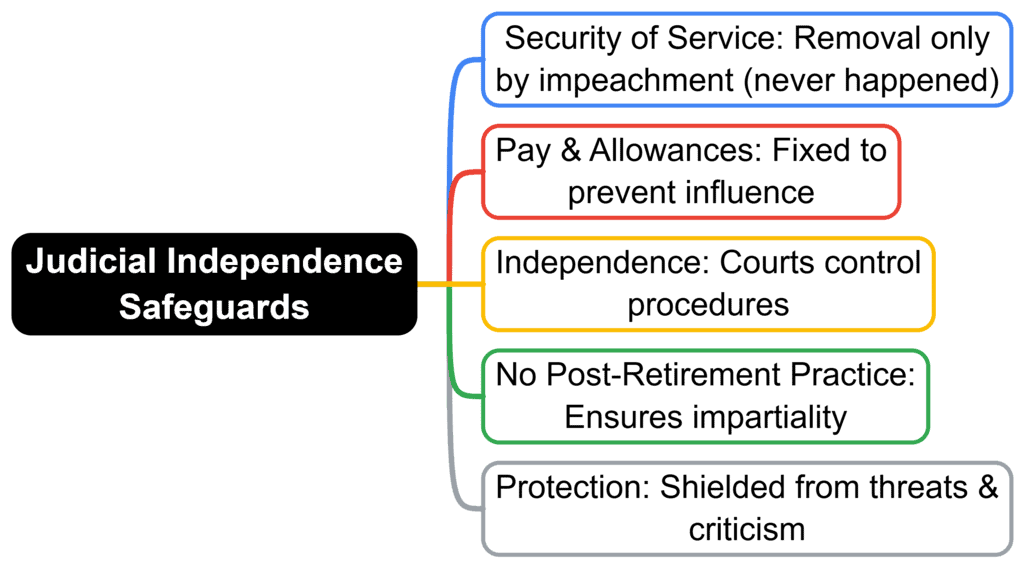
The Constitution safeguards this independence through various provisions:
- Security of Service: A judge can only be removed through an impeachment motion that passes with a two-thirds majority in both Houses of Parliament. This has never occurred in Indian history.
- Security of Pay and Allowances: Judges receive stable salaries and allowances to prevent financial manipulation.
- Free from Outside Influence: Courts can decide their procedures and work without outside interference.
- No Practice after Retirement: Judges cannot practice law after retiring, ensuring impartiality.
- Safety and Protection: Judges are protected from threats against their person, property, or reputation, and their decisions cannot be publicly criticised by the media or the public.
Moreover, the judiciary in India possesses substantial powers that enhance its independence:
- Judicial Review: The judiciary has the authority to assess the constitutional validity of any legislation or executive action when challenged in court.
- Power of the Judiciary: The Supreme Court and High Courts can interpret the Constitution and declare any law or action of the legislature or executive invalid if it violates the Constitution.
- Integrated Judiciary: India has an integrated judiciary where the Supreme Court oversees judicial administration, and its decisions are binding on all other courts.
- Public Interest Litigation: Individuals can approach the courts if government actions harm the public interest, known as public interest litigation.
The powers and independence of the Indian judiciary enable it to safeguard Fundamental Rights. Citizens can seek remedies in court for violations of their rights. In recent years, courts have issued numerous rulings to protect public interests and human rights.
Therefore, the independence of the judiciary is vital for democracy in India, ensuring justice is served without bias or outside influence.
Appointment and Removal of Judges
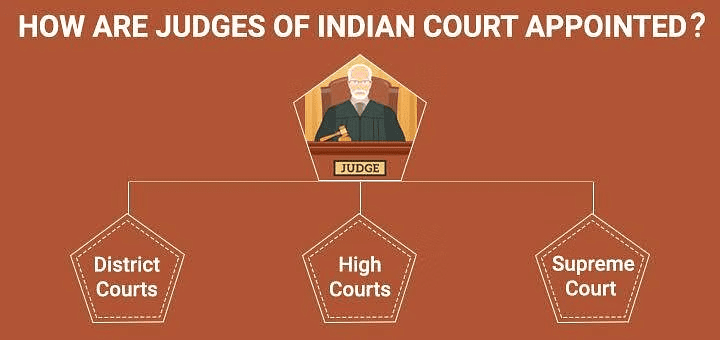
Judges for the Supreme Court and High Courts are appointed by the President of India, based on the Prime Minister's advice and in consultation with the Chief Justice of the Supreme Court. The Indian judiciary is among the strongest globally, with the power to interpret the Constitution and invalidate any laws or executive actions that contradict it.
- Senior judges from the Supreme Court are also involved in choosing new judges. This limits political interference, helping maintain judicial independence.
- Removal of judges is very uncommon. Once appointed, it is quite challenging to dismiss a judge. A judge can only be removed through an impeachment motion that must be approved by two-thirds of the members in both Houses of Parliament. This process is as complex as removing the President of India and has never occurred in Indian democratic history.
The Supreme Court and High Courts hold the power of judicial review, enabling them to evaluate the constitutional validity of laws or executive actions challenged in court. This authority highlights the judiciary's role in protecting the Constitution and safeguarding the Fundamental Rights of citizens.
Powers and Role of the Supreme Court and High Courts
The Supreme Court of India has various types of authority:
- Original Jurisdiction: This includes disputes involving the Union Government and states, conflicts between states, and cases between citizens and the state. The judiciary's powers and independence ensure it protects Fundamental Rights.
- Appellate Jurisdiction: The Supreme Court reviews appeals from both criminal and civil cases decided by High Courts.
- Advisory Jurisdiction: The Supreme Court can advise the President of India on legal issues.
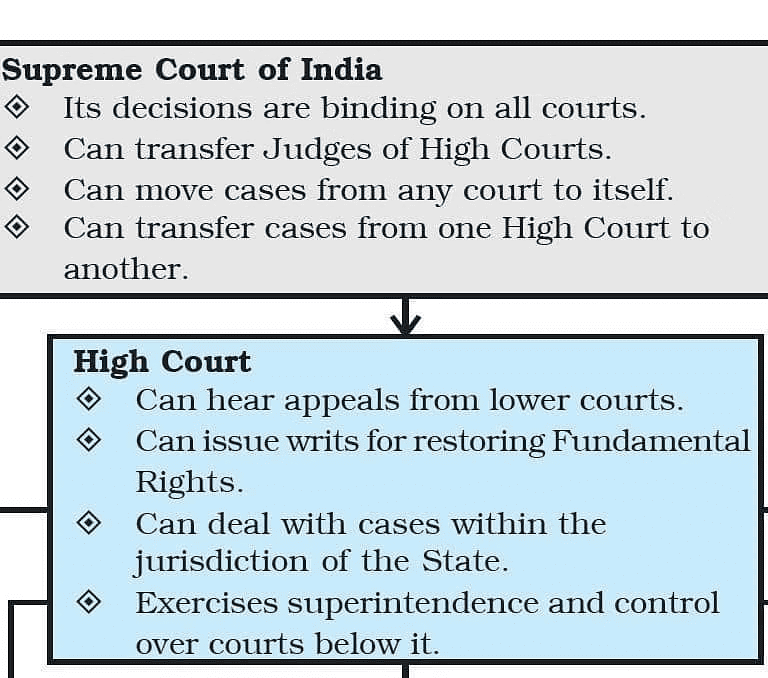
Additionally, the Supreme Court is empowered to:
- Interpret the Constitution: It can declare laws from Parliament and State Legislatures unconstitutional if they breach the Constitution.
- Judicial Review: The Court assesses the constitutionality of actions from the legislature and executive, determining if any laws or actions are constitutional.
The High Courts operate similarly at the state level, with powers to interpret the Constitution and protect fundamental rights. They handle public interest cases through Public Interest Litigation (PIL) and scrutinise government actions.
Judges of both the Supreme Court and High Courts are appointed by the President based on the Prime Minister's advice and consultation with the Chief Justice. The judiciary is independent, meaning it does not answer to the legislature or executive. A judge can only be removed through an impeachment motion that requires two-thirds approval from both Houses of Parliament. India's judiciary is among the most powerful globally.
Judiciary as the Guardian of Fundamental Rights
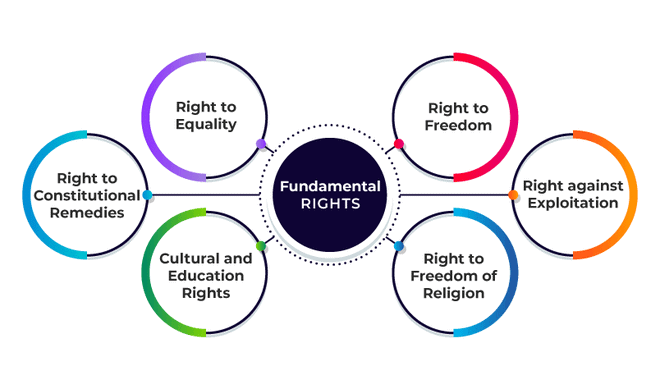
Both the Supreme Court and High Courts serve as defenders of citizens' Fundamental Rights. Anyone whose rights have been infringed or whose public interest is negatively affected by government actions can turn to the judiciary via Public Interest Litigations (PILs).
- The courts play a vital role in stopping the misuse of government authority. They step in to prevent improper use of power and to address wrongdoings. This judicial oversight is crucial for maintaining checks and balances in Indian democracy.
- In federal systems like India and the United States, the judiciary settles disputes between the central and state governments or among different states. For instance, issues like water distribution between Haryana and Punjab are often resolved by the courts. This capacity to settle inter-state disputes is essential for the effective operation of federal states.
The judiciary has the authority to assess the constitutional validity of any law or action taken by the executive when challenged. This process is known as judicial review. The Supreme Court and the High Courts are responsible for interpreting the Constitution of the country.
Judges of the Supreme Court and High Courts are appointed by the President based on the Prime Minister's advice and in consultation with the Chief Justice. After their appointment, judges can only be removed through an impeachment motion, which requires a two-thirds majority from both Houses of Parliament. This procedure safeguards the independence of the judiciary, making it challenging to remove judges.
The independence and powers of the judiciary enable it to act as the guardian of Fundamental Rights. Citizens can approach the courts for remedies if their rights are violated. In recent years, the courts have issued numerous rulings and directives to uphold public interest and human rights.
The independent and robust judiciary is crucial for democracies. All courts at various levels in a country together form the judiciary. The Indian judiciary comprises a Supreme Court for the nation, High Courts in the states, District Courts, and local courts. India has an integrated judiciary, meaning the Supreme Court oversees the whole judicial system.
Judicial Setup and Functioning
At the top of India’s judicial system is the Supreme Court, followed by High Courts at the state level. Below the High Courts, there are District Courts and Subordinate Courts that deal with criminal and civil cases.
- Supreme Court: As the highest court, it addresses cases that impact the entire country, including constitutional issues, civil and criminal appeals, and providing advice to the President. It has the authority to assess the constitutional validity of any law or executive action when contested, a process known as judicial review.
- High Courts: These courts handle state-level legal matters and possess similar powers to the Supreme Court in interpreting the Constitution and upholding justice. They also hear appeals from lower courts.
- District and Subordinate Courts: These courts manage local disputes and are the primary legal interface within their areas.
The Supreme Court oversees all other courts in the nation, ensuring consistency within the judicial system. It can hear appeals against High Court decisions.
Judges of the Supreme Court and High Courts are appointed by the President based on the Prime Minister’s advice, in consultation with the Chief Justice of the Supreme Court. Once appointed, a judge can only be removed through an impeachment motion passed by two-thirds of the members from both Houses of Parliament.
The judiciary in India is also one of the most powerful globally. The Supreme Court and High Courts can interpret the Constitution and nullify any law or executive action that contradicts it, whether at the national or state level.
Moreover, any individual can approach the courts if they believe the government’s actions harm public interest. This is known as public interest litigation, allowing the judiciary to step in and prevent the abuse of government power, protecting public interest and human rights.
Conclusion
This chapter explains the Indian judicial system and its vital role in supporting democratic values. The independence and powers of the Indian judiciary enable it to protect Fundamental Rights. This system can assess the constitutionality of laws or executive actions through a process called judicial review. This means they can evaluate any law or executive action when it is challenged in court.
The Supreme Court of India has stated that the main principles of the Constitution cannot be altered by Parliament. In recent times, the courts have made many decisions to safeguard public interests and human rights. This allows anyone to bring cases to court if government actions harm public interest, a process known as public interest litigation. The judiciary steps in to prevent the abuse of governmental power and to address malpractices.
Difficult Words
- Elucidates - Makes something clear; explains.
- Responsibilities - Duties or tasks that one is required or expected to carry out.
- Democratic Institutions - Organisations that uphold the principles of democracy.
- Parliament - The supreme legislative body of a country.
- Executive - The branch of government that carries out laws.
- Judiciary - The system of courts that interprets and applies the law.
- Operation - The functioning or work of an organisation.
- Checks and Balances - Mechanisms that ensure no single branch of government is too powerful.
- Governance - The manner of governing a state or organisation.
- Informed Citizen Participation - Active engagement of citizens in politics based on knowledge.
- Equips - Provides the necessary items or knowledge for a purpose.
- Significance - The importance or meaning of something.
|
55 videos|525 docs|78 tests
|
FAQs on Class 9 Civics Chapter 4 Notes - Working of Institutions
| 1. What is the significance of the independence of the judiciary in a democratic system? |  |
| 2. How are judges appointed and removed in India? | |
| 3. What are the powers and roles of the Supreme Court and High Courts in India? | |
| 4. In what ways does the judiciary act as the guardian of fundamental rights? | |
| 5. What is the overall structure of the judiciary in India, and how does it function? | |





ppt
,video lectures
,practice quizzes
,Free
,Extra Questions
,Objective type Questions
,Class 9 Civics Chapter 4 Notes - Working of Institutions
,study material
,Important questions
,past year papers
,Previous Year Questions with Solutions
,Semester Notes
,Sample Paper
,Class 9 Civics Chapter 4 Notes - Working of Institutions
,shortcuts and tricks
,Class 9 Civics Chapter 4 Notes - Working of Institutions
,Summary
,Exam
,Viva Questions
,MCQs
,mock tests for examination
;



Detailed Chapter Notes (Part - 2) - Working of Institutions Free PDF Download
Importance of Detailed Chapter Notes (Part - 2) - Working of Institutions
Detailed Chapter Notes (Part - 2) - Working of Institutions
Detailed Chapter Notes (Part - 2) - Working of Institutions Class 9 Questions
Study Detailed Chapter Notes (Part - 2) - Working of Institutions on the App
|
© EduRev
|
Education Revolution
|


|




