NCERT Solutions for Class 9 English Moments Chapter 6 - Weathering the Storm in Ersama

Page No. 42
Think About It
Q.1. What havoc has the super cyclone wreaked in the life of the people of Orissa?
Ans.
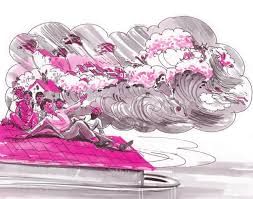
- It was a damaging storm that washed the houses away and destroyed hundreds of villages. It killed thousands of people and uprooted a large number of trees.
 Weathering Storm in Ersama
 - There were dead bodies all around. People became homeless and many children who had lost their parents became orphans.
- This destruction continued for the next thirty-six hours. The condition seemed grim after the super cyclone.
Q.2. How has Prashant, a teenager, been able to help the people of his village?
Ans.
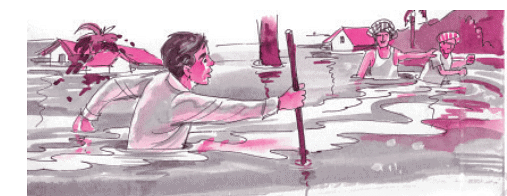
- Prashant decided to help the people of his village by stepping in as a leader.
- He organized the youths and elders to jointly pressurize the merchant to give rice to the people living in the shelter.
- After this, he organized a team of youth volunteers to clean the shelter and to tend the wounds and fractures of the many who had been injured.
- Prashant also brought the orphaned children together and constructed a polythene shelter for them. Then he organised sports events for kids.
- Women were mobilized to look after the orphan kids, while the men secured food and other essentials for the shelter.
Q.3. How have the people of the community helped one another? What role do the women of Kalikuda play during these days?
Ans.
- Prashant took the initiative and mobilized everyone to help one another. In this time of distress, the people of the community joined hands together and started relief work.
- Women started working in the food for work programme and looked after the orphans.
Q.4. Why do Prashant and other volunteers resist the plan to set up institutions for orphans and widows? What alternatives do they consider?
Ans.
- Prashant and the other volunteers resisted the plan to set up institutions for orphans and widows because they felt that in such institutions the children would grow up without family love and the widows would suffer from stigma and loneliness. Instead, they considered that orphans should be resettled in their own community or in foster families made up of childless widows and children without adult care.
Page No. 43
Q.5. Do you think Prashant is a good leader? Do you think young people can get together to help people during natural calamities?
Ans.
- Undoubtedly, Prashant is a good leader. He has all the qualities of a leader. He has a special quality of taking initiative.
- His vision is quite clear.
- He faces adverse circumstances courageously. He is a source of energy for others and has great motivational power. I think that youth is power.
- This power can be used to assist society during natural disasters. Whatever job is assigned to the youth in such circumstances, they perform their duty with full spirit.
Word - meaning
Grim - very serious
Mobilise - prepare and organize for active service.
Distress - extreme anxiety, sorrow, or pain.
Stigma - a mark of disgrace associated with a particular circumstance, quality, or person.
Foster family - a family that provides custody or guardianship for children whose parents are dead or unable to look after them.
|
180 videos|980 docs|124 tests
|
FAQs on NCERT Solutions for Class 9 English Moments Chapter 6 - Weathering the Storm in Ersama
| 1. What is the main focus of the article "Weathering the Storm in Ersama"? |  |
| 2. How did the people of Ersama cope with the aftermath of the cyclone? | |
| 3. What lessons can be learned from the experiences of the people in Ersama? | |
| 4. How does the article emphasize the role of government and non-governmental organizations in post-disaster recovery? | |
| 5. What are some of the challenges faced by Ersama in rebuilding after the cyclone? | |





NCERT Solutions for Class 9 English Moments Chapter 6 - Weathering the Storm in Ersama
,study material
,practice quizzes
,Semester Notes
,Exam
,ppt
,Viva Questions
,Free
,Extra Questions
,Summary
,video lectures
,NCERT Solutions for Class 9 English Moments Chapter 6 - Weathering the Storm in Ersama
,mock tests for examination
,MCQs
,Objective type Questions
,shortcuts and tricks
,past year papers
,Previous Year Questions with Solutions
,Important questions
,NCERT Solutions for Class 9 English Moments Chapter 6 - Weathering the Storm in Ersama
,Sample Paper
;



NCERT Solutions - Weathering the Storm in Ersama Free PDF Download
Importance of NCERT Solutions - Weathering the Storm in Ersama
NCERT Solutions - Weathering the Storm in Ersama Notes
NCERT Solutions - Weathering the Storm in Ersama Class 9 Questions
Study NCERT Solutions - Weathering the Storm in Ersama on the App
|
© EduRev
|
Education Revolution
|


|




within 7 days!