NEET Exam  >  NEET Test  >  Biology Class 11  >  31 Years NEET Previous Year Questions: Cell: The Unit of Life - NEET MCQ

31 Years NEET Previous Year Questions: Cell: The Unit of Life Free MCQ


MCQ Practice Test & Solutions: 31 Years NEET Previous Year Questions: Cell: The Unit of Life (40 Questions)

You can prepare effectively for NEET Biology Class 11 with this dedicated MCQ Practice Test (available with solutions) on the important topic of "31 Years NEET Previous Year Questions: Cell: The Unit of Life ". These 40 questions have been designed by the experts with the latest curriculum of NEET 2026, to help you master the concept.

Test Highlights:

  • - Format: Multiple Choice Questions (MCQ)
  • - Duration: 25 minutes
  • - Number of Questions: 40

Sign up on EduRev for free to attempt this test and track your preparation progress.

31 Years NEET Previous Year Questions: Cell: The Unit of Life - Question 1

Given below are two statements : one is labelled as Assertion (A) and the other is labelled as Reason (R).      [NEET 2025]
2025

In the light of the above statements, choose the correct answer from the options given below:

Detailed Solution: Question 1

  •  The Golgi apparatus is an essential component of the cellular endomembrane system responsible for modifying, sorting, and packaging proteins and lipids for secretion or delivery to other organelles.
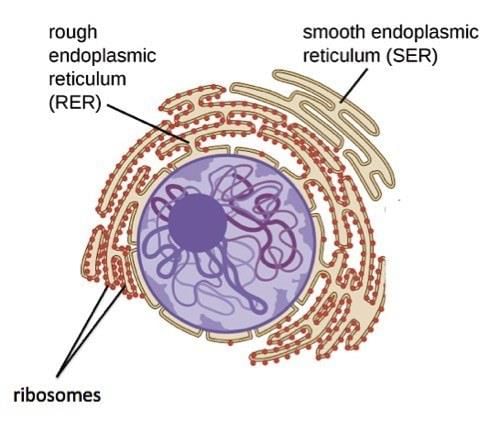
  • The endoplasmic reticulum (ER) is involved in the synthesis of proteins (rough ER) and lipids (smooth ER).
  • The Golgi apparatus receives materials from the ER, processes them, and then directs them to their appropriate destinations within or outside the cell.

Assertion (A): The primary function of the Golgi apparatus is to package the materials made by the endoplasmic reticulum and deliver it to intracellular targets and outside the cell:

  • This statement is true. The Golgi apparatus processes and packages proteins and lipids synthesized in the ER and sends them to various destinations.
  • The golgi apparatus principally performs the function of packaging materials, to be delivered either to the intra-cellular targets or secreted outside the cell.

Reason (R): Vesicles containing materials made by the endoplasmic reticulum fuse with the cis face of the Golgi apparatus, and they are modified and released from the trans face of the Golgi apparatus:

  • This statement is true and provides the correct explanation for the Assertion.
  • The Golgi apparatus has a cis face (receiving side) and a trans face (shipping side).
  • Vesicles from the ER fuse with the cis face, and the materials within these vesicles are modified, sorted, and packaged as they move through the Golgi to be released from the trans face.
  • That's why Golgi apparatus remains in close association with the endoplasmic reticlum.

Therefore, both A and R are true, and R correctly explains A, making the correct answer option C).

2025

31 Years NEET Previous Year Questions: Cell: The Unit of Life - Question 2

Which one of the following statements refers to Reductionist Biology?      [NEET 2025]

Detailed Solution: Question 2

  • Reductionist Biology is an approach in biology that seeks to understand complex biological systems by breaking them down into their simpler constituent parts. It involves studying the physical and chemical processes underlying the functioning of living organisms.
  • This physico-chemical approach to study and understand living organisms is called ‘Reductionist Biology’.  The concepts and techniques of physics and chemistry are applied to understand biology.
  • For example, the structure of DNA, the role of enzymes in metabolic pathways, and the biophysical properties of cell membranes are all studied using this approach.

31 Years NEET Previous Year Questions: Cell: The Unit of Life - Question 3

From the statements given below choose the correct option:     [NEET 2025]
2025

Detailed Solution: Question 3

Statement A: "The eukaryotic ribosomes are 80S and prokaryotic ribosomes are 70S" is correct.

  • In eukaryotic cells, ribosomes have a sedimentation rate of 80S (indicating their size and density), while in prokaryotic cells, ribosomes are smaller with a sedimentation rate of 70S.

Statement B: "Each ribosome has two sub-units" is correct.

  • Both prokaryotic and eukaryotic ribosomes consist of two subunits: a larger subunit and a smaller subunit.

Statement C: "The two sub-units of 80S ribosome are 60S and 40S while that of 70S are 50S and 30S" is correct.

  • The eukaryotic 80S ribosome is composed of a larger 60S subunit and a smaller 40S subunit.
  • The prokaryotic 70S ribosome consists of a larger 50S subunit and a smaller 30S subunit.

Statement D: "The two sub-units of 80S ribosome are 60S and 20S and that of 70S are 50S and 20S" is incorrect.

  • This statement incorrectly mentions the smaller subunit as 20S, which is not accurate for either eukaryotic or prokaryotic ribosomes.

Statement E: "The two sub-units of 80S are 60S and 30S and that of 70S are 50S and 30S" is incorrect.

  • This statement incorrectly mentions the smaller subunit of the 80S ribosome as 30S instead of 40S.

2025

31 Years NEET Previous Year Questions: Cell: The Unit of Life - Question 4

A specialised membranous structure in a prokaryotic cell which helps in cell wall formation, DNA replication is:     [NEET 2025]

Detailed Solution: Question 4

  •  Mesosome is an infolding of the plasma membrane found in prokaryotic cells, especially in bacteria.
  • Mesosomes are invaginations of the plasma membrane.
  • These extensions are in the form of vesicles, tubules and lamellae. They help in cell wall formation, DNA replication and distribution to daughter cells.
  • They also help in respiration, secretion processes, to increase the surface area of the plasma membrane and enzymatic content.

2025

Other Options:

  • Chromatophores: These are membranous structures found in photosynthetic prokaryotes like cyanobacteria. Their primary role is in photosynthesis.
  • Cristae: Cristae are folds of the inner mitochondrial membrane found in eukaryotic cells. They are involved in oxidative phosphorylation and ATP production. 
  • Endoplasmic Reticulum: The endoplasmic reticulum is an organelle exclusive to eukaryotic cells and is involved in protein and lipid synthesis. Prokaryotic cells do not have this organelle.

31 Years NEET Previous Year Questions: Cell: The Unit of Life - Question 5

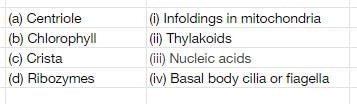
Match List-I with List-II.     [NEET 2025]
2025

Choose the correct answer from the options given below:

Detailed Solution: Question 5

  • Centromere (A-II): The centromere is a region of the chromosome where the microtubules of the spindle attach during cell division, specifically during mitosis and meiosis.
  • Cilium (B-III): Cilia are hair-like structures on the surface of the cell, primarily involved in cell movement. They can move fluid over the cell surface or contribute to locomotion of the cell itself.
  • Cristae (C-I): Cristae are the folds of the inner mitochondrial membrane, and they increase the surface area for chemical reactions to occur, including those involved in the synthesis of ATP during cellular respiration.
  • Cell membrane (D-IV): The cell membrane is a phospholipid bilayer that provides a barrier which separates the interior of the cell from the outside environment while regulating the passage of materials into and out of the cell.

31 Years NEET Previous Year Questions: Cell: The Unit of Life - Question 6

Match List I with List II       [NEET 2024]
2024

Choose the correct answer from the options given below:

Detailed Solution: Question 6

Let's analyze each item in List I and the correct match in List II.

Nucleolus (A) is primarily known as the site where ribosomal RNA (rRNA) is synthesized and where initial ribosome assembly occurs. Thus, it matches perfectly with III. Site of active ribosomal RNA synthesis.
Centriole (B) is a cylindrical cellular structure composed of microtubules and is best known for its role in facilitating cell division, especially in the formation of the spindle apparatus. Its structure is often described as being like a cartwheel, which makes it accurately matched with II. Organization like the cartwheel.

Leucoplasts (C) are a type of non-pigmented plastid found in plant cells, primarily involved in the storage of important nutrients such as starch, oils, and proteins. Hence, the appropriate pair is IV. For storing nutrients.

Golgi apparatus (D) functions in the sorting, modifying, and packaging of macromolecules for cell secretion or for use within the cell. It includes the synthesis of glycolipids among its activities. Consequently, the correct match is I. Site of formation of glycolipid.

With these correlations, the correct matches are:

  • A - III,
  • B - II,
  • C - IV,
  • D - I

Therefore, the correct option is Option A: A-III, B-II, C-IV, D-I.

31 Years NEET Previous Year Questions: Cell: The Unit of Life - Question 7

The DNA present in chloroplast is:      [NEET 2024]

Detailed Solution: Question 7

Chloroplasts are organelles found in the cells of plants and of some other organisms that carry out photosynthesis. They contain their own genetic material, separated from the DNA found in the nucleus of the cell. The DNA in chloroplasts has a distinct structure and form.

The DNA within chloroplasts is mostly:

  • Circular: The DNA forms a closed loop, similar to the DNA found in bacteria. This similarity supports the endosymbiotic theory, which proposes that chloroplasts originated as free-living prokaryotes that were engulfed by ancestral eukaryotic cells.
  • Double-stranded: Like most DNA, the DNA in chloroplasts is made up of two complementary strands that wind around each other to form a double helix.
    Based on this information, the correct answer to your query about the form of DNA present in chloroplasts is: Option B: Circular, double stranded

31 Years NEET Previous Year Questions: Cell: The Unit of Life - Question 8

Given below are two statements:      [NEET 2024]
Statement I: Mitochondria and chloroplasts both double membranes bound organelles.
Statement II: Inner membrane of mitochondria is relatively less permeable, as compared chloroplast.
In the light of the above statements, choose the misappropriate answer from the options given below:
(a) Both Statement I and Statement II are correct.
(b) Both Statement I and Statement II are incorrect.
(c) Statement I is correct but Statement II is incorrect.
(d) Statement I is incorrect but Statement II is correct.

Detailed Solution: Question 8

Statement I is correct because both mitochondria and chloroplasts are double membrane-bound organelles.
Statement II is also correct because the inner mitochondrial membrane is highly selective (less permeable), whereas the inner membrane of chloroplast is comparatively more permeable due to transport proteins.

31 Years NEET Previous Year Questions: Cell: The Unit of Life - Question 9

Match List I with List-II :     (NEET 2024)

2024

Choose the correct answer from the options given below :

Detailed Solution: Question 9

The correct matching between List I and List II can be understood by knowing the respective functions or structural components of the mentioned items:

  • Axoneme: This is the core of cilia or flagella, consisting of microtubules arranged in a characteristic pattern. This hence matches with II 'Cilia and flagella'.
  • Cartwheel pattern: The term 'cartwheel structure' is specifically associated with the central hub of the centriole's microtubule triplet arrangements in cellular structures. Therefore, this matches with I 'Centriole'.
  • Crista: Cristae are the internal membranes of mitochondria that are folded into ridges, involved in the mitochondrial energy generation. Therefore, C matches with IV 'Mitochondria'.
  • Satellite: In a cellular context, satellites typically refer to certain types of secondary structures or appendages associated with nucleic acids, hence best matching with III 'Chromosome'.

Thus, matching the correct items gives us: A-II, B-I, C-IV, D-III.
This corresponds to Option D.

31 Years NEET Previous Year Questions: Cell: The Unit of Life - Question 10

Cell wall formation in bacteria is facilitated by :   [NEET 2024]

Detailed Solution: Question 10

Mesosomes are invaginations of the plasma membrane in prokaryotic cells, specifically bacteria. They play a crucial role in cell wall formation, DNA replication, and distribution to daughter cells. Other options are not directly involved in cell wall formation:
1. Ribosomes: These are the sites of protein synthesis but do not play a role in cell wall formation.
3. Golgi Apparatus: This organelle is involved in modifying, sorting, and packaging proteins and lipids for secretion or delivery to other organelles, not in bacteria.
4. Centrosomes: These are involved in organizing microtubules during cell division in eukaryotic cells, not in bacteria.

31 Years NEET Previous Year Questions: Cell: The Unit of Life - Question 11

Match List-I with List-II.   [NEET 2024]
2024

Choose the correct answer from the options given below:

Detailed Solution: Question 11

Here’s the matching of the components:

  • A. Cilia: III. Axoneme - Cilia have a core structure called the axoneme, which is essential for their movement.
  • B. Endoplasmic Reticulum: IV. Ribosomes - The rough ER is studded with ribosomes, which are the sites of protein synthesis.
  • C. Mitochondria: II. Cristae - The inner membrane of mitochondria is folded into structures called cristae, which increase the surface area for ATP production.
  • D. Kinetochore: I. Spindle fibres - The kinetochore is a protein structure on chromatids where the spindle fibers attach during cell division.

31 Years NEET Previous Year Questions: Cell: The Unit of Life - Question 12

Given below are two statements:      [NEET 2024]
Statement I: 
The Golgi cisternae are concentrically arranged near the nucleus with distinct convex cis or the forming face and concave trans or the maturing face.
Statement II:
 The cis and trans faces of the organelle are identical and interconnected.
In the light of the above statements, choose the correct answer from the options given below:

Detailed Solution: Question 12

The Golgi cisternae are concentrically arranged near the nucleus with distinct convex cis or the forming  face and concave trans or the maturing face. The cis and the trans faces of the organelle are entirely different, but interconnected.

31 Years NEET Previous Year Questions: Cell: The Unit of Life - Question 13

Match List-I with List-II   [NEET 2024]
2024
Choose the correct answer form the options given below:

Detailed Solution: Question 13

  • (a) A-II, B-IV, C-III, D-I: This is the correct option. Fleming is associated with the discovery of the cell nucleus (IV), Robert Brown with the nucleus (IV), George Palade with ribosomes (III), and Camillo Golgi with the Golgi apparatus (I).
  • (b) A-II, B-III, C-I, D-IV: This is incorrect as it misassigns the contributions of these scientists.
  • (c) A-I, B-II, C-III, D-IV: This is incorrect as it misassigns the contributions of these scientists.
  • (d) A-IV, B-II, C-III, D-I: This is incorrect as it misassigns the contributions of these scientists.

31 Years NEET Previous Year Questions: Cell: The Unit of Life - Question 14

Mesosome in a cell is a:        [NEET 2024]

Detailed Solution: Question 14

(a) Membrane bound vesicular structure: This option is incorrect as mesosomes are not simply vesicular structures; they are extensions of the plasma membrane.
(b) Chain of many ribosomes attached to a single mRNA: This describes a polysome, not a mesosome, making this option incorrect.
(c) Special structure formed by the extension of plasma membrane: This is correct. Mesosomes are invaginations of the plasma membrane in prokaryotic cells, believed to be involved in cell division and DNA replication.
(d) Medium sized chromosome: This option is incorrect as mesosomes are not chromosomes; they are membrane structures.

31 Years NEET Previous Year Questions: Cell: The Unit of Life - Question 15

Match List I with List II:         [NEET 2024]

2024

Choose the correct answer from the options given below: 

Detailed Solution: Question 15

  • A. Metacentric chromosome: Matches with II. Middle centromere forming two equal arms of chromosome. This is correct as metacentric chromosomes have centromeres located in the middle.
  • B. Sub-metacentric chromosome: Matches with III. Centromere is slightly away from the middle chromosome resulting in two unequal arms. This is correct as sub-metacentric chromosomes have centromeres that are not centrally located.
  • C. Acrocentric chromosome: Matches with IV. Centromere is situated close to its end forming one extremely short and one very long arm. This is accurate as acrocentric chromosomes have a centromere near one end.
  • D. Telocentric chromosome: Matches with I. Chromosome has a terminal centromere. This is correct as telocentric chromosomes have their centromere at one end.

2024

31 Years NEET Previous Year Questions: Cell: The Unit of Life - Question 16

Match List-I with List-II.        [NEET 2024]
2024
Choose the correct answer from the options given below:

Detailed Solution: Question 16

  • A. F1 Particles: Matches with IV. Mitochondria. F1 particles are associated with ATP synthesis in mitochondria.
  • B. Histones: Matches with I. Chromosomes. Histones are proteins that package and order DNA into structural units called nucleosomes, which make up chromosomes.
  • C. Axoneme: Matches with II. Cilia. The axoneme is the structural basis of cilia and flagella, consisting of microtubules.
  • D. Cisternae: Matches with III. Golgi apparatus. Cisternae are the flattened membrane-bound compartments that make up the Golgi apparatus.

31 Years NEET Previous Year Questions: Cell: The Unit of Life - Question 17

Given below are two statements:      [NEET 2024]
Statement I: Concentrically arranged cisternae of Golgi complex are arranged near the nucleus with distinct convex cis or forming face and concave trans or maturing face.
Statement II: A number of proteins are modified in the cisternae of Golgi complex before they are released from cis face.
In the light of the above statements, choose the most appropriate answer from the options given below:

Detailed Solution: Question 17

Statement I is true because the Golgi apparatus has concentrically arranged cisternae near the nucleus with a convex cis (forming) face and a concave trans (maturing) face.
Statement II is false because although proteins are modified in the Golgi cisternae, they are released from the trans face, not the cis face.

31 Years NEET Previous Year Questions: Cell: The Unit of Life - Question 18

Which of the following are NOT considered as the part of endomembrane system?    [NEET 2023]
A. Mitochondria
B. Endoplasmic reticulum
C. Chloroplast
D. Golgi Complex
E. Peroxisomes

Detailed Solution: Question 18

The endomembrane system in a cell includes:
- The nuclear envelope
- The endoplasmic reticulum (ER)
- The Golgi apparatus (Golgi complex)
- Lysosomes
- Vesicles
- The plasma membrane
This system is involved in the modification, packaging, and transport of proteins and lipids.
Mitochondria and chloroplasts are not part of the endomembrane system. They are both organelles with their own separate membranes, and they have their own DNA. They are thought to have originated from a symbiotic relationship with prokaryotic cells, a theory known as endosymbiosis.
Peroxisomes, although they are membrane-bound organelles involved in many metabolic reactions, are also not considered part of the endomembrane system because they do not communicate with the other endomembrane organelles and are not involved in protein sorting or lipid synthesis like the other components of the endomembrane system.

31 Years NEET Previous Year Questions: Cell: The Unit of Life - Question 19

Which of the following functions is carried out by cytoskeleton in a cell?      [NEET 2023]

Detailed Solution: Question 19

An elaborate network of filamentous proteinaceous structures consisting of microtubules, microfilaments and intermediate filaments present in cytoplasm is collectively referred to as the cytoskeleton. It is involved in many functions such as mechanical support, motility, maintenance of the shape of the cell.

31 Years NEET Previous Year Questions: Cell: The Unit of Life - Question 20

Given below are two statements:    [NEET 2023]
Statement I: In bacteria, the mesosomes are formed by the extensions of the plasma membrane.
Statement II: The mesosomes, in bacteria, help in DNA replication and cell wall formation.
In light of the above statements, choose the most appropriate answer from the options given below:

Detailed Solution: Question 20

Statement I: In bacteria, the mesosomes are indeed formed by the extensions of the plasma membrane into the cytoplasm. They are typically observed as invaginations of the plasma membrane.
Statement II: Mesosomes in bacteria are thought to assist in several cellular processes including DNA replication, distribution of DNA during cell division, respiration, and cell wall formation. Hence, this statement is also correct.

31 Years NEET Previous Year Questions: Cell: The Unit of Life - Question 21

Which of the following statements are correct in the context of Golgi apparatus?      [NEET 2023]
(A) It is the important site for the formation of glycoprotein and glycolipids
(B) It produces cellular energy in the form of ATP
(C) It modifies the protein synthesized by ribosomes on ER
(D) It facilitates the transport of ions
(E) It provides mechanical support
Choose the most appropriate answer from the options given below:

Detailed Solution: Question 21

(A) and (C) are correct. (B), (D) and (E) are incorrect. 

A. Statement A is correct. Glycoproteins and glycolipids are formed by addition of carbohydrate groups to proteins and
lipids, respectively. Golgi is the site of this glycosylation process. 

B. Statement B is incorrect. ATP production primarily occurs in the mitochondria, not the Golgi apparatus. 

C. Statement C is correct. Golgi body modifies the proteins synthesised by ribosomes on the endoplasmic reticulum (ER). The Golgi apparatus receives proteins synthesised on the ribosomes of the ER and modifies them. This modification includes processes, like adding sugar moieties, cleaving signal peptides, and folding the proteins into their functional conformation.

D. Statement D is incorrect. While the Golgi apparatus is involved in intracellular transport, it does not primarily facilitate the transport of ions. It mainly deals with the transport and sorting of proteins and lipids.

E. Statement E is incorrect. The Golgi apparatus does not provide mechanical support. The cytoskeleton, which is composed of proteins such as microtubules and microfilaments, is responsible for providing structural support to the cell.

31 Years NEET Previous Year Questions: Cell: The Unit of Life - Question 22

Which type of substance would face difficulty to pass through the cell membrane?    [NEET 2022 Phase 2]

Detailed Solution: Question 22

Substances that have a hydrophilic moiety find it difficult to pass through the plasma membrane; thus, their movement has to be facilitated.

2022

31 Years NEET Previous Year Questions: Cell: The Unit of Life - Question 23

If the pH in lysosomes is increased to alkaline, what will be the outcome?   [NEET 2022 Phase 2]

Detailed Solution: Question 23

  • Sol. Lysosomes contain hydrolytic enzymes which become active at acidic pH.
  • If pH in lysosomes is increased to alkaline or basic then hydrolytic enzymes will become inactive.

31 Years NEET Previous Year Questions: Cell: The Unit of Life - Question 24

Which of the following statements with respect to the endoplasmic reticulum is incorrect?    [NEET 2022 Phase 1]

Detailed Solution: Question 24

Presence of membranous organelles is an exclusive property of eukaryotic cells. Endoplasmic reticulum is an example of membranous organelles, so, it will always be found in eukaryotic cells only and never in the prokaryotes. This is true for SER and RER both. 

31 Years NEET Previous Year Questions: Cell: The Unit of Life - Question 25

When the centromere is situated in the middle of two equal arms of chromosomes, the chromosome is referred as: (2021)

Detailed Solution: Question 25

  • When the centromere is situated in the middle of two equal arms of chromosomes, the chromosome is called Metacentric.
  • When the centromere is present slightly away from the middle, it is called sub-metacentric chromosome.
  • When the centromere is present very close to one end of the chromosome, it is known acrocentric chromosome.
  • When the centromere is present at terminal position, chromosome is refers as telocentric.

Topic in NCERT: Types of chromosomes based on the position of centromere

Line in NCERT: "the metacentric chromosome has middle centromere forming two equal arms of the chromosome."

31 Years NEET Previous Year Questions: Cell: The Unit of Life - Question 26

Which is the important site of formation of glycoproteins and glycolipids in eukaryotic cells?    (2020)
Detailed Solution: Question 26

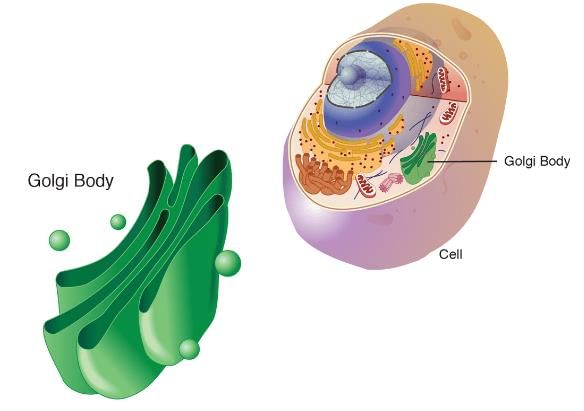
  • Proteins and lipids are formed in the endoplasmic reticulum and some of them are modified to form glycoproteins and glycolipids in the Golgi apparatus.
  • Enlarged image of Endoplasmic reticulum and golgi apparatus (relation). Only golgi bodies given here.

Hence, the correct option is A

Topic in NCERT: Golgi apparatus

Line in NCERT: "golgi apparatus is the important site of formation of glycoproteins and glycolipids."

31 Years NEET Previous Year Questions: Cell: The Unit of Life - Question 27

Which of the following statements is not correct?    (2019)

Detailed Solution: Question 27

  • Lysosomes are formed by the process of packaging in the Golgi apparatus.
  • They are membrane-bound and possess hydrolytic enzymes which work optimally in acidic pH.
  • Lysosomes bud off from the trans face to Golgi bodies.
  • Precursors of lysosomal enzymes are synthesized by RER and then sent to Golgi bodies for further processing.

The Golgi Apparatus: The Golgi Apparatus and Lysosomes

Hence, the correct option is A
NCERT Reference: Page no. 134 of sub-topic “8.5.3.3 Lysosomes” of chapter 8 of NCERT

Topic in NCERT: Golgi apparatus

Line in NCERT: "these are membrane bound vesicular structures formed by the process of packaging in the golgi apparatus."

31 Years NEET Previous Year Questions: Cell: The Unit of Life - Question 28

Which of the following is true for nucleolus?    (2018)
Detailed Solution: Question 28

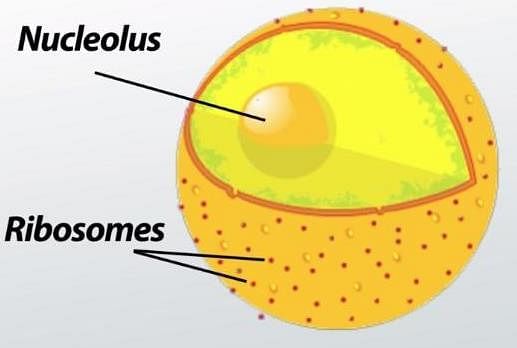
  • Nucleolus is naked (devoid of membrane), round or slightly irregular structure which is attached to the chromatin at a specific region called nucleolar organiser region (NOR).
  • Nucleolus is a site for rRNA synthesis.
  • Nucleolus disappears when the cell undergoes division and reappears after its completion.

Hence, the correct option is D

Topic in NCERT: Nucleolus

Line in NCERT: "it is a site for active ribosomal rna synthesis."

31 Years NEET Previous Year Questions: Cell: The Unit of Life - Question 29

Which of the following cell organelles is responsible for extracting energy from carbohydrates to form ATP?    (2017)
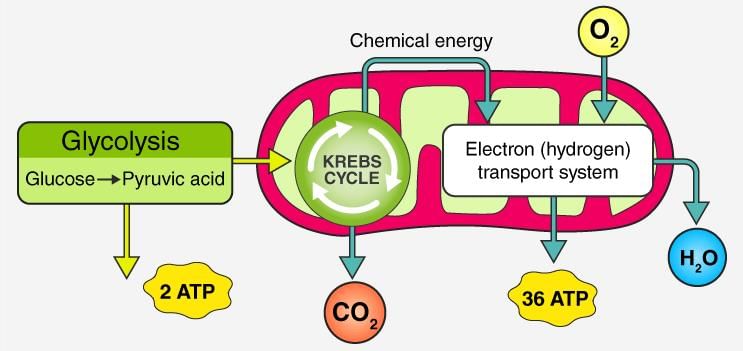
Detailed Solution: Question 29

  • Mitochondria are miniature biochemical factories where food stuffs or respiratory substrates are completely oxidised to carbon dioxide and water.
  • During aerobic respiration, carbohydrates are completely oxidised in mitochondria. In mitochondria, the Krebs cycle and electron transport chain occur, and ATP is generated. As a result, mitochondria are known as a cell's powerhouse.

  • ATP comes out of mitochondria and helps perform various energy-requiring processes of the cell like muscle contraction, nerve impulse conduction, biosynthesis, membrane transport, cell division, movement, etc. Because of the formation of ATP, the mitochondria are called power houses of the cell.

Hence, the correct option is C
NCERT Reference: Page no. 135 of topic “8.5.4 Mitochondria” of chapter 8 of NCERT

Topic in NCERT: Mitochondria

Line in NCERT: "mitochondria are the sites of aerobic respiration. they produce cellular energy in the form of atp, hence they are called 'power houses' of the cell."

31 Years NEET Previous Year Questions: Cell: The Unit of Life - Question 30

Select the correct matching in the following pairs:                 [2015 RS]
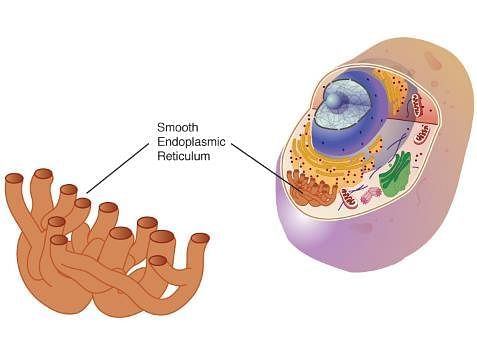
Detailed Solution: Question 30

  • Smooth endoplasmic reticulum is the major site for synthesis of lipids.
  • Rough endoplasmic reticulum contains ribosomes found attached to it, therefore RER synthesise proteins.
  • Phospholipids are different from simple lipids as simple lipids are esters of fatty acid with various alcohols while compound or conjugated lipids like phospholipids are esters of fatty acids with alcohol but contain some other substances also like phosphate group in phospholipid.
  • The smooth endoplasmic reticulum(SER) packages proteins for transportation, synthesizes membrane phospholipids, and releases calcium.

Hence, the correct option is A

Topic in NCERT: The endoplasmic reticulum (er)

Line in NCERT: "the smooth endoplasmic reticulum is the major site for synthesis of lipid."

View more questions
142 videos|400 docs|138 tests
Information about 31 Years NEET Previous Year Questions: Cell: The Unit of Life Page
In this test you can find the Exam questions for 31 Years NEET Previous Year Questions: Cell: The Unit of Life solved & explained in the simplest way possible. Besides giving Questions and answers for 31 Years NEET Previous Year Questions: Cell: The Unit of Life , EduRev gives you an ample number of Online tests for practice
142 videos|400 docs|138 tests
Download as PDF