NEET Exam  >  NEET Test  >  Topic-wise MCQ Tests  >  31 Year NEET Previous Year Questions: Chemical Bonding & Molecular Structure - 3 - NEET MCQ

31 Year NEET Previous Questions: Chemical Bonding & Molecular Structure


MCQ Practice Test & Solutions: 31 Year NEET Previous Year Questions: Chemical Bonding & Molecular Structure - 3 (30 Questions)

You can prepare effectively for NEET Topic-wise MCQ Tests for NEET with this dedicated MCQ Practice Test (available with solutions) on the important topic of "31 Year NEET Previous Year Questions: Chemical Bonding & Molecular Structure - 3". These 30 questions have been designed by the experts with the latest curriculum of NEET 2026, to help you master the concept.

Test Highlights:

  • - Format: Multiple Choice Questions (MCQ)
  • - Duration: 60 minutes
  • - Number of Questions: 30

Sign up on EduRev for free to attempt this test and track your preparation progress.

31 Year NEET Previous Year Questions: Chemical Bonding & Molecular Structure - 3 - Question 1

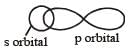
The angle between the overlapping of one s-orbital and one p-orbital is [1988]
Detailed Solution: Question 1

The overlap between s- and p-orbitals occurs along internuclear axis and hence the angle is 180°.

31 Year NEET Previous Year Questions: Chemical Bonding & Molecular Structure - 3 - Question 2

Equilateral shape has [1988]

Detailed Solution: Question 2

Equilateral or triangular planar shape involves sp2 hybridization.

31 Year NEET Previous Year Questions: Chemical Bonding & Molecular Structure - 3 - Question 3

Which of the following molecule does not have a linear arrangement of atoms ? [1989]

Detailed Solution: Question 3

For linear arrangement of atoms the hybridisation should be sp(linear shape, 180° angle). Only H2S has sp3-hybridization and hence has angular shape while C2H2, BeH2 and CO2 all involve sp - hybridization and hence have linear arrangement of atoms.

31 Year NEET Previous Year Questions: Chemical Bonding & Molecular Structure - 3 - Question 4

Which of the following does not apply to metallic bond ?[1989]

Detailed Solution: Question 4

In metallic bonds each ion is surrounded by equal no. of oppositely charged ions hence have electrostatic attraction on all sides and hence do not have directional characteristics.

31 Year NEET Previous Year Questions: Chemical Bonding & Molecular Structure - 3 - Question 5

In which one of the following molecules the central atom said to adopt sp2 hybridization?

31 Year NEET Previous Year Questions: Chemical Bonding & Molecular Structure - 3 - Question 6

H2O has a non zero dipole moment while BeF2 has zero dipole moment because [1989]

Detailed Solution: Question 6

BeF2 is linear and hence has zero dipole moment while H2O, being a bent molecule, has a finite or non-zero dipole moment.

31 Year NEET Previous Year Questions: Chemical Bonding & Molecular Structure - 3 - Question 7

Among LiCl, BeCl2 BCl3 and CCl4, the covalent bond character follows the order [1990]

Detailed Solution: Question 7

As we move in period from Li → Be → B → C, the electronegativity (EN)  increases and hence the EN difference between the element and Cl decreases and accordingly the covalent character increases Thus option (c) i.e., LiCl < BeCl2 < BCl3< CCl4 is correct.

31 Year NEET Previous Year Questions: Chemical Bonding & Molecular Structure - 3 - Question 8

Which statement is NOT correct ? [1990]

Detailed Solution: Question 8

A σ - bond is stronger than a σ -bond hence option (a) is not correct. Sigma (σ) bonds are formed by head on overlap of  unhybridised s–s, p–p or s–p orbitals and hybridised orbitals (sp, sp2, sp3, sp3d and sp3d2) hence σ bonds  are strong bonds. Where as Pi (π)-bonds are formed by side ways overlap of unhybridised p- and d orbitals-hence σ bonds are weak bonds.

31 Year NEET Previous Year Questions: Chemical Bonding & Molecular Structure - 3 - Question 9

Which one shows the strongest hydrogen bonding?

Detailed Solution: Question 9

Among F, O, and N, fluorine has the highest electronegativity, which allows it to form the strongest hydrogen bonds with hydrogen atoms of other molecules.

This can be seen from the hydrogen bond energies:

  • HF: 10 kcal/mol

  • H₂O: 7 kcal/mol

  • NH₃: 2 kcal/mol

This means that to break the hydrogen bonds in one mole of HF molecules, 10 kcal of energy is required — more than in water or ammonia — indicating that HF forms the strongest hydrogen bonds among the three.

31 Year NEET Previous Year Questions: Chemical Bonding & Molecular Structure - 3 - Question 10

Linear combination of two hybridized orbitals belonging to two atoms and each having one electron leads to a [1990]

Detailed Solution: Question 10

Linear combination of two hybridized orbitals leads to the formation of sigma bond.

31 Year NEET Previous Year Questions: Chemical Bonding & Molecular Structure - 3 - Question 11

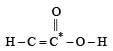
Which one of the following formulae does not correctly represent the bonding capacities of the two atoms involved ? [1990]
Detailed Solution: Question 11

The  star marked carbon has a valency of 5 and hence this formula is not correct.

31 Year NEET Previous Year Questions: Chemical Bonding & Molecular Structure - 3 - Question 12

In compound X, all the bond angles are exactly 109°28; X is [1991]

Detailed Solution: Question 12

CCl4 has sp3 hybridisation , tetrahedral geometry and all bond angles of 109° 28'.

31 Year NEET Previous Year Questions: Chemical Bonding & Molecular Structure - 3 - Question 13

Which of the following bonds will be most polar?

Detailed Solution: Question 13

Polarity of the bond depends upon the electronegativity difference of the two atoms forming the bond. Greater the electronegativity difference, more is the polarity of the bond.

As the electronegativity difference between N and F is maximum hence this bond is most polar.

31 Year NEET Previous Year Questions: Chemical Bonding & Molecular Structure - 3 - Question 14

Which one of the following has the shortest carbon carbon bond length ? [1992]

Detailed Solution: Question 14

The bond length decreases in the order sp3 > sp2 > sp.
Because of the triple bond, the carbon-carbon bond distance in ethyne is shortest.

31 Year NEET Previous Year Questions: Chemical Bonding & Molecular Structure - 3 - Question 15

Which structure is linear ? [1992]

Detailed Solution: Question 15

CO2 has sp-hybridization and is linear. SO2 and CO2-3 are planar (sp2) while SO2-is tetrahedral (sp3).

31 Year NEET Previous Year Questions: Chemical Bonding & Molecular Structure - 3 - Question 16

Strongest hydrogen bond is shown by [1992]

Detailed Solution: Question 16

H – F shows strongest H-bonds.  Linear combination of two hybridized orbitals leads to the formation of sigma bond.

31 Year NEET Previous Year Questions: Chemical Bonding & Molecular Structure - 3 - Question 17

Which of the following statements is not correct ? [1993]

Detailed Solution: Question 17

Sigma bond is stronger than π-bond. The electrons in the π bond are loosely held. The bond is easily broken and is more reactive than σ-bond. Energy released during sigma bond formation is always more than π bond because of greater  extent of overlapping.

31 Year NEET Previous Year Questions: Chemical Bonding & Molecular Structure - 3 - Question 18

Among the following which compound will show the highest lattice energy ? [1993]

Detailed Solution: Question 18

For compounds containing ion s of same charge, lattice energy increases as the size the ions decrease. Thus, NaF has highest lattice energy. The size of cation is in the order Na+ < K+ < Rb+ < Cs+

31 Year NEET Previous Year Questions: Chemical Bonding & Molecular Structure - 3 - Question 19

Which one of the following is the correct order of interactions ? [1993]

Detailed Solution: Question 19

The strength of the interactions follows the order vander Waal’s < hydrogen – bonding < dipole-dipole < covalent.

31 Year NEET Previous Year Questions: Chemical Bonding & Molecular Structure - 3 - Question 20

Strongest bond is in between [1993]

Detailed Solution: Question 20

According to Fajan rules, ionic character increases with increase in size of the cation and decrease in size of the anion. Thus, CsF has higher ionic character than NaCl and hence bond in CsF is stronger than in NaCl.

31 Year NEET Previous Year Questions: Chemical Bonding & Molecular Structure - 3 - Question 21

Mark the incorrect statement in the following [1994]

Detailed Solution: Question 21

The removal of an electron from a diatomic molecule may increase the bond order as in the conversion  or decrease the bond order as in the conversion,  As a result, the bond energy may increase or decrease. thus, statement (b) is incorrect.

31 Year NEET Previous Year Questions: Chemical Bonding & Molecular Structure - 3 - Question 22

The weakest among the following types of bonds is[1994]

Detailed Solution: Question 22

H-bond is the weakest.

31 Year NEET Previous Year Questions: Chemical Bonding & Molecular Structure - 3 - Question 23

Which of the following does not have a tetrahedral structure ? [1994]

Detailed Solution: Question 23

BH3 has sp2 hybridization and hence does not have tetrahedral structure while all others have tetrahedral structures.

31 Year NEET Previous Year Questions: Chemical Bonding & Molecular Structure - 3 - Question 24

Which of the following pairs will form the most stable ionic bond ? [1994]

Detailed Solution: Question 24

The stability of the ionic bond depends upon the lattice energy which is expected to be more between Mg and F due to +2 charge on Mg atom.

31 Year NEET Previous Year Questions: Chemical Bonding & Molecular Structure - 3 - Question 25

Among the following orbital bonds, the angle is minimum between [1994]

Detailed Solution: Question 25

The angle between the bonds formed by px and py orbitals is the minimum i.e. 90°

31 Year NEET Previous Year Questions: Chemical Bonding & Molecular Structure - 3 - Question 26

Linus Pauling received the Nobel Prize for his work on [1994]

Detailed Solution: Question 26

Chemical bonds.

31 Year NEET Previous Year Questions: Chemical Bonding & Molecular Structure - 3 - Question 27

The boiling point of p-nitrophenol is higher than that of o-nitrophenol because [1994]

Detailed Solution: Question 27

The b.p. of p-nitrophenol is higher than that of o-nitrophenol because in p-nitrophenol there is intermolecular H-bonding but in onitrophenol it is intramolecular H-bonding.

31 Year NEET Previous Year Questions: Chemical Bonding & Molecular Structure - 3 - Question 28

The distance between the two adjacent carbon atoms is largest in [1994]

Detailed Solution: Question 28

The C–C bond distance decreases as the multiplicity of the bond increases. Thus, bond distance decreases in the order: butane (1.54 Å) > benzene (1.39 Å) > ethene (1.34) Å > ethyne (1.20 Å). Thus in butane, C – C bond distance is the largest.

31 Year NEET Previous Year Questions: Chemical Bonding & Molecular Structure - 3 - Question 29

Which of the following species is paramagnetic?

Detailed Solution: Question 29

Paramagnetism is caused by the presence of atoms, ions or molecules with unpaired electrons. In NO the presence of unpaired electron is clear. Therefore it is paramagnetic.

31 Year NEET Previous Year Questions: Chemical Bonding & Molecular Structure - 3 - Question 30

The BCl3 is a planar molecule whereas NCl3 is pyramidal because [1995]

Detailed Solution: Question 30

As there is no lone pair on boron in BCl3 therefore no repulsion takes place. But there is a lone pair on nitrogen in NCl3. Therefore repulsion takes place. Thus BCl3 is planar molecule but NCl3 is a pyramidal molecule.

8 docs|805 tests
Information about 31 Year NEET Previous Year Questions: Chemical Bonding & Molecular Structure - 3 Page
In this test you can find the Exam questions for 31 Year NEET Previous Year Questions: Chemical Bonding & Molecular Structure - 3 solved & explained in the simplest way possible. Besides giving Questions and answers for 31 Year NEET Previous Year Questions: Chemical Bonding & Molecular Structure - 3, EduRev gives you an ample number of Online tests for practice
Download as PDF