NEET Exam  >  NEET Test  >  Chemistry Class 11  >  31 Year NEET Previous Year Questions: Redox Reactions - NEET MCQ

31 Year NEET Previous Questions: Redox Reactions Free MCQ Practice Test


MCQ Practice Test & Solutions: 31 Year NEET Previous Year Questions: Redox Reactions (20 Questions)

You can prepare effectively for NEET Chemistry Class 11 with this dedicated MCQ Practice Test (available with solutions) on the important topic of "31 Year NEET Previous Year Questions: Redox Reactions". These 20 questions have been designed by the experts with the latest curriculum of NEET 2026, to help you master the concept.

Test Highlights:

  • - Format: Multiple Choice Questions (MCQ)
  • - Duration: 20 minutes
  • - Number of Questions: 20

Sign up on EduRev for free to attempt this test and track your preparation progress.

31 Year NEET Previous Year Questions: Redox Reactions - Question 1

Consider the following compounds:
2025
The oxidation states of the underlined elements in them are, respectively:      [NEET 2025]

Detailed Solution: Question 1

In KO2 (potassium superoxide):

  • Potassium (K) has an oxidation state of +1.
  • Oxygen in superoxide has an oxidation state of -½.

In H2O2 (hydrogen peroxide):

  • Hydrogen (H) has an oxidation state of +1.
  • Oxygen in peroxide has an oxidation state of -1.

In H2SO4 (sulfuric acid):

  • Hydrogen (H) has an oxidation state of +1.
  • Oxygen has an oxidation state of -2.
  • To balance the molecule:
  • 2(+1) + x + 4(-2) = 0
  • x = +6

Therefore, sulfur (S) has an oxidation state of +6.
Therefore, the oxidation states of the underlined elements in KO2, H2O2, and H2SO4 are respectively +1, -1, and +6.

31 Year NEET Previous Year Questions: Redox Reactions - Question 2

Which reaction is NOT a redox reaction?     [NEET 2024]

Detailed Solution: Question 2

2024
This is not a redox reaction as there is no change in oxidation state.

31 Year NEET Previous Year Questions: Redox Reactions - Question 3

The products A and B obtained in the following reactions, respectively, are    [NEET 2024]
3ROH + PCl3 → 3RCl + A
ROH + PCl5 → RCl + HCl + B

Detailed Solution: Question 3

Let's analyze the given reactions and determine the products A and B.
Reaction with PCl3:
When an alcohol (ROH) reacts with phosphorus trichloride (PCl3), the hydroxyl group (OH) of the alcohol is replaced by a chloro group (Cl), resulting in the formation of an alkyl chloride (RCl). Additionally, the reaction produces phosphorous acid as a byproduct. This can be represented as:
3ROH + PCl3 → 3RCl + H3PO3
Here, A is H3PO3 (phosphorous acid).
Reaction with PCl5:
When an alcohol reacts with phosphorus pentachloride (PCl5), it also replaces the hydroxyl group with a chloro group. The reaction differs
slightly in the byproducts; phosphorus oxychloride (POCl3) and hydrogen chloride (HCl) are produced:
ROH + PCl5 → RCl + HCl + POCl3
Here, B is POCl3 (phosphorus oxychloride).
Thus, in the reactions provided:
A = H3PO3
B = POCl3
Matching these findings against the provided options, we see that Option D correctly identifies A as H3PO3 and B as POCl3:
Option D: H3PO3 and POCl3
This is the correct answer.

31 Year NEET Previous Year Questions: Redox Reactions - Question 4

Which of the following reactions is not a disproportionation reaction?      [NEET 2024]

Detailed Solution: Question 4

disproportionation reaction is a type of redox reaction where a single substance undergoes both oxidation and reduction, forming two different products.
Let's analyze each option:
(a) 2 F2(g) + 2 OH-(aq) → 2 F-(aq) + OF2(g) + H2O(l)

  • This reaction involves fluorine (F2), which is reduced to F- and oxidized to OF2. Therefore, fluorine undergoes both oxidation and reduction.
  • This is a disproportionation reaction.

(b) Cl2(g) + 2 OH-(aq) → ClO-(aq) + Cl-(aq) + H2O(l)

  • In this reaction, chlorine (Cl2) is reduced to Cl- and oxidized to ClO-.
  • This is a disproportionation reaction.

(c) 2 NO2(g) + 2 OH-(aq)→ NO3-(aq) + NO2-(aq) + H2O(l)

  • In this reaction, NO2 undergoes both oxidation and reduction to form NO3- and NO2-.
  • This is a disproportionation reaction.

(d) 2 H2O2(aq)→ 2 H2O(l) + O2(g)
In this reaction, hydrogen peroxide (H2O2) decomposes into water (H2O) and oxygen (O2). Here, hydrogen peroxide undergoes reduction to form H2O and oxidation to form O2, but since it does not involve two different products from a single reactant, it is not a disproportionation reaction. It's a simple decomposition reaction.
Conclusion:The reaction in (a) is the disproportionation reaction, so the correct answer is (d) 2 H2O2(aq) → 2 H2O(l) + O2(g).

31 Year NEET Previous Year Questions: Redox Reactions - Question 5

Given the following reaction involving manganese (Mn):          [NEET 2024]
3 MnO42- + 4 H+ → 2 MnO4- + MnO2 + 2 H2O
MnO42- + 4 H+ → 2 MnO4- + MnO2 + 2 H2O
Which oxidation states of manganese are not observed in the above reaction?
A. +6
B. +2
C. +4
D. +7
E. +3
Mark the most appropriate answer from the options given below:

Detailed Solution: Question 5

3 MnO42- + 4 H+ → 2 MnO4- + MnO2 + 2 H2O

Step 1: Assign oxidation states in the reactants:
MnO42-: Manganese in MnO42- is in the +6 oxidation state.

  • Oxygen is typically -2, and since the overall charge on the ion is -2, the charge on Mn must be +6 to balance the charges.
  • H+: This is a proton, so its oxidation state is +1.

Step 2: Assign oxidation states in the products:
MnO4-: Manganese in MnO4- is in the +7 oxidation state.

  • Oxygen is -2, and since the overall charge on the ion is -1, the charge on Mn must be +7 to balance the charges.

MnO2: Manganese in MnO2 is in the +4 oxidation state.

  • Oxygen is -2, and for the compound to be neutral, Mn must have a charge of +4.

  • H2O: Water, which does not affect the oxidation state of manganese.

Step 3: Identify which oxidation states are missing:

  • +6 is observed in MnO42-.
  • +7 is observed in MnO4-.
  • +4 is observed in MnO2.
  • +2 and +3 are not present in the reaction.

Conclusion:The +2 and +3 oxidation states of manganese are not observed in the given reaction.
The correct answer is (d) B and E only.

31 Year NEET Previous Year Questions: Redox Reactions - Question 6

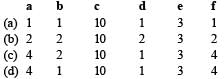
On balancing the given redox reaction,      [NEET 2023]
2023
the coefficients a, b and c are found to be, respectively- 

Detailed Solution: Question 6

Using Ion electron method:
2023

Balancing Redox Reactions by Oxidation Number Method

31 Year NEET Previous Year Questions: Redox Reactions - Question 7

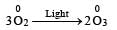
Which of the following reactions is a decomposition redox reaction?     [NEET 2022 Phase 2]

Detailed Solution: Question 7

Decomposition redox reaction leads to breakdown of a compound into two or more compounds at least one of which must be in the elemental state with change in oxidation number.
2022

31 Year NEET Previous Year Questions: Redox Reactions - Question 8

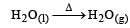
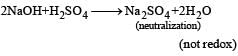
Which of the following involves a redox reaction?
Detailed Solution: Question 8

(not redox reaction)

here oxidation of N2 & reduction of O2 is taking place

(not redox reaction)

31 Year NEET Previous Year Questions: Redox Reactions - Question 9

When Cl2  gas reacts with hot and concentrated sodium hydroxide solution, the oxidation number of chlorine changes from : [2012]

Detailed Solution: Question 9

The correct answer is Option B.

The reaction of chlorine gas with hot and concentrated sodium hydroxide solution is

3Cl2 ​+ 6NaOH ⟶ NaClO3 ​+ 5NaCl + 3H2​O

 Oxidation number of Cl is 0 in Cl2, −1 in NaCl and +5 in NaClO3

​So, the oxidation number of chlorine changes from Zero to -1 and Zero to +5.

31 Year NEET Previous Year Questions: Redox Reactions - Question 10

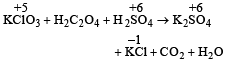
A mixture of potassium chlorate, oxalic acid and sulphuric acid is heated. During the reaction which element undergoes maximum change in the oxidation number ? [2012]

Detailed Solution: Question 10

i.e. maximum change in oxidation number is observed in Cl (+5 to –1).

31 Year NEET Previous Year Questions: Redox Reactions - Question 11

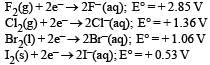
Standard reduction potentials of the half reactions are given below :

The strongest oxidising and reducing agents respectively are : [2012 M]

Detailed Solution: Question 11

Higher the value of reduction potential higher will be the oxidising power whereas the lower the value of reduction potential higher will be the reducing power.

31 Year NEET Previous Year Questions: Redox Reactions - Question 12

Oxidation numbers of P in PO43 , of S in SO42– and that of Cr in Cr2O72–  are respectively [2009]

Detailed Solution: Question 12

(i) Sum of oxidation states of all atoms = charge of ion.
(ii) oxidation number of oxygen = -2
Let the oxidation state of P in PO43- is x.
 PO43- 

x + 4 (-2) = - 3
x-8 = - 3
x = +5

Let the oxidation state of S in SO42- is y
y + 4(-2) = -2
y-8 = - 2
y = +6

Let the oxidation state of Cr in Cr2O72- is z.
2 x z+7(-2) = -2
2z-14 = - 2
z=+6
Hence, oxidation state of P, S and Cr are +5, +6 and +6

31 Year NEET Previous Year Questions: Redox Reactions - Question 13

The oxidation states of sulphur in the anions SO32–, S2O42– and S2O62– follow the order [2003]

Detailed Solution: Question 13

The correct answer is option B
Oxidation state of S2​O42−
2(x) + 4(−2) = −2
 2x = 8 − 2
 2x = 6
  x = 3
Oxidation state of SO32−
x + 3(−2) = −2
 x = 6 − 2
 x = 4
Oxidation state of S2​O62−
2(x) + 6(−2) = −2
 2x = 12 − 2
 2x = 10
   x = 5
So the oxidation state of sulphur in the anions S2​O42−​, S2​O42−​ and S2​O62−​ follows the order.S2​O42−​ < SO32−​ < S2​O62−​.
 

31 Year NEET Previous Year Questions: Redox Reactions - Question 14

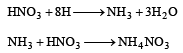
Zn gives H2 gas with H2SO4 and HCl but not with HNO3 because [2002]

Detailed Solution: Question 14

Zinc gives H2 gas with dil H2SO4/HCl but not with HNO3 because in HNO3, NO3 ion is reduced and give NH4NO3, N2O, NO and NO2 (based upon the concentration of HNO3)

Zn is on the top position of hydrogen in electrochemical series. So Zn displaces H2 from dilute H2SO4 and HCl with liberation of H2.

31 Year NEET Previous Year Questions: Redox Reactions - Question 15

A compound contains atoms of three elements A, B and C. If the oxidation number of A is +2, B is +5, and that of C is –2, the possible formula of the compound is : [2000]

Detailed Solution: Question 15

Oxidation number of a compound must be 0.
Using the values for A, B and C in the four options we find that A3(BC4)2 is the answer.
Check : (+2)3 + [(+5)+4(–2)]2 = 6 + (5–8)2 = 0

31 Year NEET Previous Year Questions: Redox Reactions - Question 16

The oxidation number of phosphorus in pyrophosphoric acid is [1999]

Detailed Solution: Question 16

Pyrophosphoric acid H4P2O7  
Let oxidation state of phosphorus is x(4 × 1 + (– 2) × 7 + 2 x) = 0
∴ 2x = 10   or  x = +5

31 Year NEET Previous Year Questions: Redox Reactions - Question 17

The following redox reaction is balanced by which set of coefficients ? [1999]


Detailed Solution: Question 17

operate eq. (1) × 4 + eq. (2) × 1

31 Year NEET Previous Year Questions: Redox Reactions - Question 18

The loss of electron is termed as [1995]

Detailed Solution: Question 18

Losing of electron is called oxidation,

31 Year NEET Previous Year Questions: Redox Reactions - Question 19

The oxide, which cannot act as a reducing agent, is[1995]

Detailed Solution: Question 19

Carbon has the maximum oxidation state of + 4, therefore carbon dioxide (CO2) cannot act as a reducing agent.

31 Year NEET Previous Year Questions: Redox Reactions - Question 20

The oxidation number of chromium in potassium dichromate is [1995]

Detailed Solution: Question 20

Let x = oxidation no. of Cr in K2Cr2O7.
∴ (2 × 1) + (2 × x) + 7 (– 2) = 0
or 2 + 2x – 14  = 0 or x = + 6.

101 videos|250 docs|76 tests
Information about 31 Year NEET Previous Year Questions: Redox Reactions Page
In this test you can find the Exam questions for 31 Year NEET Previous Year Questions: Redox Reactions solved & explained in the simplest way possible. Besides giving Questions and answers for 31 Year NEET Previous Year Questions: Redox Reactions, EduRev gives you an ample number of Online tests for practice
101 videos|250 docs|76 tests
Download as PDF