Mechanical Engineering Exam  >  Mechanical Engineering Test  >  Topicwise Question Bank  >  Test: Mechanism With Lower Pairs - 1 - Mechanical Engineering MCQ

Mechanism With Lower Pairs - 1 - GATE ME Free MCQ Test solutions


MCQ Practice Test & Solutions: Test: Mechanism With Lower Pairs - 1 (10 Questions)

You can prepare effectively for Mechanical Engineering Topicwise Question Bank for Mechanical Engineering with this dedicated MCQ Practice Test (available with solutions) on the important topic of "Test: Mechanism With Lower Pairs - 1". These 10 questions have been designed by the experts with the latest curriculum of Mechanical Engineering 2026, to help you master the concept.

Test Highlights:

  • - Format: Multiple Choice Questions (MCQ)
  • - Duration: 30 minutes
  • - Number of Questions: 10

Sign up on EduRev for free to attempt this test and track your preparation progress.

Test: Mechanism With Lower Pairs - 1 - Question 1

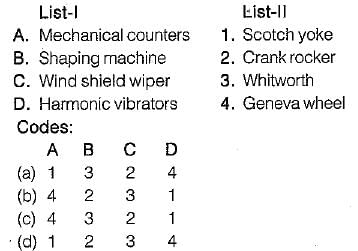
Match List-I (Application) with List-II (Mechanism) and select the correct answer using the codes given below the lists:
Detailed Solution: Question 1

To match List-I (Applications) with List-II (Mechanisms), analyze the functionality of each mechanism and its corresponding application:

  • A. Mechanical counters - Geneva wheel (4):
    The Geneva wheel mechanism is widely used in mechanical counters due to its ability to ensure precise and incremental motion.
  • B. Shaping machine - Whitworth (3):
    The Whitworth mechanism is commonly used in shaping machines to convert rotary motion into reciprocating motion.
  • C. Windshield wiper - Crank rocker (2):
    The crank-rocker mechanism is used in windshield wipers to produce oscillatory motion.
  • D. Harmonic vibrators - Scotch yoke (1):
    The Scotch yoke mechanism is used in harmonic vibrators to convert rotary motion into sinusoidal reciprocating motion.

Correct Answer: c) 4, 3, 2, 1

Test: Mechanism With Lower Pairs - 1 - Question 2

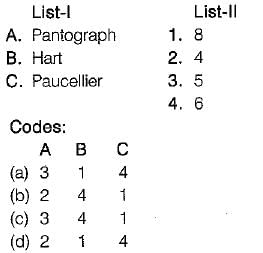
Match the List-I (Mechanism) with List-ll (Number of links):
Test: Mechanism With Lower Pairs - 1 - Question 3

Which of these mechanisms gives an approximately straight line?

Detailed Solution: Question 3

Grass-hoper and watt mechanisms gives an approximately straight line.

Test: Mechanism With Lower Pairs - 1 - Question 4

Which of the following mechanism is extensively used as a substitute for T-square and set- square?

Test: Mechanism With Lower Pairs - 1 - Question 5

The Davis steering gear is not used because

Detailed Solution: Question 5

A Davis steering gear has sliding pairs which means more friction and easy wearing. The gear fulfills the fundamental equation of gearing in all the positions. Due to easy wearing if becomes inaccurate after some time.

Test: Mechanism With Lower Pairs - 1 - Question 6

The Davis steering gear fullfills the condition of correct gearing at

Test: Mechanism With Lower Pairs - 1 - Question 7

The Ackermann steering gear fulfills the condition of correct gearing at

Detailed Solution: Question 7

An Ackermann steering gears has only turning pairs and thus is preferred. Its drawback is that fulfills the fundamental equation of correct gearing at the middle and the two extreme positions and not in all positions.

Test: Mechanism With Lower Pairs - 1 - Question 8

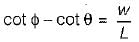
The ratio between the width of the front axle and that of the wheel base of a steering mechanism is 0.44. At the instant when the front inner wheel is turned by 18°, what should be the angle turned by the outer front wheel for perfect steering?
[Take cot18° = 3.078, cot16° = 3.487, cot20° = 2.747]

Detailed Solution: Question 8


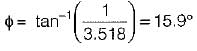
∴  

From the given data, we can see that φ should be closer to 16° and best possible option is (a).

Test: Mechanism With Lower Pairs - 1 - Question 9

In automobiles, Hook’s joint is used between which of the followings?

Test: Mechanism With Lower Pairs - 1 - Question 10

A Hook’s joint is used to connect

Detailed Solution: Question 10

A Hook’s joint, commonly known as a universal joint is used to connect two non-parallel and intersecting shafts. It is also used for shafts with angular misalignment. A common application of this joint is in an automobile where it is used to transmit power from the gear box (of the engine) to the rear axle.

45 videos|314 tests
Information about Test: Mechanism With Lower Pairs - 1 Page
In this test you can find the Exam questions for Test: Mechanism With Lower Pairs - 1 solved & explained in the simplest way possible. Besides giving Questions and answers for Test: Mechanism With Lower Pairs - 1, EduRev gives you an ample number of Online tests for practice
Download as PDF