Electrical Engineering (EE) Exam  >  Electrical Engineering (EE) Test  >  GATE Mock Test Series 2027  >  Test: Feedback Characteristics - Electrical Engineering (EE) MCQ

GATE Electrical Engineering (EE) Test: Feedback Characteristics Free Online


MCQ Practice Test & Solutions: Test: Feedback Characteristics (10 Questions)

You can prepare effectively for Electrical Engineering (EE) GATE Electrical Engineering (EE) Mock Test Series 2027 with this dedicated MCQ Practice Test (available with solutions) on the important topic of "Test: Feedback Characteristics". These 10 questions have been designed by the experts with the latest curriculum of Electrical Engineering (EE) 2026, to help you master the concept.

Test Highlights:

  • - Format: Multiple Choice Questions (MCQ)
  • - Duration: 30 minutes
  • - Number of Questions: 10

Sign up on EduRev for free to attempt this test and track your preparation progress.

Test: Feedback Characteristics - Question 1

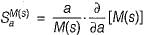
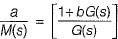
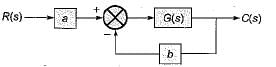
In the system shown in figure below, the sensitivity of the closed loop transfer function w.r.t. parameter a is
Detailed Solution: Question 1

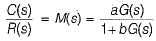
The closed loop transfer function is given by

∴ 
Now,   

∴ 

Test: Feedback Characteristics - Question 2

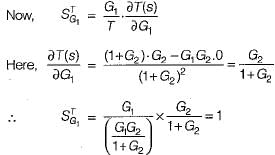
For the system shown in figure below,  is equal to (where, T = closed loop transfer function)
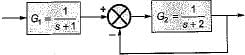
Detailed Solution: Question 2

The CLTF is

Test: Feedback Characteristics - Question 3

In control system, the feedback

Test: Feedback Characteristics - Question 4

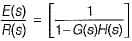
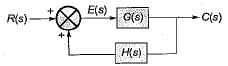
For the closed loop transfer function shown below, E(s)/R(s) is given by
Detailed Solution: Question 4

We have:   E(s) = R(s) + C(s) H(s) ...(i)

Also,   C(s) = E(s) G(s) ...(ii)
From (i) and (ii), we have:
E(s) = R(s) + E(s) G(s) H(s)
or, E(s) (1-G(s)H(s)] = R(s)
or,  

Test: Feedback Characteristics - Question 5

Due to positive feedback

Test: Feedback Characteristics - Question 6

Consider the following statements:
1. Closed loop system is less sensitive to variations in feedback path parameters than variations in forward path parameters.
2. Feedback can improve the stability or may be harmful to stability if it is not properly designed and applied.
3. Feedback controls the time response of the system by adjusting the location of poles. 

Q. Which of the these statements are correct?
Detailed Solution: Question 6


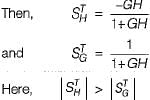
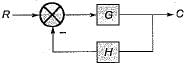
For the closed loop control system shown above, let, H = C/R transfer function.

Thus, closed loop system is more sensitive to variation in feedback path parameters than variation in forward path parameters. Hence statement-1 is false. Thus, statements 2 and 3 are only correct. 

Test: Feedback Characteristics - Question 7

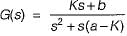
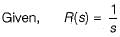
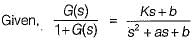
An unity feedback control system has a transfer function of  The open loop transfer function of this system is
Detailed Solution: Question 7


∴ 

Test: Feedback Characteristics - Question 8

Assertion (A): Feedback in control system improves the time response of the system. ​
Reason (R): Time constant of an open loop system is less than the time constant of a closed loop system.

Detailed Solution: Question 8

Time constant of open loop system is more than that of closed loop system. Lesser is the time constant of the system, faster is its' time response.

Test: Feedback Characteristics - Question 9

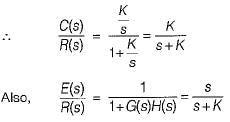
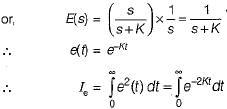
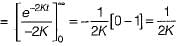
For the unity feedback system shown below, if the input to the system is a unit-step signal, then the integral square error  (t) dt for infinite value of gain k will be
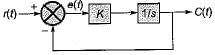
Detailed Solution: Question 9


Thus, when K = ∞, Ie = 0.

Test: Feedback Characteristics - Question 10

Introduction of feedback to a system

Detailed Solution: Question 10

Introduction of feed back to a system will increase the stability if negative feedback is introduced while it will reduce the stability if positive feedback is introduced.

26 docs|247 tests
Information about Test: Feedback Characteristics Page
In this test you can find the Exam questions for Test: Feedback Characteristics solved & explained in the simplest way possible. Besides giving Questions and answers for Test: Feedback Characteristics, EduRev gives you an ample number of Online tests for practice
Download as PDF