Civil Engineering (CE) Exam  >  Civil Engineering (CE) Test  >  GATE 2027 Mock Test Series  >  Test: Properties of Soil - 2 - Civil Engineering (CE) MCQ

GATE Civil Engineering (CE) 2027 Test: Properties of Soil - 2 Free Online


MCQ Practice Test & Solutions: Test: Properties of Soil - 2 (10 Questions)

You can prepare effectively for Civil Engineering (CE) GATE Civil Engineering (CE) 2027 Mock Test Series with this dedicated MCQ Practice Test (available with solutions) on the important topic of "Test: Properties of Soil - 2". These 10 questions have been designed by the experts with the latest curriculum of Civil Engineering (CE) 2026, to help you master the concept.

Test Highlights:

  • - Format: Multiple Choice Questions (MCQ)
  • - Duration: 30 minutes
  • - Number of Questions: 10

Sign up on EduRev for free to attempt this test and track your preparation progress.

Test: Properties of Soil - 2 - Question 1

For a sandy soil with soil grains spherical in shape and uniform in size, what is the theoretical void ratio?

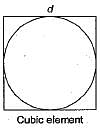
Detailed Solution: Question 1


Test: Properties of Soil - 2 - Question 2

The laboratory tests on a sample yielded the following results:
Plasticity index : 32%
Liquidity index 0.15
Activity number 1.58
Which of the following inferences can be drawn?
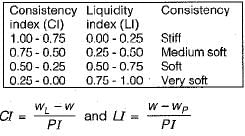
1. The soil is very stiff.
2. The soil is medium soft.
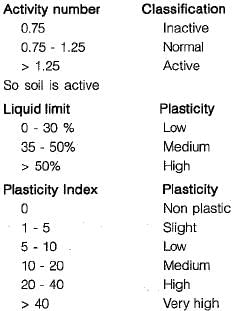
3. The soil is highly plastic,
4. The soil is medium plastic.
5. The soil is active.
Select the correct answer using the codes given below:
Detailed Solution: Question 2


where
w is natural water content
wL is liquid limit
wp is plastic limit
PI is plasticity index
Cl + LI = 1.00
If Cl > 1 or LI < 0, then soil is very stiff.
If Cl < 0 or LI > 1 soil behaves as liquid.

So soil is high plastic

Test: Properties of Soil - 2 - Question 3

A clay sample has a void ratio 0.54 in dry state. The specific gravity of soil solids is 2.7, What is the shrinkage limit of the soil?

Detailed Solution: Question 3

At shrinkage limit, the soil remains fully saturated. 

Test: Properties of Soil - 2 - Question 4

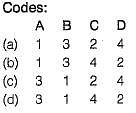
Match List-I (Unit/Test) with List-ll (Purpose) and select the correct answer using the codes given below the lists:
List-I
A. Casagrande’s apparatus
B. Hydrometer
C. Plate load test
D. Oedometer
List-ll
1. Determination of grain size distribution
2. Consolidation characteristics
3. Determination of consistency limits
4. Determination of safe bearing capacity of soil
Detailed Solution: Question 4

  • Cassagrande apparatus is used to determine the liquid limit of soils. Liquid Limit is defined as the water content at which the soil changes from liquid state to plastic state.
  • Hydrometer method is used to determine the particle size distribution of fine-grained soils passing 75 μ sieve. The hydrometer measures the specific gravity of the soil suspension at the Centre of its bulb. The specific gravity depends upon the mass of solids present, which in turn depends upon the particle size.
  • Plate Load Test is a field test for determining the ultimate bearing capacity of soil and the likely settlement under a given load. The Plate Load Test basically consists of loading a steel plate placed at the foundation level and recording the settlements corresponding to each to increment.
  • An oedometer test is a test that measures a soil's consolidation properties. Oedometer tests are performed by applying different loads to a soil sample and measuring the deformation response. The results from these tests are used to predict how a soil in the field will deform in response to a change in effective stress.

Test: Properties of Soil - 2 - Question 5

Consistency as applied to cohesive soils is an indicator of its

Detailed Solution: Question 5

Soil consistency is the strength with which soil materials are held together or the resistance of soils to deformation and rupture. It is related to shear strength of the soil.

Porosity is defined as the ratio of volume of voids to the volume of soil in a given soil mass.

Test: Properties of Soil - 2 - Question 6

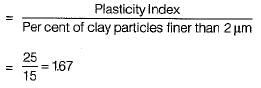
The plasticity index and the percentage of grain size finer than 2 microns of a clay sample are 25 and 15, respectively. Its activity ratio is
Detailed Solution: Question 6

Activity

As activity is more than 1.25 so it is active soil.

Test: Properties of Soil - 2 - Question 7

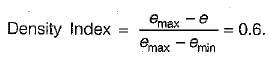
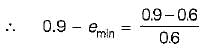
The natural void ratio of a sand sample is 0.6 and its density index is 0.6. If its void ratio in the loosest state is 0.9, then the void ratio in the densest state will be
Detailed Solution: Question 7


Void ratio in loosest state, emax = 0.9
Void ratio in natural state, e = 0.6

emin = 0.9 - 0.5 = 0.4

Test: Properties of Soil - 2 - Question 8

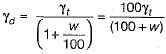
Which one of the following correctly represents the dry unit weight of a soil sample which has a bulk unit weight of γat a moisture content of W%?

Detailed Solution: Question 8

Test: Properties of Soil - 2 - Question 9

A soil has a liquid limit of 40% and plasticity index of 20%. The plastic limit of the soil will be

Detailed Solution: Question 9

The plastic limit, denoted as WP, can be calculated using the formula:

  • WP = WL - PI

Where:

  • WL = Liquid limit = 40%
  • PI = Plasticity index = 20%

Substituting the values, we have:

  • WP = 40% - 20% = 20%

Test: Properties of Soil - 2 - Question 10

A soil has bulk density of 22 kN/m3 and water content 10%. The dry density is

Detailed Solution: Question 10

33 docs|280 tests
Information about Test: Properties of Soil - 2 Page
In this test you can find the Exam questions for Test: Properties of Soil - 2 solved & explained in the simplest way possible. Besides giving Questions and answers for Test: Properties of Soil - 2, EduRev gives you an ample number of Online tests for practice
Download as PDF