NEET Exam  >  NEET Test  >  Chemistry Class 11  >  Test: The Valence Shell Electron Pair Repulsion Theory (NCERT) - NEET MCQ

The Valence Shell Electron Pair Repulsion Theory (NCERT) - Free MCQ Practice


MCQ Practice Test & Solutions: Test: The Valence Shell Electron Pair Repulsion Theory (NCERT) (15 Questions)

You can prepare effectively for NEET Chemistry Class 11 with this dedicated MCQ Practice Test (available with solutions) on the important topic of "Test: The Valence Shell Electron Pair Repulsion Theory (NCERT)". These 15 questions have been designed by the experts with the latest curriculum of NEET 2026, to help you master the concept.

Test Highlights:

  • - Format: Multiple Choice Questions (MCQ)
  • - Duration: 15 minutes
  • - Number of Questions: 15

Sign up on EduRev for free to attempt this test and track your preparation progress.

Test: The Valence Shell Electron Pair Repulsion Theory (NCERT) - Question 1

According to VSEPR theory

Detailed Solution: Question 1

The pairs of electrons tend to occupy such positions that place them farthest from each other and minimise repulsions.

Test: The Valence Shell Electron Pair Repulsion Theory (NCERT) - Question 2

In a bonded molecule, the order of repulsion between the bonded and non-bonded electrons is

Detailed Solution: Question 2

Lone pair-lone pair lp - lp repulsions are considered stronger than lone pair-bonding pair lp - bp repulsions, which in turn are considered stronger than bonding pairbonding pair bp - bp repulsions, This is because the lone pair of electrons are attracted towards single nuclei only whereas bond pair electrons are attracted towards two nuclei. Thus the strength of the lone pair-lone pair repulsion is supposed to be more than bond pair-bond pair or bond pair-lone pair repulsion.

Test: The Valence Shell Electron Pair Repulsion Theory (NCERT) - Question 3

The shape of water molecule which should be tetrahedral has a bent or distorted tetrahedral shape with a bond angle 104.5°. What could be the reason for this?

Detailed Solution: Question 3

Due to presence of lone pairs, the repulsion is more which changes the bond angle to 104.5°.

Test: The Valence Shell Electron Pair Repulsion Theory (NCERT) - Question 4

Which of the following shapes of SF4 is more stable and why?
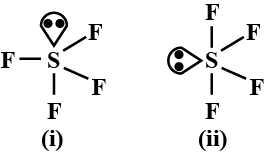
Detailed Solution: Question 4

In structure (ii), Ip-bp repulsions are minimum.

Test: The Valence Shell Electron Pair Repulsion Theory (NCERT) - Question 5

The most stable shape of ClF3 is shown by
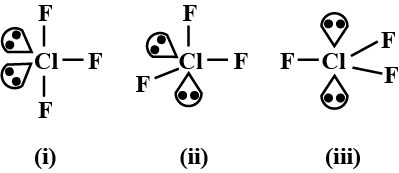
Detailed Solution: Question 5

In (i), the Ip are atequatorial position so there are less Ip - bp repulsions as compared to other positions.

Hence, T-shape is moststable.

Test: The Valence Shell Electron Pair Repulsion Theory (NCERT) - Question 6

In which of the following molecules the central atomdoes not retain any lone pair of electrons?

Detailed Solution: Question 6

In all other molecules, N and O retain lone pair
of electrons.

Test: The Valence Shell Electron Pair Repulsion Theory (NCERT) - Question 7

Few examples of the compounds formed by chemical bonding are given below. Mark the incorrect example.

Detailed Solution: Question 7

The correct example is H2O. NH3 is pyramidal and bond angle is 104.50.

Test: The Valence Shell Electron Pair Repulsion Theory (NCERT) - Question 8

Which of the following statements is correct regarding the structure of PCI5?

Detailed Solution: Question 8
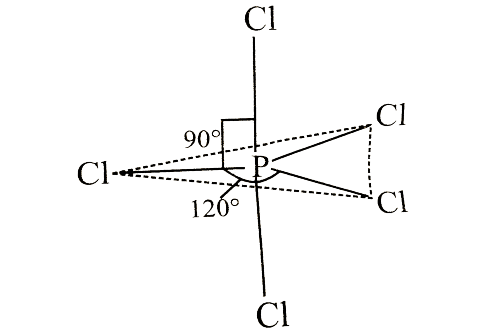
In PCI5, three axial and two equatorial bonds are present.

Test: The Valence Shell Electron Pair Repulsion Theory (NCERT) - Question 9

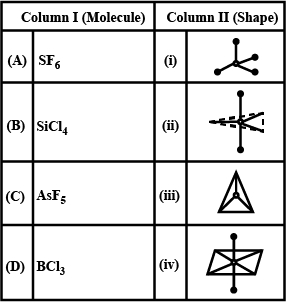
Match the molecules given in column I with their shapes given in column II and mark the appropriate choice
Detailed Solution: Question 9

(A) SF−  Octahedral

(B) SiCl− Tetrahedral

(C) AsF− Trigonal bipyramidal

(D) BCl3− Trigonal planar

Test: The Valence Shell Electron Pair Repulsion Theory (NCERT) - Question 10

What is common between the following molecules

SO3, CO2-3, No-3

Detailed Solution: Question 10
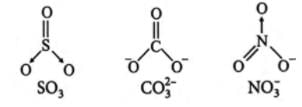

All the moleculeshave trigonal planar structure.

Test: The Valence Shell Electron Pair Repulsion Theory (NCERT) - Question 11

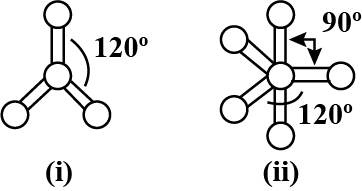
Which molecule is depicted by the given ball and stick models?
Detailed Solution: Question 11

BF3 - Trigonal planar with bond angle 120º.
PCI5 - Trigonal bipyramidal with bond angles 120º and 90º.

Test: The Valence Shell Electron Pair Repulsion Theory (NCERT) - Question 12

Which of the following does not show octahedral geometry?

Detailed Solution: Question 12

SF4 has trigonal bipyramidal geometry. SF6, IF5, and SiF62- have octahedral geometry.

Test: The Valence Shell Electron Pair Repulsion Theory (NCERT) - Question 13

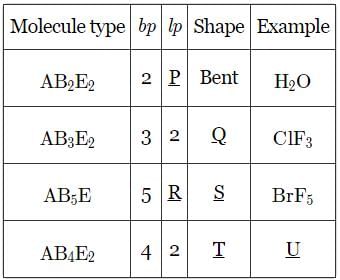
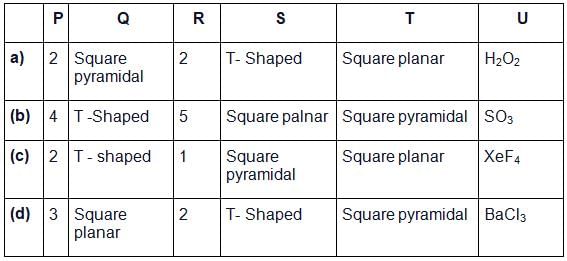
Given below is the table showing shapes of some molecules having lone pairs of electrons. Fill up the blanks left in it.
Test: The Valence Shell Electron Pair Repulsion Theory (NCERT) - Question 14

The BCI3 is a planar molecule whereas NCI3 is pyramidal, because

Detailed Solution: Question 14

No lone pair ofelectrons is available in BCI3

One lone pair of electrons is available on N atom, occupies a corner in the tetrahedral arrangement. Therefore, NCI3 appears pyramidal in shape.

Test: The Valence Shell Electron Pair Repulsion Theory (NCERT) - Question 15

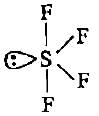
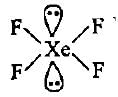
CF4, SF4 and XeF4 contain the following electronicstructure on their central atoms. Which one iscorrect option?

Detailed Solution: Question 15
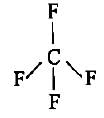
CF4−sp3 , tetrahedral but no unpaired electron.

SF4−sp3d, trigonal bipyramidal with one unpaired electron.


XeF4−sp3d2, square planar, two lone pairs of electrons.

98 videos|243 docs|71 tests
Information about Test: The Valence Shell Electron Pair Repulsion Theory (NCERT) Page
In this test you can find the Exam questions for Test: The Valence Shell Electron Pair Repulsion Theory (NCERT) solved & explained in the simplest way possible. Besides giving Questions and answers for Test: The Valence Shell Electron Pair Repulsion Theory (NCERT), EduRev gives you an ample number of Online tests for practice
98 videos|243 docs|71 tests
Download as PDF