NEET Exam  >  NEET Test  >  NCERT Based Tests  >  Test: Electrostatic Potential & Potential due to a Point Charge (NCERT) - NEET MCQ

Electrostatic Potential & due to a Point Charge (NCERT) - NEET NCERT Based


MCQ Practice Test & Solutions: Test: Electrostatic Potential & Potential due to a Point Charge (NCERT) (10 Questions)

You can prepare effectively for NEET NCERT Based Tests for NEET with this dedicated MCQ Practice Test (available with solutions) on the important topic of "Test: Electrostatic Potential & Potential due to a Point Charge (NCERT)". These 10 questions have been designed by the experts with the latest curriculum of NEET 2026, to help you master the concept.

Test Highlights:

  • - Format: Multiple Choice Questions (MCQ)
  • - Duration: 10 minutes
  • - Number of Questions: 10

Sign up on EduRev for free to attempt this test and track your preparation progress.

Test: Electrostatic Potential & Potential due to a Point Charge (NCERT) - Question 1

Which of the following statement is not true?

Detailed Solution: Question 1

Work done by the electrostatic force is independent of the path followed by it, and it depends only on the initial and final positions. For example, work done in moving a unit positive charge in a closed loop of an electric field is zero.

Test: Electrostatic Potential & Potential due to a Point Charge (NCERT) - Question 2

1 volt is equivalent to

Detailed Solution: Question 2

Volt is the electrical unit of potential difference or voltage, and is expressed as V. One Volt is described as one joule of energy consumption per one coulomb electric charge.

Test: Electrostatic Potential & Potential due to a Point Charge (NCERT) - Question 3

The work done in bringing a unit positive charge from infinite distance to a point at distance x from a positive charge Q is W. Then the potential ϕ at that point is

Detailed Solution: Question 3

Electric potential at a point in an electric field is defined as the work done in bringing a unit positive charge from infinity to that point.
Or,  V = W/q ​
Since charge is of magnitude unity, Hence electric potential at that point will be equal to the workdone ∴ ϕ = W

Test: Electrostatic Potential & Potential due to a Point Charge (NCERT) - Question 4

The potential at a point due to a charge of 5×10⁻⁷C located 10cm10cm away is

Detailed Solution: Question 4

Here, q = 5 × 10(−7) C, r = 10 cm = 0.1 m

Test: Electrostatic Potential & Potential due to a Point Charge (NCERT) - Question 5

In the question number 4, work done in bringing a charge of 4 x 10⁻⁹ C from infinity to that point is

Detailed Solution: Question 5

Work done, W = q(Vf − Vi) = 4 × 10−9 × 4.5 × 104 = 1.8 × 10⁻⁴ J

Test: Electrostatic Potential & Potential due to a Point Charge (NCERT) - Question 6

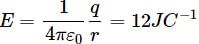
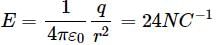
The electric field intensity at a point P due to point charge q kept at point Q is 24 N C−1 and the electric potential at point P due to same charge is 12 J C−1. The order of magnitude of charge q is
Detailed Solution: Question 6

Electric field of a point charge.

Electric potential of a point charge,

The distance PQ is r = V/E = 12/24 = 0.5 m
∴ Magnitude of charge
q' = 4πε0Vr

= 10−9 C

Test: Electrostatic Potential & Potential due to a Point Charge (NCERT) - Question 7

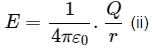
The electric potential at a point in free space due to charge Q coulomb is Q x 1011 volts. The electric field at that point is

Detailed Solution: Question 7

The electric potential due to charge Q is

where r is the distance of observation point from the charge. At the same point, electric field is

Combining Eqs. (i) and (ii), we have

= 4πε0Q × 1022 V/m-1

Test: Electrostatic Potential & Potential due to a Point Charge (NCERT) - Question 8

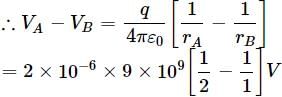
Two points A and B are located in diametrically opposite directions of a point charge of +2μC at distances 2m and 1m respectively from it. The potential difference between A and B is
Detailed Solution: Question 8

Here, q = 2 μC = 2 × 10⁻⁶ C,
rA = 2m, rB = 1m

= −9 × 10³  V

Test: Electrostatic Potential & Potential due to a Point Charge (NCERT) - Question 9

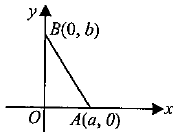
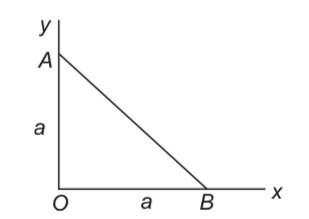
A charge +q is placed at the origin O of x-y axes as shown in the figure. The work done in taking a charge Q from A to B along the straight line AB is
Detailed Solution: Question 9

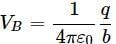
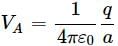
Potential at point A is 
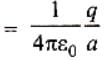
Potential at point B is
Work done in taking a charge Q from A to B is,

Test: Electrostatic Potential & Potential due to a Point Charge (NCERT) - Question 10

As per this diagram a point charge +q is placed at the origin O. Work done in taking another point charge −Q from the point A [coordinates (0, a)] to another point B [coordinates (a, 0)] along the straight path AB is
Detailed Solution: Question 10

Work done is equal to zero because the potential of A and B are the same

image
No work is done if a particle does not change its potential energy
i. e. initial potential energy = final potential energy.

677 tests
Information about Test: Electrostatic Potential & Potential due to a Point Charge (NCERT) Page
In this test you can find the Exam questions for Test: Electrostatic Potential & Potential due to a Point Charge (NCERT) solved & explained in the simplest way possible. Besides giving Questions and answers for Test: Electrostatic Potential & Potential due to a Point Charge (NCERT), EduRev gives you an ample number of Online tests for practice
Download as PDF