
Oxidation Number in Redox Reaction - Free MCQ Practice Test with solutions,
MCQ Practice Test & Solutions: Test: Oxidation Number in Redox Reaction (18 Questions)
You can prepare effectively for NEET Chemistry Class 11 with this dedicated MCQ Practice Test (available with solutions) on the important topic of "Test: Oxidation Number in Redox Reaction". These 18 questions have been designed by the experts with the latest curriculum of NEET 2026, to help you master the concept.
Test Highlights:
- - Format: Multiple Choice Questions (MCQ)
- - Duration: 18 minutes
- - Number of Questions: 18
Sign up on EduRev for free to attempt this test and track your preparation progress.

In which case change of oxidation number of V is maximum?
Detailed Solution: Question 1
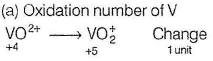
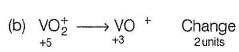

In which of the following set of compounds oxidation number of oxygen is not (- 2)?
Detailed Solution: Question 2
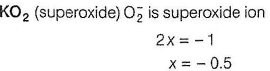

Detailed Solution: Question 3
Which of the following is not an example of redox reaction?
Detailed Solution: Question 4
Which of the following atom has been assigned only single oxidation number?
Detailed Solution: Question 5
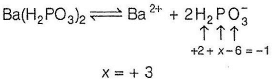
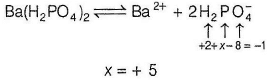
The oxidation number of P in Ba(H2PO2)2, Ba(H2PO3)2 and Ba(H2PO4)2 are respectively
Detailed Solution: Question 6
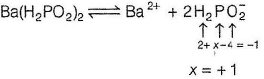
the oxidation number of sulphur in S8,S2F2,H2S respectively are
Detailed Solution: Question 7
In which of the following reactions oxidation number of chromium has been affected?
Detailed Solution: Question 8
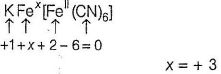
Prussian blue is represented by KFex[Fe(CN)6]. Value of x is
Detailed Solution: Question 9
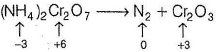
In the following reaction,  , oxidation number of
, oxidation number ofDetailed Solution: Question 10
Select the set of compounds having fractional oxidation number in one or more atoms.
Detailed Solution: Question 11
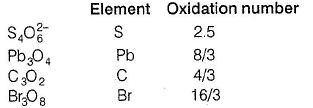
Direction (Q. Nos. 13 and 14) This section contains 2 multiple choice questions. Each question has four choices (a), (b), (c) and (d), out of which ONE or MORE THANT ONE is correct.
Q. Which of the following species has/have oxidation number of the metal as + 6 ?
Detailed Solution: Question 12




Oxidation numbers of P in PO4−3, of S in SO42− and that of Cr in Cr2O72− are respectively,
Detailed Solution: Question 13
Direction (Q. Nos. 15-16) This section contains a paragraph, wach describing theory, experiments, data etc. three Questions related to paragraph have been given.Each question have only one correct answer among the four given options (a),(b),(c),(d)
The complex [Fe(H2O)5NO]2+ is formed in the ring-test for nitrate ion  when freshly prepared FeSO4 solution is added to aqueous solution of
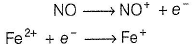
  followed by the addition of conc. H2SO4. NO exists as NO+ (nitrosyl).
Q.Oxidation number of the Fe in the ring is
when freshly prepared FeSO4 solution is added to aqueous solution of followed by the addition of conc. H2SO4. NO exists as NO+ (nitrosyl).Detailed Solution: Question 14
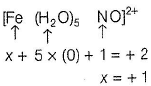
The complex [Fe(H2O)5NO]2+ is formed in the ring-test for nitrate ion when freshly prepared FeSO4 solution is added to aqueous solution of followed by the addition of conc. H2SO4. NO exists as NO+ (nitrosyl).
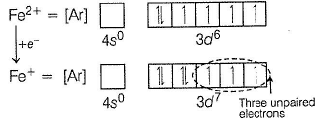
Q. Magnetic moment  of Fe in the ring is
when freshly prepared FeSO4 solution is added to aqueous solution of followed by the addition of conc. H2SO4. NO exists as NO+ (nitrosyl).of Fe in the ring is Detailed Solution: Question 15


Direction (Q. Nos. 17) Choice the correct combination of elements and column I and coloumn II are given as option (a), (b), (c) and (d), out of which ONE option is correct.
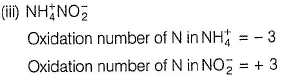
Match the compounds/ions having underlined atoms of different oxidation number (in Column I) with values (in Column II).
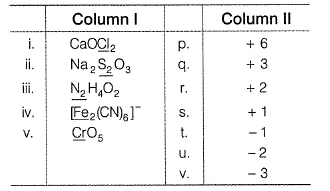

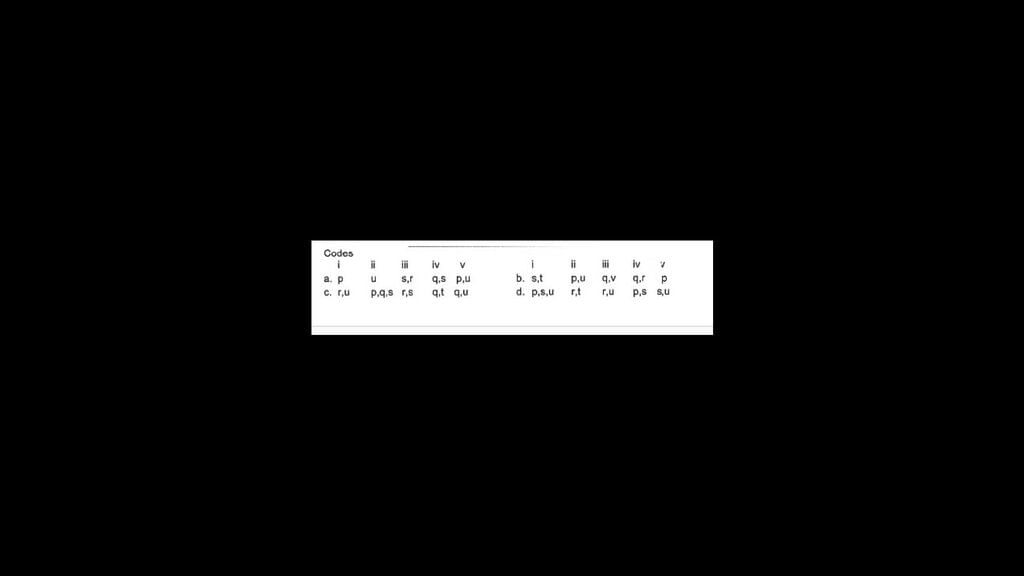
Detailed Solution: Question 16


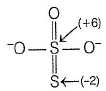
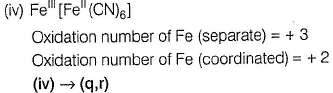
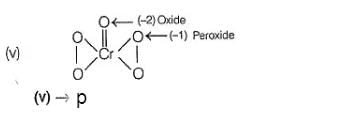
Direction (Q. Nos. 18 and 19) This section contains 2 questions. when worked out will result in an integer from 0 to 9 (both inclusive)
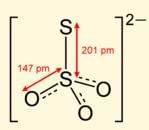
Q. S2O32- has two types of sulphur atoms. What is the difference in the oxidation states of two types of sulphur atoms?
Detailed Solution: Question 17
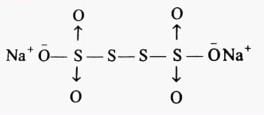
The difference in the oxidation number of the two types of sulphur atoms in Na2S4O6 is _________. [HTJEE2011]
Detailed Solution: Question 18
98 videos|243 docs|71 tests |
