Electrical Engineering (EE) Exam  >  Electrical Engineering (EE) Test  >  GATE Mock Test Series 2027  >  Test: Compensators - 1 - Electrical Engineering (EE) MCQ

GATE Electrical Engineering (EE) Test: Compensators - 1 Free Online Test


MCQ Practice Test & Solutions: Test: Compensators - 1 (10 Questions)

You can prepare effectively for Electrical Engineering (EE) GATE Electrical Engineering (EE) Mock Test Series 2027 with this dedicated MCQ Practice Test (available with solutions) on the important topic of "Test: Compensators - 1". These 10 questions have been designed by the experts with the latest curriculum of Electrical Engineering (EE) 2026, to help you master the concept.

Test Highlights:

  • - Format: Multiple Choice Questions (MCQ)
  • - Duration: 30 minutes
  • - Number of Questions: 10

Sign up on EduRev for free to attempt this test and track your preparation progress.

Test: Compensators - 1 - Question 1

A system with impulse response is essentially a _______ compensator and used as a ________ filter.

Detailed Solution: Question 1

Lag compensator:
Transfer function:

If it is in the form of then a < 1
If it is in the form of  then a > b
Maximum phase lag frequency: ωm = 1/T√α
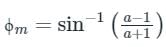
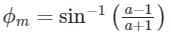
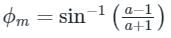
Maximum phase lag: ϕm = sin−1(a−1/a+1)
ϕm is negative

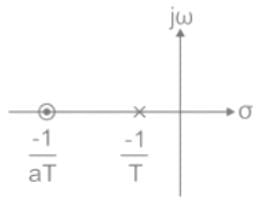
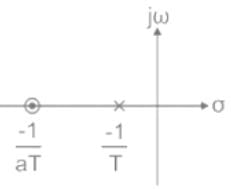
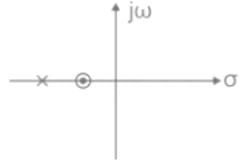
Pole zero plot:

The pole is nearer to the origin.
Filter: It is a low pass filter (LPF)
Effect on the system:

  • Rise time and settling time increases and Bandwidth decreases
  • The transient response becomes slower
  • The steady-state response is improved
  • Stability decreases

Test: Compensators - 1 - Question 2

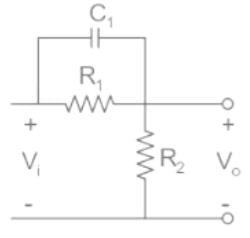
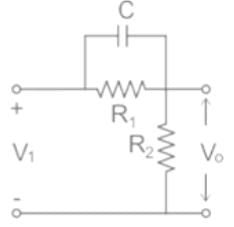
Which of the following is true for the network shown below -
Detailed Solution: Question 2

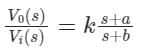
In general, the lead and lag compensator is represented by the below transfer function

 
If a > b then that is lag compensator because pole comes first.
If a < b then that is the lead compensator since zero comes first.
Analysis:
Lead compensator:
1) When sinusoidal input applied to this it produces sinusoidal output with the phase lead input.
2) It speeds up the Transient response and increases the margin for stability.
A circuit diagram is as shown:

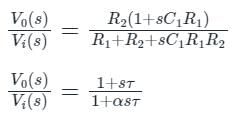
Response is:

Lead constant α = 

Test: Compensators - 1 - Question 3

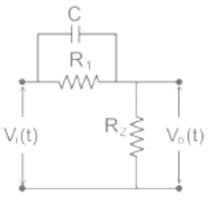
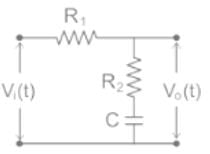
Given a badly underdamped control system, the type of cascade compensator to be used to improve its damping is
Detailed Solution: Question 3

Phase Lead Compensator:

  • A lead compensator provides a positive phase shift for increasing the value of frequencies from 0 to ∞.
  • It is also known as a differentiator circuit.
  • For a lead network, zero is nearer to the origin.
  • It is used to improve the transient response of the system.
  • It increases the damping of the system.

Phase Lag Compensator:

  • A lead compensator provides a negative phase shift for increasing the value of frequencies from 0 to ∞.
  • It is also known as an integrator circuit.
  • For a lag network, pole is nearer to the origin.
  • It is used to improve the steady state response of the system.
  • It decreases the steady-state error of the system.

Test: Compensators - 1 - Question 4

The maximum phase shift that can be obtained by using a lead compensator with transfer function Gc(s) = equal to

Detailed Solution: Question 4

The standard T/F of the compensator is 

Maximum phase lead

Maximum phase lead frequency, 
ωm = 1/T√a
Calculation:
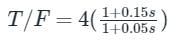
The given transfer function is,
By comparing both transfer functions,
aT = 0.15
T = 0.05
a = 3
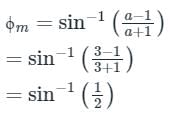
Maximum phase lead


= sin-1 (0.5)
ϕm = 30° 

Test: Compensators - 1 - Question 5

An R-C network has the transfer function 
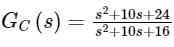
The network could be used as
1. lead compensator
2. lag compensator
3. lag-lead compensator
Which of the above is/are correct?
Detailed Solution: Question 5


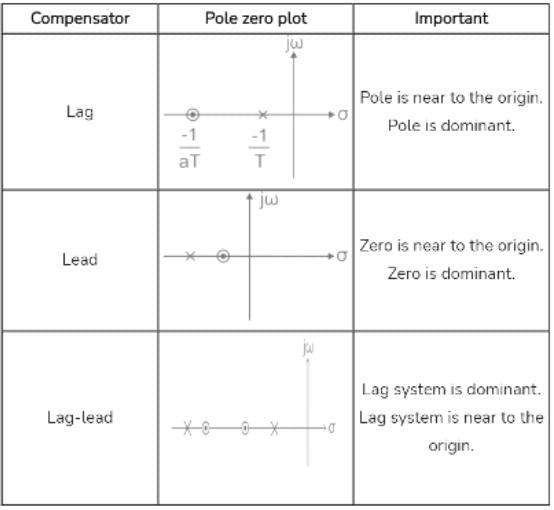
Application:

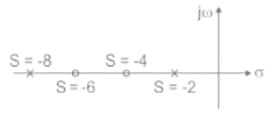
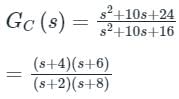
Poles: s = -2, -8
Zeros: s = -4, -6
The pole-zero plot of the above transfer function is shown below.

The above pole-zero represents that the given system is a lag-lead compensator.

Test: Compensators - 1 - Question 6

The compensator required to improve the steady state response of a system is

Detailed Solution: Question 6

Lag compensator:
Transfer function:

If it is in the form of  then a < 1

If it is in the form of then a > b
Maximum phase lag frequency:
ωm = 1√Ta
Maximum phase lag::


ϕm is negative
Pole zero plot:

The pole is nearer to the origin.
Filter: It is a low pass filter (LPF)
Effect on the system:

  • Rise time and settling time increases and Bandwidth decreases
  • The transient response becomes slower
  • The steady-state response is improved
  • Stability decreases

*Answer can only contain numeric values
Test: Compensators - 1 - Question 7

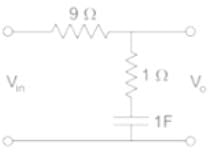
For the network shown in the figure below, the frequency (in rad/s) at which the maximum phase lag occurs is, ___________.


Detailed Solution: Question 7

Given circuit is a lag compensator and transfer function is given as

On comparison we get, T = 1
βT = 10 ⇒ β = 10
The frequency at which maximum lead occurs is ωm = 1/T√β

Test: Compensators - 1 - Question 8

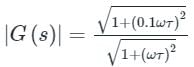
A compensator with the transfer function G(s) =  can give maximum gain of

Detailed Solution: Question 8


For all ω Numerator is less than Denominator maximum value of |G(s)| occurs at ω = 0
|G(s)|max = 1 
In dB, 20 log (1) = 0 dB

Test: Compensators - 1 - Question 9

Which of the following is not correct with respect to a phase-lead compensation network?

Detailed Solution: Question 9

Lead compensator:
Transfer function:

If it is in the form of  then a < 1

If it is in the form of then a > b
Maximum phase lag frequency:
ωm = 1√Ta
Maximum phase lag::


ϕm is positive

Pole zero plot:

The zero is nearer to the origin.
Filter: It is a high pass filter (HPF)
Effect on the system:

  • Rise time and settling time decreases and Bandwidth increases
  • The transient response becomes faster
  • The steady-state response is not affected
  • Improves the stability
  • The velocity constant is usually increased
  • Helps to increase the system error constant though to a limited extent
  • The slope of the magnitude curve is reduced at the gain crossover frequency, as a result, relative stability improves
  • The margin of stability of a system (phase margin) increased

Test: Compensators - 1 - Question 10

Phase lead occurs at: 

Detailed Solution: Question 10

Phase lead occurs in phase lead compensator and it occurs at the high-frequency region.

Lead compensator:
Transfer function:

If it is in the form of  then a < 1

If it is in the form of then a > b
Maximum phase lag frequency: ωm = 1√Ta
Maximum phase lag::


ϕm is positive

Pole zero plot:

The zero is nearer to the origin.
Filter: It is a high pass filter (HPF)
Effect on the system:

  • Rise time and settling time decreases and Bandwidth increases
  • The transient response becomes faster
  • The steady-state response is not affected
  • Improves the stability

26 docs|247 tests
Information about Test: Compensators - 1 Page
In this test you can find the Exam questions for Test: Compensators - 1 solved & explained in the simplest way possible. Besides giving Questions and answers for Test: Compensators - 1, EduRev gives you an ample number of Online tests for practice
Download as PDF