
Civil Engineering (CE) Exam > Civil Engineering (CE) Tests > Test: Design of Steel Structures - Civil Engineering (CE) MCQ
Test: Design of Steel Structures - Civil Engineering (CE) MCQ
Test Description
10 Questions MCQ Test - Test: Design of Steel Structures
Test: Design of Steel Structures for Civil Engineering (CE) 2025 is part of Civil Engineering (CE) preparation. The Test: Design of Steel Structures questions and answers have been prepared
according to the Civil Engineering (CE) exam syllabus.The Test: Design of Steel Structures MCQs are made for Civil Engineering (CE) 2025 Exam.
Find important definitions, questions, notes, meanings, examples, exercises, MCQs and online tests for Test: Design of Steel Structures below.
Solutions of Test: Design of Steel Structures questions in English are available as part of our course for Civil Engineering (CE) & Test: Design of Steel Structures solutions in
Hindi for Civil Engineering (CE) course.
Download more important topics, notes, lectures and mock test series for Civil Engineering (CE) Exam by signing up for free. Attempt Test: Design of Steel Structures | 10 questions in 30 minutes | Mock test for Civil Engineering (CE) preparation | Free important questions MCQ to study for Civil Engineering (CE) Exam | Download free PDF with solutions
Test: Design of Steel Structures - Question 1

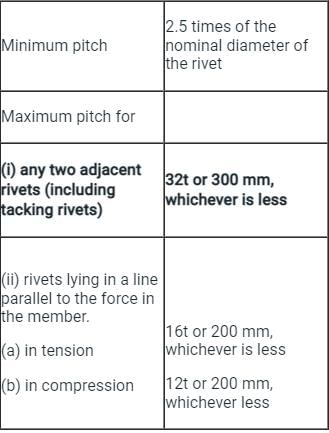
Two steel plates of 20 (outer) and 25 (inner) millimeters are tied together by a solder binder of 32 mm thickness. In-line gap (millimeter) of these binder should not exceed _____.
Detailed Solution for Test: Design of Steel Structures - Question 1
Detailed Solution for Test: Design of Steel Structures - Question 2

Test: Design of Steel Structures - Question 4
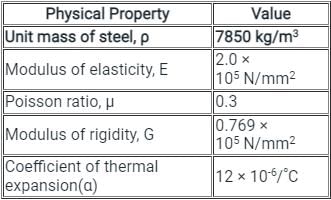
The unit mass (kg/cum) of structural steel as prescribed by IS 800 is:
Detailed Solution for Test: Design of Steel Structures - Question 4
Test: Design of Steel Structures - Question 5
Which of the following method is best for the design of steel structure?
Detailed Solution for Test: Design of Steel Structures - Question 5
Test: Design of Steel Structures - Question 6
The forces acting on the web splice of a plate girder are
Test: Design of Steel Structures - Question 7
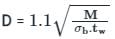
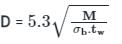
Usually, a plate girder is called as economical if it corresponds to minimum:
Detailed Solution for Test: Design of Steel Structures - Question 7
Test: Design of Steel Structures - Question 8
The phenomenon of producing higher stresses near the junction of a web and lower stresses at points away from the web of a steel beam is known as _____.
Detailed Solution for Test: Design of Steel Structures - Question 8
Test: Design of Steel Structures - Question 9
Generally the purlins are placed at the panel points so as to avoid
Detailed Solution for Test: Design of Steel Structures - Question 10
Information about Test: Design of Steel Structures Page
In this test you can find the Exam questions for Test: Design of Steel Structures solved & explained in the simplest way possible.
Besides giving Questions and answers for Test: Design of Steel Structures, EduRev gives you an ample number of Online tests for practice
Download as PDF



Important Questions for Design of Steel Structures
Find all the important questions for Design of Steel Structures at EduRev.Get fully prepared for Design of Steel Structures with EduRev's comprehensive question bank and test resources.
Our platform offers a diverse range of question papers covering various topics within the Design of Steel Structures syllabus.
Whether you need to review specific subjects or assess your overall readiness, EduRev has you covered.
The questions are designed to challenge you and help you gain confidence in tackling the actual exam.
Maximize your chances of success by utilizing EduRev's extensive collection of Design of Steel Structures resources.
Design of Steel Structures MCQs with Answers
Prepare for the Design of Steel Structures within the Civil Engineering (CE) exam with comprehensive MCQs and answers at EduRev.
Our platform offers a wide range of practice papers, question papers, and mock tests to familiarize you with the exam pattern and syllabus.
Access the best books, study materials, and notes curated by toppers to enhance your preparation.
Stay updated with the exam date and receive expert preparation tips and paper analysis.
Visit EduRev's official website today and access a wealth of videos and coaching resources to excel in your exam.
Online Tests for Design of Steel Structures
Practice with a wide array of question papers that follow the exam pattern and syllabus.
Our platform offers a user-friendly interface, allowing you to track your progress and identify areas for improvement.
Access detailed solutions and explanations for each test to enhance your understanding of concepts.
With EduRev's Online Tests, you can build confidence, boost your performance, and ace Design of Steel Structures with ease.
Join thousands of successful students who have benefited from our trusted online resources.
|
© EduRev
|
Education Revolution
|


|










Signup to see your scores
go up within 7 days!
Access 1000+ FREE Docs, Videos and Tests
Takes less than 10 seconds to signup