You can prepare effectively for NEET Biology Class 11 with this dedicated MCQ Practice Test (available with solutions) on the important topic of "Test: Biological Classification - 1". These 20 questions have been designed by the experts with the latest curriculum of NEET 2026, to help you master the concept.
Test Highlights:
Sign up on EduRev for free to attempt this test and track your preparation progress.
Why are viruses not included in any of the five kingdoms?
Detailed Solution: Question 1
Topic in NCERT: Viruses, viroids, prions and lichens
Line in NCERT: "viruses did not find a place in classification since they are not considered truly ‘living', if we understand living as those organisms that have a cell structure."
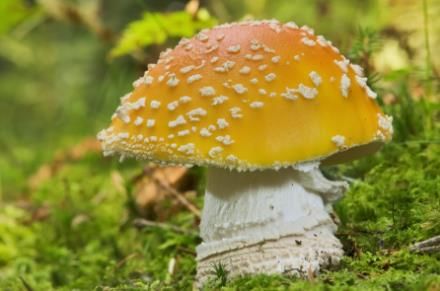
In which class of fungi the mushroom belongs to?
Detailed Solution: Question 2
Topic in NCERT: Basidiomycetes
Line in NCERT: "commonly known forms of basidiomycetes are mushrooms, bracket fungi or puffballs."
The five kingdom classification was proposed by______.
Detailed Solution: Question 3
Topic in NCERT: Biological classification
Line in NCERT: "r.h. whittaker (1969) proposed a five kingdom classification."
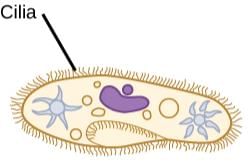
Which one is important in nutrient recycle and act as decomposer and mineralisers of the biosphere?
Detailed Solution: Question 4
Topic in NCERT: Kingdom monera
Line in NCERT: "heterotrophic bacteria are most abundant in nature. the majority are important decomposers."
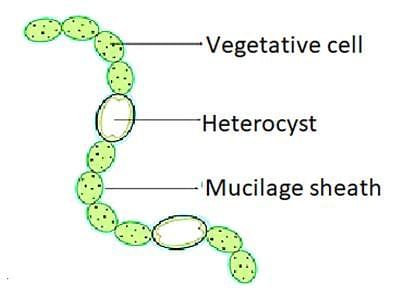
Which of the following pairs include photosynthetic and saprophytic/heterotrophic organisms respectively?
Detailed Solution: Question 5
Which of the following organisms can be found in extreme saline conditions?
Detailed Solution: Question 6
Topic in NCERT: Archaebacteria
Line in NCERT: "these bacteria are special since they live in some of the most harsh habitats such as extreme salty areas (halophiles), hot springs (thermoacidophiles) and marshy areas (methanogens)."
The _____ spores are conidia produced ________ on the special mycelium called conidiophores whereas ______spores are ascospores which are produced _________in sac like asci.
Detailed Solution: Question 7
Topic in NCERT: Ascomycetes
Line in NCERT: "the asexual spores are conidia produced exogenously on the special mycelium called conidiophores. sexual spores are called ascospores which are produced endogenously in sac like asci."

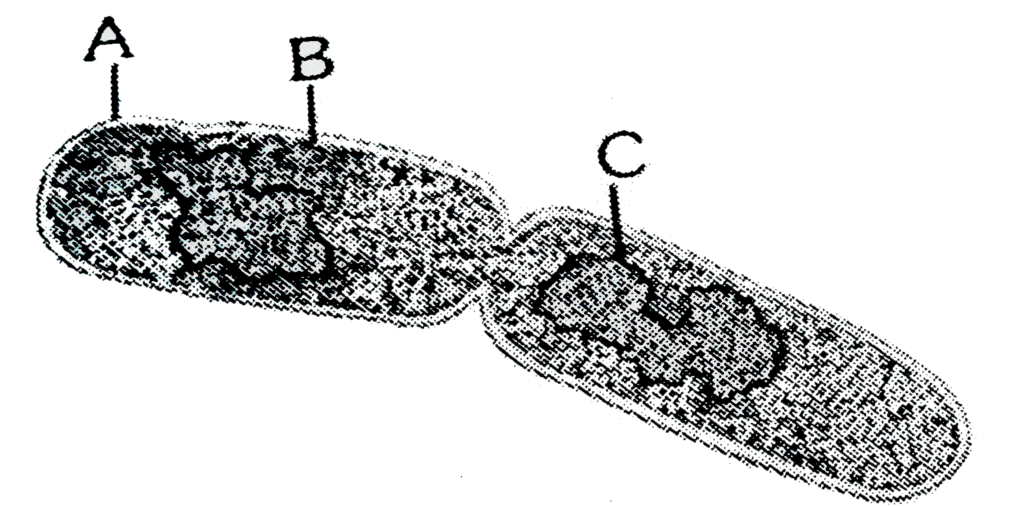
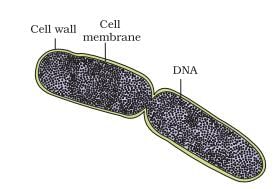
Identify the above process in bacteria and identify part A,B &C:
Detailed Solution: Question 8
Topic in NCERT: Kingdom monera
Line in NCERT: "bacteria reproduce mainly by fission (figure 2.3)."
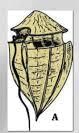
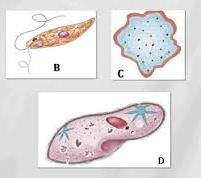
Detailed Solution: Question 9
Topic in NCERT: Euglenoids
Line in NCERT: "example: euglena (figure 2.4b)."
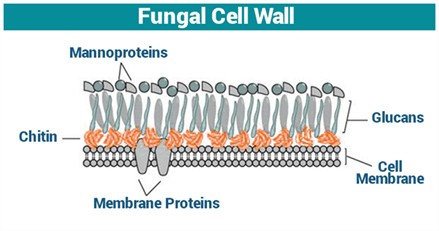
Detailed Solution: Question 10
Topic in NCERT: Kingdom fungi
Line in NCERT: "the cell walls of fungi are composed of chitin and polysaccharides."
Detailed Solution: Question 11
Which among the following can’t produce spores sexually?
Detailed Solution: Question 12
Topic in NCERT: Deuteromycetes
Line in NCERT: "the deuteromycetes reproduce only by asexual spores known as conidia."
What are the two distinct phases in the life cycle of plants?
Detailed Solution: Question 13
Topic in NCERT: Kingdom plantae
Line in NCERT: "life cycle of plants has two distinct phases – the diploid sporophytic and the haploid gametophytic – that alternate with each other."
How do two haploid hyphae of compatible mating types reproduce in some fungi?
Detailed Solution: Question 14
Detailed Solution: Question 15
Match the following:
| List I | List II | |
|---|---|---|
| A. Diatoms | 1. Pellicle instead of cell wall | |
| B. Euglenoids | 2. Fruiting bodies called basidiocarps | |
| C. Slime moulds | 3. Diatomaceous earth | |
| D. Basidiomycetes | 4. Plasmodium formation |
Detailed Solution: Question 16
Detailed Solution: Question 17
Detailed Solution: Question 18
Detailed Solution: Question 19
Detailed Solution: Question 20
142 videos|400 docs|136 tests |