
Test: Plant Kingdom - 1 - NEET MCQ
20 Questions MCQ Test - Test: Plant Kingdom - 1

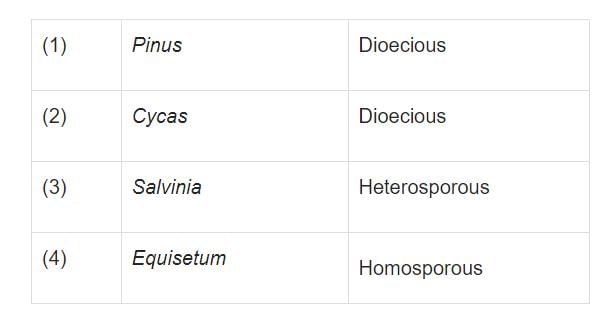
In which group of plants does the sporophyte not have a free-living stage?

In Pinus,
I. The stem is branched
II. Roots have fungal association in the form of mycorrhiza
III. The male and female strobili are borne on different trees
Of the above statements:
Asexual reproduction in liverworts a specialised structures are called as
Pteridophytes differ from mosses/ bryophytes in possessing
Sporophyte is differentiated into a foot, a seta, and a capsule in:
I. Liverworts
II. Mosses
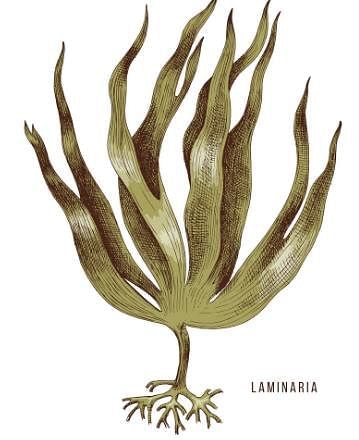
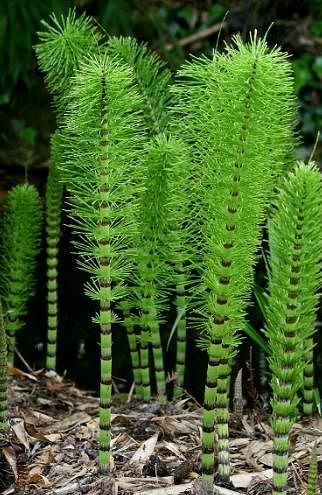
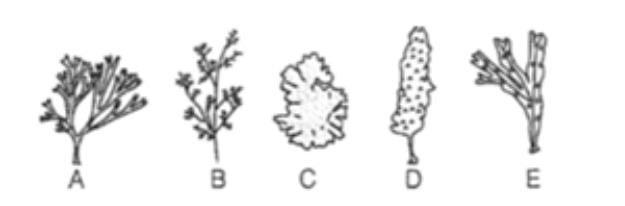
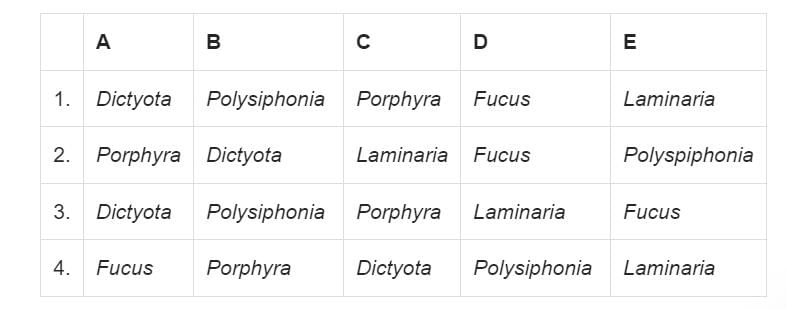
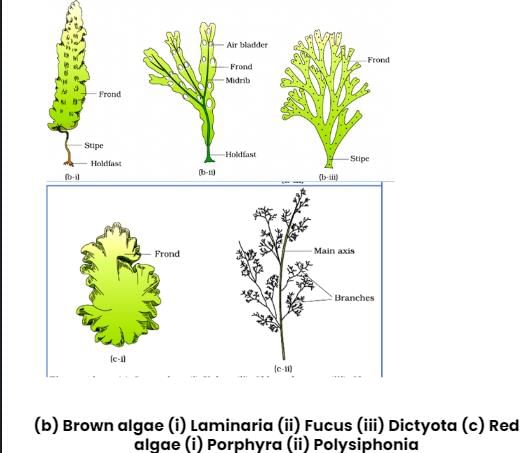
In the given diagrams, some of the algae have been labelled as A, B, C, D and E. Choose the correct option to identify these algae.
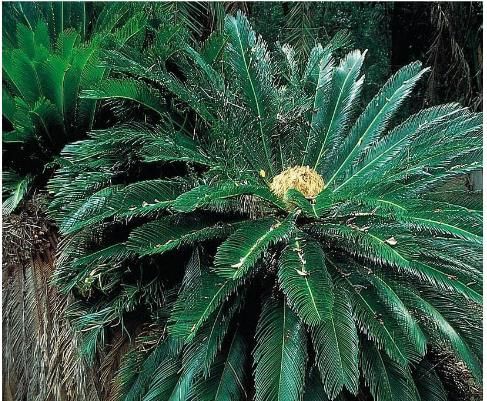
Assertion (A): Cycads have coralloid roots that participate in nitrogen fixation.
Reason (R): Coralloid roots form a symbiotic relationship with cyanobacteria, which are capable of fixing atmospheric nitrogen.
What are the two main stages of the gametophyte in a moss life cycle?
Consider the following statements regarding green algae:
I.Pyrenoids contain protein besides starch
II.Most of the members have one or more storage bodies called pyrenoids located in the chloroplasts
III. Cell wall has an inner layer of pectose and outer layer of cellulose
Assertion (A): Heterospory in some pteridophytes paved the way for the evolution of seeds in higher plants.
Reason (R): The megaspores and microspores in heterosporous ferns give rise to female and male gametophytes respectively.
In the light of the above statements, choose the correct answer from the options given below:
Which of the statements given above is/are correct?
1. Statement 1: Gymnosperms have enclosed ovules.
2. Statement 2: Angiosperms produce seeds that are enclosed in fruits.

Important Questions for Plant Kingdom - 1
Plant Kingdom - 1 MCQs with Answers
Online Tests for Plant Kingdom - 1
|
© EduRev
|
Education Revolution
|


|







within 7 days!