Mechanical Engineering Exam  >  Mechanical Engineering Test  >  Fluid Mechanics  >  Test: Vapor Pressure - Mechanical Engineering MCQ

Vapor Pressure - GATE ME Fluid Mechanics Free MCQ Test with solutions


MCQ Practice Test & Solutions: Test: Vapor Pressure (8 Questions)

You can prepare effectively for Mechanical Engineering Fluid Mechanics for Mechanical Engineering with this dedicated MCQ Practice Test (available with solutions) on the important topic of "Test: Vapor Pressure". These 8 questions have been designed by the experts with the latest curriculum of Mechanical Engineering 2026, to help you master the concept.

Test Highlights:

  • - Format: Multiple Choice Questions (MCQ)
  • - Duration: 10 minutes
  • - Number of Questions: 8

Sign up on EduRev for free to attempt this test and track your preparation progress.

Test: Vapor Pressure - Question 1

Which of the following statement is true about vapor pressure of a liquid?

Detailed Solution: Question 1

Explanation: The vapor pressure of a liquid at a given temperature is given by the pressure ex-erted by the saturated vapor on the liquid surface. When the vapor is saturated, an equilibrium exists between the liquid and the vapor phases. The number of molecules leaving the liquid surface is equal to the number of molecules entering the liquid surface. Hence, it is obvious that vapor pressure will be related to molecular activity and consequently to temperature. With the increase in temperature molecular activity increases as a result of which vapor pressure increases.

Test: Vapor Pressure - Question 2

 Which of the following option correctly depicts the relation between the vapor pressure of a liquid and it’s temperature?

Detailed Solution: Question 2

Explanation: Vapor pressure is closely related to molecular activity which is in turn dependant on the temperature of the liquid. With the increase in temperature molecular activity of a vapor increases slowly at first and then rapidly. Similar is the nature of variaion of vapor pressure.

Test: Vapor Pressure - Question 3

Which of the following is the condition for the boiling of a liquid?

Detailed Solution: Question 3

Explanation: As the absolute pressure of a liquid goes below it’s vapor pressure, the formation of vapor bubbles start. Thus, for boiling to start, the absolute pressure of a liquid must be less than or equal to it’s vapor pressure.

Test: Vapor Pressure - Question 4

Which of the following machines have the possibility of cavitation?

Detailed Solution: Question 4

Explanation: Cavitation occurs whenever absolute pressure of a liquid drops below it’s vapor pressure. Dropping of pressure is observed mainly in reaction turbines and centrifugal pumps.

Test: Vapor Pressure - Question 5

The three liquids 1, 2, and 3 with vapor pressures V1, V2 and V3 respectively, are kept under same pressure. If V1 > V2 > V3, which liquid will start boiling early?

Detailed Solution: Question 5

Explanation: A liquid starts to boil whenever it’s absolute pressure drops below it’s vapor pressure. Thus, the absolute pressure of liquid 1 will drop early, as a result it’ll start boiling early.

Test: Vapor Pressure - Question 6

Equal amount of a particular liquid is poured into three similar containers, namely 1, 2 and 3, at a temperature of T1, T2 and T3 respectively. If T1 < T2 < T3, the liquid in which container will have the highest vapor pressure?

Detailed Solution: Question 6

Explanation: Higher the temperature, higher is the molecular activity and consequently, higher is the vapor pressure of a given liquid. Since, container 3 is at the highest temperature, liquid in it will have the highest vapor pressure.

Test: Vapor Pressure - Question 7

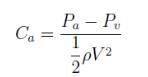
The absolute pressure of a water is 0.5kN above it’s vapor pressure. If it flows with a velocity of 1m/s, what will be the value of Cavitation Number describing the flow induced boiling?

Detailed Solution: Question 7


Test: Vapor Pressure - Question 8

Which of the following is correct regarding the formation and collapse of vapor bubbles in a liquid?

Detailed Solution: Question 8

Explanation: Whenever the absolute pressure of a fluid drops below it’s vapor pressure, bubble formation starts. Again, when the fluid pressure goes above the bubble pressure, it’ll collapse. This is how cavitation formation takes place.

56 videos|148 docs|75 tests
Information about Test: Vapor Pressure Page
In this test you can find the Exam questions for Test: Vapor Pressure solved & explained in the simplest way possible. Besides giving Questions and answers for Test: Vapor Pressure, EduRev gives you an ample number of Online tests for practice
Download as PDF