


All Exams >
Class 6 >
English Olympiad for Class 6 >
All Questions
All questions of Idioms for Class 6 Exam
Identify The Idiom from The Following Sentences and Choose the Correct Option.Sanjay was the real power behind the throne and all politicians were aware of this.- a)Power behind the throne
- b)Aware of
- c)The real power
- d)All politicians were aware
Correct answer is option 'A'. Can you explain this answer?
Identify The Idiom from The Following Sentences and Choose the Correct Option.
Sanjay was the real power behind the throne and all politicians were aware of this.
a)
Power behind the throne
b)
Aware of
c)
The real power
d)
All politicians were aware

|
Jay Goyal answered |
Answer:
The idiom used in the given sentence is "power behind the throne".
Explanation:
Meaning of the idiom:
The idiom "power behind the throne" refers to a person or a group of people who have the real control or influence over those in power, even though they may not hold an official position or title. It suggests that there is someone who has significant influence behind the scenes, often unrecognized by the public.
Explanation of the sentence:
In the given sentence, it is mentioned that "Sanjay was the real power behind the throne and all politicians were aware of this." This implies that Sanjay, although not in an official position of power, had significant influence over those who were in power (the politicians). His influence was recognized by all the politicians.
Breakdown of the sentence:
- "Sanjay was the real power behind the throne": This part of the sentence means that Sanjay had significant control or influence over those in power.
- "and all politicians were aware of this": This part of the sentence means that all the politicians knew about Sanjay's influence.
Therefore, the idiom "power behind the throne" accurately describes the situation mentioned in the sentence, where Sanjay had significant influence over the politicians.
The idiom used in the given sentence is "power behind the throne".
Explanation:
Meaning of the idiom:
The idiom "power behind the throne" refers to a person or a group of people who have the real control or influence over those in power, even though they may not hold an official position or title. It suggests that there is someone who has significant influence behind the scenes, often unrecognized by the public.
Explanation of the sentence:
In the given sentence, it is mentioned that "Sanjay was the real power behind the throne and all politicians were aware of this." This implies that Sanjay, although not in an official position of power, had significant influence over those who were in power (the politicians). His influence was recognized by all the politicians.
Breakdown of the sentence:
- "Sanjay was the real power behind the throne": This part of the sentence means that Sanjay had significant control or influence over those in power.
- "and all politicians were aware of this": This part of the sentence means that all the politicians knew about Sanjay's influence.
Therefore, the idiom "power behind the throne" accurately describes the situation mentioned in the sentence, where Sanjay had significant influence over the politicians.

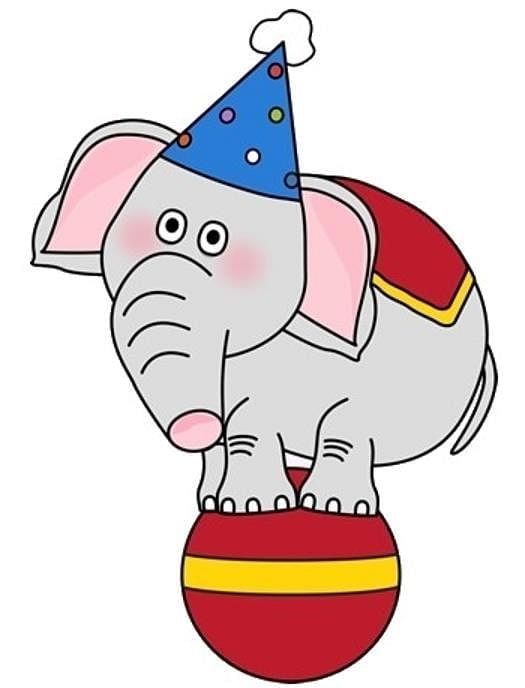


Guess The Idiom with The Help of The Picture and Choose the Correct Option.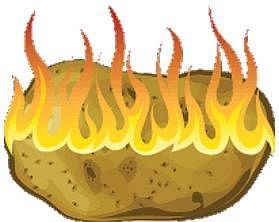
- a)Hot potato
- b)Couch potato
- c)Baked potato
- d)None of these
Correct answer is option 'A'. Can you explain this answer?
Guess The Idiom with The Help of The Picture and Choose the Correct Option.
a)
Hot potato
b)
Couch potato
c)
Baked potato
d)
None of these

|
Sarita Singh answered |
hot potato - Speak of an issue (mostly current) which many people are talking about and which is usually disputed.
Select the Correct Meaning of Following Idioms.Plough a lonely furrow- a)Work single handedly
- b)Plough the field
- c)Plough the sands
- d)Work in a furrow
Correct answer is option 'A'. Can you explain this answer?
Select the Correct Meaning of Following Idioms.
Plough a lonely furrow
a)
Work single handedly
b)
Plough the field
c)
Plough the sands
d)
Work in a furrow

|
Ashwini Goyal answered |
Meaning of the Idiom "Plough a Lonely Furrow"
The idiom "Plough a Lonely Furrow" means to work single-handedly and independently without any assistance from others. It is used to describe a situation where a person is working alone and is not getting any support or help from others. The idiom is often used to describe a person who is working on a difficult or challenging project that requires a lot of effort and dedication.
Explanation
The phrase "Plough a Lonely Furrow" is derived from the agricultural practice of ploughing a field. When a farmer ploughs a field, he creates furrows or rows in the soil that are used for planting seeds. The furrows are created by a plough, which is a farming tool that is used to dig up the soil and turn it over.
When a farmer ploughs a field, he usually works with a team of oxen or horses to pull the plough. However, if a farmer does not have any animals to help him, he may have to plough the field by himself. This is called "ploughing a lonely furrow."
Similarly, the idiom "Plough a Lonely Furrow" means to work alone and independently without any assistance from others. It is used to describe a situation where a person is facing challenges and difficulties but is determined to overcome them on their own.
Example
John decided to quit his job and start his own business. He knew it would be tough, but he was determined to plough a lonely furrow and succeed on his own.
In conclusion, the idiom "Plough a Lonely Furrow" means to work single-handedly and independently without any assistance from others. It is often used to describe a person who is facing challenges and difficulties but is determined to overcome them on their own.
The idiom "Plough a Lonely Furrow" means to work single-handedly and independently without any assistance from others. It is used to describe a situation where a person is working alone and is not getting any support or help from others. The idiom is often used to describe a person who is working on a difficult or challenging project that requires a lot of effort and dedication.
Explanation
The phrase "Plough a Lonely Furrow" is derived from the agricultural practice of ploughing a field. When a farmer ploughs a field, he creates furrows or rows in the soil that are used for planting seeds. The furrows are created by a plough, which is a farming tool that is used to dig up the soil and turn it over.
When a farmer ploughs a field, he usually works with a team of oxen or horses to pull the plough. However, if a farmer does not have any animals to help him, he may have to plough the field by himself. This is called "ploughing a lonely furrow."
Similarly, the idiom "Plough a Lonely Furrow" means to work alone and independently without any assistance from others. It is used to describe a situation where a person is facing challenges and difficulties but is determined to overcome them on their own.
Example
John decided to quit his job and start his own business. He knew it would be tough, but he was determined to plough a lonely furrow and succeed on his own.
In conclusion, the idiom "Plough a Lonely Furrow" means to work single-handedly and independently without any assistance from others. It is often used to describe a person who is facing challenges and difficulties but is determined to overcome them on their own.
Select the Correct Meaning of Following Idioms.To fall flat- a)Retreat
- b)To meet accidentally
- c)Quarrel
- d)To be met with a cold reception
Correct answer is option 'D'. Can you explain this answer?
Select the Correct Meaning of Following Idioms.
To fall flat
a)
Retreat
b)
To meet accidentally
c)
Quarrel
d)
To be met with a cold reception
|
|
Ananya Das answered |
Meaning of the idiom "To fall flat":
"To fall flat" means to receive a cold reception or to fail to impress or have the desired impact on someone or something.
Explanation:
When something "falls flat," it means that it doesn't achieve the expected or desired result. It can refer to a variety of situations, such as a performance or a presentation that fails to engage the audience, a joke that doesn't elicit laughter, or an idea that doesn't generate interest or support.
Example:
Let's say a comedian tells a joke that they think is hilarious, but when they deliver it to the audience, nobody laughs. In this case, the joke "falls flat" because it fails to have the intended effect of making people laugh.
Identification of key points:
- Meaning of the idiom "To fall flat"
- Explanation of the idiom
- Example of the idiom in a sentence
Visually appealing response:
Meaning of the idiom "To fall flat":
"To fall flat" means to receive a cold reception or to fail to impress or have the desired impact on someone or something.
Explanation:
When something "falls flat," it means that it doesn't achieve the expected or desired result. It can refer to a variety of situations, such as a performance or a presentation that fails to engage the audience, a joke that doesn't elicit laughter, or an idea that doesn't generate interest or support.
Example:
Let's say a comedian tells a joke that they think is hilarious, but when they deliver it to the audience, nobody laughs. In this case, the joke "falls flat" because it fails to have the intended effect of making people laugh.
"To fall flat" means to receive a cold reception or to fail to impress or have the desired impact on someone or something.
Explanation:
When something "falls flat," it means that it doesn't achieve the expected or desired result. It can refer to a variety of situations, such as a performance or a presentation that fails to engage the audience, a joke that doesn't elicit laughter, or an idea that doesn't generate interest or support.
Example:
Let's say a comedian tells a joke that they think is hilarious, but when they deliver it to the audience, nobody laughs. In this case, the joke "falls flat" because it fails to have the intended effect of making people laugh.
Identification of key points:
- Meaning of the idiom "To fall flat"
- Explanation of the idiom
- Example of the idiom in a sentence
Visually appealing response:
Meaning of the idiom "To fall flat":
"To fall flat" means to receive a cold reception or to fail to impress or have the desired impact on someone or something.
Explanation:
When something "falls flat," it means that it doesn't achieve the expected or desired result. It can refer to a variety of situations, such as a performance or a presentation that fails to engage the audience, a joke that doesn't elicit laughter, or an idea that doesn't generate interest or support.
Example:
Let's say a comedian tells a joke that they think is hilarious, but when they deliver it to the audience, nobody laughs. In this case, the joke "falls flat" because it fails to have the intended effect of making people laugh.
Identify The Idiom from The Following Sentences and Choose the Correct Option.The teacher warned the student once and for all that no mischief shall be tolerated in the class.- a)Warned the student
- b)Once and for all
- c)Tolerated in the class
- d)No mischief
Correct answer is option 'B'. Can you explain this answer?
Identify The Idiom from The Following Sentences and Choose the Correct Option.
The teacher warned the student once and for all that no mischief shall be tolerated in the class.
a)
Warned the student
b)
Once and for all
c)
Tolerated in the class
d)
No mischief
|
|
Sounak Ghoshal answered |
Idiom: Once and for all
Explanation:
The correct idiom used in the given sentence is "once and for all". This idiom is used to indicate that something is done or settled conclusively and will not be repeated or changed in the future. It emphasizes finality and permanence.
Usage:
The phrase "once and for all" is often used to emphasize the seriousness or finality of a statement or action. It is used to indicate that a decision, rule, or warning is being given in a definitive manner, with no room for negotiation or compromise.
Sentence Analysis:
In the given sentence, the teacher warned the student "once and for all" that no mischief shall be tolerated in the class. This means that the teacher gave a strong and final warning to the student, making it clear that any form of mischief will not be accepted or allowed in the class.
Importance of the Idiom in the Sentence:
The idiom "once and for all" is important in the sentence as it emphasizes the firmness and finality of the teacher's warning. It conveys that the teacher is not willing to tolerate any mischief in the class under any circumstances.
Alternative Options:
a) "Warned the student" - This option does not represent the idiom used in the sentence.
c) "Tolerated in the class" - This option does not represent the idiom used in the sentence.
d) "No mischief" - This option does not represent the idiom used in the sentence.
Conclusion:
The correct idiom used in the given sentence is "once and for all". It conveys the teacher's firm warning to the student that no mischief will be tolerated in the class. The idiom adds emphasis and finality to the statement, making it clear that the teacher's decision is non-negotiable.
Explanation:
The correct idiom used in the given sentence is "once and for all". This idiom is used to indicate that something is done or settled conclusively and will not be repeated or changed in the future. It emphasizes finality and permanence.
Usage:
The phrase "once and for all" is often used to emphasize the seriousness or finality of a statement or action. It is used to indicate that a decision, rule, or warning is being given in a definitive manner, with no room for negotiation or compromise.
Sentence Analysis:
In the given sentence, the teacher warned the student "once and for all" that no mischief shall be tolerated in the class. This means that the teacher gave a strong and final warning to the student, making it clear that any form of mischief will not be accepted or allowed in the class.
Importance of the Idiom in the Sentence:
The idiom "once and for all" is important in the sentence as it emphasizes the firmness and finality of the teacher's warning. It conveys that the teacher is not willing to tolerate any mischief in the class under any circumstances.
Alternative Options:
a) "Warned the student" - This option does not represent the idiom used in the sentence.
c) "Tolerated in the class" - This option does not represent the idiom used in the sentence.
d) "No mischief" - This option does not represent the idiom used in the sentence.
Conclusion:
The correct idiom used in the given sentence is "once and for all". It conveys the teacher's firm warning to the student that no mischief will be tolerated in the class. The idiom adds emphasis and finality to the statement, making it clear that the teacher's decision is non-negotiable.
Four alternative meanings of the underlined part of the sentence are given below in the sentence. Mark as your answer that alternative meaning which you think is correct.Having sold off his factory, he is now a gentleman at large.- a)Has no serious occupation
- b)Is living comfortably
- c)Is respected by everybody
- d)Is held in high esteem
Correct answer is option 'A'. Can you explain this answer?
Four alternative meanings of the underlined part of the sentence are given below in the sentence. Mark as your answer that alternative meaning which you think is correct.
Having sold off his factory, he is now a gentleman at large.
a)
Has no serious occupation
b)
Is living comfortably
c)
Is respected by everybody
d)
Is held in high esteem

|
Maitri Bajaj answered |
Understanding the Phrase "Gentleman at Large"
When we analyze the phrase "gentleman at large," it refers to someone who is not tied down by a specific job or responsibility. Let's break down why option 'A' is the correct interpretation.
Meaning of "Gentleman at Large"
- The term "at large" implies freedom and lack of constraints.
- A "gentleman" typically denotes a man of good social standing, but in this context, it refers to someone who is not engaged in a serious occupation.
Explanation of Option 'A'
- *Has no serious occupation*: This option captures the essence of the phrase. After selling his factory, the individual is likely enjoying a life without the demands of a job, hence he is "at large."
Why Other Options Are Incorrect
- Option 'B': Is living comfortably: While he may be living comfortably, the term "at large" specifically denotes a lack of serious occupation rather than a comfortable lifestyle.
- Option 'C': Is respected by everybody: Respect is subjective and not inherently implied by the phrase "at large." The focus is on his lack of occupation rather than social standing.
- Option 'D': Is held in high esteem: Similar to option C, esteem is not a direct consequence of being "at large." The phrase does not address how others perceive him.
Conclusion
In summary, the phrase "gentleman at large" primarily suggests that he is free from serious obligations, making option 'A' the most accurate interpretation.
When we analyze the phrase "gentleman at large," it refers to someone who is not tied down by a specific job or responsibility. Let's break down why option 'A' is the correct interpretation.
Meaning of "Gentleman at Large"
- The term "at large" implies freedom and lack of constraints.
- A "gentleman" typically denotes a man of good social standing, but in this context, it refers to someone who is not engaged in a serious occupation.
Explanation of Option 'A'
- *Has no serious occupation*: This option captures the essence of the phrase. After selling his factory, the individual is likely enjoying a life without the demands of a job, hence he is "at large."
Why Other Options Are Incorrect
- Option 'B': Is living comfortably: While he may be living comfortably, the term "at large" specifically denotes a lack of serious occupation rather than a comfortable lifestyle.
- Option 'C': Is respected by everybody: Respect is subjective and not inherently implied by the phrase "at large." The focus is on his lack of occupation rather than social standing.
- Option 'D': Is held in high esteem: Similar to option C, esteem is not a direct consequence of being "at large." The phrase does not address how others perceive him.
Conclusion
In summary, the phrase "gentleman at large" primarily suggests that he is free from serious obligations, making option 'A' the most accurate interpretation.
Select the Correct Meaning of Following Idioms.An apple of discord- a)Cause of wealth
- b)Cause of illness
- c)Cause of happiness
- d)Cause of quarrel
Correct answer is option 'D'. Can you explain this answer?
Select the Correct Meaning of Following Idioms.
An apple of discord
a)
Cause of wealth
b)
Cause of illness
c)
Cause of happiness
d)
Cause of quarrel
|
|
Sarita Singh answered |
An apple of discord means the cause of quarrel.
Four Alternative Meanings of The Underline Part of The Sentence Are Given Below in The Sentence. Mark As Your Answer That Alternative Meaning Which You Think is Correct.The secretary and the treasurer are hand in glove with each other.- a)Very good friends
- b)Constantly fighting
- c)Associates in some action (something wrong)
- d)Suspicious of each other
Correct answer is option 'C'. Can you explain this answer?
Four Alternative Meanings of The Underline Part of The Sentence Are Given Below in The Sentence. Mark As Your Answer That Alternative Meaning Which You Think is Correct.
The secretary and the treasurer are hand in glove with each other.
a)
Very good friends
b)
Constantly fighting
c)
Associates in some action (something wrong)
d)
Suspicious of each other
|
|
Sarita Singh answered |
Hand in glove means people working together mostly for something wrong or dishonest.
Select the Correct Meaning of Following Idioms.Turn out crabs- a)End in failure
- b)To be successful
- c)To bring up crabs
- d)To be victorious
Correct answer is option 'A'. Can you explain this answer?
Select the Correct Meaning of Following Idioms.
Turn out crabs
a)
End in failure
b)
To be successful
c)
To bring up crabs
d)
To be victorious

|
Surbhi Patel answered |
Turn out crabs
The correct meaning of the idiom "turn out crabs" is to end in failure.
Explanation:
- When we say that something "turns out crabs," it means that it does not go as planned or expected and results in failure or disappointment.
- The idiom is derived from the behavior of crabs. When caught in a fishing net or trap, crabs tend to crawl over each other in an attempt to escape. This chaotic movement often leads to a failed escape attempt and the crabs are caught.
- Similarly, when something "turns out crabs," it implies that the situation or outcome becomes disorganized or goes awry, leading to failure.
Example:
Let's consider an example to understand the usage of this idiom:
Scenario: A group of friends plans a surprise party for their friend, but things don't go as expected.
Friend 1: "Did the surprise party for John go well?"
Friend 2: "Unfortunately, it turned out crabs. His sister accidentally spilled the beans, and he found out before we could surprise him."
In this example, the surprise party did not go as planned, resulting in failure. The phrase "turned out crabs" is used to describe the unsuccessful outcome of the event.
Therefore, the correct meaning of the idiom "turn out crabs" is to end in failure.
The correct meaning of the idiom "turn out crabs" is to end in failure.
Explanation:
- When we say that something "turns out crabs," it means that it does not go as planned or expected and results in failure or disappointment.
- The idiom is derived from the behavior of crabs. When caught in a fishing net or trap, crabs tend to crawl over each other in an attempt to escape. This chaotic movement often leads to a failed escape attempt and the crabs are caught.
- Similarly, when something "turns out crabs," it implies that the situation or outcome becomes disorganized or goes awry, leading to failure.
Example:
Let's consider an example to understand the usage of this idiom:
Scenario: A group of friends plans a surprise party for their friend, but things don't go as expected.
Friend 1: "Did the surprise party for John go well?"
Friend 2: "Unfortunately, it turned out crabs. His sister accidentally spilled the beans, and he found out before we could surprise him."
In this example, the surprise party did not go as planned, resulting in failure. The phrase "turned out crabs" is used to describe the unsuccessful outcome of the event.
Therefore, the correct meaning of the idiom "turn out crabs" is to end in failure.
Select the Correct Meaning of Following Idioms.Hard boiled- a)Boiled hard
- b)Extremely hot
- c)Hardened
- d)Hardly boiled
Correct answer is option 'C'. Can you explain this answer?
Select the Correct Meaning of Following Idioms.
Hard boiled
a)
Boiled hard
b)
Extremely hot
c)
Hardened
d)
Hardly boiled

|
Rutuja Bose answered |
Hard boiled
The correct meaning of the idiom "hard boiled" is hardened.
Explanation:
The idiom "hard boiled" is used to describe someone who is tough, unsentimental, or lacking in emotion. It is often used to refer to a person's personality or character. Here's an explanation of the meaning and usage of the idiom:
1. Hardened: The idiom "hard boiled" refers to someone who is tough or hardened, both emotionally and physically. It suggests that the person has experienced difficult situations or challenges in life and has become resilient or unemotional as a result. This can be seen in phrases like "He is a hard boiled detective" or "She has a hard boiled attitude."
2. Tough and unsentimental: The term "hard boiled" is often used to describe individuals who are tough, rugged, and unemotional. It implies that they are not easily affected by emotions or sentimentality. This can be applied to different contexts, such as describing a tough and resilient athlete or a no-nonsense businessperson.
3. Common usage: The idiom "hard boiled" is commonly used in literature, movies, and everyday language. It is often associated with characters in crime novels or detective stories who have a tough and cynical outlook on life. It can also be used to describe individuals who have a stoic or unemotional demeanor.
4. Origin: The idiom "hard boiled" originated from the literal meaning of the term, which refers to eggs that have been boiled until the yolk and white become solid. This process makes the eggs tough and unyielding, similar to the metaphorical meaning of the idiom.
In conclusion, the idiom "hard boiled" means hardened, tough, or unsentimental. It is often used to describe individuals who display a tough and unemotional attitude or demeanor.
The correct meaning of the idiom "hard boiled" is hardened.
Explanation:
The idiom "hard boiled" is used to describe someone who is tough, unsentimental, or lacking in emotion. It is often used to refer to a person's personality or character. Here's an explanation of the meaning and usage of the idiom:
1. Hardened: The idiom "hard boiled" refers to someone who is tough or hardened, both emotionally and physically. It suggests that the person has experienced difficult situations or challenges in life and has become resilient or unemotional as a result. This can be seen in phrases like "He is a hard boiled detective" or "She has a hard boiled attitude."
2. Tough and unsentimental: The term "hard boiled" is often used to describe individuals who are tough, rugged, and unemotional. It implies that they are not easily affected by emotions or sentimentality. This can be applied to different contexts, such as describing a tough and resilient athlete or a no-nonsense businessperson.
3. Common usage: The idiom "hard boiled" is commonly used in literature, movies, and everyday language. It is often associated with characters in crime novels or detective stories who have a tough and cynical outlook on life. It can also be used to describe individuals who have a stoic or unemotional demeanor.
4. Origin: The idiom "hard boiled" originated from the literal meaning of the term, which refers to eggs that have been boiled until the yolk and white become solid. This process makes the eggs tough and unyielding, similar to the metaphorical meaning of the idiom.
In conclusion, the idiom "hard boiled" means hardened, tough, or unsentimental. It is often used to describe individuals who display a tough and unemotional attitude or demeanor.
Four Alternative Meanings of The Underline Part of The Sentence Are Given Below in The Sentence. Mark As Your Answer That Alternative Meaning Which You Think is Correct.It is time that professors came down from their ivory towers and studied the real needs of the students.- a)Detachment and seclusion
- b)A tower made of ivory
- c)Prison
- d)Dream lands
Correct answer is option 'A'. Can you explain this answer?
Four Alternative Meanings of The Underline Part of The Sentence Are Given Below in The Sentence. Mark As Your Answer That Alternative Meaning Which You Think is Correct.
It is time that professors came down from their ivory towers and studied the real needs of the students.
a)
Detachment and seclusion
b)
A tower made of ivory
c)
Prison
d)
Dream lands
|
|
Sarita Singh answered |
Ivory towers mean a state of seclusion or isolation from the real world.
Select the Correct Meaning of Following Idioms.'Some people have a habit of wearing their heart on their sleeve.'- a)Saying something which is not to be taken seriously
- b)Exposing their innermost feelings to others
- c)Avoiding being friendly with others
- d)Always trying to gain an advantage over others
Correct answer is option 'B'. Can you explain this answer?
Select the Correct Meaning of Following Idioms.
'Some people have a habit of wearing their heart on their sleeve.'
a)
Saying something which is not to be taken seriously
b)
Exposing their innermost feelings to others
c)
Avoiding being friendly with others
d)
Always trying to gain an advantage over others

|
Sneha Rane answered |
Understanding the Idiom
The idiom "wearing their heart on their sleeve" refers to the practice of openly expressing one's emotions and feelings.
Meaning of the Idiom
- When someone wears their heart on their sleeve, they do not hide their emotions.
- They are transparent about their feelings, whether it's joy, sadness, or love.
Why Option B is Correct
- Exposing Innermost Feelings: The correct answer, option B, captures the essence of this idiom perfectly. People who demonstrate this behavior are not afraid to show how they truly feel.
- Emotional Honesty: This expression highlights a level of emotional honesty that can foster deeper connections with others.
Other Options Explained
- Option A: "Saying something which is not to be taken seriously" does not relate to the idea of expressing true feelings.
- Option C: "Avoiding being friendly with others" is the opposite of what the idiom suggests, as it implies a lack of emotional openness.
- Option D: "Always trying to gain an advantage over others" also does not align with the meaning of the idiom, which is about vulnerability rather than manipulation.
Conclusion
In summary, wearing one's heart on their sleeve signifies a willingness to be open and honest about emotions, making option B the most accurate interpretation of the idiom.
The idiom "wearing their heart on their sleeve" refers to the practice of openly expressing one's emotions and feelings.
Meaning of the Idiom
- When someone wears their heart on their sleeve, they do not hide their emotions.
- They are transparent about their feelings, whether it's joy, sadness, or love.
Why Option B is Correct
- Exposing Innermost Feelings: The correct answer, option B, captures the essence of this idiom perfectly. People who demonstrate this behavior are not afraid to show how they truly feel.
- Emotional Honesty: This expression highlights a level of emotional honesty that can foster deeper connections with others.
Other Options Explained
- Option A: "Saying something which is not to be taken seriously" does not relate to the idea of expressing true feelings.
- Option C: "Avoiding being friendly with others" is the opposite of what the idiom suggests, as it implies a lack of emotional openness.
- Option D: "Always trying to gain an advantage over others" also does not align with the meaning of the idiom, which is about vulnerability rather than manipulation.
Conclusion
In summary, wearing one's heart on their sleeve signifies a willingness to be open and honest about emotions, making option B the most accurate interpretation of the idiom.
Select the Correct Meaning of Following Idioms.Go hot & cold- a)Get angry
- b)Get irritated
- c)Get out of cold
- d)Sudden feeling of fear
Correct answer is option 'D'. Can you explain this answer?
Select the Correct Meaning of Following Idioms.
Go hot & cold
a)
Get angry
b)
Get irritated
c)
Get out of cold
d)
Sudden feeling of fear
|
|
Lekshmi Sen answered |
1. To become angry or upset.
2. To become passionate or enthusiastic about something.
3. To become popular or trendy.
2. To become passionate or enthusiastic about something.
3. To become popular or trendy.
Four Alternative Meanings of The Underline Part of The Sentence Are Given Below in The Sentence. Mark As Your Answer That Alternative Meaning Which You Think is Correct.As soon as he laid his hands on all that money, he donated part of it to charitable institutions.- a)Stole
- b)Scattered
- c)Released
- d)Took possession of
Correct answer is option 'D'. Can you explain this answer?
Four Alternative Meanings of The Underline Part of The Sentence Are Given Below in The Sentence. Mark As Your Answer That Alternative Meaning Which You Think is Correct.
As soon as he laid his hands on all that money, he donated part of it to charitable institutions.
a)
Stole
b)
Scattered
c)
Released
d)
Took possession of
|
|
Saranya Chakraborty answered |
Meaning of the underlined part:
The underlined part of the sentence "he laid his hands on all that money" means that he took possession of or acquired all that money.
Explanation:
The sentence talks about someone who acquired a large sum of money and then donated part of it to charitable institutions. Let's discuss each alternative meaning and why they are incorrect:
a) Stole:
This meaning implies that the person took the money without permission or unlawfully. However, the sentence does not indicate any wrongdoing or illegal activity. It simply states that he acquired the money.
b) Scattered:
This meaning suggests that the person dispersed or spread the money in different directions. However, the sentence implies that he donated part of the money to charitable institutions, indicating a deliberate and purposeful action.
c) Released:
This meaning conveys the idea of setting something free or letting it go. However, in the context of the sentence, it does not make sense to say that he "released" the money. The sentence indicates that he donated part of the money, which implies a transfer or giving action, not a release.
d) Took possession of:
This meaning accurately represents the action described in the sentence. "Took possession of" means that he acquired or gained control over the money. This is the correct interpretation because the sentence states that he acquired the money and then donated part of it.
Therefore, the correct alternative meaning for the underlined part of the sentence is "took possession of."
The underlined part of the sentence "he laid his hands on all that money" means that he took possession of or acquired all that money.
Explanation:
The sentence talks about someone who acquired a large sum of money and then donated part of it to charitable institutions. Let's discuss each alternative meaning and why they are incorrect:
a) Stole:
This meaning implies that the person took the money without permission or unlawfully. However, the sentence does not indicate any wrongdoing or illegal activity. It simply states that he acquired the money.
b) Scattered:
This meaning suggests that the person dispersed or spread the money in different directions. However, the sentence implies that he donated part of the money to charitable institutions, indicating a deliberate and purposeful action.
c) Released:
This meaning conveys the idea of setting something free or letting it go. However, in the context of the sentence, it does not make sense to say that he "released" the money. The sentence indicates that he donated part of the money, which implies a transfer or giving action, not a release.
d) Took possession of:
This meaning accurately represents the action described in the sentence. "Took possession of" means that he acquired or gained control over the money. This is the correct interpretation because the sentence states that he acquired the money and then donated part of it.
Therefore, the correct alternative meaning for the underlined part of the sentence is "took possession of."
Select the Correct Meaning of Following Idioms.See eye to eye- a)Stare at each other
- b)Agree
- c)Depend on
- d)Make an effort
Correct answer is option 'B'. Can you explain this answer?
Select the Correct Meaning of Following Idioms.
See eye to eye
a)
Stare at each other
b)
Agree
c)
Depend on
d)
Make an effort
|
|
Akshita Sarkar answered |
Meaning of the idiom 'See eye to eye'
The correct meaning of the idiom 'See eye to eye' is option 'B' - Agree.
Explanation:
The idiom 'See eye to eye' is a figurative expression that is used when two or more people have the same opinion, viewpoint, or agreement on a particular matter. It indicates that they are in harmony and there is no disagreement between them.
Let's break down the idiom and understand its meaning more clearly:
1. Literal Meaning:
The idiom uses the phrase 'eye to eye', which means looking directly into someone's eyes, face to face. It suggests that the two individuals involved in the conversation are engaged in a direct and open communication where they can clearly see each other's facial expressions and body language.
2. Figurative Meaning:
The idiom 'See eye to eye' goes beyond the literal meaning and conveys the idea of mutual understanding and agreement. It implies that the individuals involved in a discussion or argument have the same perspective, opinion, or belief regarding a particular topic. They are on the same page and share a common understanding without any conflicts or differences.
Example Sentence:
Let's consider an example sentence to better understand the usage of the idiom:
"Despite having different backgrounds and experiences, the team members were able to see eye to eye on the project's goals and objectives."
In this sentence, it means that even though the team members have diverse backgrounds, they were able to agree and have a similar understanding of the project's goals and objectives.
Summary:
In summary, the idiom 'See eye to eye' means to agree or have the same opinion or viewpoint on a particular matter. It signifies a state of harmony and understanding between two or more individuals, where there are no conflicts or disagreements.
The correct meaning of the idiom 'See eye to eye' is option 'B' - Agree.
Explanation:
The idiom 'See eye to eye' is a figurative expression that is used when two or more people have the same opinion, viewpoint, or agreement on a particular matter. It indicates that they are in harmony and there is no disagreement between them.
Let's break down the idiom and understand its meaning more clearly:
1. Literal Meaning:
The idiom uses the phrase 'eye to eye', which means looking directly into someone's eyes, face to face. It suggests that the two individuals involved in the conversation are engaged in a direct and open communication where they can clearly see each other's facial expressions and body language.
2. Figurative Meaning:
The idiom 'See eye to eye' goes beyond the literal meaning and conveys the idea of mutual understanding and agreement. It implies that the individuals involved in a discussion or argument have the same perspective, opinion, or belief regarding a particular topic. They are on the same page and share a common understanding without any conflicts or differences.
Example Sentence:
Let's consider an example sentence to better understand the usage of the idiom:
"Despite having different backgrounds and experiences, the team members were able to see eye to eye on the project's goals and objectives."
In this sentence, it means that even though the team members have diverse backgrounds, they were able to agree and have a similar understanding of the project's goals and objectives.
Summary:
In summary, the idiom 'See eye to eye' means to agree or have the same opinion or viewpoint on a particular matter. It signifies a state of harmony and understanding between two or more individuals, where there are no conflicts or disagreements.
Four Alternative Meanings of The Underline Part of The Sentence Are Given Below in The Sentence. Mark As Your Answer That Alternative Meaning Which You Think is Correct.I have a bone to pick with you in this matter.- a)Am in agreement
- b)Am angry
- c)Am indebted
- d)Will join hands
Correct answer is option 'B'. Can you explain this answer?
Four Alternative Meanings of The Underline Part of The Sentence Are Given Below in The Sentence. Mark As Your Answer That Alternative Meaning Which You Think is Correct.
I have a bone to pick with you in this matter.
a)
Am in agreement
b)
Am angry
c)
Am indebted
d)
Will join hands
|
|
Sarita Singh answered |
Having a bone to pick means confronting someone about an annoying issue.
Select the Correct Meaning of Following Idioms.Black sheep- a)A costly item
- b)A dark shiny object
- c)An unworthy person in a family or group
- d)A funny man
Correct answer is option 'C'. Can you explain this answer?
Select the Correct Meaning of Following Idioms.
Black sheep
a)
A costly item
b)
A dark shiny object
c)
An unworthy person in a family or group
d)
A funny man
|
|
Sarita Singh answered |
This phrase means a member of a family or group who is regarded as a disgrace to it.
Four Alternative Meanings of The Underline Part of The Sentence Are Given Below in The Sentence. Mark As Your Answer That Alternative Meaning Which You Think is Correct.His plan was so complicated that it floored his listeners.- a)Entertained
- b)Puzzled
- c)Annoyed
- d)Encouraged
Correct answer is option 'B'. Can you explain this answer?
Four Alternative Meanings of The Underline Part of The Sentence Are Given Below in The Sentence. Mark As Your Answer That Alternative Meaning Which You Think is Correct.
His plan was so complicated that it floored his listeners.
a)
Entertained
b)
Puzzled
c)
Annoyed
d)
Encouraged
|
|
Sarita Singh answered |
Floored means to be puzzled or surprised.
The curious neighbors were disappointed as the young couple's quarrel was just a storm in a teacup.- a)Violent quarrel
- b)Fuss about a trifle
- c)Brittle situation
- d)Quarrel about teacups
Correct answer is option 'B'. Can you explain this answer?
The curious neighbors were disappointed as the young couple's quarrel was just a storm in a teacup.
a)
Violent quarrel
b)
Fuss about a trifle
c)
Brittle situation
d)
Quarrel about teacups
|
|
Surbhi Patel answered |
The meaning of the phrase:
The phrase "a storm in a teacup" is an idiomatic expression that means making a big fuss or creating a lot of drama about a trivial or insignificant matter. It implies that the situation may seem intense or important initially, but in reality, it is blown out of proportion and lacks real substance or significance.
Explanation of the answer:
The correct answer to this question is option 'B' - Fuss about a trifle. Let's break down the phrase and understand why it fits the given context:
1. Fuss: The word "fuss" refers to excessive or unnecessary excitement, activity, or agitation. In this context, it suggests that the young couple's quarrel created a lot of commotion or drama.
2. About: The word "about" indicates the subject or reason for the fuss or commotion.
3. A trifle: The phrase "a trifle" means something of little importance or value. It signifies that the cause of the quarrel was insignificant or trivial.
Therefore, the phrase "a storm in a teacup" means that the young couple's quarrel was blown out of proportion and created a lot of drama, even though the actual matter at hand was insignificant or trivial.
Other options:
- Option 'A' - Violent quarrel: This option suggests that the quarrel between the young couple was intense or aggressive, which is not implied in the given context. The phrase "a storm in a teacup" does not convey violence, but rather exaggeration.
- Option 'C' - Brittle situation: This option implies that the situation was delicate or fragile, which is not the intended meaning of the phrase. The phrase emphasizes the triviality of the matter rather than the fragility of the situation.
- Option 'D' - Quarrel about teacups: This option takes the literal meaning of the phrase, which is not applicable in this context. The phrase is used figuratively to describe a situation blown out of proportion, not an actual quarrel about teacups.
The phrase "a storm in a teacup" is an idiomatic expression that means making a big fuss or creating a lot of drama about a trivial or insignificant matter. It implies that the situation may seem intense or important initially, but in reality, it is blown out of proportion and lacks real substance or significance.
Explanation of the answer:
The correct answer to this question is option 'B' - Fuss about a trifle. Let's break down the phrase and understand why it fits the given context:
1. Fuss: The word "fuss" refers to excessive or unnecessary excitement, activity, or agitation. In this context, it suggests that the young couple's quarrel created a lot of commotion or drama.
2. About: The word "about" indicates the subject or reason for the fuss or commotion.
3. A trifle: The phrase "a trifle" means something of little importance or value. It signifies that the cause of the quarrel was insignificant or trivial.
Therefore, the phrase "a storm in a teacup" means that the young couple's quarrel was blown out of proportion and created a lot of drama, even though the actual matter at hand was insignificant or trivial.
Other options:
- Option 'A' - Violent quarrel: This option suggests that the quarrel between the young couple was intense or aggressive, which is not implied in the given context. The phrase "a storm in a teacup" does not convey violence, but rather exaggeration.
- Option 'C' - Brittle situation: This option implies that the situation was delicate or fragile, which is not the intended meaning of the phrase. The phrase emphasizes the triviality of the matter rather than the fragility of the situation.
- Option 'D' - Quarrel about teacups: This option takes the literal meaning of the phrase, which is not applicable in this context. The phrase is used figuratively to describe a situation blown out of proportion, not an actual quarrel about teacups.
Identify The Idiom from The Following Sentences and Choose the Correct Option.Some people now wonder whether we just pay lip service or genuinely subscribe to democracy.- a)Subscribe to democracy
- b)Genuinely subscribe to
- c)Wonder whether
- d)Pay lip service
Correct answer is option 'D'. Can you explain this answer?
Identify The Idiom from The Following Sentences and Choose the Correct Option.
Some people now wonder whether we just pay lip service or genuinely subscribe to democracy.
a)
Subscribe to democracy
b)
Genuinely subscribe to
c)
Wonder whether
d)
Pay lip service
|
|
Sarita Singh answered |
Pay lip service means to respect something insincerely.
Select the Correct Meaning of Following Idioms.In pretty pass- a)Problems of a passage
- b)In difficulties
- c)In a difficult way
- d)Caught in heavy traffic
Correct answer is option 'B'. Can you explain this answer?
Select the Correct Meaning of Following Idioms.
In pretty pass
a)
Problems of a passage
b)
In difficulties
c)
In a difficult way
d)
Caught in heavy traffic
|
|
Tanishq Mehra answered |
Meaning of the idiom "In pretty pass":
In difficulties
Explanation:
- This idiom is used to indicate that someone is facing problems or challenges.
- When someone is said to be "in pretty pass", it means that they are in a difficult situation or experiencing difficulties.
- It is often used to describe a person's current predicament or state of affairs.
- The phrase conveys a sense of trouble or adversity that the person is going through.
- Therefore, the correct meaning of the idiom "In pretty pass" is "in difficulties".
Four Alternative Meanings of The Underline Part of The Sentence Are Given Below in The Sentence. Mark As Your Answer That Alternative Meaning Which You Think is Correct.There was no opposition to the new policy by the rank and file of the Government.- a)The official machinery
- b)The ordinary members
- c)The majority
- d)The cabinet ministers
Correct answer is option 'B'. Can you explain this answer?
Four Alternative Meanings of The Underline Part of The Sentence Are Given Below in The Sentence. Mark As Your Answer That Alternative Meaning Which You Think is Correct.
There was no opposition to the new policy by the rank and file of the Government.
a)
The official machinery
b)
The ordinary members
c)
The majority
d)
The cabinet ministers
|
|
Sarita Singh answered |
Rank and file refer to the ordinary members of a group or community.
Identify The Idiom from The Following Sentences and Choose the Correct Option.His friends let him down.- a)Let him down
- b)His friends
- c)Let him
- d)His friends let
Correct answer is option 'A'. Can you explain this answer?
Identify The Idiom from The Following Sentences and Choose the Correct Option.
His friends let him down.
a)
Let him down
b)
His friends
c)
Let him
d)
His friends let
|
|
Sarita Singh answered |
‘Let him down’ here refers to fail to support or help.
Select the Correct Meaning of Following Idioms.To eat a humble pie- a)To eat cheap food
- b)To eat slowly
- c)To swallow one’s pride and apologise for doing something wrong
- d)To defy authority
Correct answer is option 'C'. Can you explain this answer?
Select the Correct Meaning of Following Idioms.
To eat a humble pie
a)
To eat cheap food
b)
To eat slowly
c)
To swallow one’s pride and apologise for doing something wrong
d)
To defy authority
|
|
Sarita Singh answered |
This phrase means to make a humble apology and accept humiliation.
Four Alternative Meanings of The Underline Part of The Sentence Are Given Below in The Sentence. Mark As Your Answer That Alternative Meaning Which You Think is Correct.He burnt his fingers by interfering in his neighbor’s affair.- a)Got himself into trouble
- b)Burnt himself
- c)Got himself insulted
- d)Got rebuked
Correct answer is option 'A'. Can you explain this answer?
Four Alternative Meanings of The Underline Part of The Sentence Are Given Below in The Sentence. Mark As Your Answer That Alternative Meaning Which You Think is Correct.
He burnt his fingers by interfering in his neighbor’s affair.
a)
Got himself into trouble
b)
Burnt himself
c)
Got himself insulted
d)
Got rebuked
|
|
Sarita Singh answered |
The idiom means to get unpleasant results of action especially loss of money.
Identify The Idiom from The Following Sentences and Choose the Correct Option.While the ladies continued their small talk in the drawing-room, I felt bored.- a)The ladies continued
- b)Drawing room
- c)Felt bored
- d)Small talk
Correct answer is option 'D'. Can you explain this answer?
Identify The Idiom from The Following Sentences and Choose the Correct Option.
While the ladies continued their small talk in the drawing-room, I felt bored.
a)
The ladies continued
b)
Drawing room
c)
Felt bored
d)
Small talk
|
|
Sarita Singh answered |
Small talk means a polite conversation about something which is not so important.
Identify The Idiom from The Following Sentences and Choose the Correct Option.My father strained every nerve to enable me to settle in life.- a)Strained every nerve
- b)Enable me to
- c)Settle in life
- d)My father
Correct answer is option 'A'. Can you explain this answer?
Identify The Idiom from The Following Sentences and Choose the Correct Option.
My father strained every nerve to enable me to settle in life.
a)
Strained every nerve
b)
Enable me to
c)
Settle in life
d)
My father
|
|
Sarita Singh answered |
Strained every nerve means to make the greatest possible effort.
Identify The Idiom from The Following Sentences and Choose the Correct Option.He visits the doctor on and off.- a)Visits the
- b)Visits the doctor
- c)He visits
- d)On and off
Correct answer is option 'D'. Can you explain this answer?
Identify The Idiom from The Following Sentences and Choose the Correct Option.
He visits the doctor on and off.
a)
Visits the
b)
Visits the doctor
c)
He visits
d)
On and off
|
|
Sarita Singh answered |
On and off means something happening occasionally.
Identify the idiom from the following sentences and choose the correct option.My car broke down on way to the railway station.- a)Brokedown on
- b)Way to
- c)My car
- d)Railway station
Correct answer is option 'A'. Can you explain this answer?
Identify the idiom from the following sentences and choose the correct option.
My car broke down on way to the railway station.
a)
Brokedown on
b)
Way to
c)
My car
d)
Railway station
|
|
Varun Kapoor answered |
Broke down means to stop working or not be successful.
Select the Correct Meaning of Following Idioms.Heart and soul- a)Very seriously and sincerely
- b)Honestly
- c)Wearily
- d)Very casually
Correct answer is option 'A'. Can you explain this answer?
Select the Correct Meaning of Following Idioms.
Heart and soul
a)
Very seriously and sincerely
b)
Honestly
c)
Wearily
d)
Very casually
|
|
Sarita Singh answered |
This idiom means the entirety of one's energies or affections. For example, He put heart and soul into his music.
Four Alternative Meanings of The Underline Part of The Sentence Are Given Below in The Sentence. Mark As Your Answer That Alternative Meaning Which You Think is Correct.In the last few years, India has advanced by leaps and bounds in the industrial sector.- a)Very rapidly
- b)Very competently
- c)Very slowly
- d)Very pathetically
Correct answer is option 'A'. Can you explain this answer?
Four Alternative Meanings of The Underline Part of The Sentence Are Given Below in The Sentence. Mark As Your Answer That Alternative Meaning Which You Think is Correct.
In the last few years, India has advanced by leaps and bounds in the industrial sector.
a)
Very rapidly
b)
Very competently
c)
Very slowly
d)
Very pathetically
|
|
Sarita Singh answered |
Rapidly; by large movements forward. The brush we cut back last fall is growing by leaps and bounds. The profits of my company are increasing by leaps and bounds. He is gaining by leaps and bounds.
We have no time to lose- a)Been procrastinating
- b)To remember what time it is
- c)Extra time
- d)To start right now
Correct answer is option 'D'. Can you explain this answer?
We have no time to lose
a)
Been procrastinating
b)
To remember what time it is
c)
Extra time
d)
To start right now
|
|
Sarita Singh answered |
Something that you say when it is important to do something immediately. Her plane gets in at 3 o'clock so there's no time to lose.
Guess The Idiom with The Help of The Picture and Choose the Correct Option.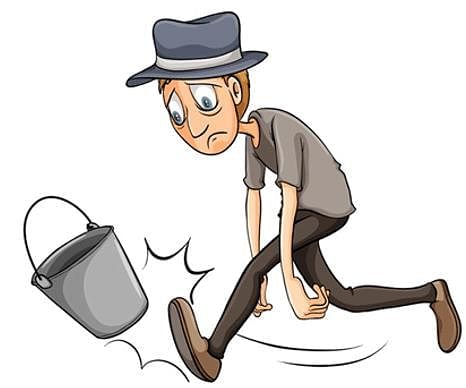
- a)On the runway
- b)Call one’s shot
- c)Kick the bucket
- d)None of these
Correct answer is option 'C'. Can you explain this answer?
Guess The Idiom with The Help of The Picture and Choose the Correct Option.
a)
On the runway
b)
Call one’s shot
c)
Kick the bucket
d)
None of these
|
|
Sarita Singh answered |
kick the bucket - (to die) someone kicked the bucket means someone is dead
Identify The Idiom from The Following Sentences and Choose the Correct Option.I hope it will not put you out if I am late.- a)Hope it will
- b)Put you out
- c)I’m late
- d)I hope
Correct answer is option 'B'. Can you explain this answer?
Identify The Idiom from The Following Sentences and Choose the Correct Option.
I hope it will not put you out if I am late.
a)
Hope it will
b)
Put you out
c)
I’m late
d)
I hope
|
|
Sarita Singh answered |
To put someone out means to cause inconvenience or trouble
Chapter doubts & questions for Idioms - English Olympiad for Class 6 2025 is part of Class 6 exam preparation. The chapters have been prepared according to the Class 6 exam syllabus. The Chapter doubts & questions, notes, tests & MCQs are made for Class 6 2025 Exam. Find important definitions, questions, notes, meanings, examples, exercises, MCQs and online tests here.
Chapter doubts & questions of Idioms - English Olympiad for Class 6 in English & Hindi are available as part of Class 6 exam.
Download more important topics, notes, lectures and mock test series for Class 6 Exam by signing up for free.
English Olympiad for Class 6
25 videos|38 docs|66 tests
|

|
© EduRev
|
Education Revolution
|


|







Signup on EduRev and stay on top of your study goals
10M+ students crushing their study goals daily