


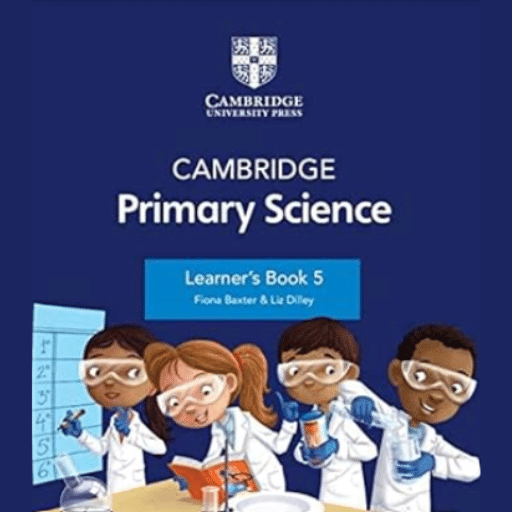
|
PARTNER COURSE
Year 5 Primary Science (Cambridge) for Class 59,513 students learning this week · Last updated on Oct 07, 2025 |
Year 5 Primary Science (Cambridge) Study Material


Trending Courses for Class 5
Year 5 Science IGCSE (Cambridge) for Class 5 CBSE Exam Pattern 2025-2026
Year 5 Primary Science (Cambridge) Exam Pattern for Year 5
The Year 5 Primary Science exam conducted by Cambridge is designed to assess students' understanding of various scientific concepts and their application. Below is a detailed overview of the exam pattern.
1. Exam Structure
- Duration: The exam typically lasts for 1 hour.
- Format: The exam consists of multiple-choice questions, short answer questions, and practical assessment components.
2. Topics Covered
- Life Sciences: Includes topics such as human body systems, plants, ecosystems, and habitats.
- Physical Sciences: Covers forces, energy, matter, and basic physics concepts.
- Earth Sciences: Focuses on weather patterns, rocks, minerals, and the solar system.
3. Question Types
- Multiple Choice Questions: Students select the correct answer from given options.
- Short Answer Questions: Require students to provide concise responses to specific scientific queries.
- Practical Assessments: Involves hands-on activities where students demonstrate their understanding of scientific principles.
4. Assessment Criteria
- Understanding of Concepts: Students must demonstrate a clear understanding of scientific principles.
- Application of Knowledge: Ability to apply learned concepts to new situations.
- Practical Skills: Performance in hands-on experiments is critical, showcasing the ability to follow procedures and analyze results.
5. Preparation Tips
- Revision: Regularly review all topics covered throughout the year.
- Practice: Engage in past papers and sample questions to familiarize with the exam format.
- Hands-On Experiments: Conduct practical experiments to reinforce theoretical knowledge.
By understanding the exam pattern, students can effectively prepare and improve their chances of success in the Year 5 Primary Science exam.
This HTML content presents the exam pattern for Year 5 Primary Science in a structured and visually appealing way, using bold tags for headers and key points.


Year 5 Science IGCSE (Cambridge) Syllabus 2025-2026 PDF Download
Year 5 Primary Science Syllabus
The Year 5 Primary Science syllabus provides students with a comprehensive understanding of various scientific concepts. The curriculum is designed to engage students with interactive and practical learning experiences while fostering critical thinking and curiosity about the natural world. Below is a detailed breakdown of the topics covered in Year 5.
Year 5 Life Cycles of Flowering Plants
- Understanding the concept of life cycles.
- Exploration of different flowering plants and their life stages:
- Seed germination
- Growth to maturity
- Flowering and pollination
- Seed dispersal
- Importance of flowering plants in ecosystems.
- Investigating how environmental factors affect plant growth.
Year 5 Sound
- Introduction to sound as a form of energy.
- Understanding how sound is produced and transmitted:
- Vibrations and their role in sound production.
- The medium for sound travel (air, water, solids).
- Exploring pitch and volume:
- Factors affecting pitch (length, tension, thickness).
- Investigating how sound travels in different environments.
- Practical experiments:
- Making musical instruments.
- Measuring sound levels using simple tools.
Year 5 States and Properties of Matter
- Identifying the three states of matter: solid, liquid, gas.
- Understanding the properties of each state:
- Solids: shape and volume.
- Liquids: shape and volume.
- Gases: shape and volume.
- Exploring changes of state:
- Melting, freezing, evaporation, and condensation.
- Real-life applications of states of matter:
- Everyday examples (ice, water, steam).
- Investigating mixtures and solutions.
Year 5 The Digestive System
- Overview of the human digestive system.
- Functions of different organs involved in digestion:
- Mouth, esophagus, stomach, intestines, liver.
- Understanding the process of digestion:
- Breakdown of food.
- Nutrient absorption.
- Waste elimination.
- Importance of a balanced diet and nutrition.
Year 5 Forces and Magnetism
- Introduction to forces: push and pull.
- Understanding different types of forces:
- Gravity, friction, magnetic force.
- Exploring magnetism:
- Properties of magnets.
- Magnetic vs. non-magnetic materials.
- Practical activities:
- Experimenting with magnets.
- Investigating how forces affect motion.
Year 5 Seasons and Adaptations of Plants and Animals
- Understanding the four seasons and their characteristics.
- Exploration of how plants and animals adapt to seasonal changes:
- Plant adaptations (leaf shape, flowering time).
- Animal adaptations (migration, hibernation).
- Investigating local ecosystems and seasonal changes.
- Importance of biodiversity and conservation.
Each of these topics in the Year 5 Primary Science syllabus is designed to build a strong foundation in scientific knowledge and skills. Through hands-on activities and real-world applications, students will develop a love for science and an understanding of its relevance in their daily lives.
This course is helpful for the following exams: Class 5
How to Prepare Year 5 Science IGCSE (Cambridge) for Class 5?
Preparing for Year 5 Primary Science (Cambridge) can be an exciting journey for both students and educators. With a structured approach, students can effectively grasp the essential concepts and skills that will serve as the foundation for their scientific education. Below are key strategies and tips to help students excel in Year 5 Primary Science (Cambridge).
1. Understand the Curriculum Framework
One of the first steps in preparing for Year 5 Primary Science (Cambridge) is to familiarize yourself with the curriculum framework. This includes:
- Key Topics: Identify the major scientific concepts covered in Year 5 Primary Science (Cambridge), such as life sciences, physical sciences, and earth sciences.
- Learning Objectives: Review the specific learning objectives that students are expected to achieve by the end of the year.
2. Engage with Interactive Learning Materials
Year 5 Primary Science (Cambridge) emphasizes the importance of hands-on learning. To enhance understanding, students should:
- Utilize Experiments: Conduct simple experiments at home or in the classroom to reinforce theoretical concepts.
- Use Visual Aids: Incorporate diagrams, charts, and videos that align with Year 5 Primary Science (Cambridge) topics for better retention.
3. Foster Critical Thinking Skills
Encouraging critical thinking is vital in Year 5 Primary Science (Cambridge). This can be achieved through:
- Inquiry-Based Learning: Pose open-ended questions that encourage students to explore and investigate scientific phenomena.
- Group Discussions: Promote collaborative discussions where students can share ideas and perspectives on scientific topics covered in Year 5 Primary Science (Cambridge).
4. Regular Assessment and Feedback
To track progress in Year 5 Primary Science (Cambridge), regular assessments are essential. Consider the following:
- Quizzes and Tests: Administer short quizzes to evaluate comprehension of key concepts in Year 5 Primary Science (Cambridge).
- Constructive Feedback: Provide feedback that highlights strengths and areas for improvement, helping students to refine their understanding.
5. Encourage a Growth Mindset
A positive mindset can greatly influence a student's approach to Year 5 Primary Science (Cambridge). To cultivate this:
- Celebrate Efforts: Acknowledge hard work and perseverance, even if the results are not perfect.
- Embrace Mistakes: Teach students that mistakes are valuable learning opportunities in Year 5 Primary Science (Cambridge).
6. Utilize Resources from EduRev
Finally, leverage the comprehensive resources offered by EduRev to support Year 5 Primary Science (Cambridge) preparation:
- Study Materials: Access a variety of study materials tailored to Year 5 Primary Science (Cambridge) topics.
- Practice Questions: Use practice questions to reinforce learning and build confidence.
By following these strategies, students can effectively prepare for Year 5 Primary Science (Cambridge) and develop a solid foundation in scientific principles that will benefit them in future studies.
Importance of Year 5 Science IGCSE (Cambridge) for Class 5
Importance of Year 5 Primary Science (Cambridge) Course for Year 5
The Year 5 Primary Science (Cambridge) Course offered by EduRev plays a crucial role in shaping the scientific understanding of young learners. This course is designed to ignite curiosity and foster a love for science among Year 5 students. Below are key reasons highlighting its importance:
1. Foundation for Future Learning
The Year 5 Science course lays the groundwork for more advanced scientific concepts. It introduces students to essential topics that will be built upon in later years, ensuring a smooth transition into complex subjects.
2. Development of Critical Thinking Skills
Through hands-on experiments and inquiry-based learning, students enhance their critical thinking skills. They learn to formulate hypotheses, conduct experiments, and analyze results, which are invaluable skills in any field.
3. Encouragement of Curiosity and Exploration
The course encourages students to ask questions and explore the world around them. This sense of curiosity is vital for scientific inquiry and promotes lifelong learning.
4. Integration of Practical and Theoretical Knowledge
Students engage in practical experiments that complement theoretical lessons, allowing them to see the real-world applications of scientific concepts. This integration helps solidify their understanding and retention of knowledge.
5. Preparation for Assessments
The Year 5 Cambridge course prepares students for future assessments, including national tests. A solid understanding of science concepts boosts their confidence and performance in examinations.
6. Promotion of Teamwork and Collaboration
Science often involves group work and collaboration. The course fosters teamwork among students, teaching them to communicate effectively, share ideas, and work towards common goals.
7. Relevance to Everyday Life
Science is all around us, and this course helps students understand its relevance to their daily lives. They learn about the world they live in, which enhances their appreciation for nature and technology.
8. Encouragement of Environmental Awareness
The curriculum includes topics related to the environment, promoting awareness and responsibility among students. They learn about sustainability and the importance of protecting our planet.
In conclusion, the Year 5 Primary Science (Cambridge) Course offered by EduRev is not just about learning facts; it is about fostering a mindset that values inquiry, understanding, and application of scientific knowledge. This course is an essential stepping stone for young learners, setting them on a path toward academic success and responsible citizenship.
Year 5 Science IGCSE (Cambridge) for Class 5 FAQs
| 1. What topics are covered in Year 5 Primary Science (Cambridge)? |  |
| 2. How can I prepare for the Year 5 Primary Science exam? | |
| 3. What types of questions can I expect in the Year 5 Primary Science exam? | |
| 4. Are there any recommended resources for Year 5 Primary Science? | |
| 5. How important is practical work in Year 5 Primary Science? | |
| 6. What skills will I develop in Year 5 Primary Science? | |
| 7. How can I improve my understanding of scientific vocabulary? | |
| 8. What is the format of the Year 5 Primary Science exam? | |
| 9. How do I conduct a simple science experiment at home? | |
| 10. What are some common misconceptions in Year 5 science topics? | |
| 11. How can group study help in understanding Year 5 Primary Science? | |
| 12. What role does technology play in Year 5 Primary Science? | |
| 13. How can I relate science to everyday life? | |
| 14. Why is it important to learn about the human body in Year 5? | |
| 15. How do I stay motivated while studying for the Year 5 Primary Science exam? | |
Best Coaching for Year 5 Science IGCSE (Cambridge) for Class 5
Tags related with Year 5 Science IGCSE (Cambridge) for Class 5
Best Year 5 Science IGCSE (Cambridge) for Class 5 NCERT Solutions and Study Materials

|
View your Course Analysis |

|

|
Create your own Test |
|






|
Explore Courses for Class 5 exam
|

|
Course Speciality


Year 5 Primary Science (Cambridge) for Class 5 Books
Year 5 Primary Science (Cambridge) for Class 5 Notes PDF Download
Year 5 Primary Science (Cambridge) for Class 5 Previous Year Papers
Important Questions for Year 5 Primary Science (Cambridge) for Class 5
|
© EduRev
|
Education Revolution
|


|






