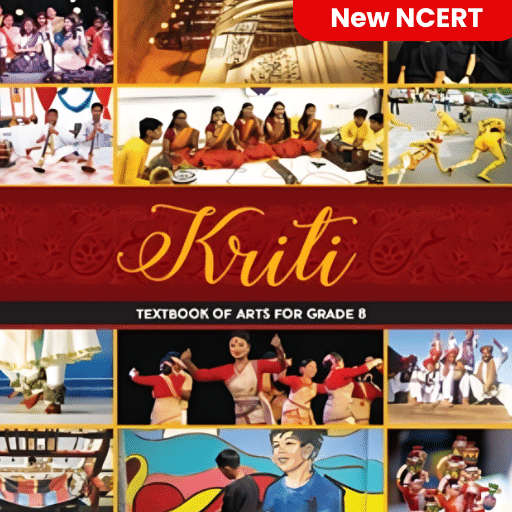
Arts   Kriti  Class 8 - New NCERT
INFINITY COURSE

Class 8 Arts Kriti New NCERT Solutions, Notes

 ·  Last updated on Mar 11, 2026
Join for Free
The Arts (Kriti) Class 8 - New NCERT course for Class 8 offers an engaging exploration of artistic concepts and creativity. Designed to align with the ... view more New NCERT curriculum, this course encourages students to express themselves through various art forms. The Arts (Kriti) Class 8 - New NCERT course emphasizes hands-on activities, fostering a deeper understanding of art's cultural significance. Join the Arts (Kriti) Class 8 - New NCERT course to enhance your artistic skills and appreciation!

Class 8 Arts Kriti New NCERT Study Material

Trending Courses for Class 8

What is NCERT Kriti Arts Class 8? Complete Course Overview

NCERT Kriti is the official textbook for arts education in Class 8, representing a significant shift in how India's educational system approaches creative learning. As part of the new NCERT curriculum aligned with the National Education Policy (NEP) 2020, the Kriti textbook brings a comprehensive arts-integrated approach to students across the country. Unlike traditional exam-focused subjects, Arts (Kriti) Class 8 encourages students to explore, create, and express themselves through multiple artistic disciplines simultaneously.

The course encompasses four major artistic domains: Theatre, Music, Dance, and Visual Arts. Each domain is carefully structured to develop both theoretical understanding and practical skills. Whether you're appearing for Class 8 exams or simply wish to develop your artistic sensibilities, understanding the structure of NCERT Arts Class 8 is essential. The textbook contains 19 comprehensive chapters plus additional study resources designed specifically for CBSE Class 8 students.

Core Structure of Arts (Kriti) Class 8

The NCERT Kriti textbook is organized into four distinct sections, each representing a major art form. This structure ensures balanced exposure to theatre arts, music education, dance education, and visual arts throughout your Class 8 studies.

  • Theatre Arts Section: Focuses on play reading, script interpretation, and stage performance techniques
  • Music Education Section: Covers fundamental elements of music and Indian classical music traditions
  • Dance Education Section: Introduces pan-Indian dance forms and choreography basics
  • Visual Arts Section: Explores elements of art, design principles, and creative artistic expression

Best Study Material for Arts (Kriti) Class 8 - Free PDF Download

Finding quality Class 8 Arts notes and study materials is crucial for mastering the diverse content covered in the NCERT Kriti textbook. The good news is that comprehensive Class 8 Arts study material is readily available through EduRev, designed specifically to support your learning journey. These resources include detailed chapter notes, flashcards, and mind maps that break down complex artistic concepts into manageable pieces.

When preparing for Class 8 Arts, you'll want access to multiple formats of study material to cater to different learning styles. Some students benefit from reading detailed Arts Kriti Class 8 notes, while others prefer visual representations through mind maps or quick-reference flashcards. The beauty of comprehensive study material is that it accommodates all learning preferences.

Types of Study Resources Available

Resource TypeBest ForCoverage
Chapter NotesIn-depth understanding and revisionAll 19 chapters with detailed explanations
FlashcardsQuick memorization and last-minute preparationKey concepts and definitions
Mind MapsVisual learners and connecting conceptsChapter-wise visual summaries

Explore our comprehensive chapter notes for Arts Kriti Class 8 to access well-organized study material covering all topics. Additionally, our Arts Kriti flashcards provide quick revision tools perfect for busy students preparing for exams.

Chapter-wise Notes for Class 8 Arts Kriti Textbook

Breaking down the NCERT Arts Class 8 textbook into chapter-wise notes helps students focus on one topic at a time without feeling overwhelmed. Each chapter in the Kriti textbook serves a specific purpose in developing your artistic knowledge and practical skills. Understanding the organization of these chapters is key to effective preparation.

Our mind maps for Arts Class 8 provide visual representations of how different concepts within each chapter relate to one another, making it easier to retain information.

Theatre Arts Chapters (1-4)

The first section of Class 8 Arts introduces you to the world of theatre and dramatic expression. Start with Bringing Words Alive—Play Reading, which teaches you how to interpret scripts and understand characters. This foundational chapter helps you appreciate the nuances of dramatic literature.

Next, explore One Stage, Many Scripts to understand how different stories can be adapted for theatrical performance. Then, From Page to Stage bridges theory and practice by showing how written text becomes a live performance.

Finally, Applause and Advice teaches you to evaluate performances critically and provide constructive feedback to fellow performers. This chapter completes your theatre arts education with practical performance evaluation skills.

Understanding Theatre and Drama in Class 8 Arts Curriculum

Theatre arts forms the foundation of creative expression in Class 8. Understanding theatre isn't just about memorizing facts—it's about developing the ability to interpret stories, appreciate character development, and recognize the magic that happens when words transform into living, breathing performances on stage.

Drama education in Class 8 emphasizes hands-on learning. You'll engage in play reading activities, participate in stage performance exercises, and learn how theatre artists collaborate to bring scripts to life. These aren't passive learning experiences; they're designed to make you an active participant in the artistic process.

Key Theatre Concepts

  • Character interpretation and emotional expression
  • Script analysis and understanding dramatic structure
  • Stage positioning, movement, and blocking techniques
  • Dialogue delivery and vocal modulation
  • Performance feedback and constructive criticism

Indian Classical Music for Class 8 Students - Complete Guide

Music education in Class 8 takes you on a journey through India's rich musical heritage. The music section of Arts Kriti Class 8 introduces you to fundamental concepts before diving into the sophisticated world of Indian classical music traditions. This progression ensures that even students with no prior musical background can appreciate and understand classical forms.

Begin your musical exploration with Discovering the Elements of Music, which covers the building blocks of all musical expression. Then explore Musical Instruments to understand how different instruments produce sound and contribute to musical ensembles.

For deeper understanding of India's musical traditions, refer to Indian Classical Music, which explores ragas, taals, and the philosophical underpinnings of Hindustani and Carnatic traditions. These chapters form the backbone of music education in Class 8.

Music Elements and Concepts

Musical ElementDefinitionImportance
Rhythm (Taal)Pattern of beats and time divisionsCreates structure and predictability
Melody (Rag)Sequence of notes following specific rulesDefines the emotional character of music
HarmonyCombination of different notes simultaneouslyAdds depth and richness to music

Enhance your musical learning with Inspiration and Imagination, which encourages creative musical expression, and My World of Music, which personalizes your relationship with musical learning.

Pan-Indian Dance Forms Explained for CBSE Class 8

Dance education in Class 8 introduces you to the incredible diversity of dance forms across India. From classical traditions to folk expressions, pan-Indian dance forms represent centuries of cultural evolution and artistic refinement. Understanding these forms helps you appreciate not just the movements, but the cultural narratives and spiritual dimensions embedded within them.

Start your dance education journey with Inner Dynamics of Dance, which teaches you the fundamental elements and principles of movement. Then explore Pan Indian Dance Forms to understand the unique characteristics of different classical and folk traditions.

The dance section also emphasizes wellness and practical application. Dance for Well-being demonstrates how dance can improve physical health, mental clarity, and emotional balance. Finally, Innovation, Inclusivity and Inspiring Change shows how contemporary dancers are reimagining traditional forms.

Major Classical Dance Forms

  • Bharatanatyam (Tamil Nadu) - Temple origin, intricate hand gestures
  • Kathak (North India) - Storytelling through movement, rhythmic footwork
  • Kathakali (Kerala) - Elaborate costumes, facial expressions, dramatic narratives
  • Odissi (Odisha) - Fluid movements, sculptural poses, lyrical expression
  • Kuchipudi (Andhra Pradesh) - Blend of dance and drama, graceful movements

Elements and Principles of Visual Art - Class 8 Guide

Visual arts form the final pillar of Arts Kriti Class 8, encouraging you to develop observational skills and creative expression through drawing, painting, and design. Understanding the elements and principles of visual art provides a framework for creating meaningful artwork and critically analyzing artistic creations.

Begin with Elements and Principles of Visual Art and Design, which covers the fundamental building blocks of visual composition. Then develop your practical skills with Still Life in Colour, where you learn to capture form, light, and shadow through careful observation.

Expand your artistic range with People in Places, which focuses on figure drawing and environmental context. Finally, discover the social dimension of art through Arts of the People, With the People, For the People and Campaign for Art Awareness.

Visual Arts Elements

  • Line: Creates direction, movement, and emotional quality
  • Shape: Geometric and organic forms that define composition
  • Color: Creates mood, emphasis, and visual harmony
  • Texture: Surface quality that adds visual and tactile interest
  • Space: Arrangement of positive and negative areas in composition

How to Prepare for Class 8 Arts Using NCERT Kriti Book

Effective preparation for Class 8 Arts requires a strategic approach that balances theoretical learning with practical engagement. Unlike subjects focused primarily on memorization, arts education demands active participation and creative exploration. Your preparation strategy should reflect this unique nature of artistic learning.

Start by reading chapters systematically rather than randomly jumping between topics. The progression from theatre to music to dance to visual arts is intentional, building concepts progressively. Create a study schedule that allocates time for both reading and practical activities—sketching, listening to music, watching performances, or attempting simple choreography.

Effective Preparation Tips

  • Read each chapter thoroughly, taking notes on key concepts and terminology
  • Engage with practical activities mentioned in each chapter
  • Use Class 8 Arts flashcards for quick concept revision
  • Refer to mind maps to see connections between different topics
  • Watch performances or demonstrations of dance and music forms discussed
  • Practice drawing and creating visual art to reinforce visual arts concepts
  • Participate in group discussions about theatre performances or scripts

Theatre Performance Activities for Class 8 Students

The theatre section of Arts Kriti Class 8 is designed to be experiential. Reading about theatre is important, but actually engaging in theatre activities—even simple ones—deepens your understanding significantly. These activities help you appreciate the challenges performers face and the collaborative nature of theatrical production.

Simple performance activities might include reading scenes from plays aloud with classmates, experimenting with different character interpretations, or creating short improvisation exercises. These hands-on experiences make theatre concepts come alive in ways that reading alone cannot achieve.

Musical Instruments and Elements of Music - Class 8 Notes

Understanding musical instruments goes beyond simply knowing their names and appearances. Each instrument has unique characteristics that affect how it produces sound, which tones it can achieve, and what roles it plays in different musical traditions. This knowledge enriches your appreciation of Indian classical music and world music traditions.

The elements of music—rhythm, melody, and harmony—work together to create the complete musical experience. In Indian classical music, rhythm is expressed through taals while melody follows rags. These concepts might seem complex initially, but with systematic study using quality notes and resources, they become increasingly intuitive.

Dance for Well-being and Choreography - Complete Chapter Guide

Dance offers remarkable benefits beyond artistic expression. Regular engagement with dance improves flexibility, coordination, cardiovascular health, and mental well-being. Class 8 Arts curriculum recognizes these benefits and includes dance for well-being as a significant component of your learning journey.

Choreography—the art of creating dance sequences—develops spatial awareness, creative thinking, and collaborative skills. Even if you never become a professional dancer, understanding choreography helps you appreciate the intelligence and artistry behind dance performances.

Visual Arts Projects and Still Life Techniques for Class 8

Still life drawing and painting provides an excellent foundation for developing observational skills essential to all visual arts. When you carefully observe and render objects, you learn about light, shadow, proportion, and perspective—skills that transfer to all artistic endeavors.

The visual arts projects in Class 8 encourage experimentation with different media and techniques. Don't be intimidated by creating artwork; the goal is exploration and learning, not perfection. Each drawing or painting teaches you something valuable about visual expression.

Important Questions and Answers for Arts Kriti Class 8

To consolidate your learning, regularly engage with important questions covering all sections of the Arts Kriti textbook. These questions help you identify gaps in understanding and ensure comprehensive preparation. Review questions across theatre, music, dance, and visual arts equally, as the course expects balanced knowledge across all four domains.

Practice answering questions about specific chapters, key concepts, and practical applications. This approach helps you move beyond surface-level knowledge to deeper understanding that will serve you well in examinations and, more importantly, in developing genuine artistic appreciation.

Arts (Kriti) Class 8 - New NCERT CBSE Exam Pattern 2026-2027


Arts (Kriti) Class 8 - New NCERT Exam Pattern for Class 8


The Arts (Kriti) subject for Class 8 under the New NCERT curriculum outlines a structured and comprehensive exam pattern designed to assess students' understanding and skills in various artistic disciplines. Below are the key components of the exam pattern:


1. Exam Structure


  • Formative Assessment: Continuous evaluation through project work, class participation, and presentations.

  • Summative Assessment: A final exam that covers the entire syllabus, typically conducted at the end of the academic year.


2. Question Types


  • Multiple Choice Questions (MCQs): These questions test students' recall and understanding of key concepts.

  • Short Answer Questions: Require students to provide brief written responses, demonstrating their comprehension of the material.

  • Long Answer Questions: Encourage in-depth analysis and critical thinking, where students elaborate on specific topics.


3. Marking Scheme


  • Total Marks: The exam typically consists of a total of 100 marks.

  • Weightage: Different sections of the exam may carry varying weightage; for instance, MCQs may account for 20 marks, while long-answer questions could be worth 40 marks.


4. Syllabus Coverage


  • Topics Included: The syllabus encompasses various forms of arts, including visual arts, performing arts, and cultural studies.

  • Practical Components: Certain assessments may involve practical work, allowing students to showcase their artistic skills.


5. Preparation Tips


  • Regular Practice: Engage in daily practice of artistic techniques and concepts.

  • Review Past Papers: Familiarize yourself with previous years’ question papers to understand the exam pattern.

  • Group Study: Collaborate with classmates to discuss and explore different artistic ideas and concepts.


Understanding the exam pattern for Arts (Kriti) in Class 8 will help students strategize their preparation effectively and enhance their performance in the assessments.


Arts (Kriti) Class 8 - New NCERT Syllabus 2026-2027 PDF Download


Class 8 Arts Syllabus Overview


This syllabus for Class 8 Arts (Kriti) is designed to immerse students in various art forms, including drama, music, dance, and visual arts. The curriculum aims to develop creativity, critical thinking, and an appreciation for the arts among students.


1. Class 8 Bringing Words Alive—Play Reading


  • Objective: To enhance comprehension and interpretation of texts through dramatic reading.

  • Activities:

    • Reading and analyzing selected plays.

    • Group discussions to explore themes and characters.

    • Performing excerpts to develop expression and voice modulation.


2. Class 8 One Stage, Many Scripts


  • Objective: To understand diversity in scriptwriting.

  • Activities:

    • Exploring different genres of scripts.

    • Writing original short plays in groups.

    • Participating in peer reviews of scripts.


3. Class 8 From Page to Stage


  • Objective: To bridge literature and performance.

  • Activities:

    • Transforming written scripts into performances.

    • Understanding staging, lighting, and props.

    • Showcasing student performances.


4. Class 8 Applause and Advice


  • Objective: To develop constructive feedback skills.

  • Activities:

    • Learning to give and receive feedback on performances.

    • Reflective discussions after performances.

    • Encouraging peer support and collaboration.


5. Class 8 Discovering the Elements of Music


  • Objective: To explore the fundamental elements of music.

  • Activities:

    • Identifying rhythm, melody, and harmony.

    • Listening exercises to differentiate music styles.

    • Creating simple musical compositions.


6. Class 8 Musical Instruments


  • Objective: To familiarize students with various musical instruments.

  • Activities:

    • Hands-on sessions with different instruments.

    • Researching the history and cultural significance of instruments.

    • Group presentations on chosen instruments.


7. Class 8 Indian Classical Music


  • Objective: To appreciate the richness of Indian classical music.

  • Activities:

    • Listening to and analyzing ragas and talas.

    • Inviting guest musicians for demonstrations.

    • Participating in traditional music sessions.


8. Class 8 Inspiration and Imagination


  • Objective: To encourage creative thinking and expression.

  • Activities:

    • Writing prompts that inspire creativity.

    • Art and music projects based on personal experiences.

    • Showcasing student creativity through exhibitions.


9. Class 8 My World of Music


  • Objective: To explore personal musical preferences and influences.

  • Activities:

    • Creating a personal music portfolio.

    • Sharing music from different cultures.

    • Discussing how music impacts emotions and memories.


10. Class 8 Inner Dynamics of Dance


  • Objective: To understand the basics of dance as an expressive art form.

  • Activities:

    • Learning about body movements and expressions.

    • Practicing different dance styles.

    • Participating in improvisational dance activities.


11. Class 8 Pan Indian Dance Forms


  • Objective: To appreciate the diversity of Indian dance forms.

  • Activities:

    • Exploring various regional dance styles.

    • Inviting dance artists for workshops.

    • Organizing a cultural dance festival.


12. Class 8 Dance for Well-being


  • Objective: To promote physical and mental health through dance.

  • Activities:

    • Engaging in dance as a form of exercise.

    • Understanding the therapeutic benefits of dance.

    • Group dance sessions focusing on well-being.


13. Class 8 Innovation, Inclusivity and Inspiring Change


  • Objective: To use art as a tool for social change.

  • Activities:

    • Discussing current social issues through art.

    • Creating projects that promote inclusivity.

    • Collaborating with community organizations.


14. Class 8 A Presentation of Dance and Choreography


  • Objective: To develop skills in choreography and performance.

  • Activities:

    • Learning about choreographic techniques.

    • Creating and presenting original dance pieces.

    • Receiving feedback from peers and instructors.


15. Class 8 Elements and Principles of Visual Art and Design


  • Objective: To introduce the basics of visual arts.

  • Activities:

    • Exploring different mediums of art.

    • Understanding color theory and composition.

    • Creating art projects using learned techniques.


16. Class 8 Still Life in Colour


  • Objective: To practice observational drawing and painting.

  • Activities:

    • Setting up still life arrangements.

    • Using various colors and techniques to depict still life.

    • Exhibiting student artworks in a gallery format.


17. Class 8 People in Places


  • Objective: To create narratives through art.

  • Activities:

    • Illustrating stories about people in different environments.

    • Using mixed media for creative expression.

    • Creating a collaborative mural project.


18. Class 8 Arts of the People, With the People, For the People


  • Objective: To understand the role of art in society.

  • Activities:

    • Researching local art forms and traditions.

    • Engaging with community artists.

    • Creating art projects that reflect community values.


19. Class 8 Campaign for Art Awareness


  • Objective: To raise awareness about the importance of art.

  • Activities:

    • Organizing events that celebrate local artists.

    • Creating campaigns to promote art education.

    • Involving the community in art discussions and exhibitions.


Conclusion


This Class 8 Arts syllabus is designed to nurture creativity and inspire students to explore various art forms. By engaging in these activities, students will develop a deeper appreciation for the arts and their role in society.


This course is helpful for the following exams: Class 8

How to Prepare Arts (Kriti) Class 8 - New NCERT?


How to Prepare Arts (Kriti) Class 8 - New NCERT for Class 8?

Preparing for Arts (Kriti) Class 8 - New NCERT can be a fulfilling journey that ignites creativity and enhances understanding of artistic concepts. Here are some effective strategies to help you excel in this course offered by EduRev.

1. Understand the Syllabus
Begin by thoroughly reviewing the syllabus for Arts (Kriti) Class 8 - New NCERT. Familiarize yourself with the topics covered, including various art forms, techniques, and historical contexts. This will provide you with a roadmap for your studies.

2. Gather Study Materials
Collect all the necessary study materials, including textbooks, reference books, and online resources. The Arts (Kriti) Class 8 - New NCERT textbook is crucial, along with supplementary materials that can deepen your understanding of the subject.

3. Create a Study Schedule
Establish a consistent study schedule that allocates time for each topic within the Arts (Kriti) Class 8 - New NCERT curriculum. Break down your study sessions into manageable chunks, ensuring you cover all areas without feeling overwhelmed.

4. Engage in Practical Exercises
Art is best understood through practice. Engage in various practical exercises related to the Arts (Kriti) Class 8 - New NCERT curriculum. Experiment with different materials and techniques to develop your skills and creativity.

5. Participate in Class Activities
Active participation in class is essential. Engage in discussions, ask questions, and collaborate with classmates on projects related to Arts (Kriti) Class 8 - New NCERT. This will enhance your learning experience and provide different perspectives on the subject.

6. Utilize Online Resources
Take advantage of online resources specifically designed for Arts (Kriti) Class 8 - New NCERT. EduRev offers a plethora of materials, including video tutorials, quizzes, and interactive content that can aid in your preparation.

7. Review Regularly
Regularly review what you have learned in Arts (Kriti) Class 8 - New NCERT. Revisiting concepts helps reinforce your understanding and aids in retention, making it easier to recall information during exams.

8. Seek Feedback
Don’t hesitate to seek feedback on your artwork and projects from teachers and peers. Constructive criticism can help you improve and refine your skills in alignment with the standards of Arts (Kriti) Class 8 - New NCERT.

9. Prepare for Exams
As exams approach, focus on revision of key concepts and practice past papers. Ensure that you are well-prepared for the Arts (Kriti) Class 8 - New NCERT assessments by understanding the exam format and types of questions asked.

10. Stay Inspired
Lastly, keep your passion for art alive! Explore different artists, styles, and movements that relate to your syllabus in Arts (Kriti) Class 8 - New NCERT. Inspiration can fuel your creativity and enhance your overall learning experience.

By following these strategies, you can effectively prepare for Arts (Kriti) Class 8 - New NCERT and cultivate a deeper appreciation for the subject. Remember, the journey is just as important as the destination!

Importance of Arts (Kriti) Class 8 - New NCERT


Importance of Arts (Kriti) Class 8 - New NCERT Course for Class 8

The Arts (Kriti) course for Class 8 under the New NCERT syllabus is an essential component of the educational curriculum, fostering creativity and cultural understanding among students. Here are some key points highlighting its importance:

1. Fostering Creativity

The Arts course encourages students to express their thoughts and emotions through various forms of art. This creative expression is crucial for mental well-being and personal growth.


2. Cultural Awareness

Through the study of different art forms, students gain insights into diverse cultures and traditions. This cultural awareness helps in building respect and appreciation for the rich heritage of our society.


3. Enhancing Critical Thinking

Engaging in arts allows students to analyze and interpret various artworks, enhancing their critical thinking and observational skills. This is essential for developing a well-rounded intellect.


4. Boosting Confidence

Participating in artistic activities, whether it's performing, painting, or crafting, helps students build self-esteem. Presenting their work to peers fosters confidence and public speaking skills.


5. Encouraging Collaboration

Arts education often involves group projects, which promote teamwork and collaboration. These skills are invaluable in both academic and professional settings.


6. Improving Academic Performance

Studies have shown that students who engage in the arts tend to perform better academically. The skills learned in arts education, such as discipline and focus, can translate into other subjects.


7. Emotional Expression

Art provides a unique outlet for students to articulate their feelings and experiences. This emotional expression is vital for developing empathy and emotional intelligence.


Conclusion

The Arts (Kriti) course for Class 8 is not merely an academic subject; it is a vital part of holistic education that shapes well-rounded individuals. By cultivating creativity, cultural appreciation, and critical thinking, this course prepares students for a brighter future.


Arts (Kriti) Class 8 - New NCERT FAQs

1. कला (कृति) क्या है?
Ans. कला (कृति) का अर्थ है रचनात्मकता और अभिव्यक्ति का एक ऐसा रूप जो भावनाओं, विचारों और अनुभवों को दर्शाता है। यह चित्रकला, संगीत, नृत्य, साहित्य आदि जैसे विभिन्न माध्यमों में प्रकट हो सकता है।
2. कक्षा 8 की कला पाठ्यक्रम में कौन-कौन से विषय शामिल हैं?
Ans. कक्षा 8 के कला पाठ्यक्रम में मुख्य रूप से चित्रकला, शिल्पकला, संगीत, नृत्य और नाटक जैसे विषय शामिल होते हैं। इसके अंतर्गत छात्रों को विभिन्न कला रूपों की जानकारी और कौशल विकसित करने का अवसर मिलता है।
3. कला का अध्ययन क्यों महत्वपूर्ण है?
Ans. कला का अध्ययन महत्वपूर्ण है क्योंकि यह रचनात्मकता को बढ़ावा देता है, आत्म-व्यक्तित्व को विकसित करता है और सामाजिक और सांस्कृतिक जागरूकता को बढ़ाता है। यह छात्रों को सोचने और समस्याओं को हल करने की क्षमता भी प्रदान करता है।
4. चित्रकला में विभिन्न तकनीकों के बारे में क्या जानना चाहिए?
Ans. चित्रकला में विभिन्न तकनीकें जैसे जलरंग, तेल रंग, एक्रिलिक, स्केचिंग, चारकोल आदि शामिल होती हैं। प्रत्येक तकनीक की अपनी विशेषताएँ होती हैं और इनका उपयोग कला के विभिन्न रूपों को व्यक्त करने के लिए किया जाता है।
5. क्या कला एक व्यवसाय बन सकता है?
Ans. हाँ, कला एक व्यवसाय बन सकता है। कई कलाकार अपनी कला को बेचते हैं, कला प्रदर्शनी में भाग लेते हैं, और कला शिक्षा में करियर बनाते हैं। इसके अलावा, डिज़ाइनिंग, एनिमेशन और फिल्म निर्माण जैसे क्षेत्रों में भी करियर के अवसर हैं।
6. शिल्पकला क्या है और इसके प्रकार क्या हैं?
Ans. शिल्पकला एक प्रकार की कला है जिसमें विभिन्न सामग्रियों जैसे मिट्टी, लकड़ी, धातु आदि का उपयोग करके वस्तुएँ बनाई जाती हैं। इसके प्रकार में मिट्टी के बर्तन, कागज कला, लकड़ी की नक्काशी आदि शामिल हैं।
7. संगीत का महत्व क्या है?
Ans. संगीत एक महत्वपूर्ण कला रूप है जो मानव भावनाओं को व्यक्त करने का एक साधन है। यह मानसिक स्वास्थ्य को सुधारने, सामाजिक संबंधों को बढ़ाने और सांस्कृतिक पहचान को बनाए रखने में मदद करता है।
8. नृत्य के विभिन्न रूप कौन से हैं?
Ans. नृत्य के विभिन्न रूपों में कथक, भरतनाट्यम, ओडिसी, कुचिपुड़ी, और बैले शामिल हैं। प्रत्येक नृत्य शैली की अपनी विशेषताएँ और सांस्कृतिक महत्व होता है।
9. कला और विज्ञान के बीच क्या संबंध है?
Ans. कला और विज्ञान के बीच गहरा संबंध है। कला में रचनात्मकता और कल्पना का उपयोग होता है, जबकि विज्ञान में विश्लेषण और प्रयोग का। दोनों क्षेत्रों में नवाचार और समस्या समाधान की आवश्यकता होती है।
10. क्या कला शिक्षा में डिजिटल तकनीकों का उपयोग किया जा सकता है?
Ans. हाँ, कला शिक्षा में डिजिटल तकनीकों का उपयोग किया जा सकता है। डिजिटल चित्रकला, ग्राफिक डिजाइनिंग और एनिमेशन जैसे क्षेत्रों में छात्रों को नई संभावनाएँ मिलती हैं।
11. कला में आलोचना का क्या महत्व है?
Ans. कला में आलोचना का महत्व यह है कि यह कलाकार को अपनी कला को समझने और सुधारने का अवसर देती है। आलोचना से कलाकार अपनी तकनीकों और विचारों को विकसित कर सकते हैं।
12. क्या कला की दुनिया में विविधता महत्वपूर्ण है?
Ans. हाँ, कला की दुनिया में विविधता महत्वपूर्ण है क्योंकि यह विभिन्न संस्कृतियों, विचारों और दृष्टिकोणों को एक साथ लाती है। यह समाज में समृद्धि और समझ को बढ़ावा देती है।
13. कला का विकास कैसे होता है?
Ans. कला का विकास अभ्यास, अनुभव और नए विचारों के साथ होता है। कलाकार विभिन्न तकनीकों का प्रयोग करके, नए प्रयोग करते हुए और अपने काम की आलोचना से सीखते हुए विकसित होते हैं।
14. कला के लिए प्रेरणा के स्रोत क्या हो सकते हैं?
Ans. कला के लिए प्रेरणा के स्रोत प्राकृतिक दृश्य, सामाजिक मुद्दे, व्यक्तिगत अनुभव, अन्य कलाकारों का काम और साहित्य हो सकते हैं। ये स्रोत कलाकार की रचनात्मकता को उत्तेजित करते हैं।
15. क्या कला शिक्षा का बच्चों के विकास पर सकारात्मक प्रभाव पड़ता है?
Ans. हाँ, कला शिक्षा का बच्चों के विकास पर सकारात्मक प्रभाव पड़ता है। यह उनकी रचनात्मकता, आत्मविश्वास, सामाजिक कौशल और मानसिक स्वास्थ्य को बेहतर बनाने में मदद करती है।

Best Arts (Kriti) Class 8 - New NCERT NCERT Solutions and Study Materials

Looking for the best Arts (Kriti) Class 8 - New NCERT NCERT study materials and Arts (Kriti) Class 8 - New NCERT NCERT Book solutions? EduRev has got you covered! Our platform offers comprehensive Class 8 NCERT Solutions and NCERT Study Materials that are tailored to fit the needs of Class 8 students. Our Arts (Kriti) Class 8 - New NCERT NCERT Book Solutions are designed to help students understand the concepts and improve their grasp on the subject. We provide step-by-step solutions to all the questions in the Arts (Kriti) Class 8 - New NCERT NCERT Tests, making it easy for students to follow along and grasp the concepts. EduRev’s chapter-wise NCERT Solutions for Class 8 are comprehensive and designed by a team of experienced teachers to cater to the learning needs of students. And the best part is - we offer our Arts (Kriti) Class 8 - New NCERT NCERT Solutions and Study Materials for free to students. So, if you're looking for the best NCERT Book Solutions and Study Materials for Arts (Kriti) Class 8 - New NCERT, look no further than EduRev. Our platform offers everything you need to excel in your studies and achieve your academic goals.
Course Description
Arts (Kriti) Class 8 - New NCERT | CBSE, Docs, MCQs with Solution, NCERT Solutions, Short & Long Questions for Class 8 2026-2027 is part of Class 8 preparation. The notes and questions for Arts (Kriti) Class 8 - New NCERT | CBSE, Docs, MCQs with Solution, NCERT Solutions, Short & Long Questions have been prepared according to the Class 8 exam syllabus. Information about Arts (Kriti) Class 8 - New NCERT | CBSE, Docs, MCQs with Solution, NCERT Solutions, Short & Long Questions covers all important topics for Class 8 2026-2027 Exam. Find important definitions, questions, notes,examples, exercises test series, mock tests and Previous year questions (PYQs) below for Arts (Kriti) Class 8 - New NCERT | CBSE, Docs, MCQs with Solution, NCERT Solutions, Short & Long Questions.
Preparation for Arts (Kriti) Class 8 - New NCERT | CBSE, Docs, MCQs with Solution, NCERT Solutions, Short & Long Questions in English is available as part of our Class 8 preparation & Arts (Kriti) Class 8 - New NCERT | CBSE, Docs, MCQs with Solution, NCERT Solutions, Short & Long Questions in Hindi for Class 8 courses. Download more important topics related with Arts (Kriti) Class 8 - New NCERT | CBSE, Docs, MCQs with Solution, NCERT Solutions, Short & Long Questions, notes, lectures and mock test series for Class 8 Exam by signing up for free.
Course Speciality
Full Syllabus, Lectures & Tests to study Arts (Kriti) Class 8 - New NCERT | CBSE, Docs, MCQs with Solution, NCERT Solutions, Short & Long Questions - Class 8 | Best Strategy to prepare for Arts (Kriti) Class 8 - New NCERT | CBSE, Docs, MCQs with Solution, NCERT Solutions, Short & Long Questions | Free Course for Class 8 Exam
Course Options
View your Course Analysis
Create your own Test
Related Exams
Arts   Kriti  Class 8   New NCERT   CBSE  Docs  MCQs with Solution  NCERT Solutions  Short   Long Questions
Arts (Kriti) Class 8 - New NCERT | CBSE, Docs, MCQs with Solution, NCERT Solutions, Short & Long Questions
Join course for Free
This course includes:
90+ Documents
10+ Tests
4.85 (699+ ratings)
Get this course, and all other courses for Class 8 with EduRev Infinity Package.
Explore Courses for Class 8 exam
Signup for Free!
Signup to see your scores go up within 7 days! Learn & Practice with 1000+ FREE Notes, Videos & Tests.
10M+ students study on EduRev

Course Speciality

Full Syllabus, Lectures & Tests to study Arts (Kriti) Class 8 - New NCERT | CBSE, Docs, MCQs with Solution, NCERT Solutions, Short & Long Questions - Class 8 | Best Strategy to prepare for Arts (Kriti) Class 8 - New NCERT | CBSE, Docs, MCQs with Solution, NCERT Solutions, Short & Long Questions | Free Course for Class 8 Exam