


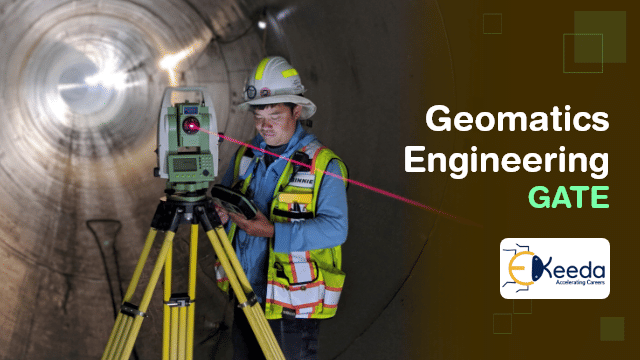
PARTNER COURSE
Geomatics Engineering (Video Lectures for GATE) for Civil Engineering (CE)488 students learning this week · Last updated on Apr 13, 2025 |
PARTNER COURSE
Geomatics Engineering (Video Lectures for GATE) for Civil Engineering (CE)488 students learning this week · Last updated on Apr 13, 2025 |
The Geomatics Engineering Course for Civil Engineering (CE) by EduRev is designed to provide an in-depth understanding of the principles and applicati
... view more
ons of geomatics in civil engineering. This course covers the use of geospatial data, geographic information systems (GIS), remote sensing, and surveying techniques for civil engineering projects. It is an essential course for civil engineering students and professionals who want to gain a comprehensive knowledge of geomatics engineering and its relevance in real-world civil engineering projects.
Geomatics Engineering (Video Lectures for GATE) Study Material


Geomatics Engineering (Video Lectures for GATE) for Civil Engineering (CE) Exam Pattern 2025-2026
Geomatics Engineering Exam Pattern for Civil Engineering (CE)
Geomatics Engineering is a branch of Civil Engineering that deals with the study of spatial information and its management. It involves the use of various technologies such as GPS, GIS, and remote sensing to collect, analyze, and interpret spatial data.
If you are planning to pursue a career in Geomatics Engineering, it is essential to have a thorough understanding of the exam pattern for Civil Engineering (CE). Here are some key pointers to keep in mind:
1. Syllabus: The syllabus for Geomatics Engineering in Civil Engineering (CE) includes topics such as Surveying, Remote Sensing, Geographic Information Systems (GIS), Global Positioning Systems (GPS), Photogrammetry, and Cartography.
2. Exam format: The exam format for Geomatics Engineering in Civil Engineering (CE) typically consists of multiple-choice questions (MCQs) and numerical answer type questions (NATs). The duration of the exam is usually three hours.
3. Marking scheme: The marking scheme for Geomatics Engineering in Civil Engineering (CE) varies from exam to exam. However, most exams award one mark for each correct answer and deduct 0.25 or 0.33 marks for each incorrect answer.
4. Preparation strategy: To prepare for the Geomatics Engineering exam in Civil Engineering (CE), it is crucial to have a solid understanding of the fundamental concepts and principles of Surveying, Remote Sensing, GIS, GPS, Photogrammetry, and Cartography. It is also important to practice solving different types of questions and take mock tests to improve your speed and accuracy.
In conclusion, Geomatics Engineering is an exciting and rapidly growing field that offers excellent career opportunities for Civil Engineering graduates. By understanding the exam pattern for Civil Engineering (CE), you can prepare effectively and increase your chances of success in this field.
Geomatics Engineering is a branch of Civil Engineering that deals with the study of spatial information and its management. It involves the use of various technologies such as GPS, GIS, and remote sensing to collect, analyze, and interpret spatial data.
If you are planning to pursue a career in Geomatics Engineering, it is essential to have a thorough understanding of the exam pattern for Civil Engineering (CE). Here are some key pointers to keep in mind:
1. Syllabus: The syllabus for Geomatics Engineering in Civil Engineering (CE) includes topics such as Surveying, Remote Sensing, Geographic Information Systems (GIS), Global Positioning Systems (GPS), Photogrammetry, and Cartography.
2. Exam format: The exam format for Geomatics Engineering in Civil Engineering (CE) typically consists of multiple-choice questions (MCQs) and numerical answer type questions (NATs). The duration of the exam is usually three hours.
3. Marking scheme: The marking scheme for Geomatics Engineering in Civil Engineering (CE) varies from exam to exam. However, most exams award one mark for each correct answer and deduct 0.25 or 0.33 marks for each incorrect answer.
4. Preparation strategy: To prepare for the Geomatics Engineering exam in Civil Engineering (CE), it is crucial to have a solid understanding of the fundamental concepts and principles of Surveying, Remote Sensing, GIS, GPS, Photogrammetry, and Cartography. It is also important to practice solving different types of questions and take mock tests to improve your speed and accuracy.
In conclusion, Geomatics Engineering is an exciting and rapidly growing field that offers excellent career opportunities for Civil Engineering graduates. By understanding the exam pattern for Civil Engineering (CE), you can prepare effectively and increase your chances of success in this field.


Geomatics Engineering (Video Lectures for GATE) Syllabus 2025-2026 PDF Download
Civil Engineering (CE) Syllabus:
Geomatics Engineering:
- Introduction to Geomatics Engineering
- Geodetic Datums and Map Projections
- Global Navigation Satellite System (GNSS)
- Remote Sensing
- Geographic Information System (GIS)
Fundamental Concepts of Surveying:
- History and Purpose of Surveying
- Types of Surveying
- Errors in Surveying
- Units and Measurement Systems
- Accuracy and Precision
Linear Measurements:
- Chains and Tapes
- Pacing and Stepping
- Electronic Distance Measurement (EDM)
- Total Station
Compass Surveying:
- Types of Compass
- Magnetic Declination
- Bearing and Azimuth
- Local Attraction
Traversing:
- Open Traverse
- Closed Traverse
- Bowditch Rule
- Transit Rule
Levelling and Contouring:
- Levelling Instruments
- Methods of Levelling
- Curvature and Refraction
- Contouring
Miscellaneous:
- Earthwork Calculation
- Setting Out of Curves
- Tacheometry
- Photogrammetry
Previous Year Gate Questions of GE:
- Past year questions from Gate exam related to Geomatics Engineering will be discussed and solved for better understanding.
Geomatics Engineering:
- Introduction to Geomatics Engineering
- Geodetic Datums and Map Projections
- Global Navigation Satellite System (GNSS)
- Remote Sensing
- Geographic Information System (GIS)
Fundamental Concepts of Surveying:
- History and Purpose of Surveying
- Types of Surveying
- Errors in Surveying
- Units and Measurement Systems
- Accuracy and Precision
Linear Measurements:
- Chains and Tapes
- Pacing and Stepping
- Electronic Distance Measurement (EDM)
- Total Station
Compass Surveying:
- Types of Compass
- Magnetic Declination
- Bearing and Azimuth
- Local Attraction
Traversing:
- Open Traverse
- Closed Traverse
- Bowditch Rule
- Transit Rule
Levelling and Contouring:
- Levelling Instruments
- Methods of Levelling
- Curvature and Refraction
- Contouring
Miscellaneous:
- Earthwork Calculation
- Setting Out of Curves
- Tacheometry
- Photogrammetry
Previous Year Gate Questions of GE:
- Past year questions from Gate exam related to Geomatics Engineering will be discussed and solved for better understanding.
This course is helpful for the following exams: Civil Engineering (CE)
How to Prepare Geomatics Engineering (Video Lectures for GATE) for Civil Engineering (CE)?
Geomatics Engineering and Civil Engineering (CE) are two interrelated fields that deal with the design, planning, construction, and maintenance of infrastructure projects. Geomatics Engineering focuses on the collection, analysis, and interpretation of spatial data using advanced technologies such as GPS, GIS, and remote sensing. Civil Engineering, on the other hand, deals with the physical and natural environment, including the design and construction of buildings, roads, bridges, and other structures.
As a student interested in pursuing a career in Civil Engineering, it is essential to have a solid foundation in Geomatics Engineering. Here are some tips on How to Prepare Geomatics Engineering for Civil Engineering (CE):
1. Understand the Basics of Geomatics Engineering:
To succeed in Civil Engineering, it is essential to have a good understanding of Geomatics Engineering basics. The course offered by EduRev provides an excellent opportunity to learn about Geomatics Engineering concepts, including surveying, mapping, and geospatial analysis. By taking this course, you can learn how to collect, analyze, and interpret data using advanced technologies such as GIS, GPS, and remote sensing.
2. Familiarize Yourself with Software Tools:
Geomatics Engineering relies heavily on software tools such as ArcGIS, AutoCAD, and ERDAS Imagine. As a Civil Engineering student, it is essential to familiarize yourself with these tools to be able to analyze and interpret spatial data. The course offered by EduRev covers the use of software tools and provides hands-on training to help you develop your skills.
3. Learn about Geodetic and Cartographic Concepts:
Geodetic and Cartographic concepts are fundamental to the Geomatics Engineering field. As a Civil Engineering student, it is essential to understand these concepts to be able to work with spatial data effectively. The course offered by EduRev covers these concepts in detail and provides a solid understanding of geodetic and cartographic principles.
4. Develop Your Problem-Solving Skills:
Geomatics Engineering and Civil Engineering require strong problem-solving skills. By taking the Geomatics Engineering course offered by EduRev, you can develop your analytical and critical thinking skills, which are essential for success in both fields.
In conclusion, by taking the Geomatics Engineering course offered by EduRev, you can prepare yourself for a successful career in Civil Engineering. The course covers the basics of Geomatics Engineering, software tools, geodetic and cartographic concepts, and problem-solving skills, which are all essential for success in the field. So, enroll in the course today to start your journey to becoming a successful Civil Engineer.
As a student interested in pursuing a career in Civil Engineering, it is essential to have a solid foundation in Geomatics Engineering. Here are some tips on How to Prepare Geomatics Engineering for Civil Engineering (CE):
1. Understand the Basics of Geomatics Engineering:
To succeed in Civil Engineering, it is essential to have a good understanding of Geomatics Engineering basics. The course offered by EduRev provides an excellent opportunity to learn about Geomatics Engineering concepts, including surveying, mapping, and geospatial analysis. By taking this course, you can learn how to collect, analyze, and interpret data using advanced technologies such as GIS, GPS, and remote sensing.
2. Familiarize Yourself with Software Tools:
Geomatics Engineering relies heavily on software tools such as ArcGIS, AutoCAD, and ERDAS Imagine. As a Civil Engineering student, it is essential to familiarize yourself with these tools to be able to analyze and interpret spatial data. The course offered by EduRev covers the use of software tools and provides hands-on training to help you develop your skills.
3. Learn about Geodetic and Cartographic Concepts:
Geodetic and Cartographic concepts are fundamental to the Geomatics Engineering field. As a Civil Engineering student, it is essential to understand these concepts to be able to work with spatial data effectively. The course offered by EduRev covers these concepts in detail and provides a solid understanding of geodetic and cartographic principles.
4. Develop Your Problem-Solving Skills:
Geomatics Engineering and Civil Engineering require strong problem-solving skills. By taking the Geomatics Engineering course offered by EduRev, you can develop your analytical and critical thinking skills, which are essential for success in both fields.
In conclusion, by taking the Geomatics Engineering course offered by EduRev, you can prepare yourself for a successful career in Civil Engineering. The course covers the basics of Geomatics Engineering, software tools, geodetic and cartographic concepts, and problem-solving skills, which are all essential for success in the field. So, enroll in the course today to start your journey to becoming a successful Civil Engineer.
Importance of Geomatics Engineering (Video Lectures for GATE) for Civil Engineering (CE)
Importance of Geomatics Engineering Course for Civil Engineering (CE)
Geomatics Engineering is an interdisciplinary field that combines surveying, GIS (Geographic Information Systems), remote sensing, and other related technologies to collect, analyze, and manage geographic data. It has become an essential part of Civil Engineering (CE) due to its ability to provide precise and accurate spatial information, which is crucial in designing, planning, and managing civil engineering projects. Here are the key points that highlight the Importance of Geomatics Engineering Course for Civil Engineering (CE):
1. Improved Planning and Designing of Civil Engineering Projects: Geomatics Engineering provides accurate and precise spatial information, which is essential in designing and planning civil engineering projects. By using GIS and remote sensing technologies, civil engineers can analyze the terrain, land use, and other factors that can impact the project's design and construction. This information helps in developing efficient and sustainable designs, reducing construction costs, and improving project outcomes.
2. Enhanced Surveying and Mapping: Geomatics Engineering provides advanced surveying and mapping technologies that enable civil engineers to collect, analyze, and manage spatial data. With the help of GPS (Global Positioning System) technology, civil engineers can accurately measure and map the project site, including its topography, boundaries, and other features. This information helps in developing accurate site plans, reducing errors, and improving project outcomes.
3. Efficient Project Management: Geomatics Engineering provides real-time monitoring and management tools that help civil engineers manage the project efficiently. By using GIS and other related technologies, civil engineers can track the project's progress, identify potential issues, and take corrective actions. This information helps in reducing project delays, improving safety, and ensuring project compliance.
4. Environmental Management: Geomatics Engineering provides advanced tools that help civil engineers manage environmental risks associated with the project. By using remote sensing and GIS technologies, civil engineers can monitor and analyze environmental factors such as water quality, air quality, and soil erosion. This information helps in developing sustainable designs, reducing the project's environmental impact, and ensuring compliance with environmental regulations.
Conclusion: Geomatics Engineering has become an essential part of Civil Engineering (CE) due to its ability to provide accurate and precise spatial information. By taking the Geomatics Engineering Course, civil engineers can enhance their skills and knowledge, improve project outcomes, and ensure compliance with environmental regulations. Therefore, it is highly recommended for civil engineers to enroll in the Geomatics Engineering Course offered by EduRev.
Geomatics Engineering is an interdisciplinary field that combines surveying, GIS (Geographic Information Systems), remote sensing, and other related technologies to collect, analyze, and manage geographic data. It has become an essential part of Civil Engineering (CE) due to its ability to provide precise and accurate spatial information, which is crucial in designing, planning, and managing civil engineering projects. Here are the key points that highlight the Importance of Geomatics Engineering Course for Civil Engineering (CE):
1. Improved Planning and Designing of Civil Engineering Projects: Geomatics Engineering provides accurate and precise spatial information, which is essential in designing and planning civil engineering projects. By using GIS and remote sensing technologies, civil engineers can analyze the terrain, land use, and other factors that can impact the project's design and construction. This information helps in developing efficient and sustainable designs, reducing construction costs, and improving project outcomes.
2. Enhanced Surveying and Mapping: Geomatics Engineering provides advanced surveying and mapping technologies that enable civil engineers to collect, analyze, and manage spatial data. With the help of GPS (Global Positioning System) technology, civil engineers can accurately measure and map the project site, including its topography, boundaries, and other features. This information helps in developing accurate site plans, reducing errors, and improving project outcomes.
3. Efficient Project Management: Geomatics Engineering provides real-time monitoring and management tools that help civil engineers manage the project efficiently. By using GIS and other related technologies, civil engineers can track the project's progress, identify potential issues, and take corrective actions. This information helps in reducing project delays, improving safety, and ensuring project compliance.
4. Environmental Management: Geomatics Engineering provides advanced tools that help civil engineers manage environmental risks associated with the project. By using remote sensing and GIS technologies, civil engineers can monitor and analyze environmental factors such as water quality, air quality, and soil erosion. This information helps in developing sustainable designs, reducing the project's environmental impact, and ensuring compliance with environmental regulations.
Conclusion: Geomatics Engineering has become an essential part of Civil Engineering (CE) due to its ability to provide accurate and precise spatial information. By taking the Geomatics Engineering Course, civil engineers can enhance their skills and knowledge, improve project outcomes, and ensure compliance with environmental regulations. Therefore, it is highly recommended for civil engineers to enroll in the Geomatics Engineering Course offered by EduRev.
Geomatics Engineering (Video Lectures for GATE) for Civil Engineering (CE) FAQs
| 1. What is Geomatics Engineering? |  |
| 2. What is Civil Engineering? | |
Civil Engineering is a branch of engineering that deals with the design, construction, and maintenance of the built environment. This includes structures such as buildings, roads, bridges, and water supply systems. Civil Engineers use principles of mathematics, physics, and materials science to design structures that are safe, efficient, and sustainable.
| 3. What is the difference between Geomatics Engineering and Civil Engineering? | |
Geomatics Engineering and Civil Engineering are both branches of engineering that deal with the built environment, but they have different areas of focus. Geomatics Engineering deals primarily with the collection and analysis of geographic information, while Civil Engineering deals with the design, construction, and maintenance of structures such as buildings and infrastructure.
| 4. What kind of career opportunities are available in Geomatics Engineering? | |
Geomatics Engineering graduates have a wide range of career opportunities available to them. They can work in fields such as land surveying, urban planning, natural resource management, and environmental monitoring. They can also work for government agencies, private companies, or start their own businesses.
| 5. What kind of career opportunities are available in Civil Engineering? | |
Civil Engineering graduates have a variety of career opportunities available to them. They can work in fields such as design and construction of structures, transportation systems, and water supply systems. They can also work for government agencies, private companies, or start their own businesses. Civil Engineers are in high demand in many countries and can expect to have a stable and rewarding career.
Best Coaching for Geomatics Engineering (Video Lectures for GATE) for Civil Engineering (CE)
EduRev is the best coaching platform for Geomatics Engineering for Civil Engineering (CE) students. It offers free online coaching for Geomatics Engineering along with online study material in the form of PDFs. The study material includes a summary of important chapters, covering various topics such as Surveying, Geographic Information System (GIS), Land Development, Remote Sensing, Cartography, Topographic Mapping, Spatial Data Analysis, GPS, Geodetic Surveying, Digital Terrain Modeling, Photogrammetry, Geospatial Analysis, Construction Surveying, Geographic Data Science, LiDAR, Geospatial Intelligence, Hydrographic Surveying, and GIS Software.
The EduRev app and website provide students with easy access to all the study material required for Geomatics Engineering. The app is user-friendly and students can easily download PDFs for free. The online coaching is designed in a way that students can easily understand the concepts and apply them in real-life scenarios. The coaching is provided by experienced teachers who have a deep understanding of the subject.
Geomatics Engineering is a crucial part of Civil Engineering and requires a lot of effort to master. EduRev's online coaching provides a great platform for students to learn at their own pace. The app and website offer a comprehensive study plan that covers all the important topics. Students can also take online tests to check their understanding of the subject.
In conclusion, EduRev is the best coaching platform for Geomatics Engineering for Civil Engineering (CE) students. It offers free online coaching, online study material, and a comprehensive study plan covering all the important topics. The app and website are user-friendly and provide easy access to PDFs. Students can take online tests to check their understanding of the subject. EduRev is the perfect platform for students who want to excel in Geomatics Engineering.
The EduRev app and website provide students with easy access to all the study material required for Geomatics Engineering. The app is user-friendly and students can easily download PDFs for free. The online coaching is designed in a way that students can easily understand the concepts and apply them in real-life scenarios. The coaching is provided by experienced teachers who have a deep understanding of the subject.
Geomatics Engineering is a crucial part of Civil Engineering and requires a lot of effort to master. EduRev's online coaching provides a great platform for students to learn at their own pace. The app and website offer a comprehensive study plan that covers all the important topics. Students can also take online tests to check their understanding of the subject.
In conclusion, EduRev is the best coaching platform for Geomatics Engineering for Civil Engineering (CE) students. It offers free online coaching, online study material, and a comprehensive study plan covering all the important topics. The app and website are user-friendly and provide easy access to PDFs. Students can take online tests to check their understanding of the subject. EduRev is the perfect platform for students who want to excel in Geomatics Engineering.
Tags related with Geomatics Engineering (Video Lectures for GATE) for Civil Engineering (CE)
Geomatics Engineering, Civil Engineering, Surveying, Geographic Information System, Land Development, Remote Sensing, Cartography, Topographic Mapping, Spatial Data Analysis, GPS, Geodetic Surveying, Digital Terrain Modeling, Photogrammetry, Geospatial Analysis, Construction Surveying, Geographic Data Science, LiDAR, Geospatial Intelligence, Hydrographic Surveying, GIS Software.
Course Description
Geomatics Engineering (Video Lectures for GATE) | Notes, Videos, MCQs & PPTs for Civil Engineering (CE) 2025-2026 is part of Civil Engineering (CE) preparation. The notes and questions for Geomatics Engineering (Video Lectures for GATE) | Notes, Videos, MCQs & PPTs have been prepared
according to the Civil Engineering (CE) exam syllabus. Information about Geomatics Engineering (Video Lectures for GATE) | Notes, Videos, MCQs & PPTs covers all important topics for Civil Engineering (CE) 2025-2026 Exam.
Find important definitions, questions, notes,examples, exercises test series, mock tests and Previous year questions (PYQs) below for
Geomatics Engineering (Video Lectures for GATE) | Notes, Videos, MCQs & PPTs.
Preparation for Geomatics Engineering (Video Lectures for GATE) | Notes, Videos, MCQs & PPTs in English is available as part of our Civil Engineering (CE) preparation & Geomatics Engineering (Video Lectures for GATE) | Notes, Videos, MCQs & PPTs in Hindi for Civil Engineering (CE) courses.
Download more important topics related with Geomatics Engineering (Video Lectures for GATE) | Notes, Videos, MCQs & PPTs, notes, lectures and mock test series for Civil Engineering (CE) Exam by signing up for free.
Course Speciality
Geomatics Engineering Online course is designed by expert faculty that will simplify concepts and make learning easy for you. This course is available at budget-friendly prices for GATE aspirants and covers all the important topics required for GATE 2022 preparation. Students can attain more knowledge in less time and perform better with our exclusive online courses.
Full Syllabus, Lectures & Tests to study Geomatics Engineering (Video Lectures for GATE) | Notes, Videos, MCQs & PPTs - Civil Engineering (CE) | Best Strategy to prepare for Geomatics Engineering (Video Lectures for GATE) | Notes, Videos, MCQs & PPTs | Free Course for Civil Engineering (CE) Exam


Course Options

|
View your Course Analysis |

|

|
Create your own Test |
|
Related Exams
Plans starting @ ₹100/month

This course includes:

120+ Videos

Top teachers of India
Add To My Courses

|
Explore Courses for Civil Engineering (CE) exam
|

|
Signup to access this Course
Signup to see your scores go up within 7 days! Learn & Practice with 1000+ FREE Notes, Videos & Tests.
Course Speciality
Geomatics Engineering Online course is designed by expert faculty that will simplify concepts and make learning easy for you. This course is available at budget-friendly prices for GATE aspirants and covers all the important topics required for GATE 2022 preparation. Students can attain more knowledge in less time and perform better with our exclusive online courses.
Full Syllabus, Lectures & Tests to study Geomatics Engineering (Video Lectures for GATE) | Notes, Videos, MCQs & PPTs - Civil Engineering (CE) | Best Strategy to prepare for Geomatics Engineering (Video Lectures for GATE) | Notes, Videos, MCQs & PPTs | Free Course for Civil Engineering (CE) Exam


Additional Information about Geomatics Engineering (Video Lectures for GATE) for Civil Engineering (CE) for Civil Engineering (CE) Preparation
Geomatics Engineering (Video Lectures for GATE) for Civil Engineering (CE) Books
Geomatics Engineering (Video Lectures for GATE) for Civil Engineering (CE) Books is your ultimate resource for mastering the Civil Engineering (CE) Exam.
Get with a wide array of carefully selected books that cover every aspect of the Geomatics Engineering (Video Lectures for GATE) for Civil Engineering (CE) syllabus.
From in-depth subject knowledge to practice papers, our collection has it all.
Boost your confidence by attempting question papers and gain valuable insights from detailed paper analysis.
Prepare with precision using our mock tests, designed to simulate the real exam experience.
With Geomatics Engineering (Video Lectures for GATE) for Civil Engineering (CE) Civil Engineering (CE) Books, you'll have the best study material at your fingertips, ensuring your success in the Civil Engineering (CE) Exam.
Geomatics Engineering (Video Lectures for GATE) for Civil Engineering (CE) Notes PDF Download
Access the comprehensive Geomatics Engineering (Video Lectures for GATE) for Civil Engineering (CE) Notes for Civil Engineering (CE) Exam at EduRev.
Elevate your preparation with well-structured study material and concise notes.
Stay updated with the latest exam pattern and syllabus.
Prepare confidently with practice papers and question banks. Enhance your understanding through detailed paper analysis.
Get access to toppers' notes for valuable insights.
With Geomatics Engineering (Video Lectures for GATE) for Civil Engineering (CE) Notes PDF download, you can streamline your study and be well-prepared for the Civil Engineering (CE) Exam.
Achieve success with EduRev's trusted study resources and boost your scores effortlessly.
Geomatics Engineering (Video Lectures for GATE) for Civil Engineering (CE) Previous Year Papers
Geomatics Engineering (Video Lectures for GATE) for Civil Engineering (CE) Previous Year Papers from EduRev: Prepare for Civil Engineering (CE) exam with ease using our extensive collection of Previous Year Papers.
Access question papers, practice papers, and in-depth paper analysis to master the exam pattern and syllabus.
Stay updated on the exam date and results while practicing in your preferred language.
Whether you need preparation tips, best books, study material, or subject-specific syllabus, EduRev's official website has you covered.
Enhance your exam readiness with Toppers' notes and comprehensive videos.
Trust EduRev's Previous Year Papers for a successful Civil Engineering (CE) exam journey.
Important Questions for Geomatics Engineering (Video Lectures for GATE) for Civil Engineering (CE)
Important questions are crucial for acing your Civil Engineering (CE) exam.
Understanding the question pattern and types is essential for effective preparation.
Explore previous years' question papers to get a sense of the language and format used.
Practice papers are available to hone your skills and assess your progress.
Analyzing question trends can give you an edge during the exam. Our recommended books and study material cover all topics in the syllabus.
Additionally, coaching videos provide valuable insights. Stay updated on the official website for exam dates and results.
Prepare with confidence, as EduRev has got your question-related needs covered for Geomatics Engineering (Video Lectures for GATE) for Civil Engineering (CE) .
|
© EduRev
|
Education Revolution
|


|










Signup on EduRev and stay on top of your study goals
10M+ students crushing their study goals daily