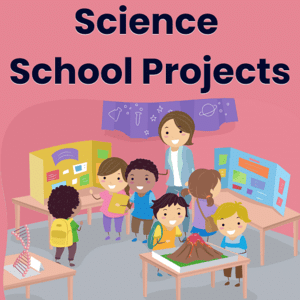
 | PARTNER COURSE Class 6 DIY Science – experiments, projects & fun116,360 students learning this week · Last updated on Apr 13, 2026 |
Class 6 DIY Science – experiments, Study Material




Trending Courses for Class 6

Best DIY Science Projects for Class 6 Students
DIY science projects have revolutionized the way Class 6 students learn scientific concepts in India. Instead of memorizing definitions from textbooks, students now engage with hands-on experimentation that makes learning meaningful and enjoyable. The DIY Science Fun: Cool School Projects course offers an excellent opportunity for Class 6 students to explore various scientific domains through practical projects that develop critical thinking and problem-solving abilities.
Science education at the Class 6 level forms the foundation for higher learning. When students participate in DIY science projects, they transform abstract concepts into tangible experiments they can observe and understand. These projects encompass multiple scientific fields, from electricity and magnetism to biology and environmental science, ensuring comprehensive coverage of the Class 6 science curriculum.
Why DIY Science Projects Matter for Class 6 Learning
Hands-on learning through DIY science projects offers several advantages that traditional classroom teaching alone cannot provide. Students develop practical understanding of scientific concepts, build confidence in STEM subjects, and learn the scientific method through direct application. These best class 6 science projects also prepare students for science fair competitions and school exhibitions, which are integral parts of school life in India.
- Develops observation and data collection skills
- Encourages hypothesis formation and testing
- Builds confidence in handling scientific equipment
- Fosters creativity and innovative thinking
- Provides memorable learning experiences
Easy Electricity Projects for Class 6 with Step-by-Step Instructions
Electricity projects for Class 6 are among the most popular and engaging experiments that students can undertake. DIY electricity projects for students help demystify how electrical circuits work, demonstrate conductivity, and explain fundamental electrical principles. Easy electricity experiments designed for this age group use safe household materials and require minimal equipment.
Simple electrical projects Class 6 students can create include basic circuits using batteries, wires, and LEDs. These electricity project ideas for school help students understand concepts like conductors, insulators, and circuit completion. The best electricity projects for kids at this level emphasize safety while providing exciting, visible results that maintain student interest.
Essential Components for Electricity Projects
| Component | Purpose | Safety Notes |
|---|---|---|
| Battery (AA/AAA) | Power source for circuits | Non-toxic and safe for Class 6 |
| Copper wire | Conductor for circuit pathways | Insulated wire recommended |
| LED bulbs | Safe light source showing circuit completion | Low voltage operation |
| Switches | Control circuit completion/interruption | Simple toggle switches suitable |
Explore our comprehensive guide on Electricity Projects to access detailed free electricity project PDF resources with step-by-step instructions perfect for Class 6 students.
Simple Magnetism Projects: Fun Experiments for School Students
Magnetism projects for Class 6 unlock fascinating phenomena that students observe daily but rarely understand deeply. DIY magnetism projects reveal how magnetic fields work, demonstrate magnetic poles, and introduce electromagnetic concepts. Simple magnet experiments using everyday materials make these concepts accessible and engaging.
Easy magnetism projects for school help students visualize invisible magnetic fields through iron filings, explore magnetic attraction and repulsion, and understand how electromagnets function. These magnetic science projects for students bridge theoretical knowledge with practical experimentation, making abstract electromagnetic concepts concrete and understandable.
Hands-On Magnetism Activities
- Creating magnetic field visualizations using iron filings and paper
- Building simple electromagnets with coils and batteries
- Testing magnetic properties of different materials
- Understanding magnetic pole interactions through experimentation
- Constructing magnetic compasses using magnetized needles
Visit our detailed resource on Magnetism Projects for comprehensive Class 6 magnetism experiments with detailed procedures and material lists.
Creative Mechanical Projects for Class 6 Science Fair
Mechanical projects for Class 6 engage students with motion, force, and mechanical systems. DIY mechanical science projects encourage experimentation with moving parts, energy transfer, and mechanical advantage. These creative mechanical projects for Class 6 science fair demonstrate principles of physics in ways students can build, observe, and modify.
Simple mechanical experiments using pulleys, ramps, and gears help students understand how machines work. Mechanical project ideas for students range from marble runs to catapults, each illustrating fundamental principles of force and motion. Easy mechanical projects for school use household items, making them accessible for all students.
Discover innovative ideas through our Mechanical Projects chapter, featuring DIY mechanical science projects that turn Class 6 science into exciting, visible demonstrations of physical principles.
Understanding Simple Machines Through Hands-On Projects
Simple machines projects Class 6 students undertake teach fundamental mechanical concepts that govern countless devices in daily life. DIY simple machine experiments help students understand levers, pulleys, inclined planes, wedges, screws, and wheel-and-axle systems. Simple machines science projects make abstract mechanical advantage concepts tangible through hands-on construction and testing.
Lever pulley projects for students demonstrate how simple machines reduce effort needed to accomplish tasks. Best simple machines projects for Class 6 include building working models that students can manipulate and adjust, observing how design changes affect mechanical advantage. Simple machines project ideas range from simple lever demonstrations to complex pulley systems.
Key Simple Machines to Explore
| Machine Type | Principle Demonstrated | Project Example |
|---|---|---|
| Lever | Force multiplication through pivots | Build a working seesaw model |
| Pulley | Changing force direction and magnitude | Create a pulley system for lifting |
| Inclined Plane | Reducing effort through sloped surfaces | Test ramp angles for rolling objects |
| Wheel and Axle | Rotational force application | Build a working wheel system |
Explore hands-on demonstrations in our Simple Machines chapter for comprehensive DIY simple machine experiments perfect for Class 6 learners.
Biology and Environmental Science Projects for Class 6
Biology projects for Class 6 connect students with living systems through direct observation and experimentation. Environmental science projects Class 6 students undertake foster awareness about ecosystem conservation and sustainability. DIY environmental projects help students understand interconnections between organisms and their environments.
Plant and animal projects Class 6 students create develop observational skills and ecological understanding. Easy biology projects for kids include seed germination experiments, food chain demonstrations, and water purification models. Bio-friendly projects for students emphasize conservation and sustainable practices relevant to contemporary environmental challenges.
- Seed germination experiments under different conditions
- Observing decomposition and nutrient cycling
- Creating miniature ecosystems in containers
- Water purification and filtration experiments
- Documenting local biodiversity through nature walks
Access comprehensive biology and ecology projects through our Biology and Environmental Projects resource, featuring eco-friendly projects that make environmental science tangible for Class 6 students.
Fun and Creative Science Project Ideas for School Competitions
Cool science projects for school need not be complicated to be impressive. Fun science experiments Class 6 students undertake should balance educational value with entertainment factor. Creative science project ideas engage students while teaching fundamental concepts, making learning memorable and enjoyable.
Science projects with household items demonstrate that extraordinary learning doesn't require expensive equipment. Creative science fair ideas often draw inspiration from everyday phenomena, transforming mundane observations into fascinating investigations. Easy DIY science projects using common materials prove that accessibility and quality are compatible.
Explore our Fun and Creative Projects chapter for imaginative science activities that combine entertainment with education, perfect for students seeking engaging learning experiences.
Top Science Fair Project Ideas for Class 6 Students
Science fair projects Class 6 students present require careful planning, clear hypothesis formulation, and systematic experimentation. Best science fair ideas for students balance originality with feasibility, creating impressive exhibitions that demonstrate understanding. Class 6 science fair experiments should follow scientific methodology while remaining age-appropriate.
Award-winning science fair projects share common characteristics: clear research questions, well-designed experiments, proper data collection, and effective presentation. Science fair projects with hypothesis help students understand scientific methodology while investigating genuine questions. Creative science fair ideas often address local issues or explore unexpected applications of scientific principles.
Planning Your Science Fair Project
- Select topics aligning with class curriculum and personal interests
- Formulate clear, testable hypotheses
- Design experiments with appropriate controls
- Collect and analyze data systematically
- Create visually appealing presentation boards
- Practice explaining your project confidently
Discover top-ranked projects in our Science Fair Project Ideas resource, featuring award-winning science fair projects specifically designed for Class 6 students.
Class 6 Science Projects PDF Download and Free Resources
Science projects free download options make quality educational resources accessible to all students regardless of socioeconomic background. Science project PDF Class 6 materials provide structured guidance, material lists, and procedural steps essential for successful project completion. Free Class 6 science projects ensure that financial limitations never prevent students from accessing excellent learning opportunities.
The EduRev platform provides comprehensive Class Wise Projects resources tailored specifically for Class 6 students, featuring age-appropriate experiments with detailed instructions and material requirements.
How to Choose the Right Science Project for Your Class
Selecting appropriate science projects requires considering multiple factors including student interests, available materials, time requirements, and curriculum alignment. Which science project is easiest for Class 6 depends on individual skill levels, interests, and available resources. Best science projects 2026 combine current scientific relevance with fundamental concept reinforcement.
Students should choose projects matching their curiosity levels while challenging them appropriately. Which DIY projects are best for Class 6 depends on personal learning styles-some students prefer visual demonstrations while others prefer hands-on construction. Consider whether you prefer working individually or collaboratively, as this influences project selection significantly.
Selection Criteria for Your Project
- Alignment with your science interests and curiosity
- Appropriate difficulty level matching your skills
- Available time for completion before deadlines
- Accessibility of required materials and equipment
- Safety considerations and adult supervision availability
- Presentation format (demonstration, model, or research project)
Benefits of DIY Science Projects for Class 6 Learning
Hands-on science activities Class 6 students undertake provide learning benefits extending far beyond traditional classroom instruction. DIY projects develop practical skills, critical thinking abilities, and scientific reasoning that serve students throughout their educational careers. Step-by-step science project guides help students develop independence and problem-solving capabilities.
Science project topics students select based on genuine interests create more engaging learning experiences than assigned topics alone. Latest science project ideas often incorporate contemporary issues, making science feel relevant to students' lives. School science project topics covering diverse domains ensure comprehensive scientific literacy development.
Measurable Learning Outcomes
- Enhanced understanding of scientific concepts through experiential learning
- Improved observation and analytical skills
- Increased confidence in STEM subject areas
- Better scientific communication and presentation abilities
- Greater independence in learning and problem-solving
- Development of perseverance through experimental challenges
Materials and Tools Required for School Science Projects
Success in science projects depends significantly on having appropriate materials and tools readily available. What materials needed for science projects varies by project type, but common items include batteries, wires, containers, measuring instruments, and safety equipment. How to make science projects for Class 6 becomes easier when students understand what materials serve specific functions.
Most Class 6 science projects use household items or inexpensive educational supplies, ensuring accessibility. Safety equipment including goggles, gloves, and aprons should accompany all experiments involving heat, chemicals, or sharp objects. Proper tool usage instruction ensures students work safely while developing practical competencies.
| Project Category | Essential Materials | Safety Equipment |
|---|---|---|
| Electricity | Batteries, wires, bulbs, switches | Insulated gloves, testing tools |
| Biology | Containers, seeds, soil, water | Hand sanitizer, aprons |
| Mechanics | Pulleys, weights, ramps, blocks | Safety goggles, closed-toe shoes |
| Chemistry | Household chemicals, containers, measuring tools | Goggles, gloves, aprons, ventilation |
The comprehensive DIY Science Fun: Cool School Projects course structure provides everything Class 6 students need for successful project completion. Whether you're interested in electricity project ideas for school, environmental investigations, or mechanical demonstrations, proper material preparation ensures smooth execution and successful learning outcomes. Access complete material lists and tool recommendations through the EduRev platform resources available across all project categories.
DIY Science Fun: Cool School Projects for Class 6 CBSE Exam Pattern 2026-2027
When it comes to science education, hands-on projects are a great way to engage students and make learning more enjoyable. DIY science projects allow students to explore various concepts and theories through practical experiments. Here, we present some cool school projects for Class 6 students that not only offer an exciting learning experience but also align with the exam pattern for this grade.
1. Water Filtration Experiment:
Key points:
- Explore the concept of water purification by creating a DIY water filtration system.
- Use materials such as sand, gravel, and activated charcoal to filter impurities.
- Test the effectiveness of the filtration system by comparing the quality of filtered and unfiltered water samples.
- Understand the importance of clean water for human health and the environment.
2. Electric Circuit Construction:
Key points:
- Build a simple electric circuit using basic components like wires, batteries, and bulbs.
- Learn about the flow of electricity and the roles of different circuit components.
- Experiment with different circuit configurations, such as series and parallel circuits.
- Observe how changes in the circuit affect the brightness of the bulb or the flow of current.
3. Plant Growth Investigation:
Key points:
- Conduct an experiment to study the factors that influence plant growth.
- Set up different plant groups exposed to varying amounts of light, water, and nutrients.
- Monitor and record the growth of each plant over a specified period.
- Analyze the data to identify the optimal conditions for plant growth and understand the importance of these factors.
4. Density Tower Formation:
Key points:
- Explore the concept of density by creating a colorful density tower using liquids of different densities.
- Use liquids like water, oil, and syrup to form distinct layers based on their densities.
- Understand that objects with higher density sink while those with lower density float.
- Observe the separation of liquids based on their densities and discuss real-life applications of density.
5. Solar Oven Construction:
Key points:
- Build a solar oven using everyday materials like cardboard, aluminum foil, and plastic wrap.
- Understand the principles of solar energy and how it can be harnessed for cooking.
- Conduct experiments to test the efficiency of the solar oven in heating food.
- Discuss the advantages of using solar energy as a renewable and sustainable alternative to conventional cooking methods.
By incorporating these DIY science projects into the exam pattern for Class 6, students can develop a deeper understanding of scientific concepts while enjoying the process of hands-on learning. These projects not only enhance their knowledge but also foster critical thinking, problem-solving, and creativity skills essential for their overall development.


DIY Science Fun: Cool School Projects Syllabus 2026-2027 PDF Download
- Introduction to the concept of DIY (Do-It-Yourself) science projects
- Understanding the scientific method and its importance in conducting experiments
- Exploring various fun and engaging science projects that can be done at home or in school
- Topics covered may include chemistry experiments, physics demonstrations, and biology investigations
- Encouraging creativity and critical thinking through hands-on activities
- Providing step-by-step instructions and guidelines for each project
- Emphasizing safety measures and responsible experimentation
Class 6 Electricity Projects
- Introduction to the basic principles of electricity
- Understanding electrical circuits and components
- Exploring different types of circuits (series, parallel, and combination)
- Constructing simple circuits using batteries, wires, and light bulbs
- Investigating conductors and insulators
- Building a working model of a switch
- Examining the effects of resistance and voltage on the brightness of a bulb
- Conducting experiments to understand the concept of static electricity
- Learning about renewable energy sources such as solar power and wind turbines
Class 6 Mechanical Projects
- Introduction to mechanical systems and their applications
- Exploring simple machines such as levers, pulleys, inclined planes, and gears
- Understanding the principles of force, motion, and work
- Building models of simple machines and investigating their functions
- Conducting experiments to measure the efficiency of different machines
- Investigating friction and its impact on mechanical systems
- Learning about the importance of lubrication in reducing friction
- Exploring the concept of mechanical advantage and its application in everyday life
Class 6 Magnetism Projects
- Introduction to the properties of magnets and magnetic fields
- Understanding the difference between magnetic and non-magnetic materials
- Investigating the poles of a magnet and their interactions
- Constructing a compass and understanding its working principle
- Exploring the Earth's magnetic field and its significance
- Conducting experiments to observe the effects of magnets on different objects
- Learning about electromagnets and their applications
- Building a simple electric motor using magnets and a battery
Class 6 Simple Machines
- Reviewing the concepts of simple machines from the previous section
- Expanding knowledge on the types of simple machines and their functions
- Examining real-life examples of simple machines and their applications
- Conducting experiments to measure the mechanical advantage of different machines
- Understanding the concept of work and how it relates to simple machines
- Building complex mechanical systems using multiple simple machines
- Exploring compound machines and their advantages
Class 6 Biology and Environmental Projects
- Introduction to basic concepts in biology and the environment
- Understanding the characteristics of living organisms
- Investigating ecosystems and their components
- Conducting experiments to study plant growth and photosynthesis
- Learning about the importance of biodiversity and conservation
- Exploring the impact of human activities on the environment
- Conducting field trips and observations to study local flora and fauna
- Participating in environmental awareness campaigns and projects
Class 6 Fun and Creative Projects
- Encouraging creativity and innovation through science projects
- Exploring unconventional and imaginative science experiments
- Building models and prototypes using recycled materials
- Conducting experiments related to art, music, and design
- Investigating optical illusions and the science behind them
- Engaging in collaborative projects that incorporate various subjects
- Showcasing projects through presentations or exhibitions
Class 6 Science Fair Project Ideas
- Providing a list of science fair project ideas for Class 6 students
- Suggesting topics related to various scientific disciplines
- Assisting students in selecting appropriate projects based on their interests and abilities
- Guiding students in conducting research, collecting data, and analyzing results
- Encouraging students to present their projects effectively using visuals and demonstrations
- Promoting critical thinking and problem-solving skills through science fair projects
Class 6 Class Wise Projects
- Assigning class-wise projects to enhance understanding of specific topics
- Providing guidelines for conducting experiments and collecting data
- Encouraging collaboration and teamwork among classmates
- Allowing students to present their projects to the class
- Providing constructive feedback and evaluation of the projects
- Fostering a sense of responsibility and ownership in completing the projects
This course is helpful for the following exams: Class 3, Class 4, Class 5, Class 6, Class 7, Class 8, Class 9, Class 10, Year 3, Year 4, Year 5, Year 6, Grade 3, Grade 4, Grade 5, Grade 6, Year 3, Year 4, Year 5, Year 6, Primary 3, Primary 4, Primary 5, Primary 6, Grade 6, Grade 3, Grade 4, Grade 5, Grade 6
How to Prepare DIY Science Fun: Cool School Projects for Class 6?
How to Prepare DIY Science Fun: Cool School Projects for Class 6?
Are you looking for exciting and educational projects to engage your Class 6 students? Look no further! In this article, we will guide you on how to prepare DIY science fun projects that are perfect for Class 6 students. These projects are designed to be hands-on, interactive, and engaging, allowing students to explore various scientific concepts while having fun.
Project 1: Solar System Mobile
One of the most fascinating topics in science for Class 6 students is the solar system. Creating a solar system mobile is a great way to help them understand the different planets and their positions in space. To make this project, you will need materials such as foam balls, paint, strings, and a stick. Encourage students to paint the foam balls to resemble each planet and attach them to the stick using strings. This project not only enhances their creativity but also reinforces their knowledge about the solar system.
Project 2: Volcano Eruption
Another exciting project that will capture your Class 6 students' attention is creating a volcano eruption. This project allows them to learn about the chemical reaction between vinegar and baking soda, resulting in a volcanic eruption. To make this project, gather materials such as a plastic bottle, baking soda, vinegar, dish soap, and food coloring. Guide students on how to construct a volcano-shaped structure using the plastic bottle and apply the chemical reaction to create an eruption. This project not only teaches them about chemical reactions but also provides a visual representation of a natural phenomenon.
Project 3: Simple Machines
Understanding the concept of simple machines can be made fun and engaging through hands-on projects. Students can create their own simple machines such as levers, pulleys, or inclined planes using household items. Encourage them to experiment with different materials to understand how these machines work and how they make work easier. This project not only reinforces their knowledge about simple machines but also enhances their problem-solving and critical thinking skills.
Project 4: Water Filtration
Teaching students about water filtration can be done through a DIY project where they build their own water filter. Provide them with materials such as sand, gravel, charcoal, and a plastic bottle. Guide them on how to layer these materials in the bottle to create a filtration system. Then, have them test the effectiveness of their filter by pouring dirty water through it and observing the clarity of the filtered water. This project not only teaches them about the importance of clean water but also develops their understanding of filtration processes.
Conclusion
By incorporating these DIY science fun projects into your Class 6 curriculum, you can create an interactive and engaging learning environment for your students. These projects not only reinforce scientific concepts but also encourage creativity, critical thinking, and problem-solving skills. So, get ready to embark on a journey of exploration and discovery with your Class 6 students through these exciting school projects.
Importance of DIY Science Fun: Cool School Projects for Class 6
The DIY Science Fun: Cool School Projects course offered by EduRev is an essential and valuable resource for Class 6 students. This course not only provides an interactive and engaging learning experience but also offers numerous benefits that contribute to the overall development of students.
1. Enhances Practical Knowledge:
This course focuses on hands-on learning, allowing students to actively participate in various science experiments and projects. By engaging in practical activities, students can gain a deeper understanding of scientific concepts and principles. This practical knowledge helps them apply theoretical concepts to real-life situations, fostering a practical approach to learning.
2. Promotes Creativity and Innovation:
One of the key aspects of the DIY Science Fun course is encouraging students to think creatively and come up with innovative project ideas. This course provides a platform for Class 6 students to explore their imagination and develop problem-solving skills. Through various projects, students learn to think out-of-the-box and find unique solutions to scientific challenges.
3. Develops Critical Thinking Skills:
The course is designed to enhance critical thinking abilities among students. By engaging in hands-on experiments and projects, students are encouraged to analyze and evaluate their outcomes. They learn to identify patterns, make connections, and draw logical conclusions. These critical thinking skills are crucial not only in science but also in other subjects and real-life scenarios.
4. Encourages Teamwork and Collaboration:
The DIY Science Fun course promotes teamwork and collaboration among Class 6 students. Through group projects and experiments, students learn to work together, share ideas, and delegate tasks. This collaborative approach fosters effective communication and interpersonal skills, preparing students for future endeavors where teamwork plays a vital role.
5. Boosts Confidence and Self-Esteem:
Engaging in hands-on science projects and successfully completing them can significantly boost students' confidence and self-esteem. The sense of accomplishment gained from creating something on their own instills a sense of pride and motivates students to explore and learn further. This increased confidence has a positive impact on their overall academic performance.
Conclusion:
The DIY Science Fun: Cool School Projects course offered by EduRev is an invaluable resource for Class 6 students. It not only enhances practical knowledge but also promotes creativity, critical thinking, teamwork, and confidence. By participating in this course, students gain a holistic learning experience that goes beyond textbooks and traditional classroom teaching.
DIY Science Fun: Cool School Projects for Class 6 FAQs
| 1. How do I make a homemade volcano for Class 6 science fair project? |  |
| 2. What are the best easy science experiments I can do at home for Class 6? | |
| 3. How do I make rock candy crystals for a Class 6 science project? | |
| 4. What simple machine projects can I build for Class 6 science? | |
| 5. How do I demonstrate the water cycle with a DIY experiment for Class 6? | |
| 6. What are the easiest electricity and circuit projects for Class 6 students? | |
| 7. How do I grow beans and observe plant growth stages for a Class 6 project? | |
| 8. What pH indicator experiments can I do at home for Class 6 chemistry? | |
| 9. How do I create a functioning water filter experiment for Class 6 science? | |
| 10. What invisible ink and secret message experiments work best for Class 6? | |
Best DIY Science Fun: Cool School Projects for Class 6 NCERT Solutions and Study Materials





 Buy Now
 Videos
 Documents
 Top teachers of India
 | Explore Courses for Class 6 exam |  |


