All Exams   >   Grade 3 Exam

Prepare for Grade 3 Exam
with EduRev

All you need for Grade 3 Exam Exam preparation covering complete
Grade 3 syllabus
349 K+K+
Grade 3 Students on EduRev
4.6/5/5
9k+ ratings on Google Play
16 Million+Million+
Docs & Videos viewed
123 Million+Million+
MCQs attempted in Tests
Everything you need for your Exam at one place
EduRev features
2500+ Notes
With relevant content to help you prepare for exams in the best way
EduRev features
600+ Tests
Practice every topic with over 15M+ questions in 75K+ tests
EduRev features
850+ Videos
With 100K+ videos & 250K+ notes clear all your concepts
EduRev features
80+ Courses
With 1000+ courses you can prepare for every exam!
EduRev features
10k+ Doubts
The best teachers and fellow students to help you out
Why students choose EduRev for their Grade 3 Exam4.6 (150K+ ratings)
Why students choose EduRev for their Grade 3 Exam
4.6 (150K+ ratings)

What Are the Best Skill-Building Courses for Grade 3 Students?

Grade 3 is a truly exciting phase for children aged 8 to 9 years. At this stage, young learners are not just picking up academic concepts - they are building habits, curiosity, and skills that will shape their learning journey for years to come. The best courses for Grade 3 students go beyond textbooks and focus on creativity, logic, language, and values simultaneously.
Whether your child is in a CBSE, ICSE, or state board school, enrolling them in the right skill-building courses for Class 3 can make a significant difference in their overall development. On EduRev, you will find a thoughtfully curated collection of Grade 3 courses designed to nurture multiple intelligences in young learners.

Skill AreaRecommended Course
Numbers & CalculationMental Maths, Abacus
Language & WritingCursive Writing, Calligraphy, Reading Comprehension
CreativityDrawing, Hands-on Art & Craft, DIY Science
Logic & ReasoningAptitude Reasoning, Sudoku, Crossword Puzzles
Values & CultureValue Education, Mahabharat Tales
MusicPiano Tutorials

Mental Maths and Abacus for Class 3: Building Strong Number Skills Early

Strong number sense in early grades is one of the biggest predictors of future academic success in mathematics. Mental Maths training helps Class 3 students perform arithmetic calculations quickly and accurately in their heads, improving numerical fluency, working memory, and concentration - all without a calculator or pencil.

Alongside mental maths, Abacus training is a time-tested method used globally, particularly popular across India and East Asia. Abacus mental maths for beginners introduces children to bead-based calculation, which sharpens spatial reasoning and builds an intuitive sense of numbers. Studies in early childhood education highlight that abacus-trained students demonstrate notably stronger mental calculation skills as they move into higher grades.

  • Mental maths worksheets for Grade 3 build speed and accuracy
  • Abacus training for Grade 3 students develops visualization and memory
  • Both skills together give children a lasting advantage in school maths

How Cursive Writing and Calligraphy Practice Improve Handwriting in Grade 3

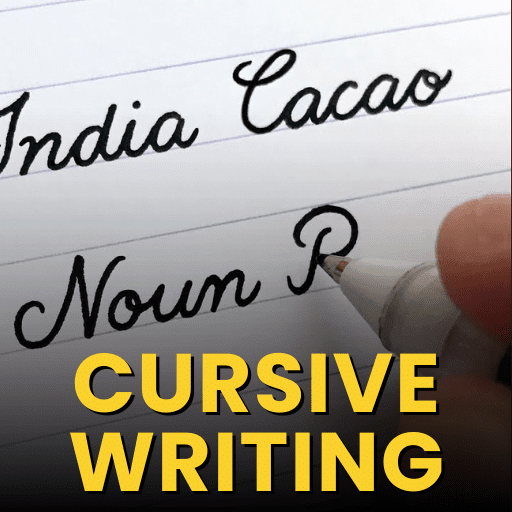
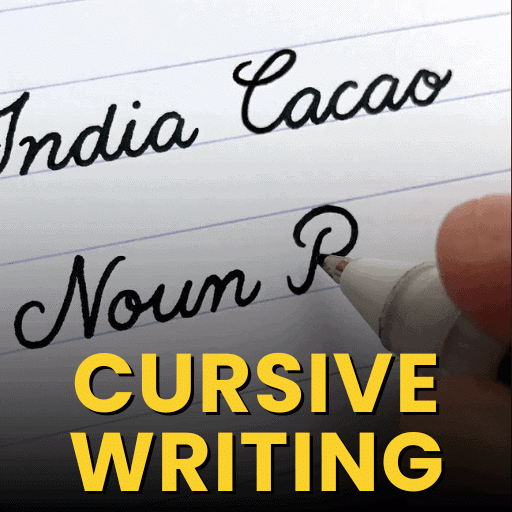
In an age of keyboards and touchscreens, beautiful handwriting remains a valued skill in Indian schools. Cursive writing for Grade 3 students helps develop fine motor skills, hand-eye coordination, and even cognitive processing speed. The Cursive Writing for English & Hindi course on EduRev covers both scripts, making it ideal for students across India who need to practice Hindi cursive writing for Class 3 alongside English.

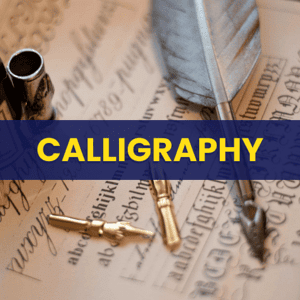
Taking handwriting a step further, the Calligraphy Course: Beginner to Advanced introduces children to the art of decorative, stylised lettering. This best calligraphy course for kids builds patience, pen control, and focus - qualities that benefit children in every subject. Calligraphy for Class 3 students is also a wonderful way to channel creativity in a structured manner.

Key Benefits at a Glance

  • Improved letter formation and neatness in school notebooks
  • Enhanced concentration and fine motor coordination
  • Greater confidence in written expression across languages

DIY Science Projects and Hands-On Art & Craft Activities for Class 3 Kids

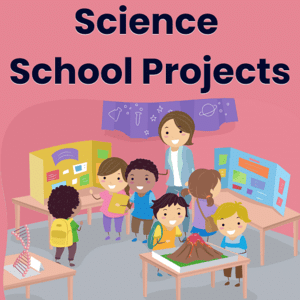
Children learn best when they do, not just when they listen. The DIY Science Fun: Cool School Projects course makes abstract scientific concepts tangible and engaging through hands-on experiments in physics, biology, and safe household chemistry. India's NEP 2020 strongly emphasises project-based and experiential learning, and DIY science projects for Grade 3 perfectly align with this vision.

On the creative side, the Hands on Art & Craft course and the dedicated Drawing (Art & Craft) course help Class 3 students explore their artistic side. These best art and craft activities for Class 3 support creativity, self-expression, and the ability to follow multi-step instructions - a transferable skill that benefits academic learning too.

  • Cool science projects for Class 3 students make learning memorable
  • Drawing for Grade 3 kids builds imagination and visual thinking
  • Hands-on activities develop task completion and material awareness

Reading Comprehension and Dictionary Words: Boosting Vocabulary in Junior Classes

A strong vocabulary foundation built during junior schooling has a lasting positive effect on academic performance across every subject. The Reading Comprehension for Junior Classes course on EduRev uses engaging short passages followed by questions that test understanding, inference, and word knowledge - exactly what Class 3 students need to sharpen their English language skills.

To support independent word learning, two excellent resources are the Dictionary for Junior Classes and Dictionary Words course. These help Grade 3 kids look up unfamiliar words, understand usage in context, and gradually expand their English vocabulary - building the kind of language confidence that shows up in essays, comprehension answers, and spoken English alike.

CourseWhat It BuildsBest For
Reading ComprehensionInference, understanding, retentionEnglish & all subjects
Dictionary for Junior ClassesWord meaning, independent learningVocabulary building
Dictionary WordsSpelling, usage, word bankLanguage fluency

Fun Learning with Games, Sudoku, and Crossword Puzzles for Grade 3 Students

Who says learning has to feel like studying? The Fun Learning with Games course brings educational games for Grade 3 students into a structured format, making concepts stick through play and interaction. Brain games for Class 3 kids are proven to improve attention spans and make even tricky concepts more approachable.

For sharpening logic independently, the Master Sudoku: From Beginner to Expert course takes young learners from simple number grids to more challenging puzzles, building concentration and systematic thinking step by step. Similarly, the Crossword Puzzles: Solve like a Pro course uses word-based challenges to reinforce vocabulary, spelling, and general knowledge in a format children genuinely enjoy.

  • Sudoku for kids beginners trains logical thinking without pressure
  • Crossword puzzles for Class 3 expand word bank and general awareness
  • Game-based learning keeps children engaged and self-motivated

Aptitude Reasoning and Worksheet-Based Learning: Sharpening Problem-Solving in Class 3

Structured analytical thinking is a skill that benefits students in competitive exams and daily problem-solving alike. The Aptitude Reasoning course introduces Grade 3 students to pattern recognition, logical sequences, and structured thinking through age-appropriate questions. This forms the groundwork for success in Olympiads and scholarship exams later.

The Aptitude Explorer with Worksheets course takes a worksheet-based approach, giving children regular practice with aptitude questions for Class 3 in a progressive manner. Worksheet-based aptitude practice is especially popular in Indian junior classes because it gives children a familiar, structured format while building analytical skills systematically.

  • Logical reasoning for Grade 3 students builds a thinking mindset early
  • Regular aptitude worksheets PDF practice reinforces concepts lesson by lesson
  • Ideal preparation for school Olympiads and competitive assessments

Value Education and Mahabharat Tales: Building Character in Young Learners

Academic excellence is only one dimension of a child's growth. India's NEP 2020 explicitly recognises value education and life skills as essential components of holistic schooling. The Value Education course on EduRev instils ethical values, empathy, civic responsibility, and positive social behaviour - character-building for Grade 3 students that goes hand in hand with classroom learning.

Adding a cultural and storytelling dimension, the Mahabharat Tales: The Battle of Good and Evil course presents stories from one of India's greatest epics in an age-appropriate, engaging format. These Mahabharat stories for kids introduce concepts of dharma, courage, and the triumph of good over evil - timeless lessons that resonate deeply with young Indian learners and their families.

Piano Tutorials for Kids: How Grade 3 Students Can Start Learning Music

Music education during the ages of 6 to 9 years is considered particularly powerful for brain development, as this period is marked by high neuroplasticity. Learning the piano improves memory, discipline, coordination, and emotional expression in children - benefits that extend well beyond music itself. The Piano Tutorials Course: Beginners to Advance on EduRev is designed for children with zero prior musical experience, starting from basic note recognition and hand positioning before moving to simple melodies and more complex pieces.

This best piano learning course for kids is structured to grow with the child, making it perfect for Grade 3 students who are just beginning their musical journey. Online piano tutorials for junior classes mean children can learn at their own pace, fitting music into their schedule alongside school and other activities.

  • Beginner to advanced piano for children in one structured course
  • Builds discipline, focus, and creative expression simultaneously
  • Ideal starting age for music learning is right at Grade 3 level

From mental maths and abacus to piano, art, reading comprehension, and value education, EduRev's collection of skill-building courses for Class 3 ensures that every child gets the opportunity to grow holistically - academically, creatively, and as a person. Explore these courses today and give your Grade 3 child the head start they deserve.

Grade 3 FAQs

1. What do Grade 3 students need to study for maths and English?
Ans. Grade 3 curriculum focuses on foundational numeracy skills like multiplication, division, fractions, and place value, alongside English reading comprehension, grammar basics, and writing simple sentences. Students learn through practical problem-solving activities, story-based lessons, and interactive exercises that build confidence in core academic competencies during this critical developmental stage.
2. How can I improve my reading and comprehension skills in Grade 3?
Ans. Regular reading practice using age-appropriate books, short stories, and comprehension passages strengthens vocabulary and understanding. Grade 3 learners benefit from reading aloud, discussing story details with parents, answering questions about texts, and gradually tackling longer narratives. Consistent daily reading habits for 15-20 minutes significantly boost fluency and retention in early primary education.
3. What topics are most important in Grade 3 science?
Ans. Grade 3 science emphasises living organisms, basic life processes, weather patterns, simple machines, and the five senses. Students explore ecosystems, plant and animal habitats, states of matter, and forces through observation-based learning. This foundational science knowledge develops curiosity about the natural world and introduces scientific thinking methods suited to junior primary students.
4. How do I solve word problems quickly in Grade 3 maths?
Ans. Breaking word problems into steps helps Grade 3 learners solve them efficiently. Students should identify given information, understand what's being asked, choose the correct operation (addition, subtraction, multiplication, or division), and verify answers. Using diagrams, counters, or drawings makes abstract concepts concrete, enabling faster problem-solving and stronger mathematical reasoning during elementary education.
5. What grammar topics should Grade 3 students focus on?
Ans. Grade 3 grammar essentials include nouns, verbs, adjectives, simple and compound sentences, punctuation rules, and tense basics. Students learn to identify parts of speech, construct grammatically correct sentences, and use full stops, commas, and question marks appropriately. Mastering these foundational language structures enables clearer writing and improved communication skills in academic and everyday contexts.
6. How can parents help their Grade 3 child with homework?
Ans. Parents support Grade 3 learning by creating a quiet study space, listening to daily reading, checking completed work, and asking questions about lessons. Encouraging independent problem-solving rather than providing direct answers builds confidence. Regular communication with teachers, reviewing progress reports, and using visual aids or practical examples make homework productive and reinforce classroom learning effectively.
7. What are easy ways to remember multiplication tables for Grade 3?
Ans. Grade 3 students master multiplication tables through repeated practice using songs, rhymes, skip-counting, and interactive games. Visual number patterns, flashcards, and daily drills for 10 minutes strengthen memory retention. Linking tables to real-life scenarios-like calculating groups of objects-makes abstract concepts meaningful and helps junior primary students build automaticity with fundamental arithmetic operations.
8. How do I write better stories and essays in Grade 3?
Ans. Grade 3 writing improves through practising simple story structure: beginning, middle, and end. Students should brainstorm ideas, use descriptive words, write short sentences, and read their work aloud. Regular writing practice with teacher feedback, reading quality children's literature for inspiration, and using writing checklists develop composition skills and creative expression during early elementary education.
9. What should Grade 3 students know about environmental studies and social awareness?
Ans. Grade 3 environmental studies cover basic ecology, community helpers, local geography, cultural diversity, and simple civic responsibilities. Students learn about water conservation, cleanliness, family structures, and neighbourhoods through observation and discussion. This foundational environmental and social knowledge cultivates awareness of interdependence, respect for different communities, and early environmental consciousness in junior primary learners.
10. How can I prepare for Grade 3 exams and tests effectively?
Ans. Grade 3 exam preparation involves reviewing notes regularly, practising sample questions, and identifying weak areas two weeks before tests. Students benefit from using flashcards for spelling and tables, attempting previous test papers, and getting adequate sleep. Creating a study schedule, staying calm, and seeking teacher clarification on difficult concepts ensures confident performance during Grade 3 assessments and builds strong examination habits.
One subscription to unlock all
Grade 3 Courses
View Pricing Plans Starting @ $1 per month
All you need for your Grade 3 exam, get it in your pocket now
Trusted by 349 K+ students
CONNECT WITH US ON
EduRev stands for Education Revolution.
Made with Love ❤️
Copyright © 2026 EduRev Inc