
|
 Sets, Relations and Functions 44 Flashcards |

Start
|

|
A set is defined as a collection of ___ objects. |

Card: 1 / 44 |
|
|
Well-defined |
Card: 2 / 44 |
|
|
If A = {F, O, L, W}, how many distinct elements are in the set A? |
Card: 3 / 44 |
|
|
4 |
Card: 4 / 44 |
|
|
A collection of all even natural numbers can be represented as(in set builder form) ___ |
Card: 5 / 44 |
|
|
E = {2n | n ∈ N} |
Card: 6 / 44 |
|
|
True or False: The collection of all natural numbers less than 100 is a well-defined set. |
Card: 7 / 44 |
|
|
True |
Card: 8 / 44 |
|
|
In roster form, the set of the first five natural numbers is represented as ___ in Roaster Form and in set builder form as {x | x is a natural number and x ≤ 5}. |
Card: 9 / 44 |
|
|
{1, 2, 3, 4, 5} |
Card: 10 / 44 |
|
|
The set of all whole numbers is an ___ set. |
Card: 11 / 44 |
|
|
Infinite |
Card: 12 / 44 |
|
|
What is a singleton set? |
Card: 13 / 44 |
|
|
A set containing only one element is called a singleton set. Example:A={7} is a singleton set |
Card: 14 / 44 |
|
|
Two sets A and B are said to be equivalent if _____ |
Card: 15 / 44 |
|
|
They have the same number of elements |
Card: 16 / 44 |

|
|
If n(A) = n(B), then A and B are ___ but not necessarily ___. |
Card: 17 / 44 |
|
|
Equivalent; equal |
Card: 18 / 44 |
|
|
True or False: The empty set is a subset of every set. |
Card: 19 / 44 |
|
|
True. The empty set is considered a subset of every set. |
Card: 20 / 44 |
|
|
If a set A has 6 elements, how many total subsets does it have? |
Card: 21 / 44 |
|
|
A set with n elements has 2n subsets. Therefore, if A has 6 elements, the total number of subsets is 26, which equals 64. |
Card: 22 / 44 |
|
|
 Unlock all Flashcards with EduRev Infinity Plan Starting from @ ₹99 only
|
|
|
|
If a set has n elements, the number of subsets is given by ___ and the number of proper subsets is given by ___. |
Card: 23 / 44 |
|
|
2ⁿ for subsets and 2ⁿ - 1 for proper subsets |
Card: 24 / 44 |
|
|
True or False: An improper subset contains at least one element from the original set. |
Card: 25 / 44 |
|
|
False. An improper subset contains all elements of the original set. |
Card: 26 / 44 |
|
|
True or False: If set C = {2, 4, 6} and set D = {2, 4, 6, 8}, then set D is a proper subset of set C. |
Card: 27 / 44 |
|
|
False. Set D is not a proper subset of set C because it has an additional element (8) that is not in set C. |
Card: 28 / 44 |
|
|
The universal set is defined as the set that contains all possible elements relevant to a given context. True or False? |
Card: 29 / 44 |
|
|
True |
Card: 30 / 44 |
|
|
If A = {1, 3, 5, 7} and B = {2, 4, 6, 8}, then the universal set N that contains all elements of A and B is ___ |
Card: 31 / 44 |
|
|
N = {1, 2, 3, 4, 5,6,7,8} |
Card: 32 / 44 |
|
|
If set A has 5 elements and set B has 3 elements, with 2 elements common to both sets, how many unique elements are there in the union of sets A and B? |
Card: 33 / 44 |
|
|
The number of unique elements in the union of sets A and B is calculated as follows: |A ∪ B| = |A| + |B| - |A ∩ B|. Thus, |A ∪ B| = 5 + 3 - 2 = 6. |
Card: 34 / 44 |
|
|
The union of sets A and B is represented as A ∪ B, and it includes all elements from both sets. True or False? |
Card: 35 / 44 |
|
|
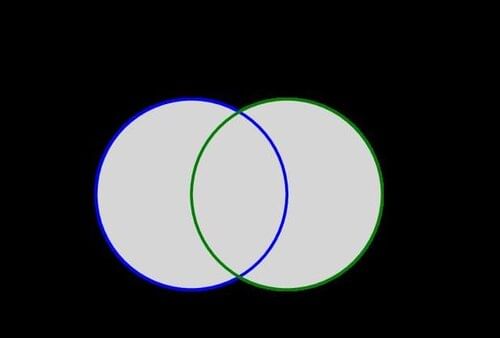 True |
Card: 36 / 44 |
|
|
If A = {1, 2, 3, 4, 5, 6} and B = {2, 4, 6, 8}, then A ∩ B = ___ and A – B = ___. |
Card: 37 / 44 |
|
|
A ∩ B = {2, 4, 6} and A – B = {1, 3, 5} |
Card: 38 / 44 |
|
|
The intersection of two sets A and B consists of elements that are ___ in both sets. |
Card: 39 / 44 |
|
|
Common |
Card: 40 / 44 |
|
|
If A ∪ φ = A, this property is known as the ___ law. |
Card: 41 / 44 |
|
|
Law of identity element |
Card: 42 / 44 |
|
|
What is the relationship between A – B and B – A? |
Card: 43 / 44 |
|
|
A – B ≠ B – A; they are not equal. |
Card: 44 / 44 |
|
|
Completed! Keep practicing to master all of them. |

Restart
|












