Whole Numbers- 1 Class 6 Worksheet Maths

Fill in the Blanks
Q1: ________ is the smallest even whole number.
Ans: 0
0 is considered the smallest even whole number because it is divisible by 2 and is part of the whole number system.
Q2: The product of any number and 0 is always ________.
Ans: 0
When you multiply any number by 0, the result is always 0.
Q3: The predecessor of 5000 is ________.
Ans: 4999
The predecessor of a number is the number that comes right before it. So, the predecessor of 5000 is 4999.
Q4: The largest single-digit number is ________.
Ans: 9
In the set of single-digit numbers (0-9), 9 is the largest.
Q5: The difference between the successor and the predecessor of a number is always ________.
Ans: 2
The difference between a number’s successor (n + 1) and its predecessor (n - 1) is always 2. For example, if the number is 5, the successor is 6, and the predecessor is 4, and 6 - 4 = 2.
Number Line Operations
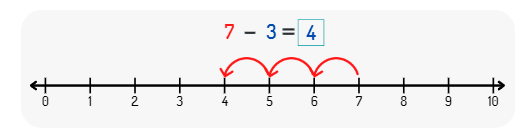
Q6: Show 7-3 on the number line.
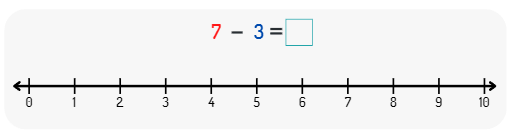
Ans:
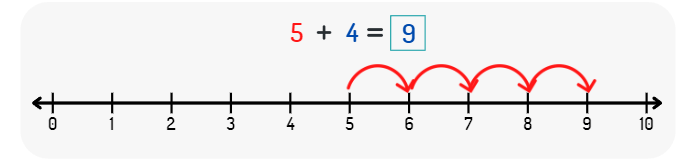
Q7: Show 5+4 on the number line.
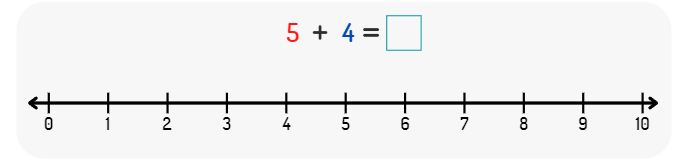
Ans:
True or False:
Q8: Every whole number has a successor.
Ans: True
Every whole number has a successor because you can always add 1 to any whole number to get the next number.
Q9: There is no largest whole number.
Ans: True
Whole numbers go on infinitely, so there is no largest whole number.
Q10: The sum of two even numbers is always an odd number.
Ans: False
The sum of two even numbers is always an even number. For example, 4 + 6 = 10, which is even.
Q11: 0 is neither positive nor negative.
Ans: True
0 is a neutral number; it is neither positive nor negative.
Q12: The predecessor of 1 is 0.
Ans: True
The predecessor is the number that comes before a given number. For 1, the predecessor is 0.
Answer the following questions
Q13: Determine the sum of the four numbers as given below:
i. Successor of 32
ii. Predecessor of 49
iii. The predecessor of the predecessor of 56
iv. The successor of the successor of 67
Ans:
Successor of 32:
Successor means the next number, so the successor of 32 is 33.
Predecessor of 49:
Predecessor means the number before, so the predecessor of 49 is 48.
The predecessor of the predecessor of 56:
First, find the predecessor of 56, which is 55. Then, find the predecessor of 55, which is 54.
The successor of the successor of 67:
First, find the successor of 67, which is 68. Then, find the successor of 68, which is 69.
Sum:
Now, add these four numbers together:
33 + 48 + 54 + 69 = 204
Final Answer: 204
Q14: Write the predecessor of:
a. 94
b. 10000
c. 208090
Ans:
a. Predecessor of 94:
The predecessor of 94 is 93.
b. Predecessor of 10000:
The predecessor of 10000 is 9999.
c. Predecessor of 208090:
The predecessor of 208090 is 208089.
Q15: How many whole numbers are there between 381 and 401?
Ans: To find the number of whole numbers between 381 and 401, subtract the smaller number from the larger number and then subtract 1 from the result (because we exclude the endpoints).
401 - 381 = 20
Since we include both 381 and 401, there are 19 whole numbers between them.
Final Answer: 19
Q16: A mobile number consists of ten digits. The first four digits of the number are 9, 9, 8, and 7. The last three digits are 3, 5, and 5. The remaining digits are distinct and make the mobile number, the greatest possible number. What are these digits?
Ans: To make the greatest possible number, choose the largest available digits for the remaining three positions. The digits left to use are 0, 1, 2, 4, and 6. We should select the largest three of these digits.
The largest three available digits are: 6, 4, and 2.
So, the greatest possible mobile number with the given digits would be:
9987642355
Final Answer: 6, 4, and 2
FAQs on Whole Numbers- 1 Class 6 Worksheet Maths
| 1. How can whole numbers be defined? |  |
| 2. What is the difference between whole numbers and natural numbers? | |
| 3. Can whole numbers be negative? | |
| 4. How can whole numbers be used in real-life situations? | |
| 5. How do you add and subtract whole numbers? | |





Sample Paper
,video lectures
,Important questions
,Semester Notes
,Whole Numbers- 1 Class 6 Worksheet Maths
,Viva Questions
,Free
,Summary
,Exam
,practice quizzes
,Objective type Questions
,Whole Numbers- 1 Class 6 Worksheet Maths
,Previous Year Questions with Solutions
,mock tests for examination
,past year papers
,study material
,Whole Numbers- 1 Class 6 Worksheet Maths
,Extra Questions
,MCQs
,shortcuts and tricks
,ppt
;



Worksheet Solutions: Whole Numbers- 1 Free PDF Download
Importance of Worksheet Solutions: Whole Numbers- 1
Worksheet Solutions: Whole Numbers- 1 Notes
Worksheet Solutions: Whole Numbers- 1 Class 6 Questions
Study Worksheet Solutions: Whole Numbers- 1 on the App
|
© EduRev
|
Education Revolution
|


|




within 7 days!